maXbox4machine

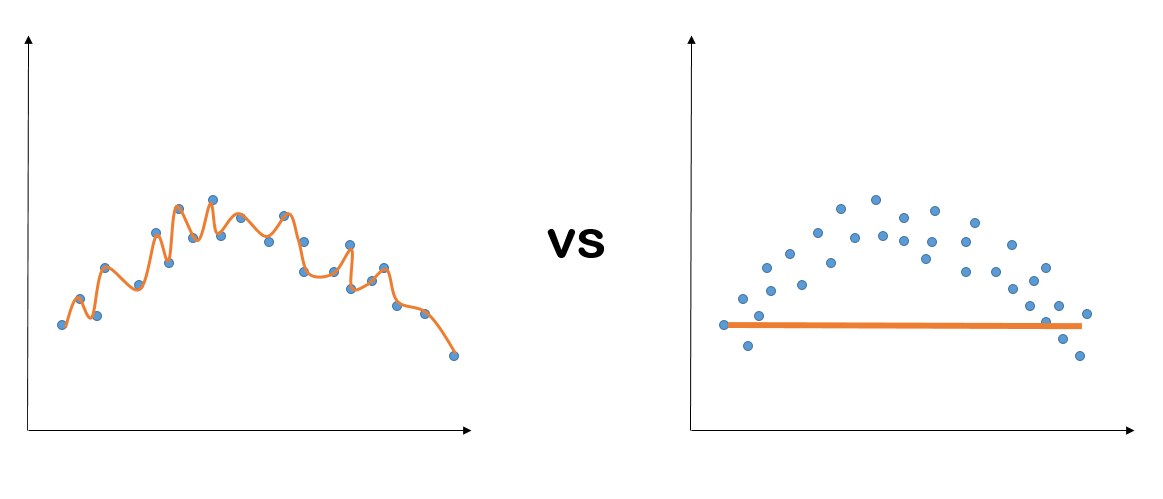
Machine Learning models’ ultimate goal is making reliable predictions on new, unknown data. With this purpose in mind, we want our algorithm to capture relations in existing data and replicate them among new entries. At the same time, we do not want our algorithm to have, let’s say, prejudices because of the data it trained on.

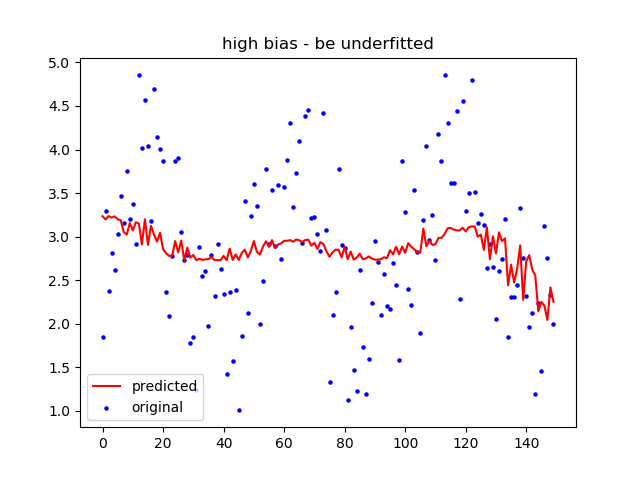
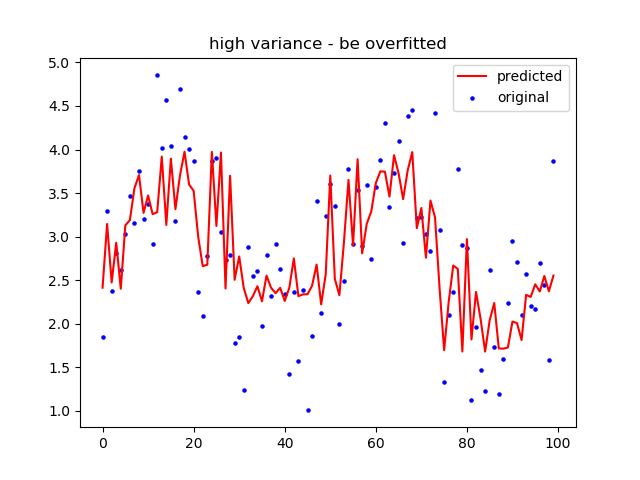
In the first case, we are trying to reduce the bias of our model, which is the difference between the average prediction and the actual value. In the second case, we are trying to reduce the variance, which captures the fluctuations of predictions around the mean value. Both the measurements concur in increasing the error of our model, but, unfortunately, they are negatively correlated: you cannot decrease the one without increasing the other.

A learning curve is the plot of the training/cross-validation error versus the sample size. The learning curve can be used to detect whether the model has the high bias (underfitting) or high variance (overfitting). If the model suffers from high bias problem, as the sample size increases, training error will increase and the cross validation error will decrease.
If the model suffers from overfitting, more samples will help to improve the model prediction performance if the model suffer from high variance.
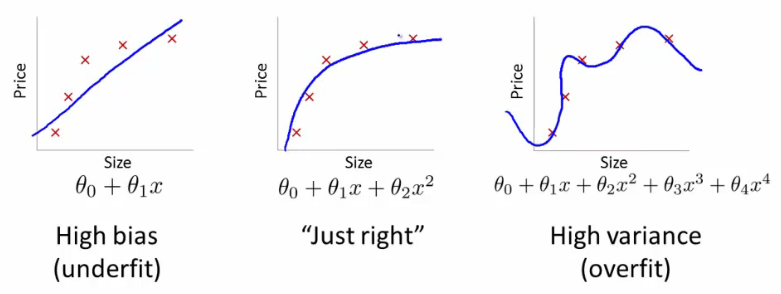
http://www.holehouse.org/mlclass/10_Advice_for_applying_machine_learning.html

see also learning curves

print(df[df.post.str.contains(‘python’,regex=False)])
post … relkw
4 trying to calculate and print the mean and its… … python
140 why doesn t python spot errors before executio… … python
143 call a python class from command line i have … … python
178 reading constants values from python file and … … python
179 converting user nickname to formal first name … … python
182 unable to assign values to variables in python… … python
240 python: wrong assignment of default argument i… … python
252 how do i do something to each element in a lis… … python
263 converting a dict into a list i have
“A model is done when nothing else can be taken out.” — Dyson

LS. Models 109 OLYMPUS DIGITAL CAMERA

Pi Numbers

Given that PI is infinite, is it possible that all possible number combinations are available in its decimals?

Pi itself is not infinite, but the decimal expansion does go on forever, and it has been proven to be transcendental. So it is possible that all decimal combinations are in this expansion, but as far as I know, this has not been proved.

Secrets of Pi:
you can find 12345 between 666 and 888: …66612345888… consecutive at position 49704!

Occurences: Pi 1 to 100000:
numb: 0 9999
numb: 1 10138
numb: 2 9908
numb: 3 10026
numb: 4 9970
numb: 5 10027
numb: 6 10027
numb: 7 10025
numb: 8 9978
numb: 9 9902

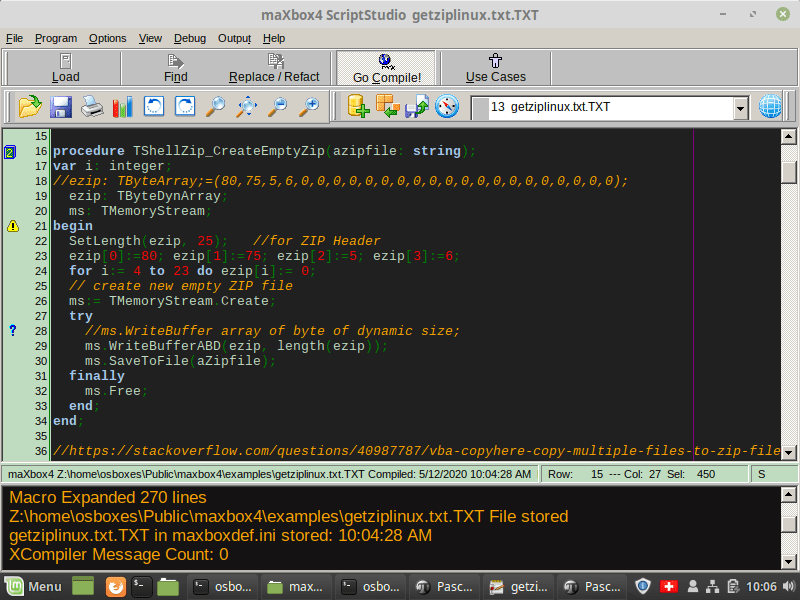
function Occurrences(const Substring, Text: string): integer;
var offset: integer;
begin
  result:= 0;
  offset:= PosEx(Substring, Text, 1);
  while offset <> 0 do begin
    inc(result);
    offset:= PosEx(Substring,Text, offset+length(Substring));
    //writeln(itoa(offset))
  end;
end;

Why is Pi not infinitely large, given that it has infinite digits and each one adds value? Doesn’t anything times infinity equal infinity?
Ist nicht irgendetwas mal Unendlichkeit gleich Unendlichkeit?
¿No hay nada por infinito igual a infinito?
N’est-ce pas quelque chose d’infini égal à l’infini?

ZH Central Station

Introduce Yourself (Example Post)

This is an example post, originally published as part of Blogging University. Enroll in one of our ten programs, and start your blog right.

You’re going to publish a post today. Don’t worry about how your blog looks. Don’t worry if you haven’t given it a name yet, or you’re feeling overwhelmed. Just click the “New Post” button, and tell us why you’re here.

Why do this?

  • Because it gives new readers context. What are you about? Why should they read your blog?
  • Because it will help you focus you own ideas about your blog and what you’d like to do with it.

The post can be short or long, a personal intro to your life or a bloggy mission statement, a manifesto for the future or a simple outline of your the types of things you hope to publish.

To help you get started, here are a few questions:

  • Why are you blogging publicly, rather than keeping a personal journal?
  • What topics do you think you’ll write about?
  • Who would you love to connect with via your blog?
  • If you blog successfully throughout the next year, what would you hope to have accomplished?

You’re not locked into any of this; one of the wonderful things about blogs is how they constantly evolve as we learn, grow, and interact with one another — but it’s good to know where and why you started, and articulating your goals may just give you a few other post ideas.

Can’t think how to get started? Just write the first thing that pops into your head. Anne Lamott, author of a book on writing we love, says that you need to give yourself permission to write a “crappy first draft”. Anne makes a great point — just start writing, and worry about editing it later.

When you’re ready to publish, give your post three to five tags that describe your blog’s focus — writing, photography, fiction, parenting, food, cars, movies, sports, whatever. These tags will help others who care about your topics find you in the Reader. Make sure one of the tags is “zerotohero,” so other new bloggers can find you, too.

Design a site like this with WordPress.com
Get started