Hanseatic cities, East Frisia and IJsselmeer: Bremen – Amsterdam
1. Day Basel – Bremen
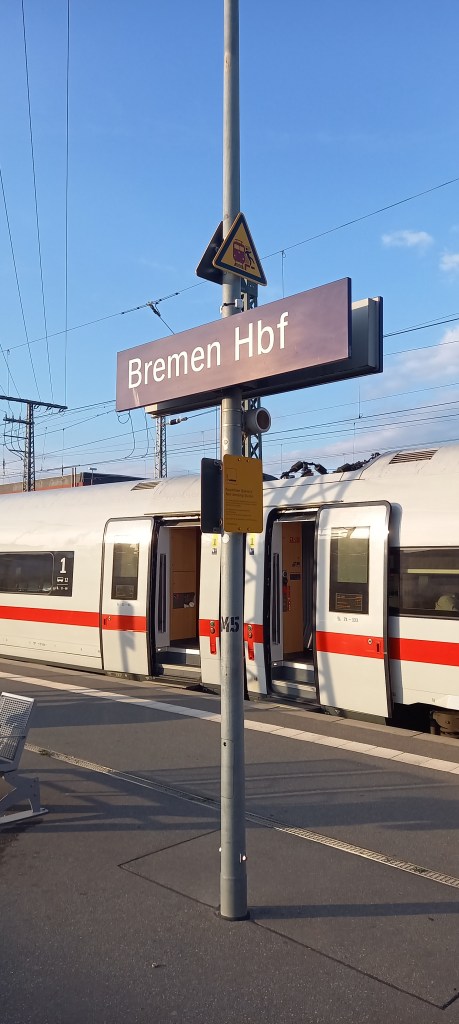
Individual arrival to Basel. Travel with the group on the direct ICE to Bremen. Transfer to the pier and embarkation. After the welcome drink and dinner, it’s worth taking a walk through the illuminated old town.
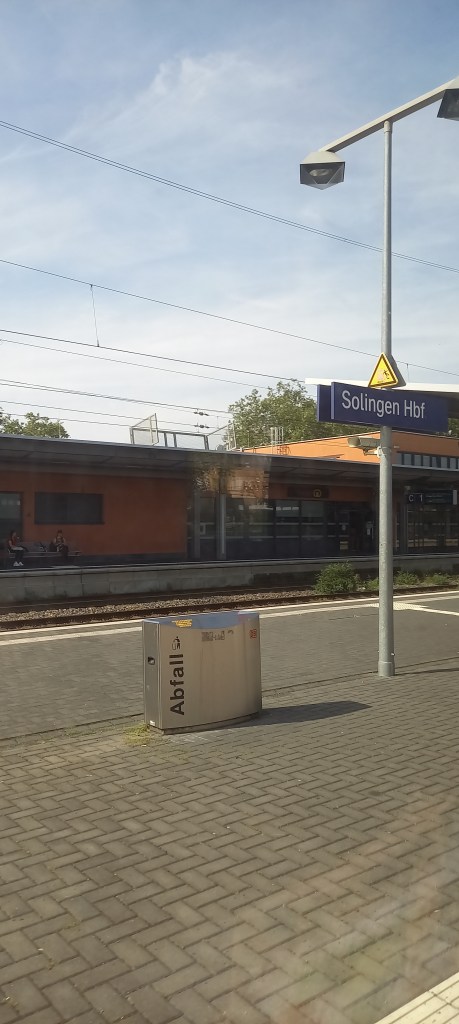
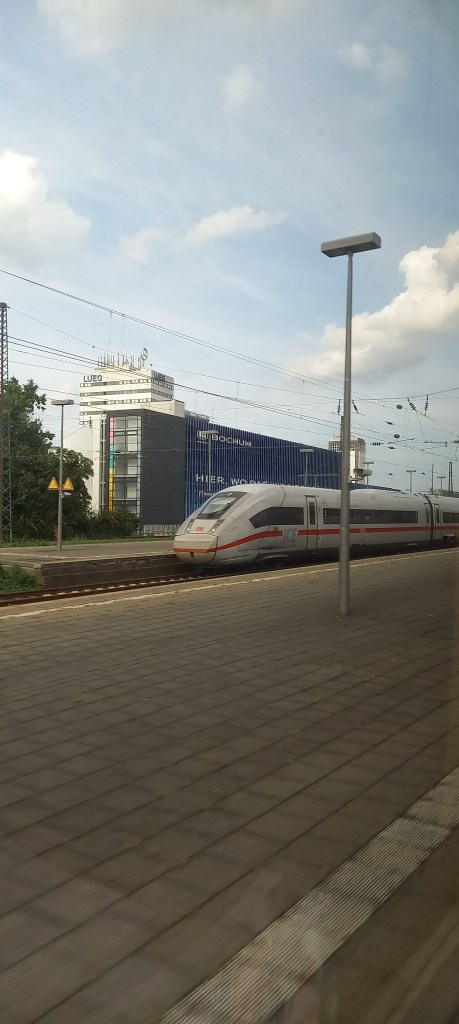
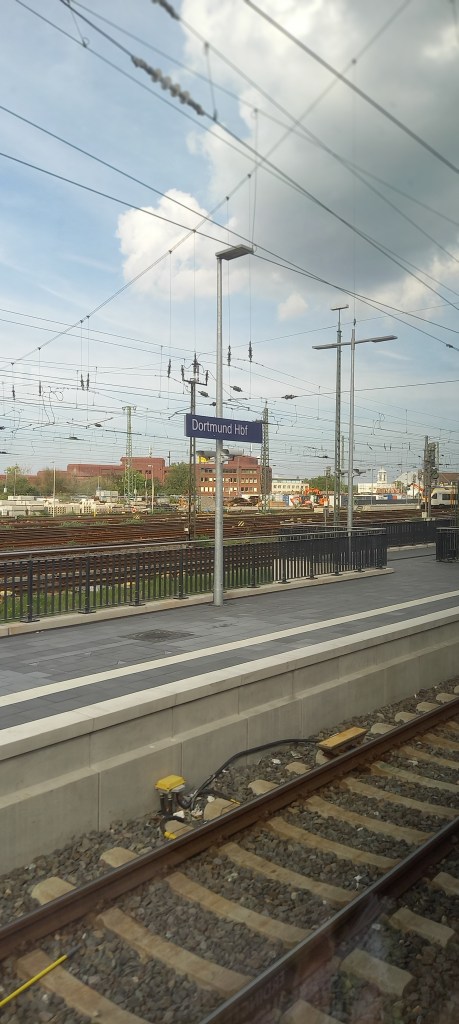
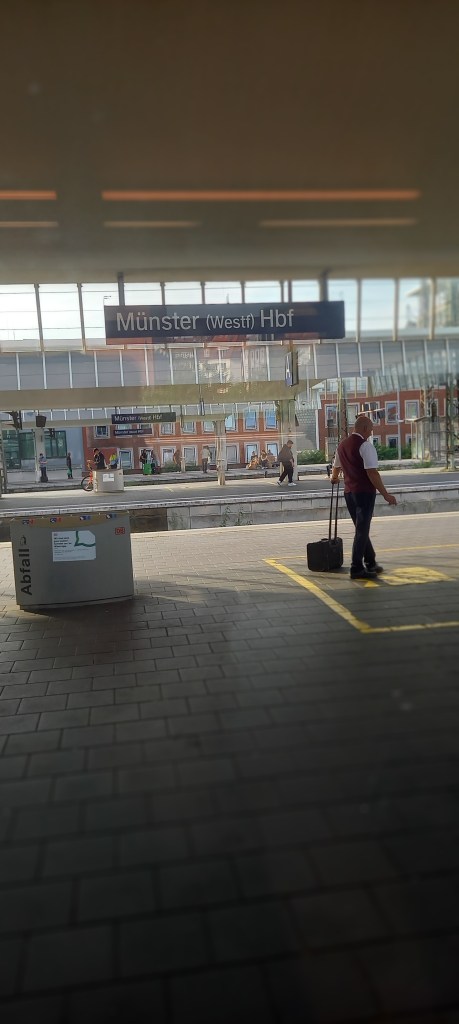
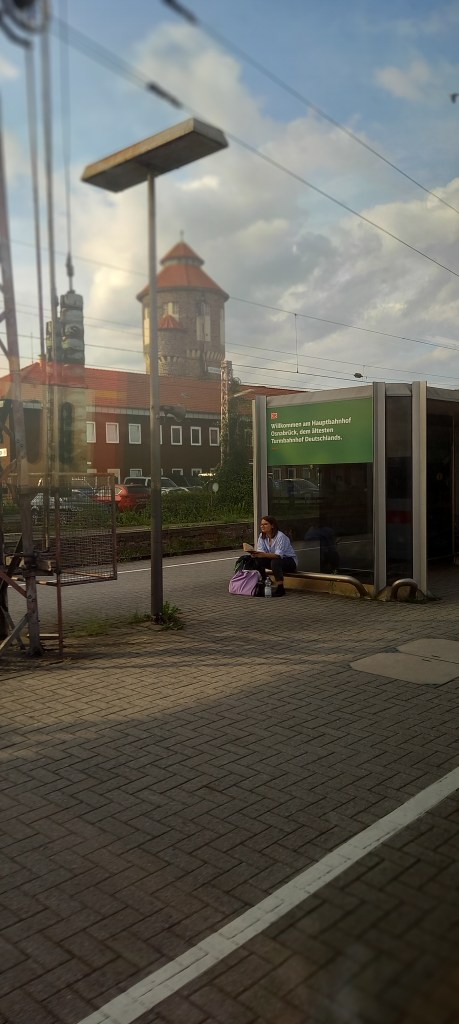
CologneSolingenDüsseldorfDuisburgEssenBochumDortmundMünsterMünsterOsnabrückStation 1 to 10 from Colgne to BremenDortmund in 1;87
2. Day Bremen – Oldenburg
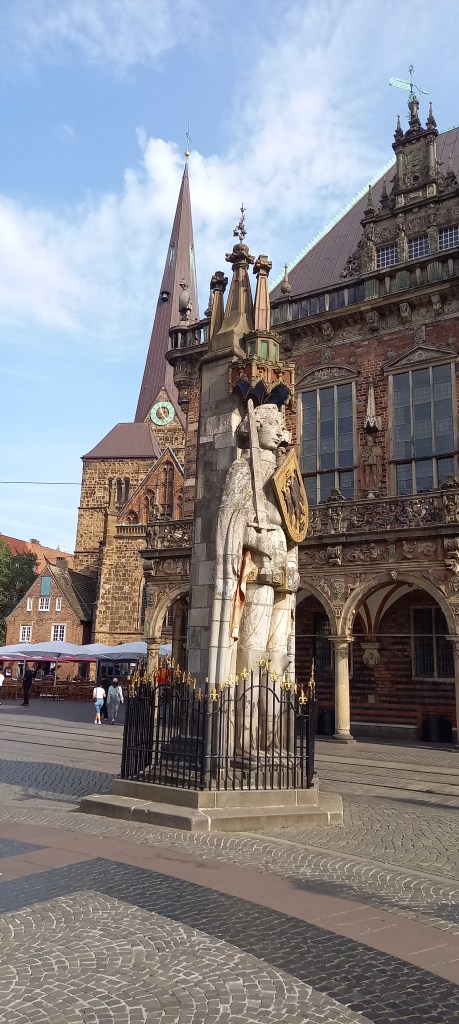
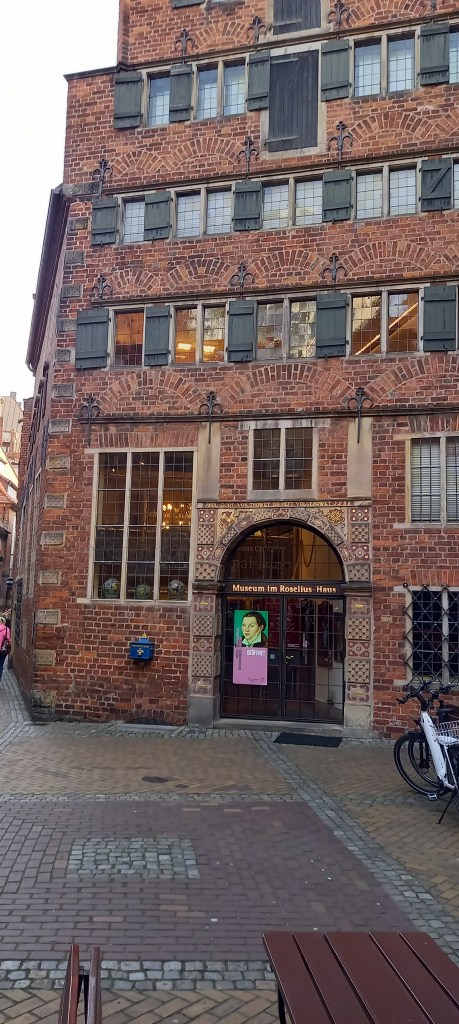
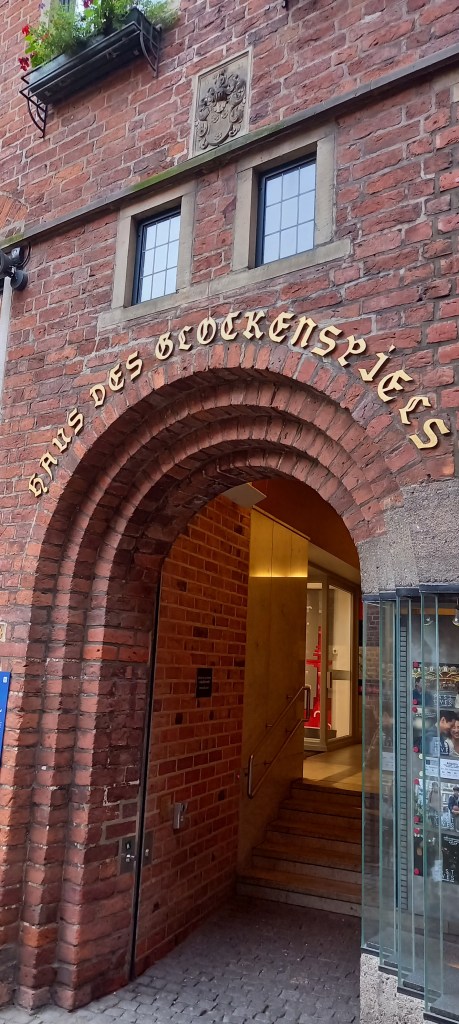
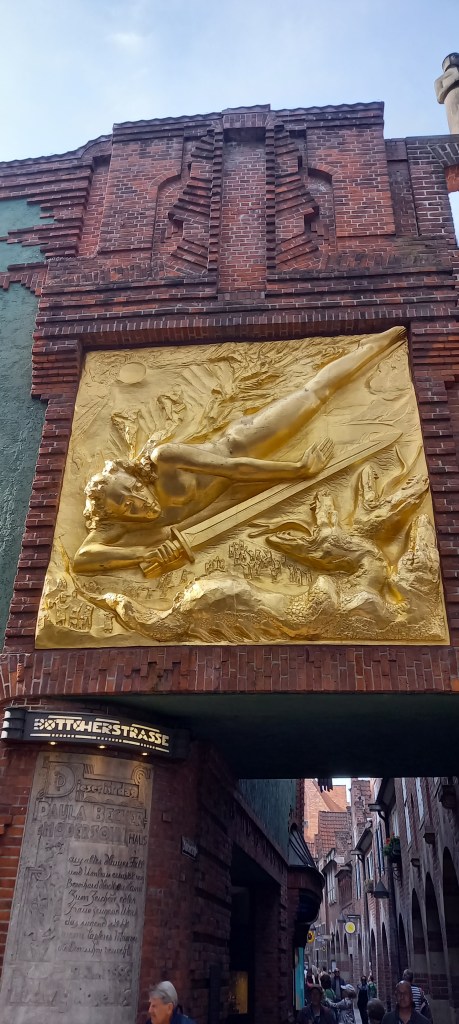
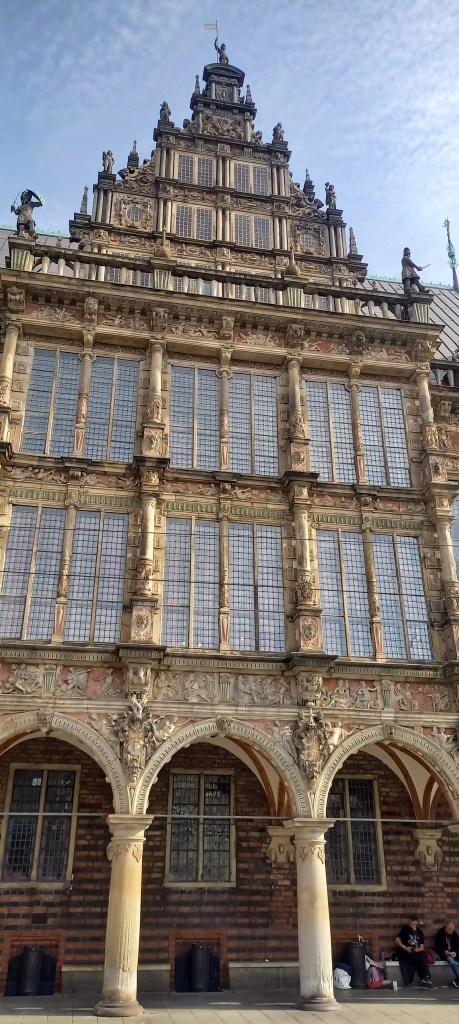
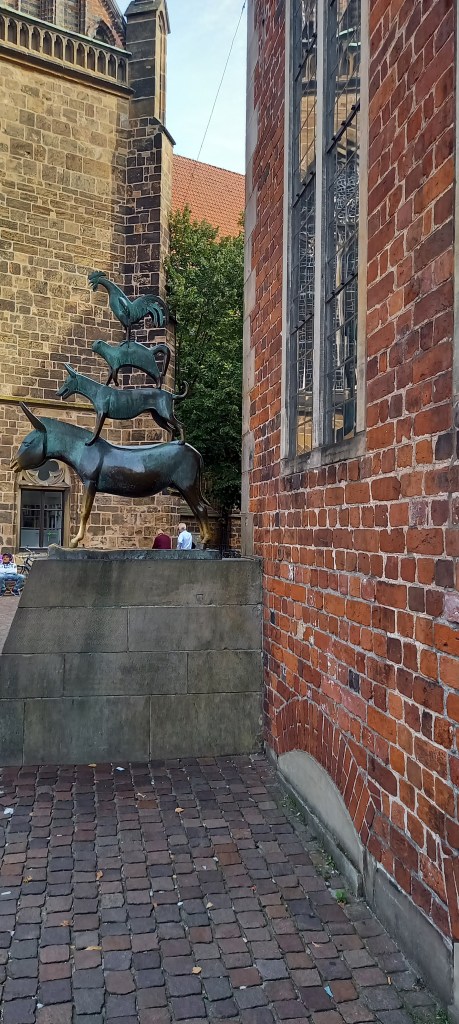
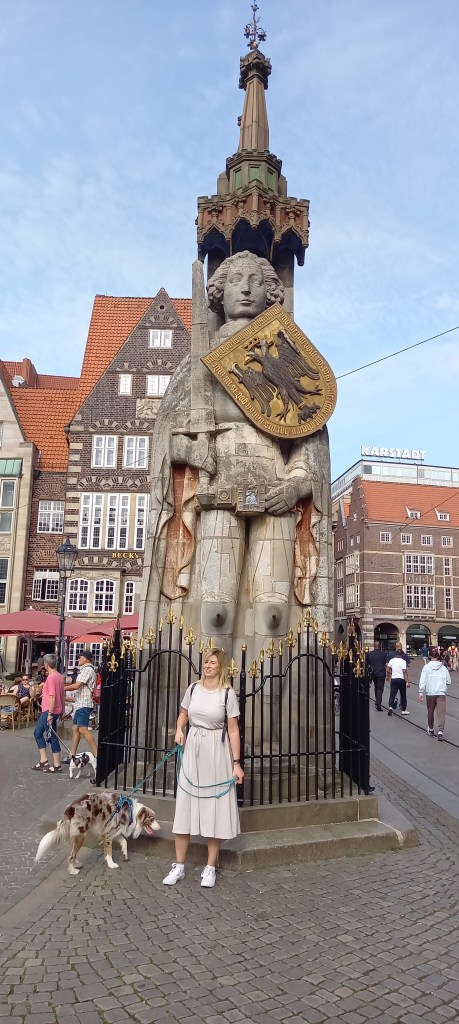
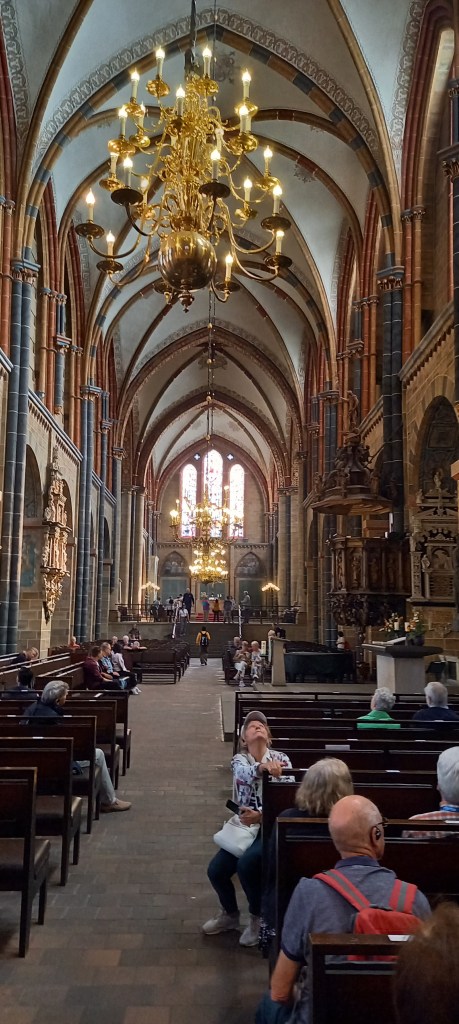
Get to know the Free Hanseatic City of Bremen on a short tour followed by a walk through the beautiful old town. The market with town hall and cathedral is also known as “the parlor”. The picturesque Schnoorviertel is particularly romantic and in the artist-designed Böttcherstrasse you can experience a glockenspiel made of Meissen porcelain at the end. Then it’s time to cast off! You reach Oldenburg on the Unterweser and Hunte.
Our Ship SaxoniaBremen
3. Day Oldenburg – Papenburg
Tour through Oldenburg with the oldest large pedestrian zone in Germany. The city also has important representative buildings. You will spend the afternoon on board as you cruise along the coastal canal through a moorland area that was primarily used for peat mining.
Oldenburg
4. Day Papenburg – Emden
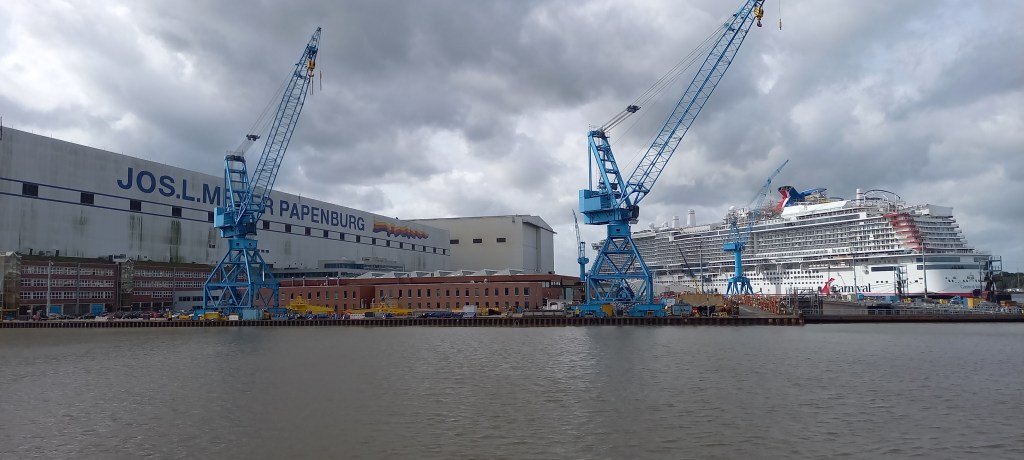
In Papenburg you first visit the Meyer shipyard, where the largest cruise ships in the world are built in a huge hall, and then the unique cityscape with its canals and historic sailing ships right in the center. The journey continues on the Ems to Emden in East Frisia.
Meyer PapenburgMeyer from Ship to Ship
5. Day Emden (- Greetsiel) – Groningen
In Emden startet der Ausflug ins ostfriesische Fischerdorf Greetsiel, wo Sie etwas Seeluft schnuppern und dem bekannten rot-gelb-gestreiften Pilsumer Leuchtturm einen Besuch abstatten können. Dieser ist Fans des Komikers Otto Waalkes sicherlich aus einem seiner Filme bekannt. Seine Heimatstadt Emden würdigt ihn im übrigen mit einem Museum, einer Skulptur sowie einer eigenen Fussgängerampel. Über das grossartige Vogelparadies Dollart, eine Meeresbucht der Nordsee, gelangen Sie in die Niederlande. Tagesziel ist Groningen.
FireWaterEarthAirGroningen 4 ElementsEms Kanal
6. Day Groningen – Lemmer, 7. Day Lemmer – Amsterdam – Cologne
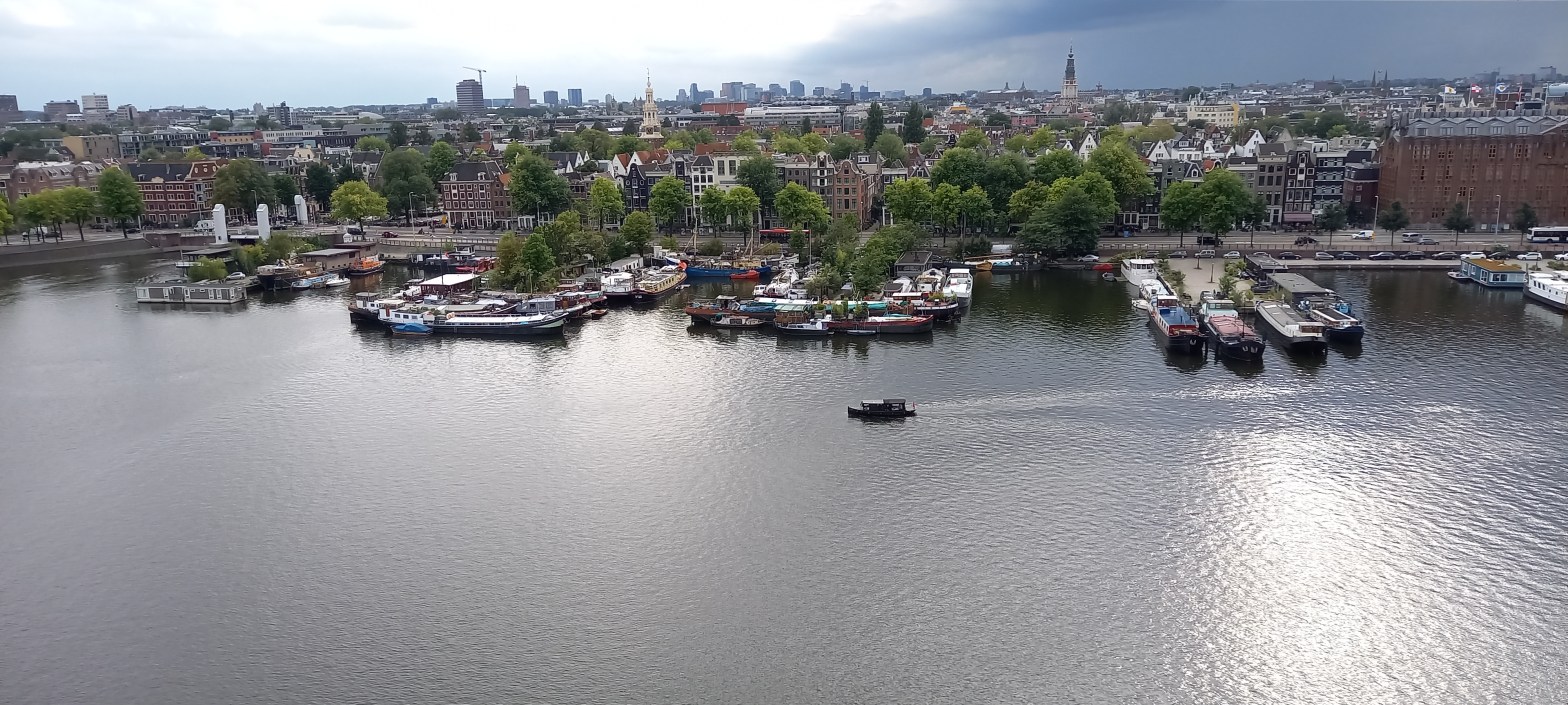
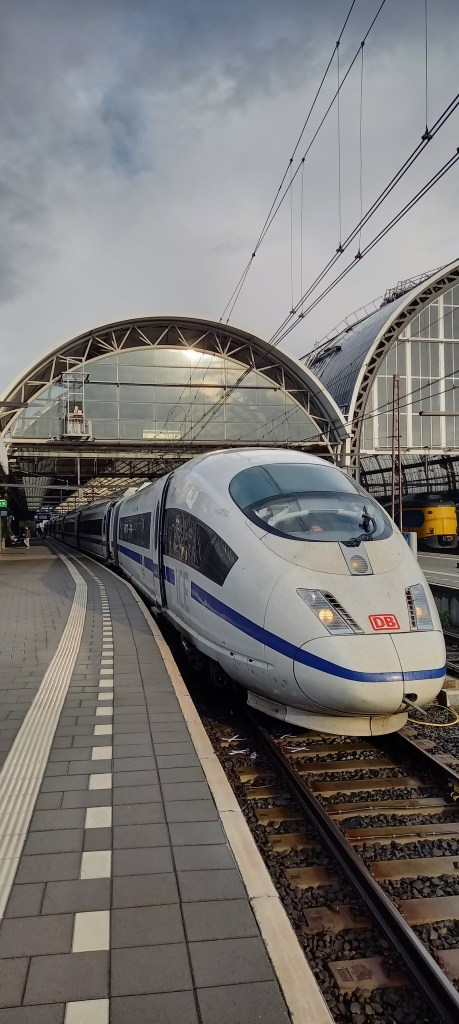
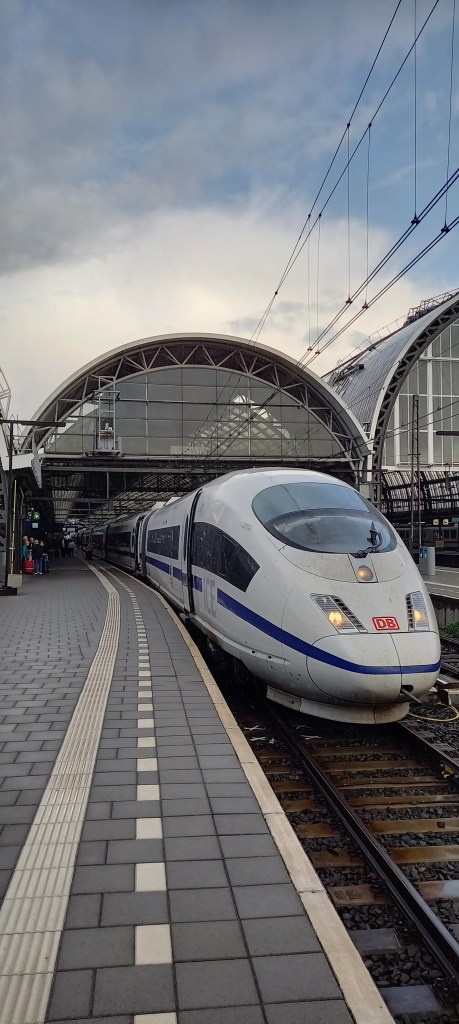
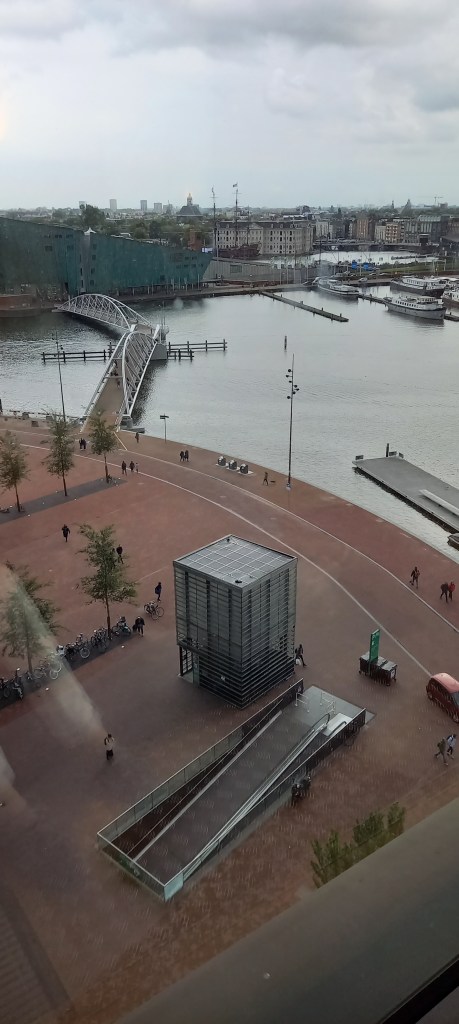
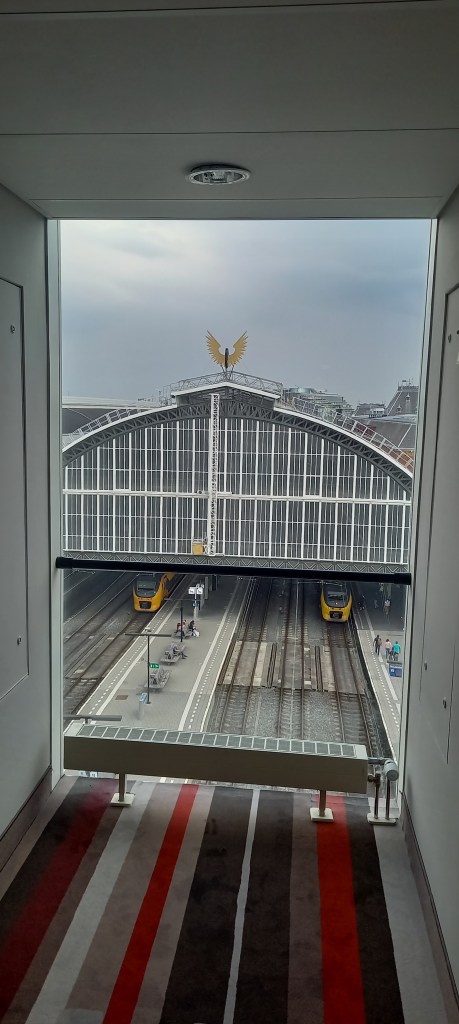
Amsterdam CentraalICE InternationalAmsterdamView from the City Library
Cologne September 2023
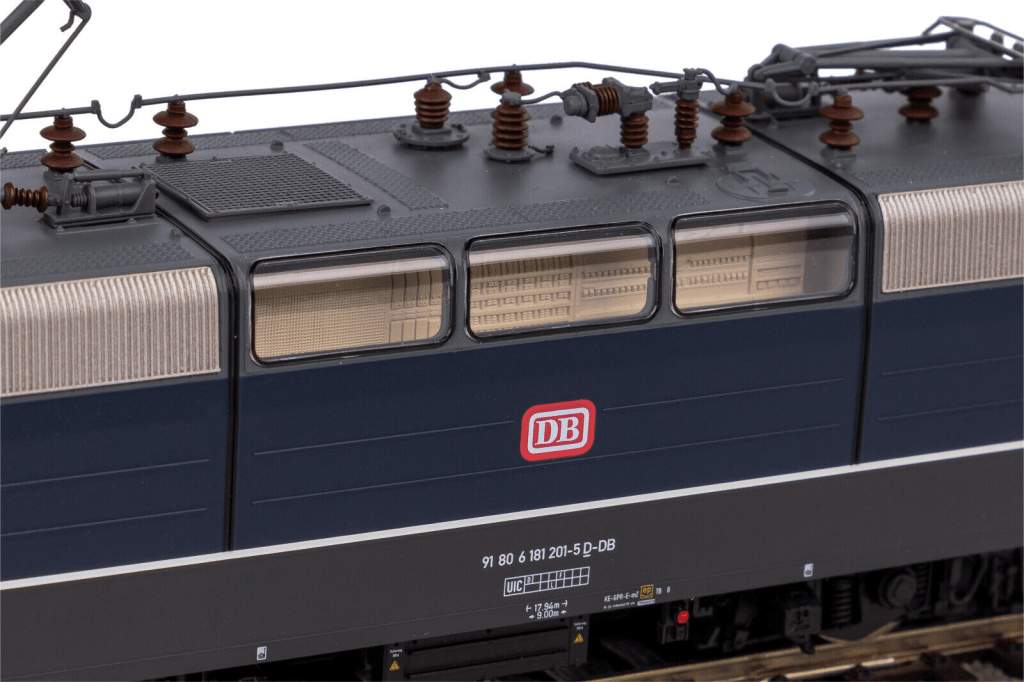
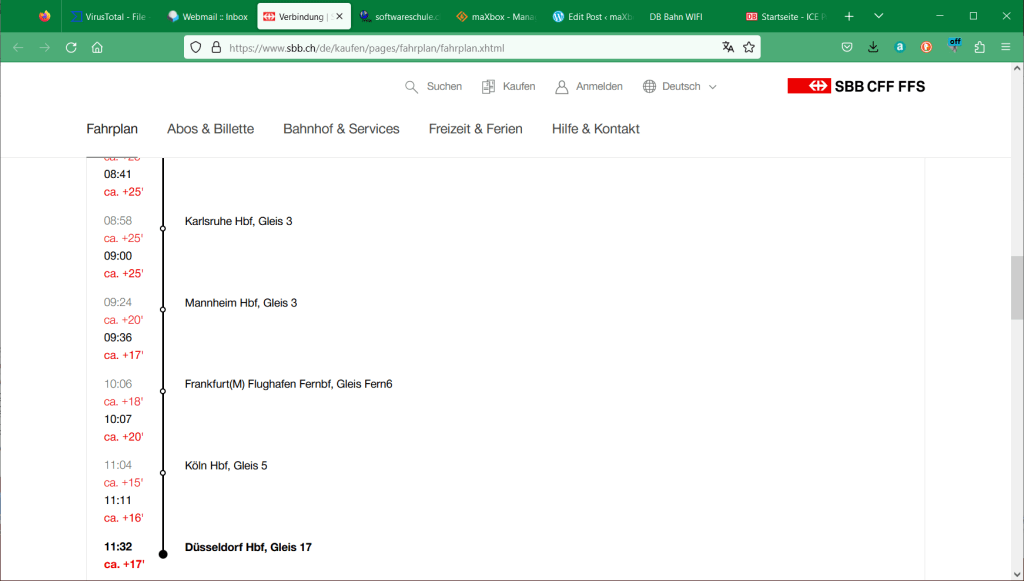
Cologne Main Station – Return via Frankfurt, Mannheim to BaselPIKO BR 181Test for EKON 27Test 2 for EKON 27Test 3 for EKON 27 Last EKON 27 Session Finals
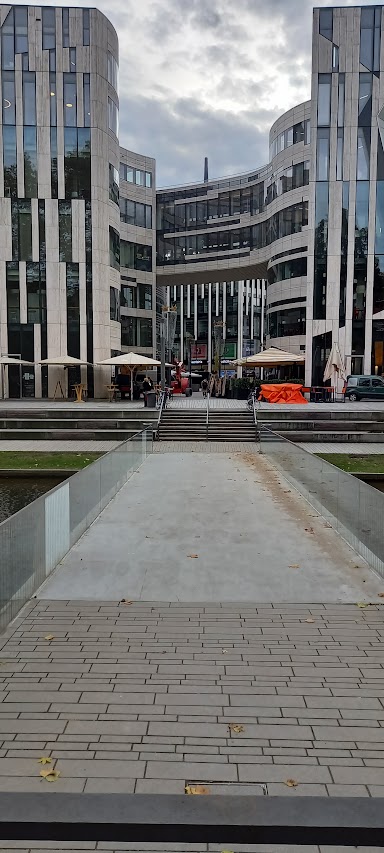
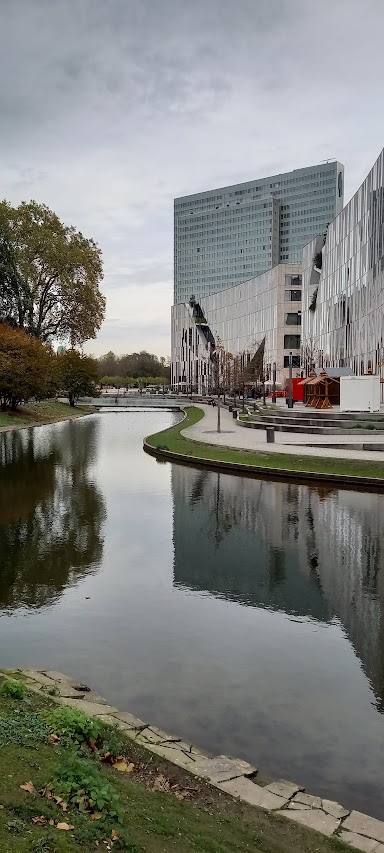
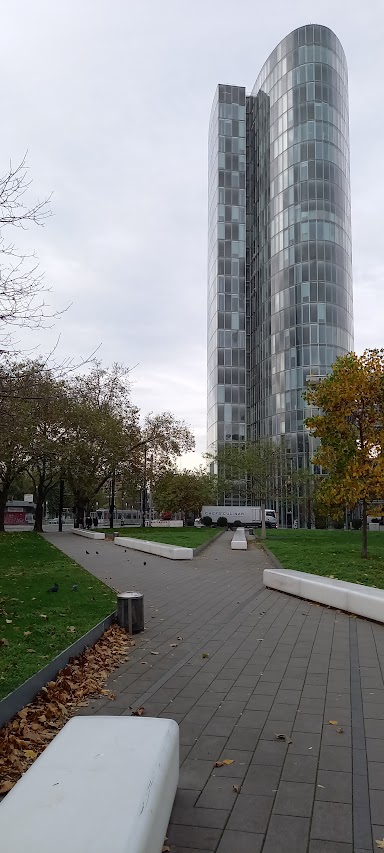
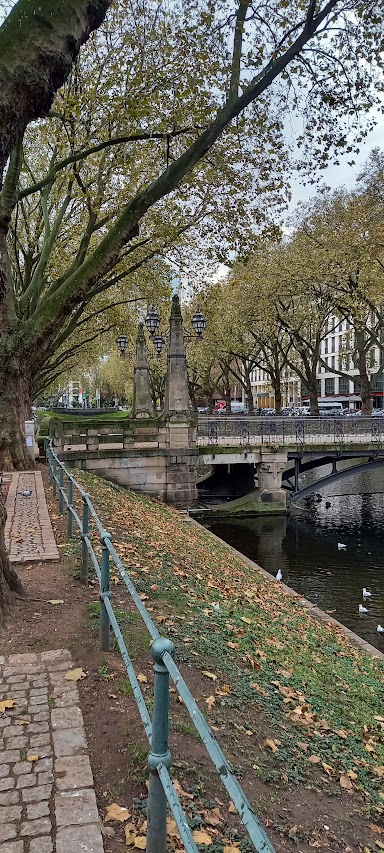
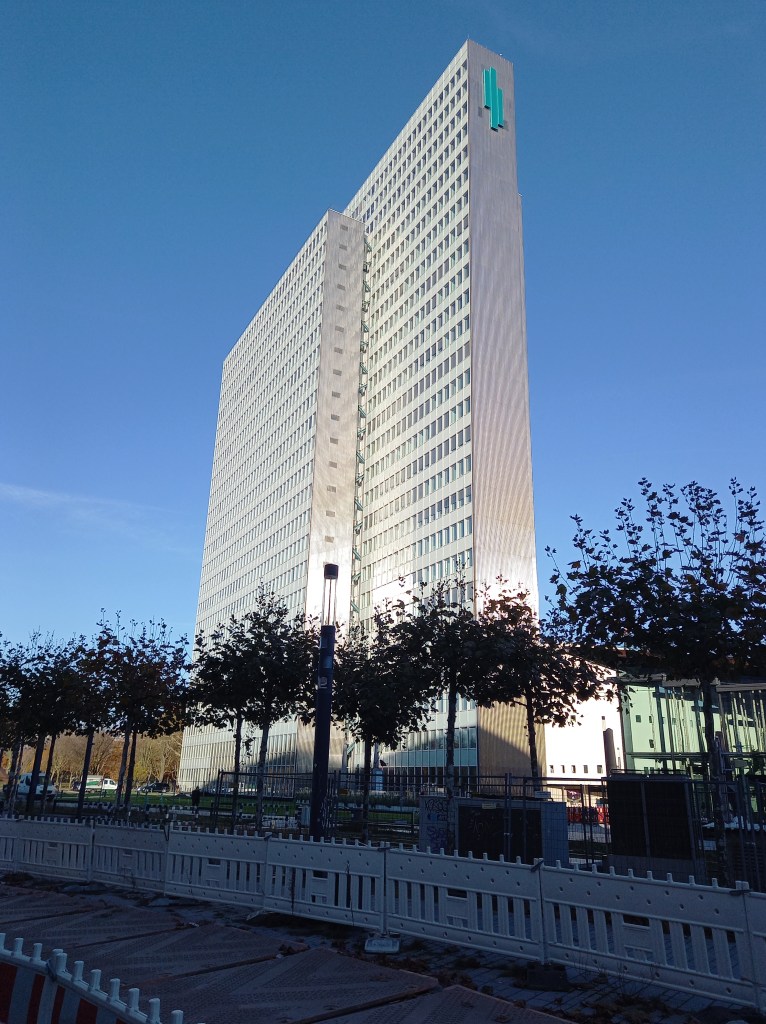
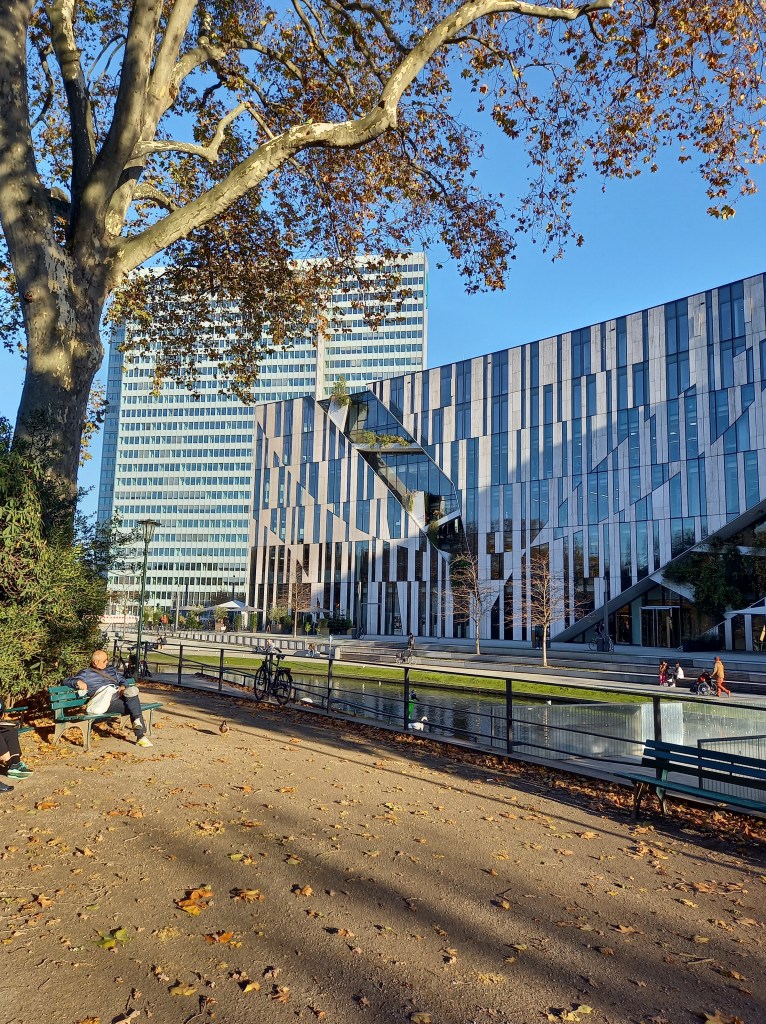
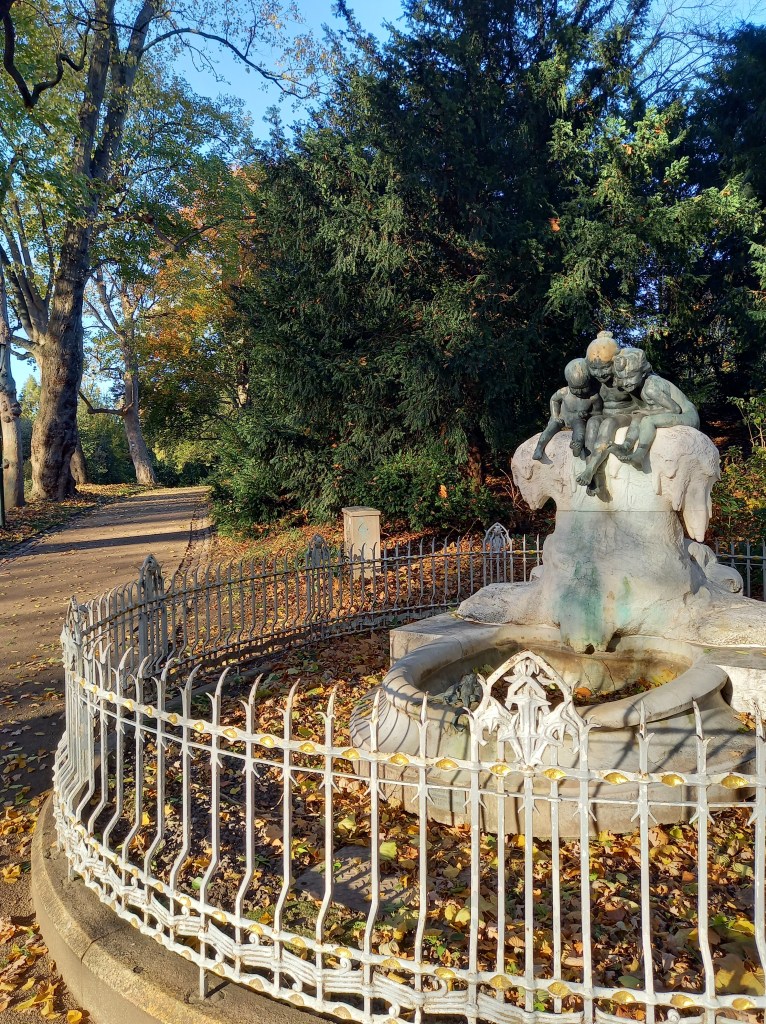
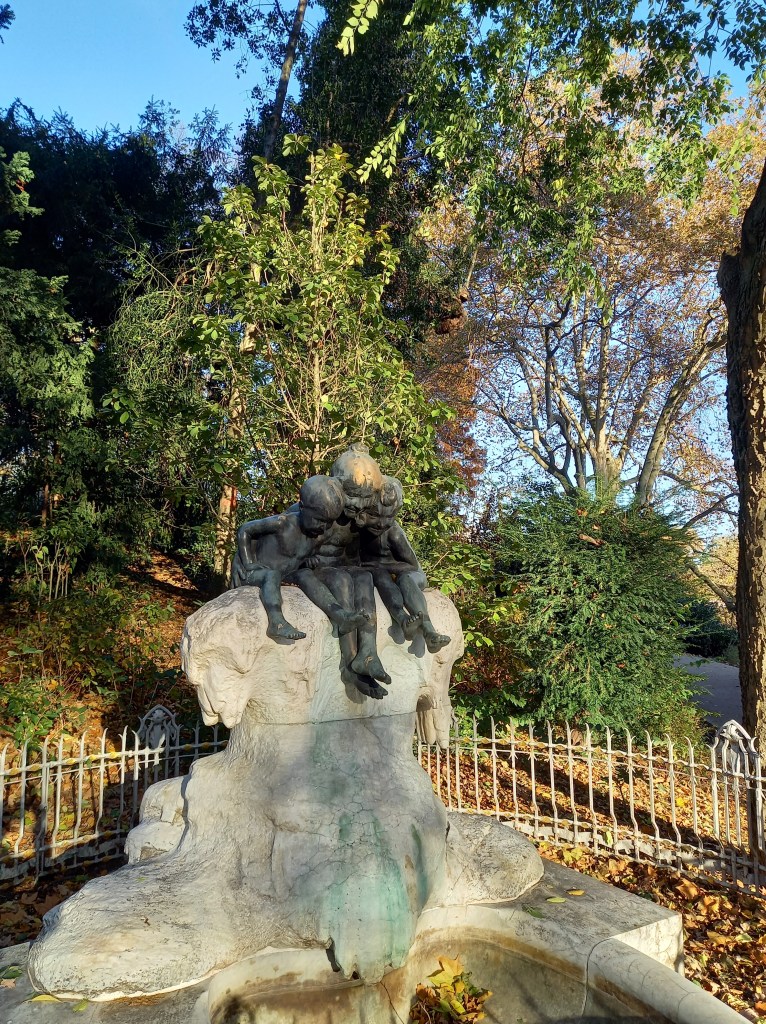
Magic of Pempelfort
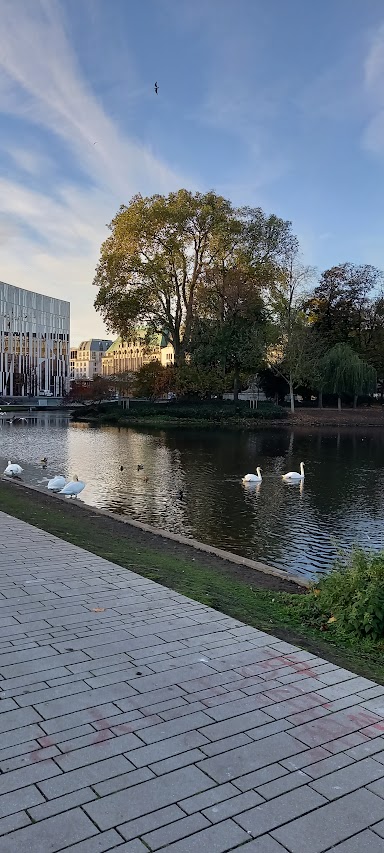
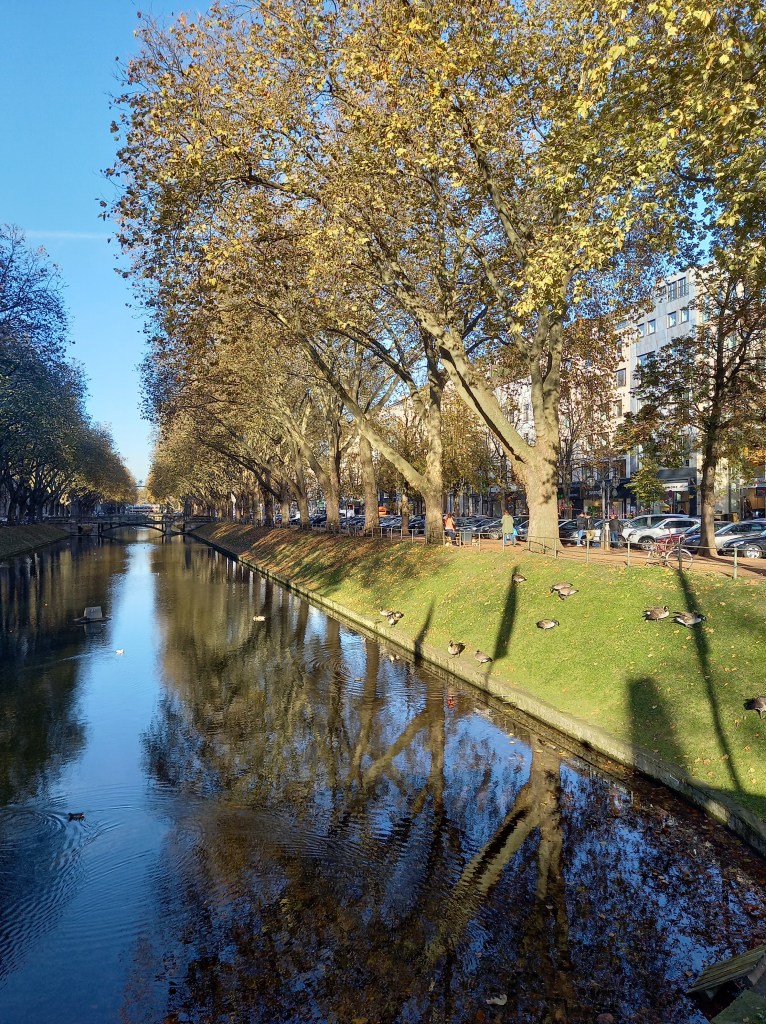
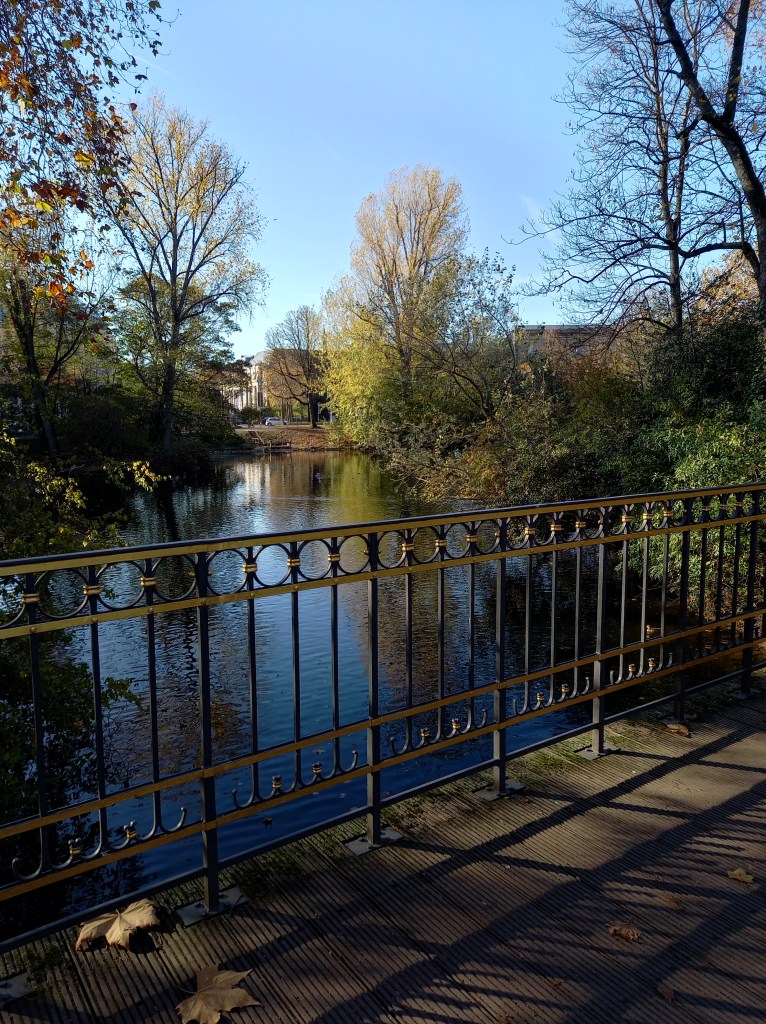
Pempelfort is a city part in the North-east of the central Borough 1 of Düsseldorf.
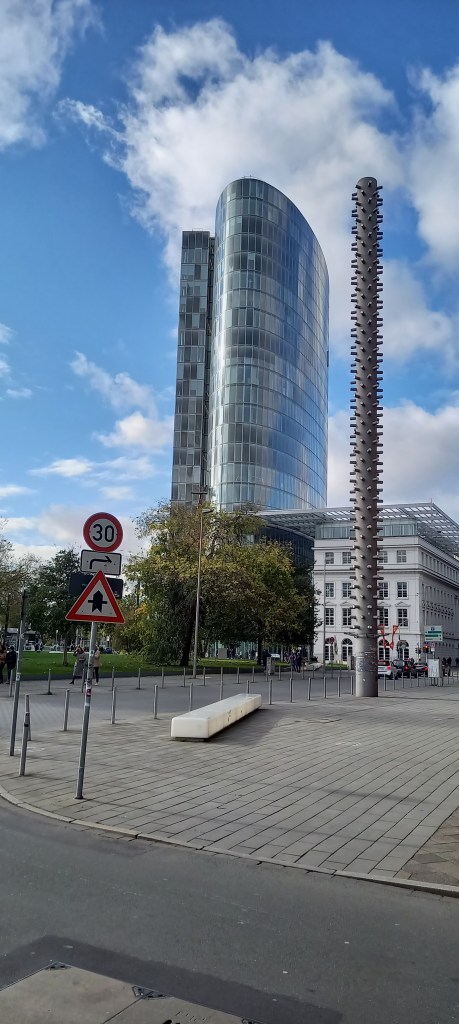
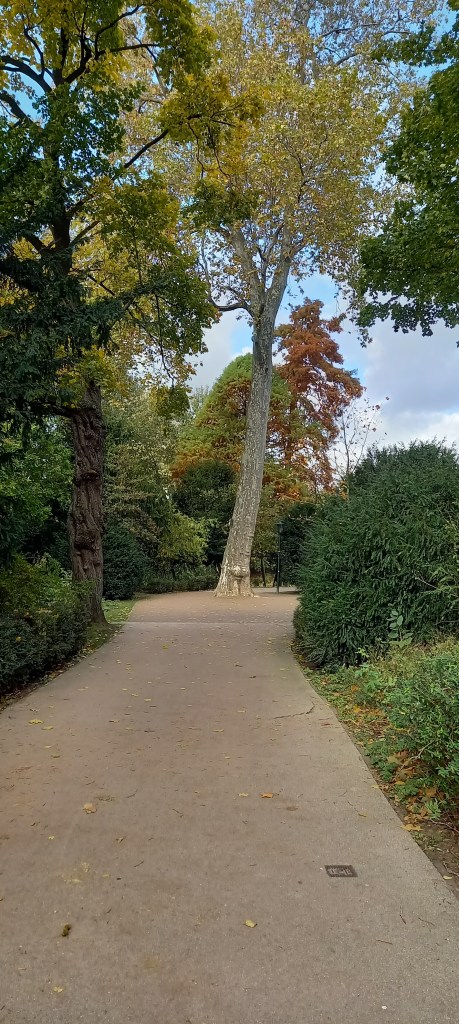
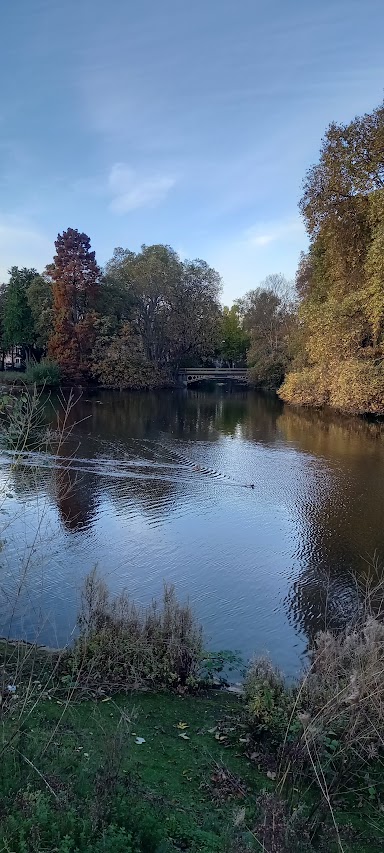
Pempelfort with Hofgarten at Düsseldorf 07/11/2023TEE-Time 2023
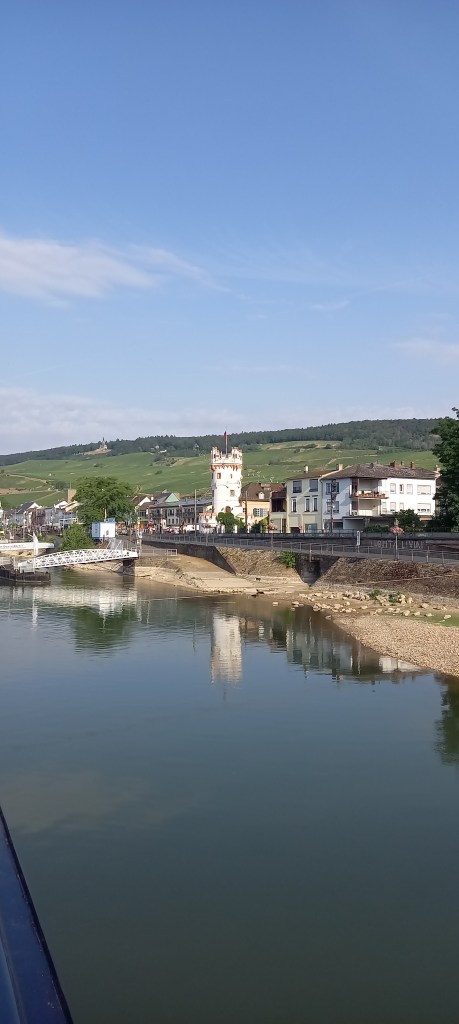
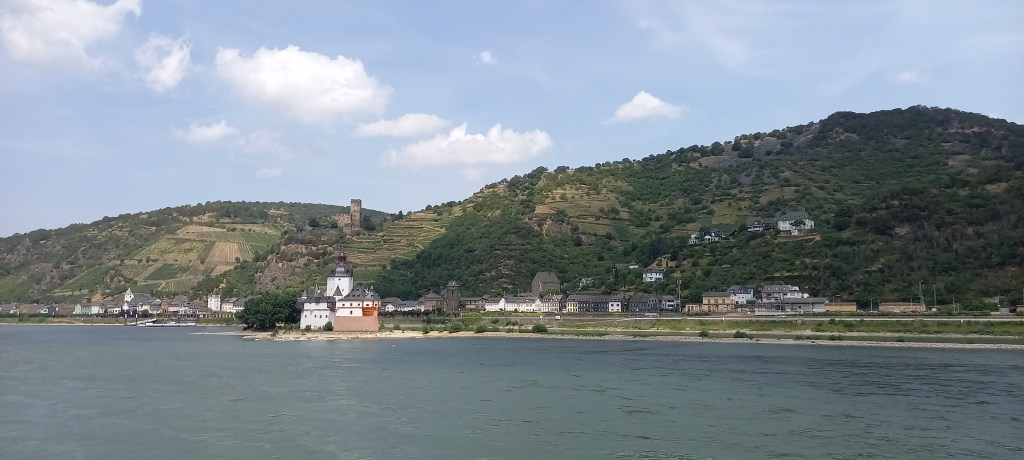
This bicycle and boat tour in Germany from Mainz to Cologne leads along the most beautiful stretch of the great Rhine River. A rich and varied history unfolded along these banks and has left its mark in culture, landscape, and the arts.
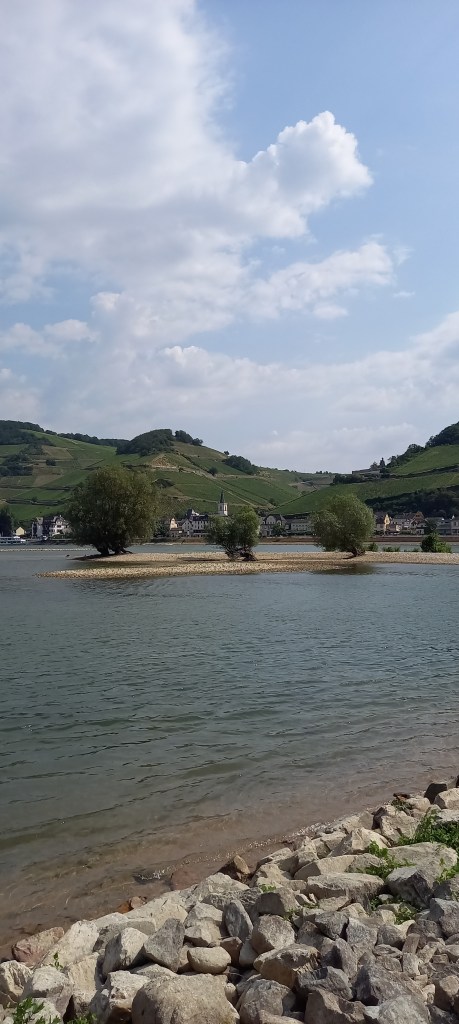
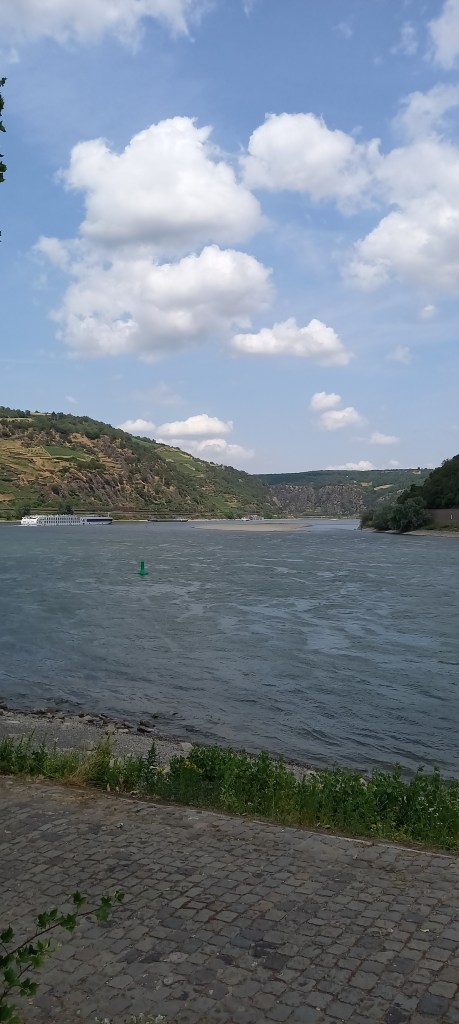
Today the entire Upper Middle Rhine Valley is designated a Unesco World Heritage Site, meeting the criteria for such on many levels. The gorges rise steeply on both river banks, protected now by strict building and developing codes, allowing the sheer beauty of the area to remain. It is not hard to step back in time.
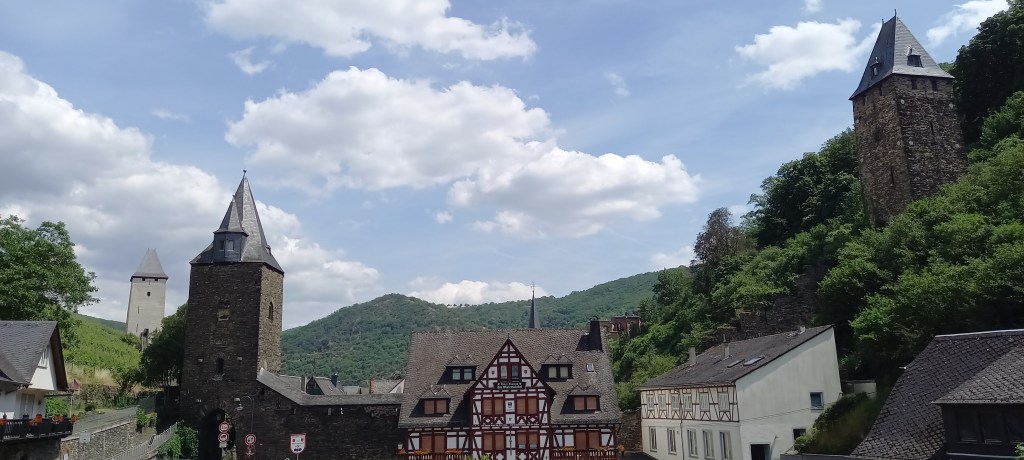
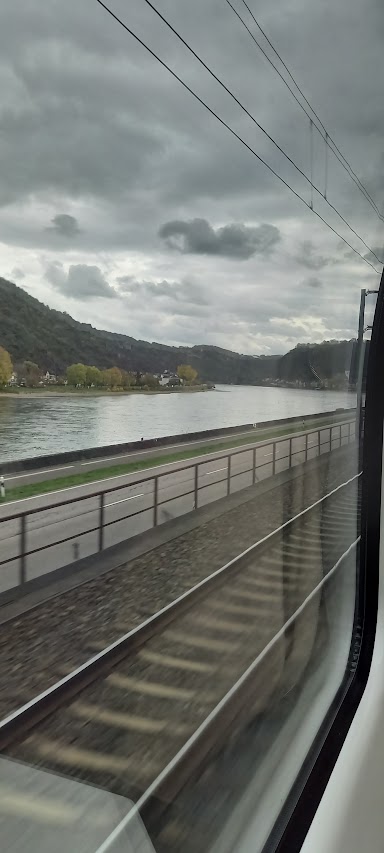
This romantic river valley, with precipitous cliffs, steep vineyards, typical villages, and hilltop castles is best explored by bike and boat, land and river!
Highlights
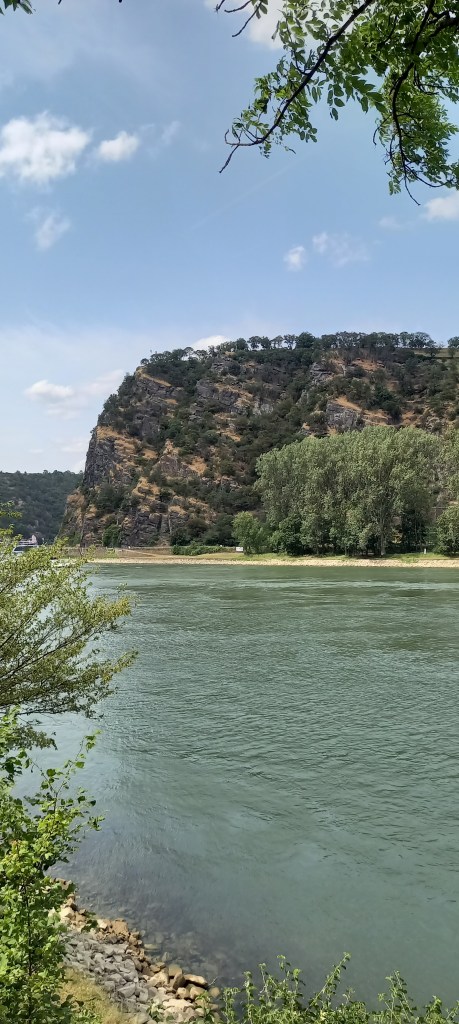
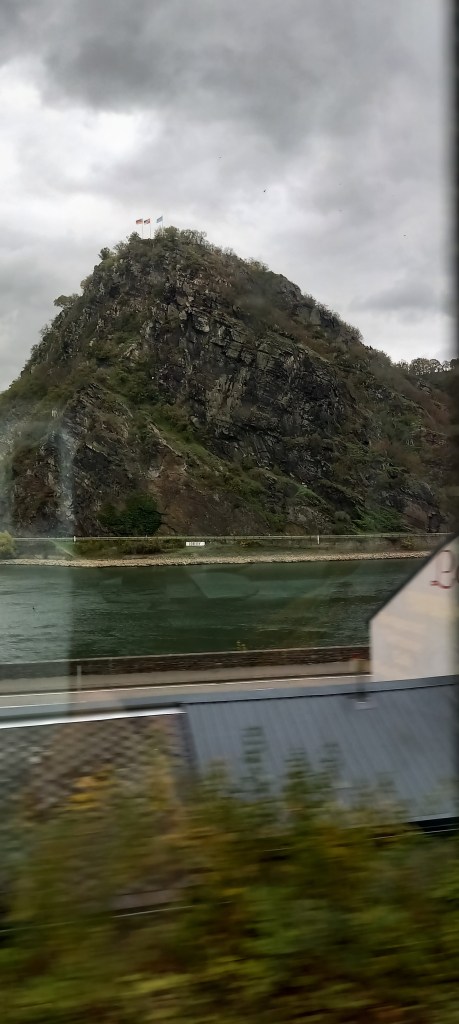
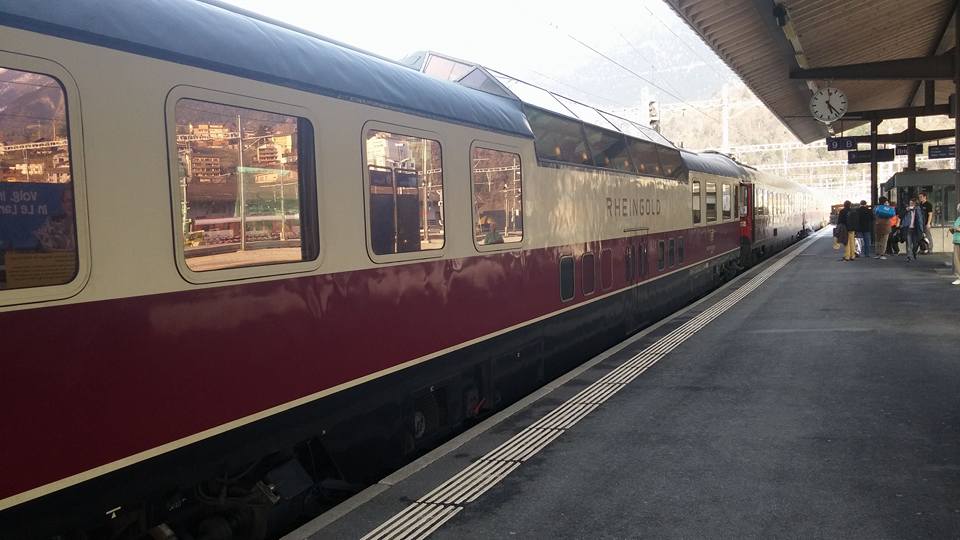
Rheingold and Loreley Rock
Bacharach, Andernach, Rüdesheim near St. Goarshausen
South BridgeChurch of St. StephanMainzSouth Bridge with Main to Rhine with ICE 3 on the bridge!
Rüdesheim
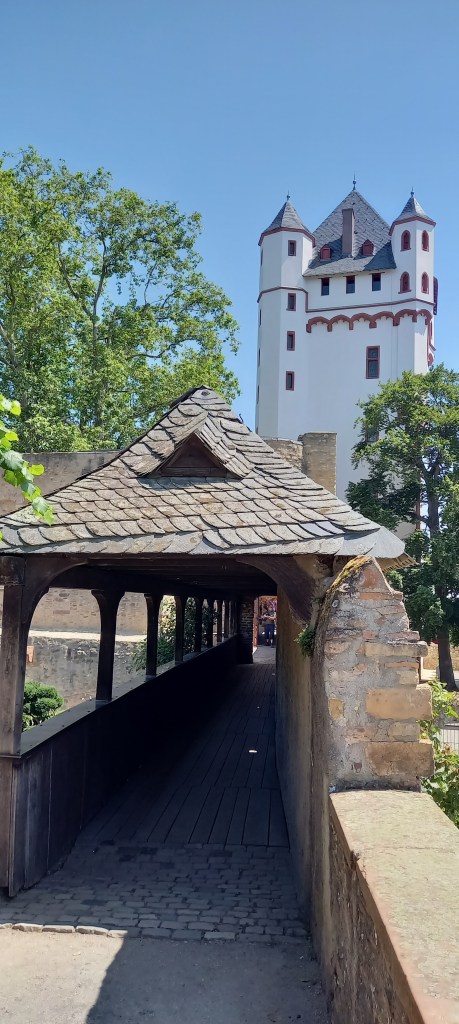
RüdesheimBurg EltvilleMainz SouthbridgeRüdesheim / GermaniaOn the road to Rüdesheim
Sankt Goarshausen
Sankt Goarshausen is a town located in the Rhein-Lahn-Kreis in Nassau on the eastern shore of the Rhine, in the section known as the Rhine Gorge, directly across the river from Sankt Goar, in the German state Rhineland-Palatinate.
Loreley RockBacharach
Koblenz
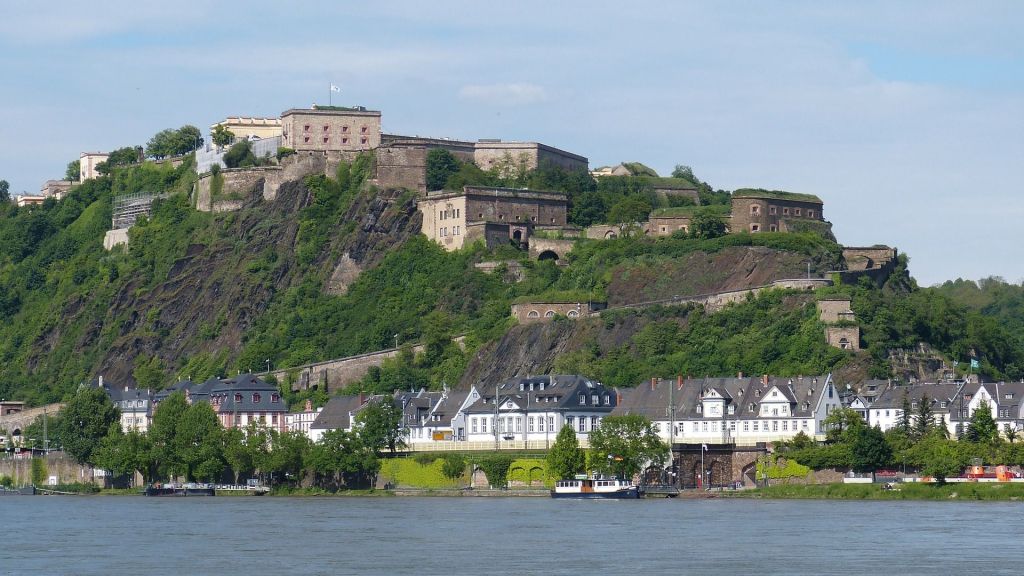
At the confluence of the Rhine and Moselle Rivers and the convergence of three low mountain ranges – the Hunsrück, the Eifel and the Westerwald – the Romans founded a military stronghold they named Confluences for the site’s supreme strategic value.
Koblenz-Lützel DB Museum ImpressionEhrenstein – Koblenz
Andernach
Andernach is a town in the district of Mayen-Koblenz, in Rhineland-Palatinate, Germany, of about 30,000 inhabitants. We visited the Geysir:
Andernach Geyser ( German: Geysir Andernach, previously Namedyer Sprudel) is the highest cold-water geyser in the world, reaching heights of 30 to 60 metres. [1] The geyser was first bored in 1903 on the Namedy Peninsula ( Namedyer Werth) in the Rhine near Andernach.
Bonn
The federal city of Bonn is a city on the banks of the Rhine located in the German state of North Rhine-Westphalia, with a population of over 300,000.
Bonn Environment
Köln
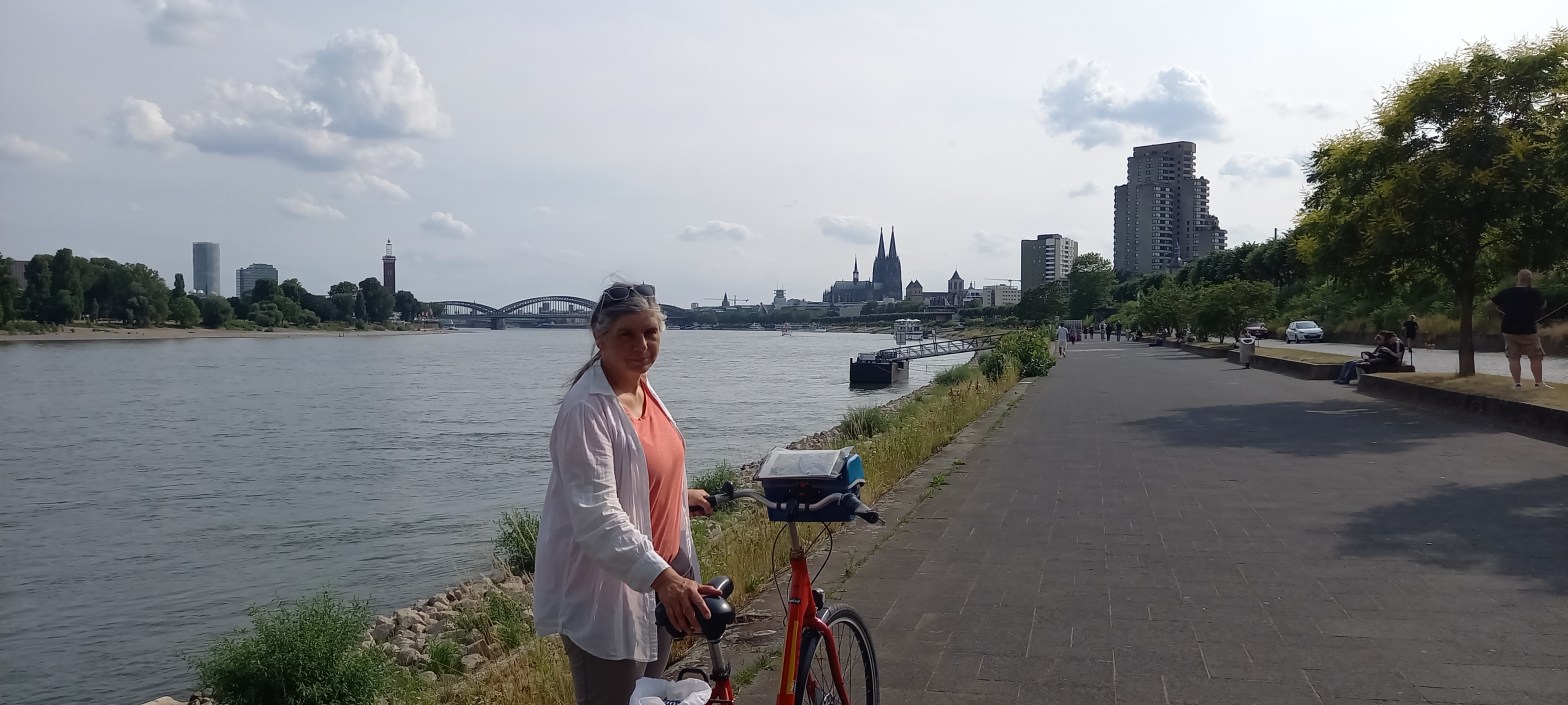
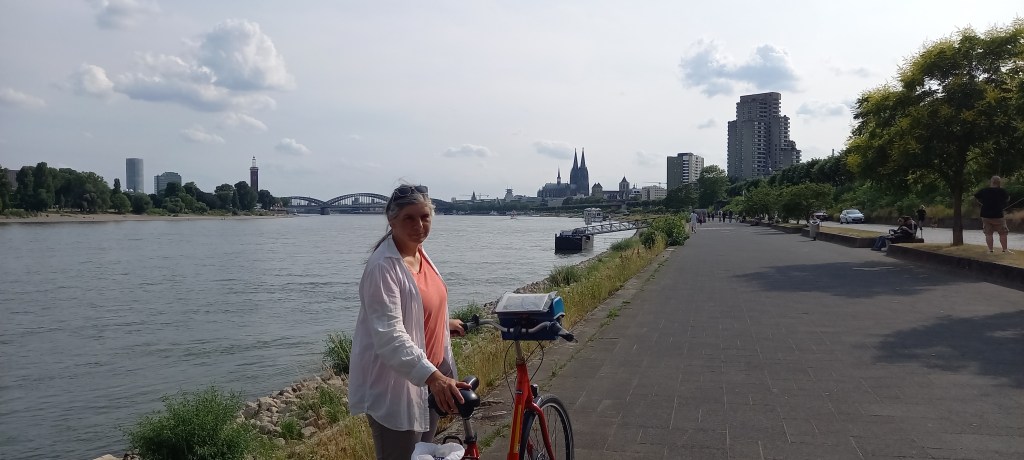
Cologne is the largest city of the German western state of North Rhine-Westphalia and the fourth-most populous city of Germany with 1.1 million inhabitants in the city proper and 3.6 million people in the urban region. Wikipedia
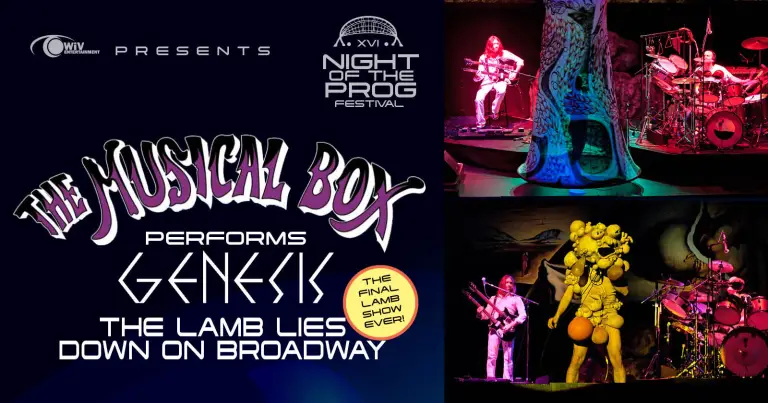
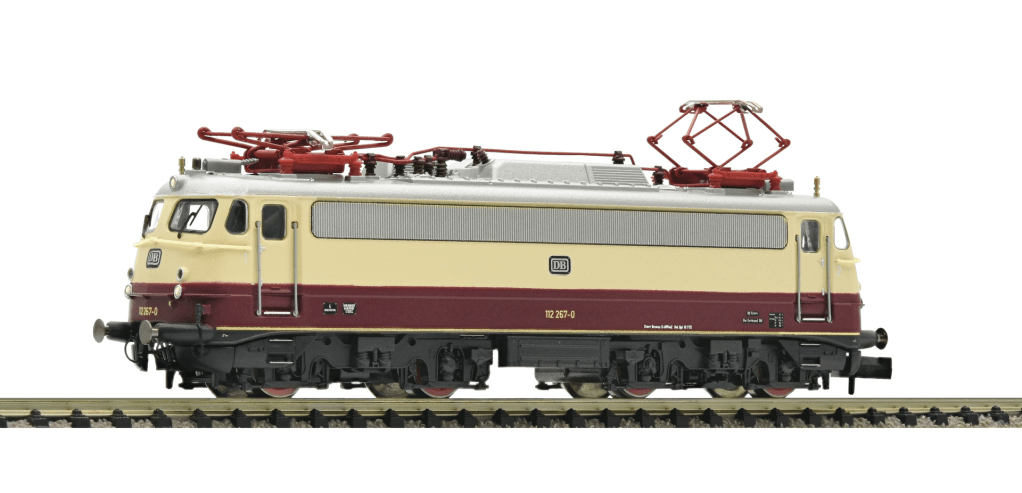
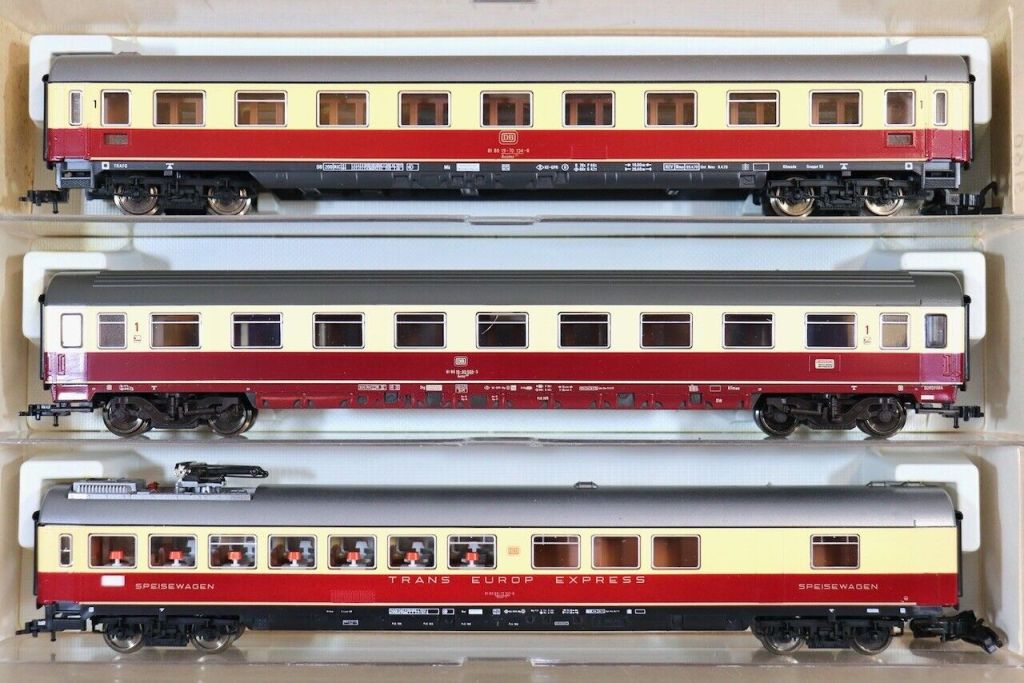
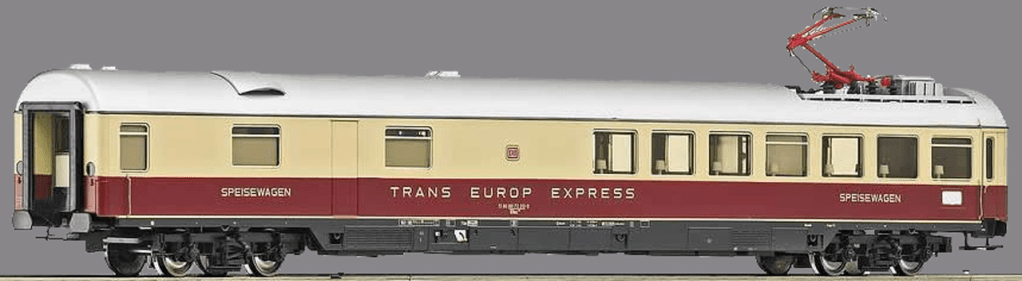
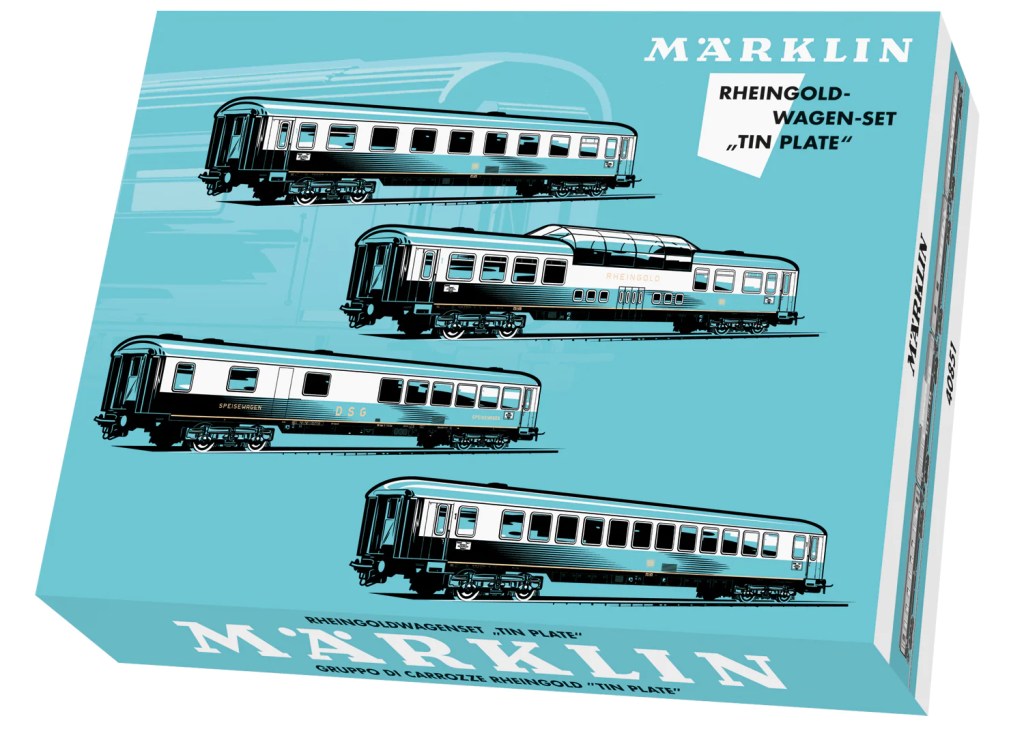
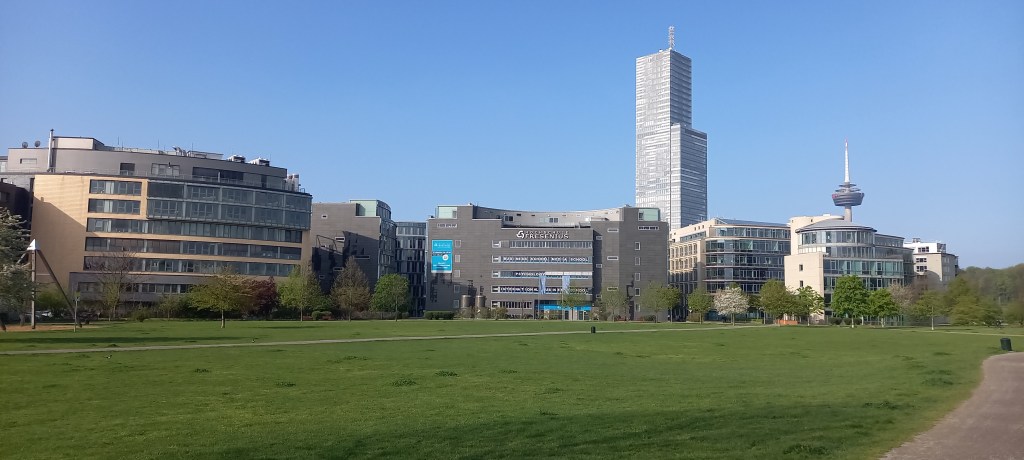
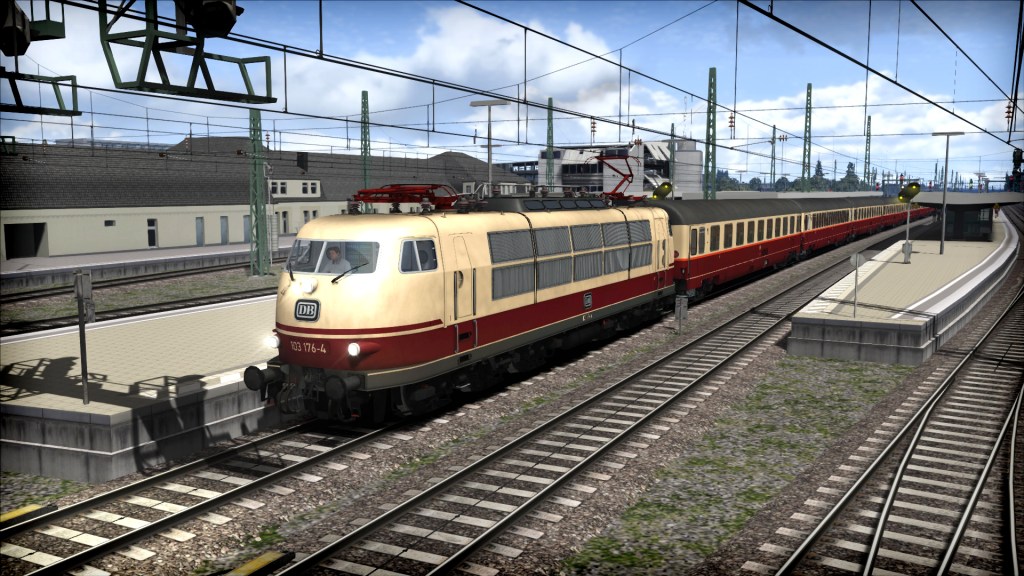
Main StationNear Full MoonKyoto ParkLudwig MuseumRheinauRheinlocationCologneMedia ParkMedia Park with SaturnDomCologne behind the SceneProg Festival Rockpalast 2023Genesis Cover BandFleischmann BR 112 TEE 22/23 „Van Beethoven“Fleischmann 5160-62 TEERoco WRmz132 TEE Ep. IV Nr. 45811, Foto RocoRheingoldwagen-Set “Tin Plate” MHI, Märklin H0 40851
Rock of Ages 2023
kurz vor dem Startschuss zum 15. ROCK OF AGES Sommer Open Air in Seebronn erreichte uns eine etwas traurige Nachricht: THE SWEET mußten aus gesundheiltichen Gründen absagen. Andy Scott und ein weiteres Bandmitglied sind an Covid erkrankt und Andy mußte sich sogar kurzfristig ins Krankenhaus begeben. Wir wünschen den beiden an dieser Stelle von unserer Seite erst einmal gute Besserung – und wir warten dann eben ein weiteres Jahr auf ein Wiedersehen… Ärgerlich.
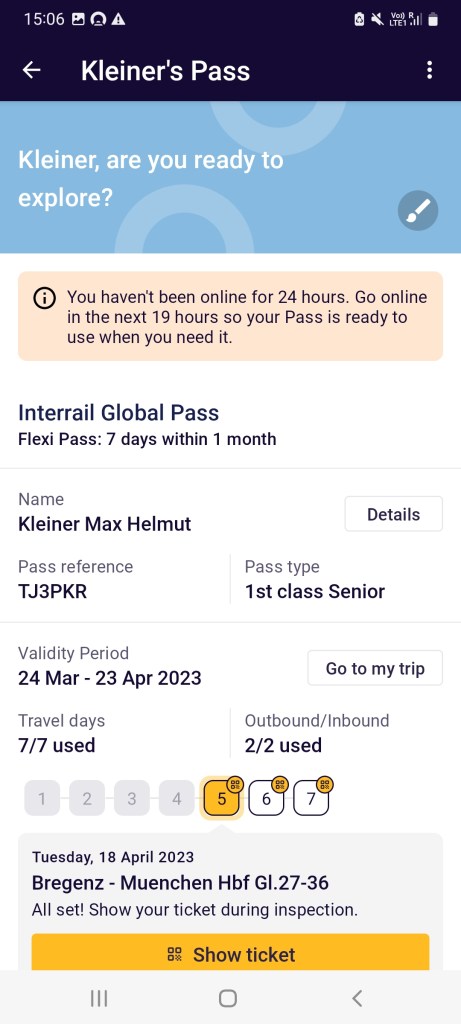
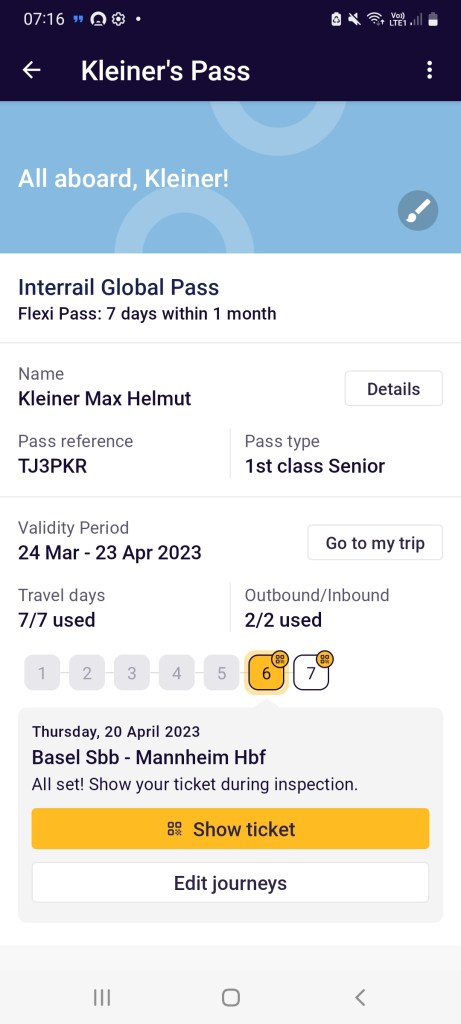
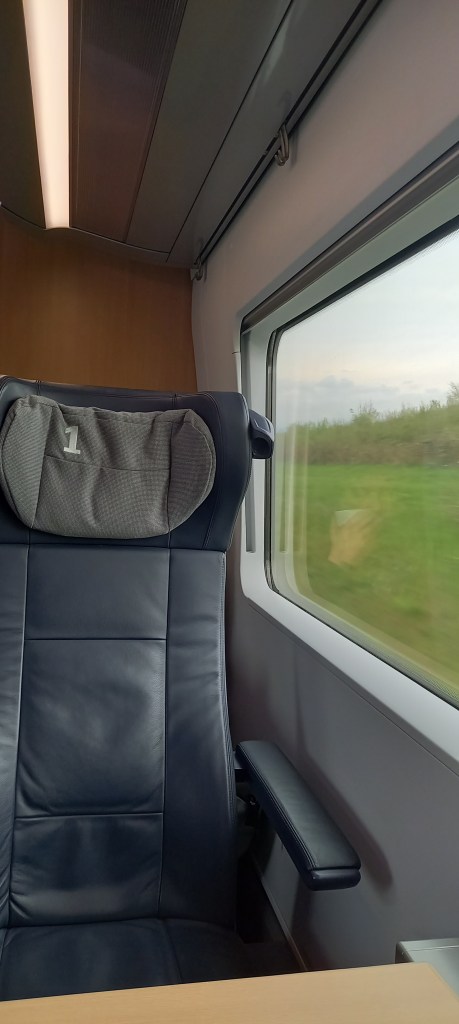
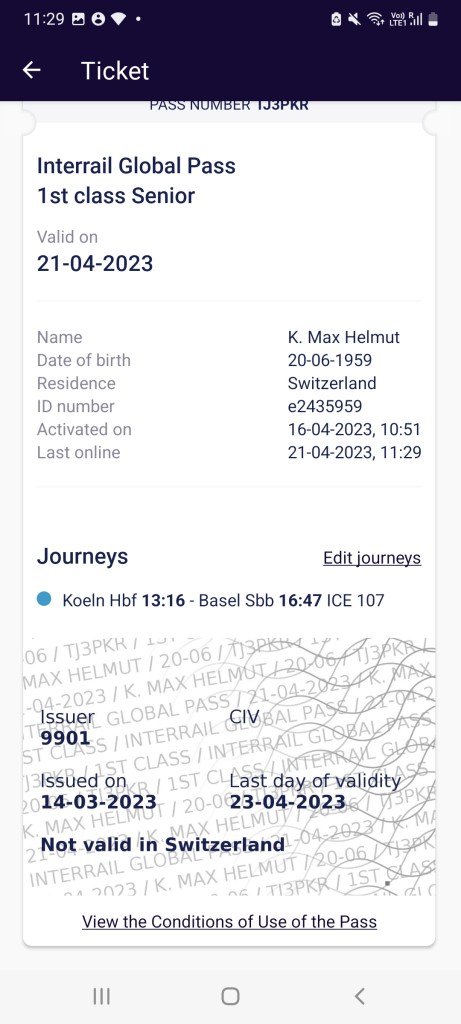
When you travel Europe by train, you’ll discover that it’s a fascinating continent. It offers many different cultures, wonderful scenery, and world-renowned cities like the previously known Trans Europ Express TEE. All of this is well-connected by rail 7 days in one month with a digital global pass. Here’s my experience in four countries:
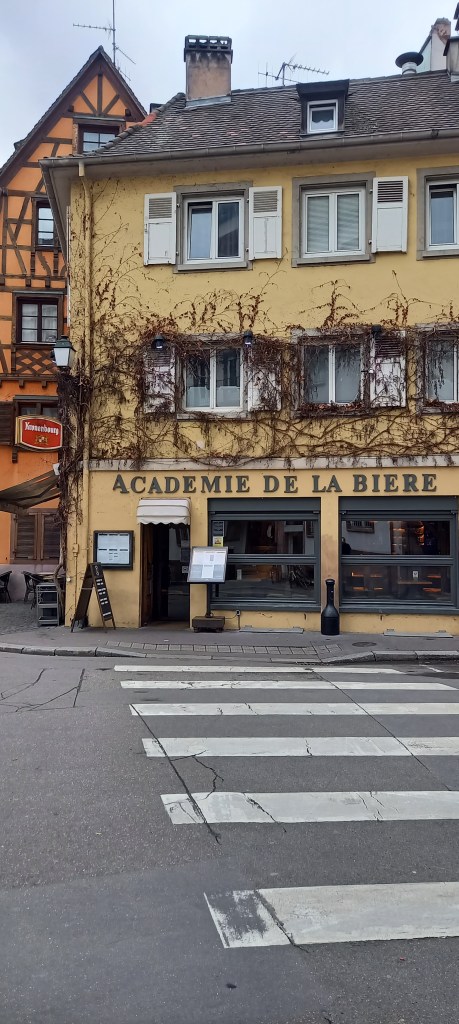
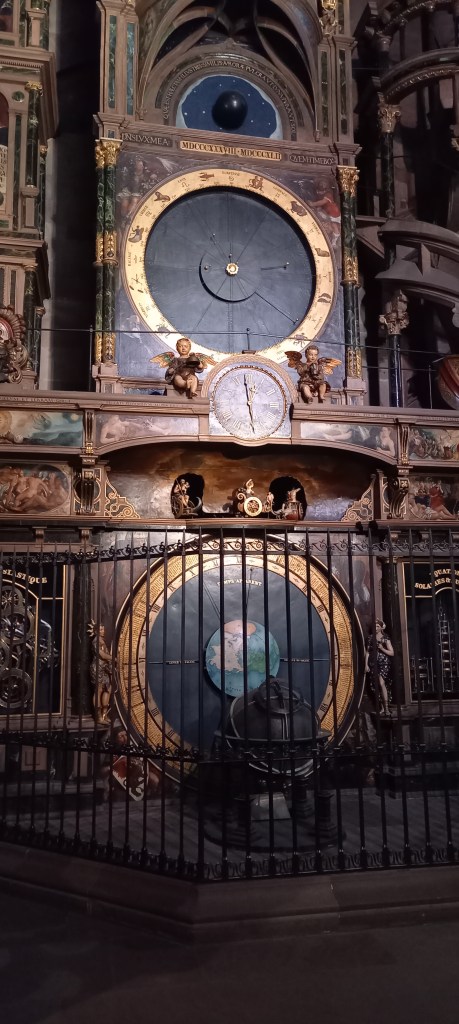
First Day Strasbourg
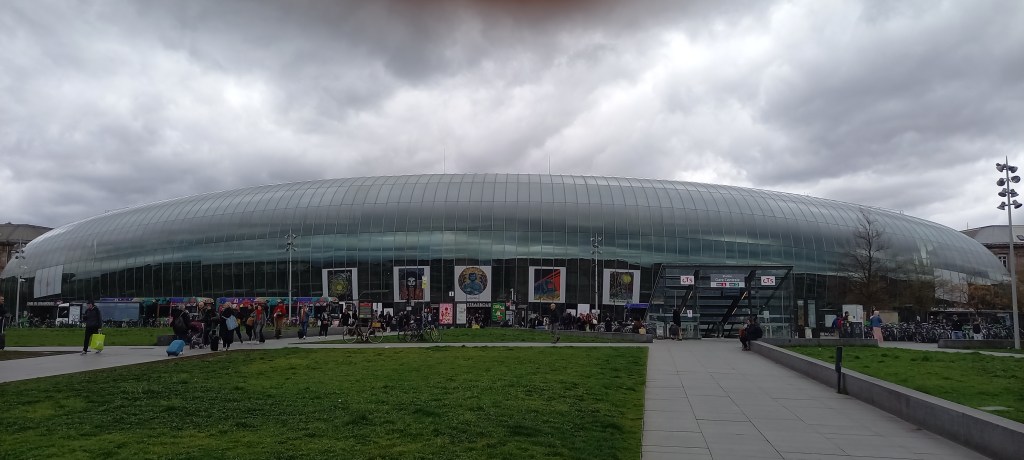
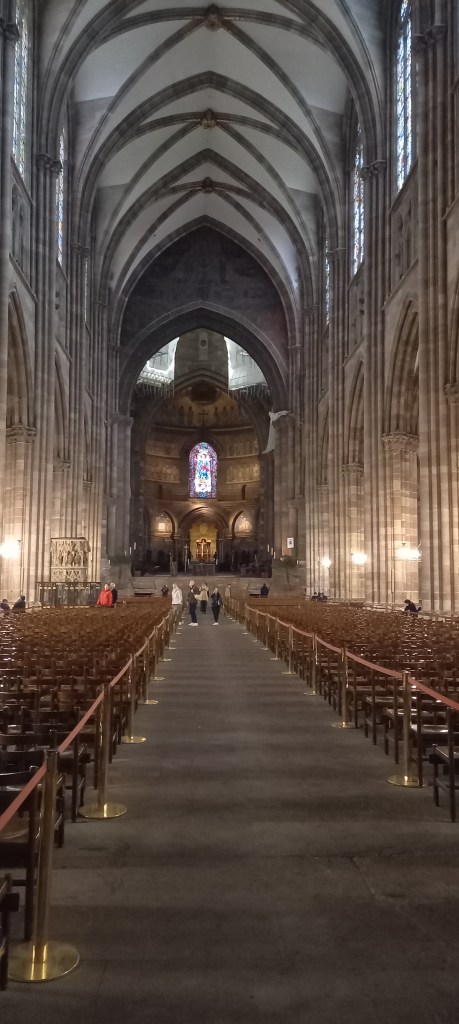
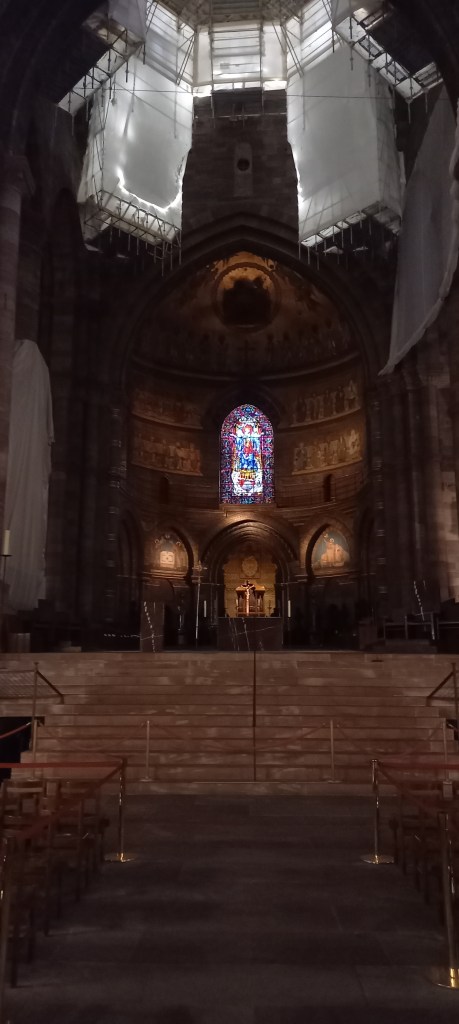
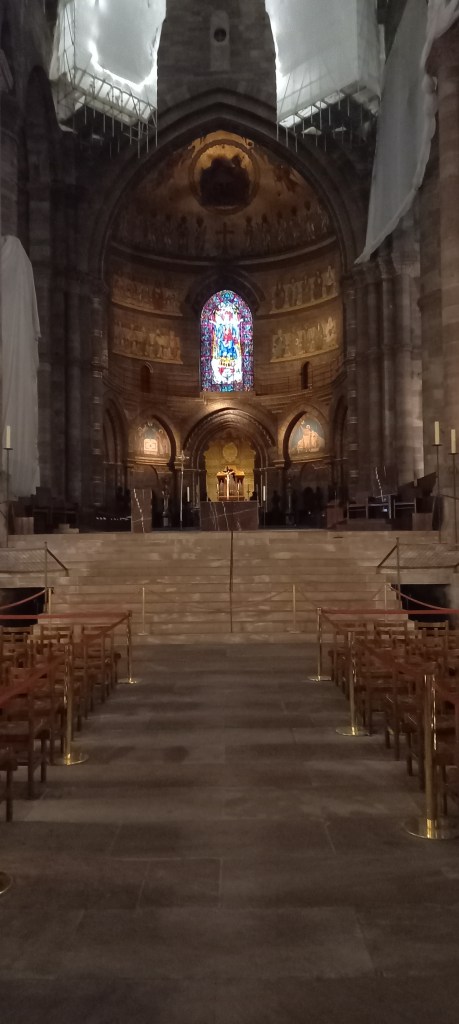
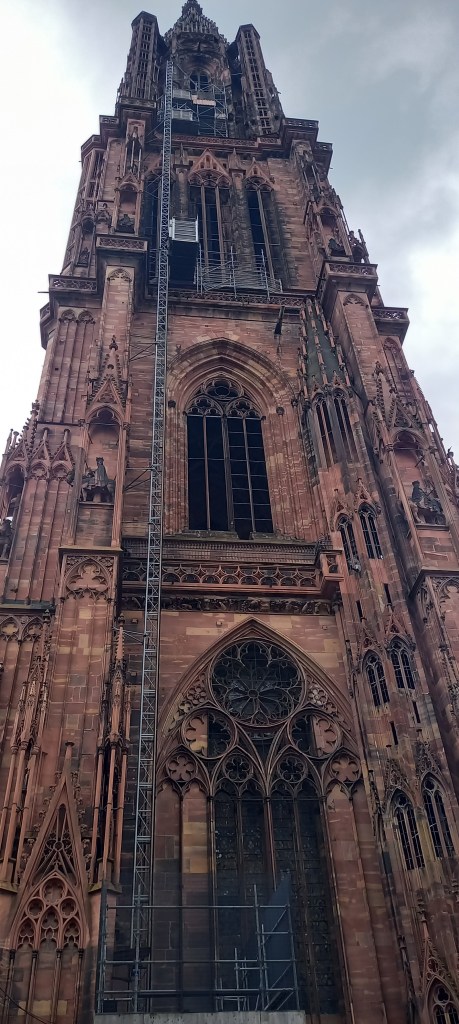
Strasbourg Railway Station March 2023Cathedral Notre DameTime behaves like SpaceStrasbourg March 2023
Find out where you can go and why exploring Europe by train with Eurail is the most flexible and unforgettable experience!
Kali Linux Pacman on Train
Second Day Innsbruck
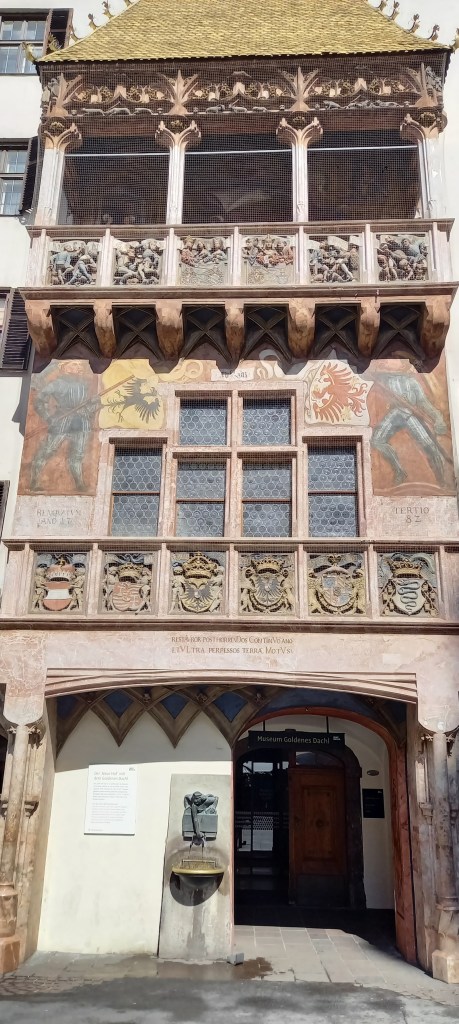
Innsbruck is the capital of Tyrol and the fifth-largest city in Austria. On the River Inn, at its junction with the Wipp Valley, which provides access to the Brenner Pass 30 km to the south, it had a population of 132,493 in 2018.
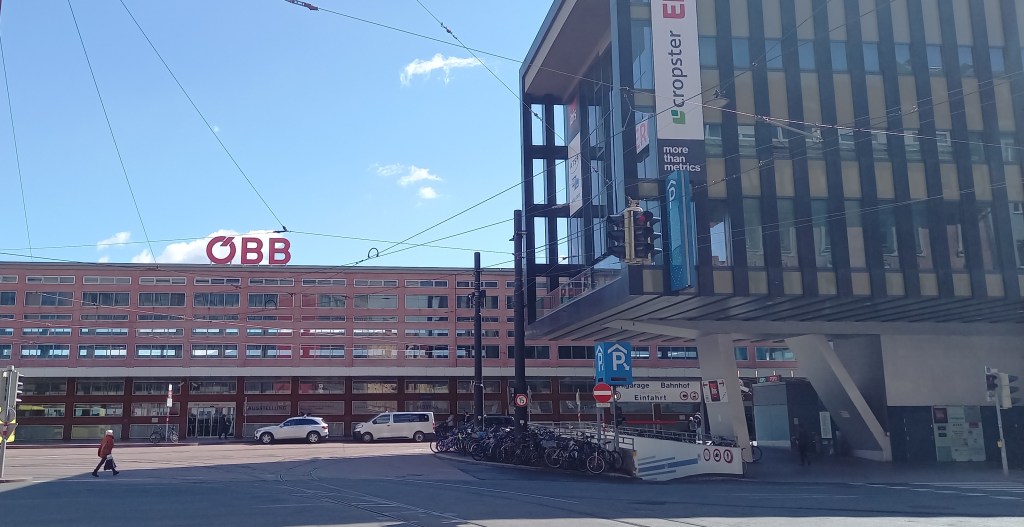
Innsbruck Central Station
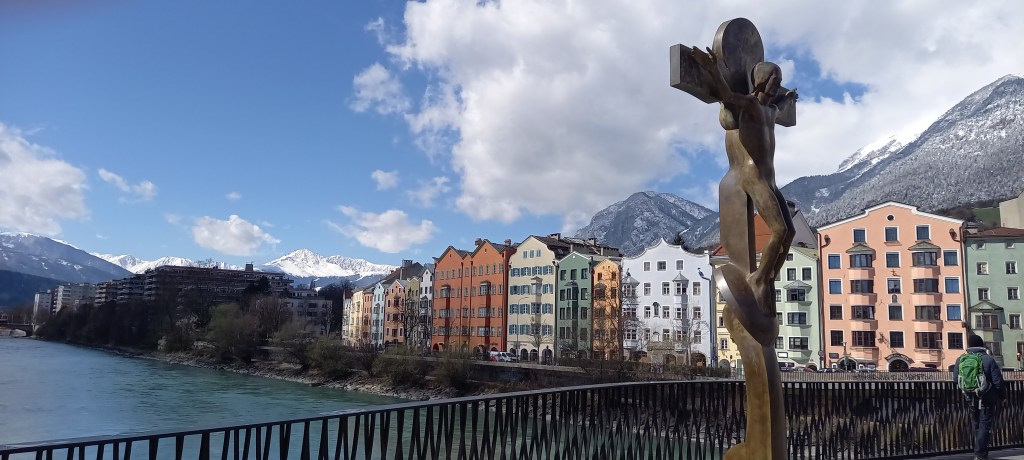
There are 12 bridges that connect Innsbruck’s 20 districts, but the most important and well-known this one called, Innbrücke which also appears on the city’s coat of arms.
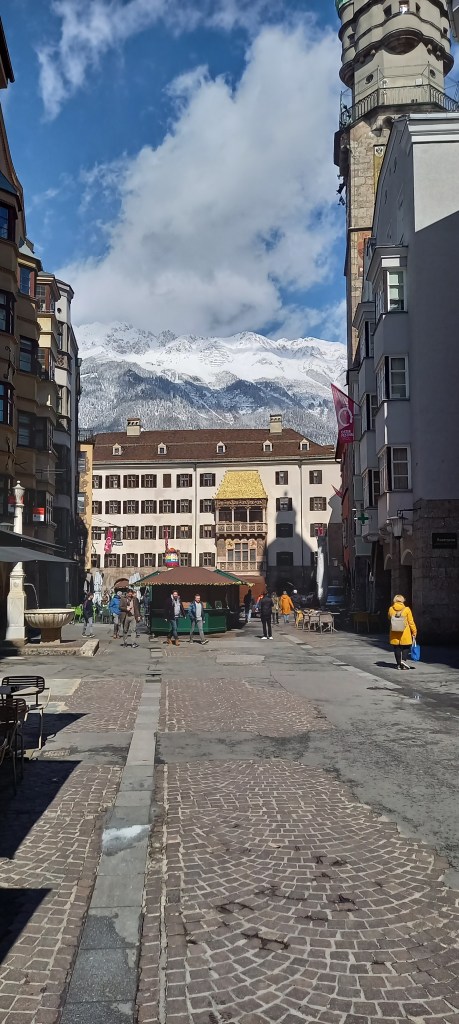
InnbrückeOttoburg, Church, Goldenes Dachl
Wondering what Innsbruck means? Well, it comes from two German words. Inn, means ‘a river’, and brücke, is ‘a bridge’. So, Innsbruck literally means “bridge over the (River) Inn”.
It was a fresh snow ride because it had snowed half a meter the night before!
Another reason to visit the Innbrücke is for the wonderful views and endless photo potential with the row of colorful buildings lining the river set directly below the towering mountains.
Third Day Munich
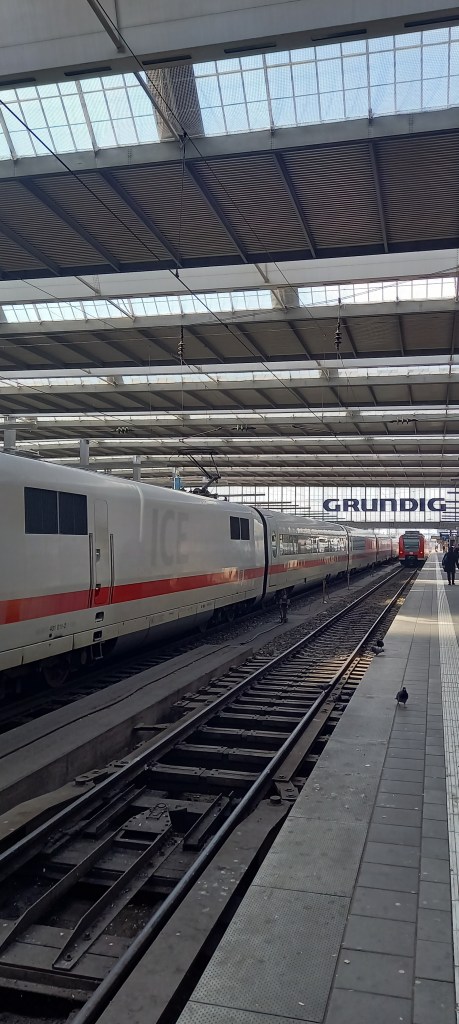
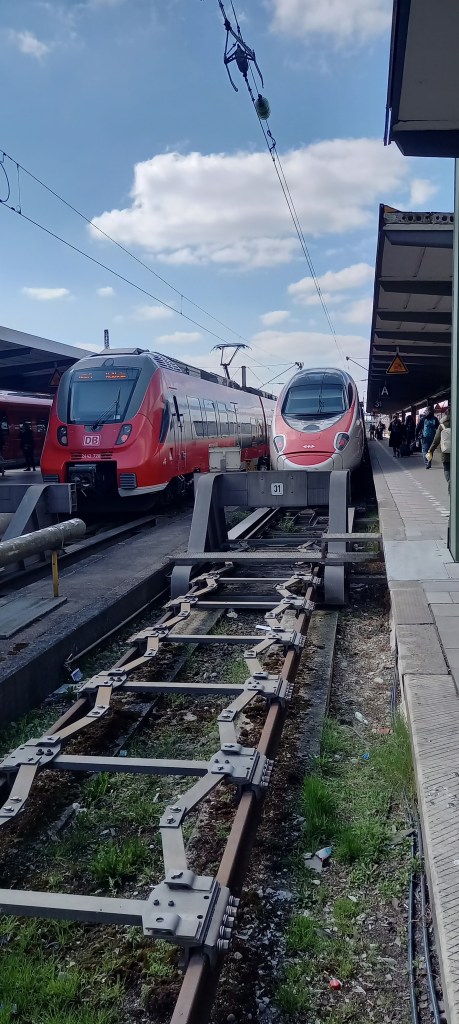
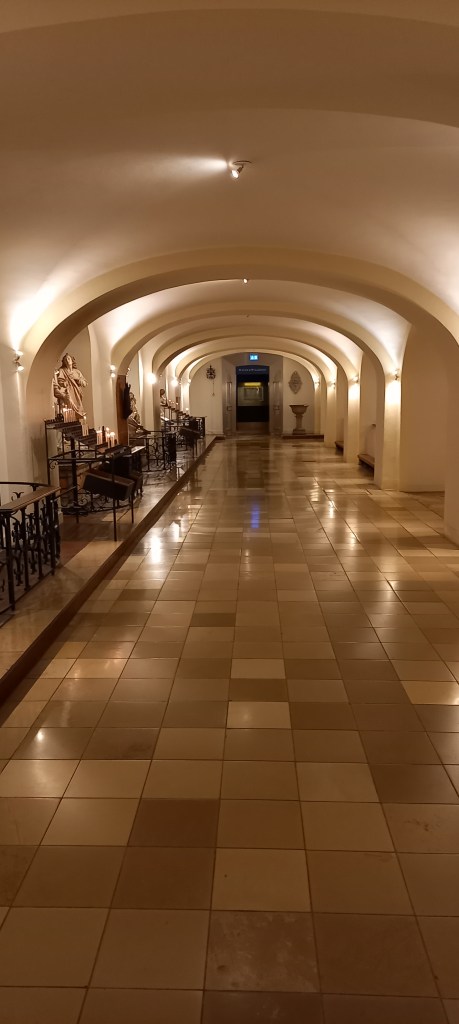
Munich Central Stationfrom Memmingen to Munich which has no old Central-station anymore!Maria
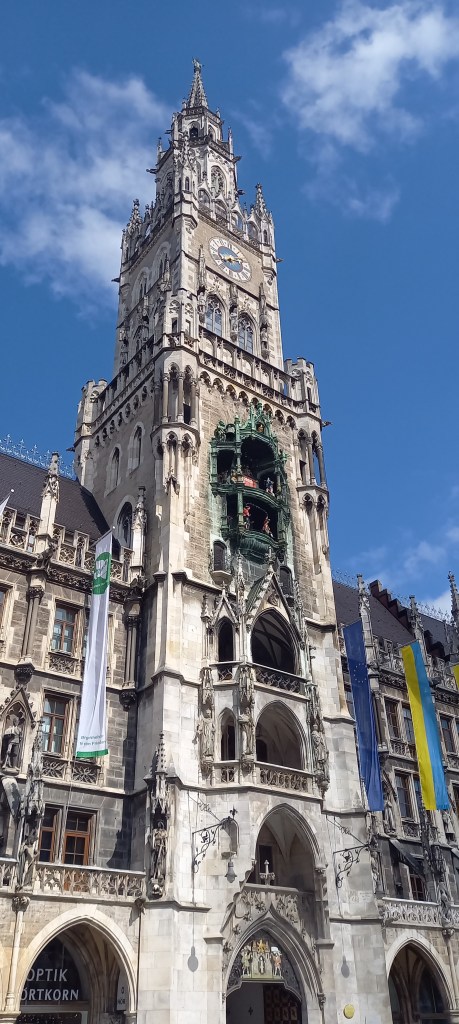
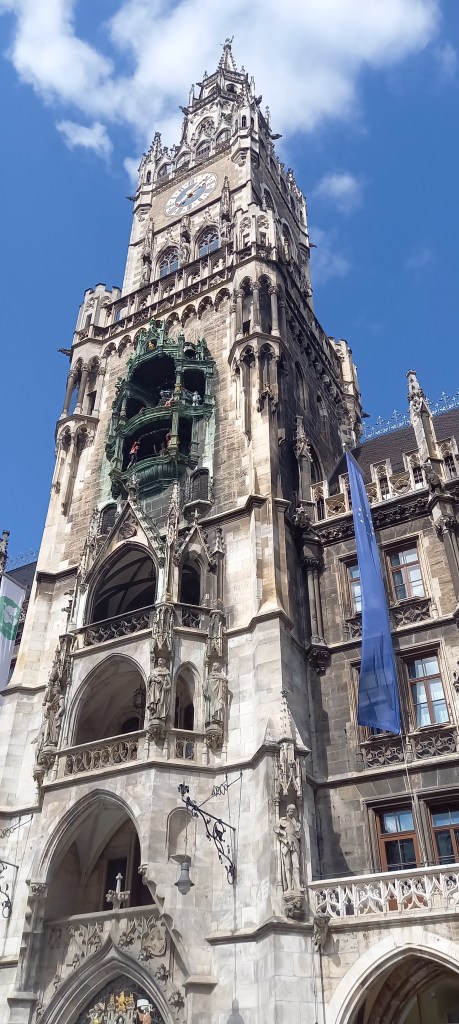
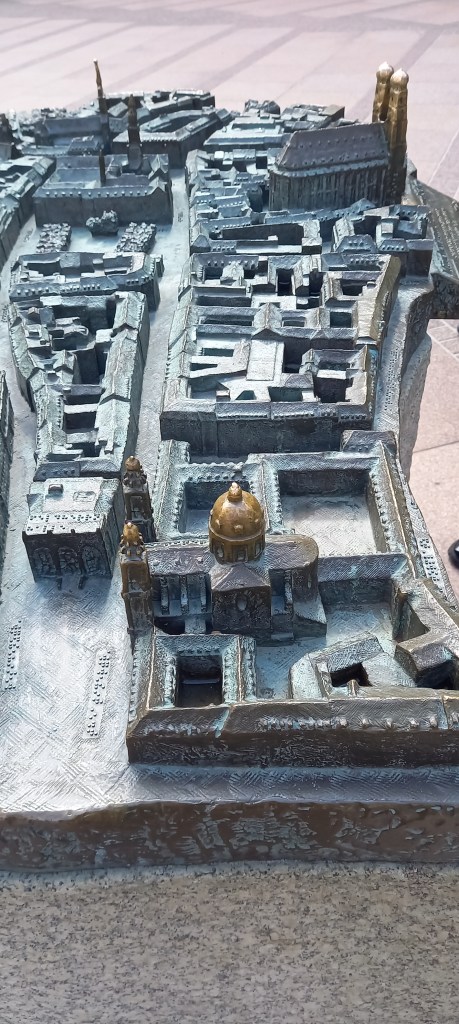
Munich’s Marienplatz with the New City Hall is the world-famous center of the Bavarian capital. The magnificent New City Hall on the north side dominates the square-shaped plaza In the tower of the city hall is a viewing platform, below which the historic carillon (glockenspiel) sounds twice a day.
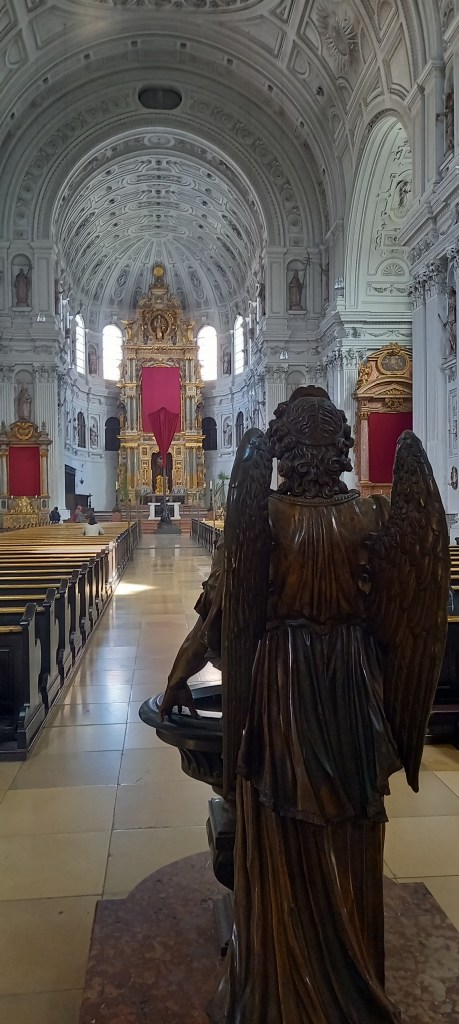
St. Michael, answer 6 of ChatGPT:: Yes, the Church of St. Michael in Munich has a large bronze angel statue in front of it.Pass away Munich
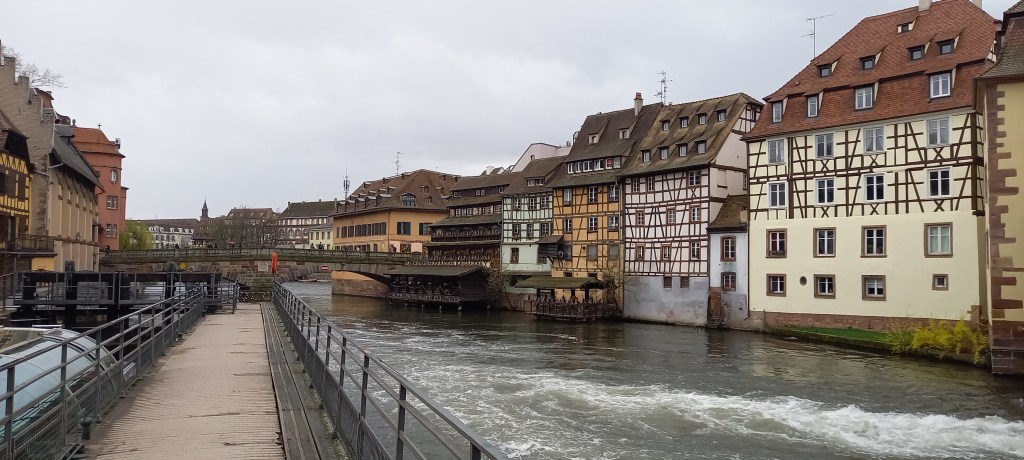
Forth Day Strasbourg Weekend
St. ThomasPlace des Tripiers avec TonneauStrasbourg II at Eastern Weekend April 2023stairway to heavenat Voco
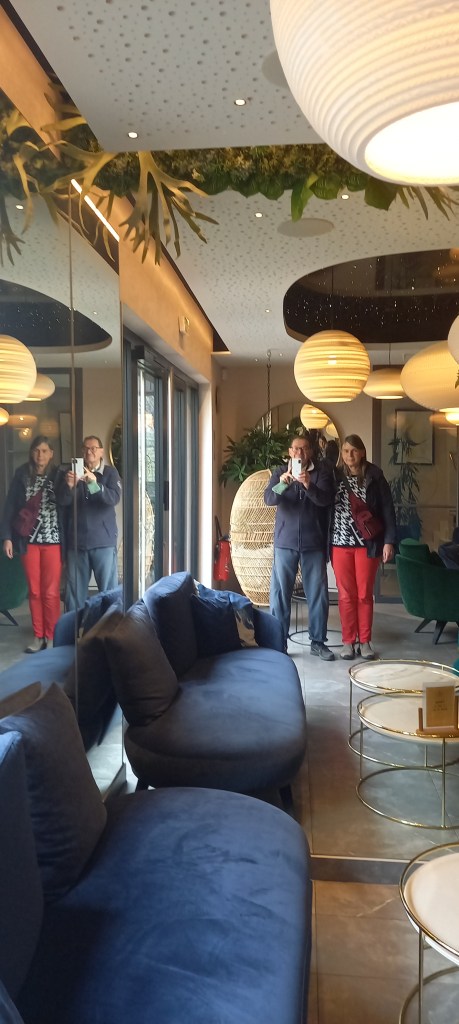
At voco® Strasbourg Centre – The Garden, you’ll find contemporary style, an eco-friendly ethos, and a prestigious location in the near heart of the city 10. min. from Rail-station (be aware of the slippery shower).
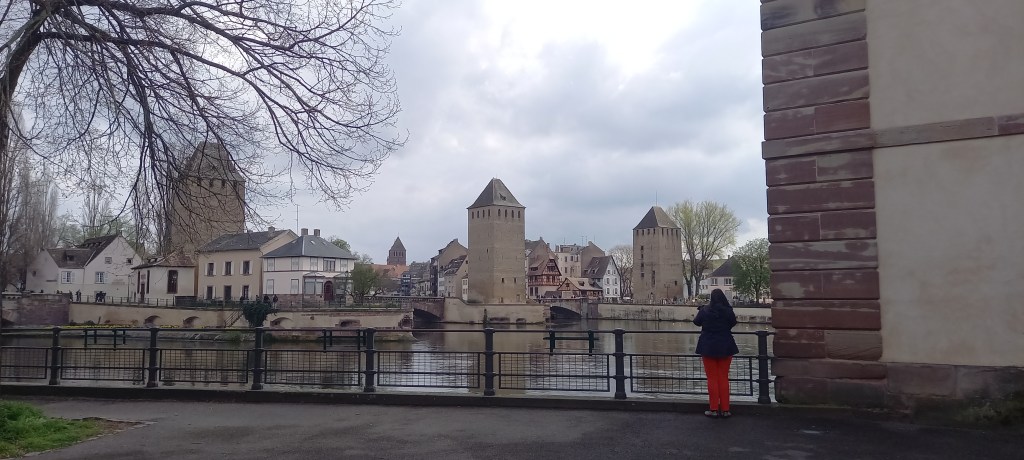
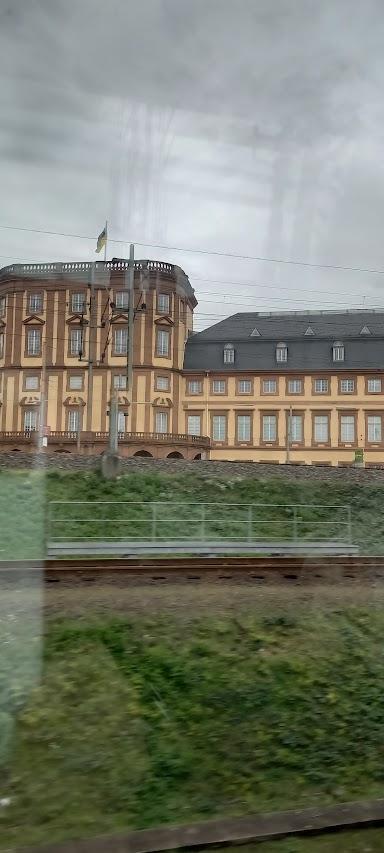
View on Petite France
Fifth Day Mannheim
Mannheim (German pronunciation: ; Palatine German: Mannem or Monnem), officially the University City of Mannheim (German: Universitätsstadt Mannheim), is the second-largest city in the German state of Baden-Württemberg after the state capital of Stuttgart, and Germany’s 21st-largest city, with a 2020 population of 309,119 inhabitants.
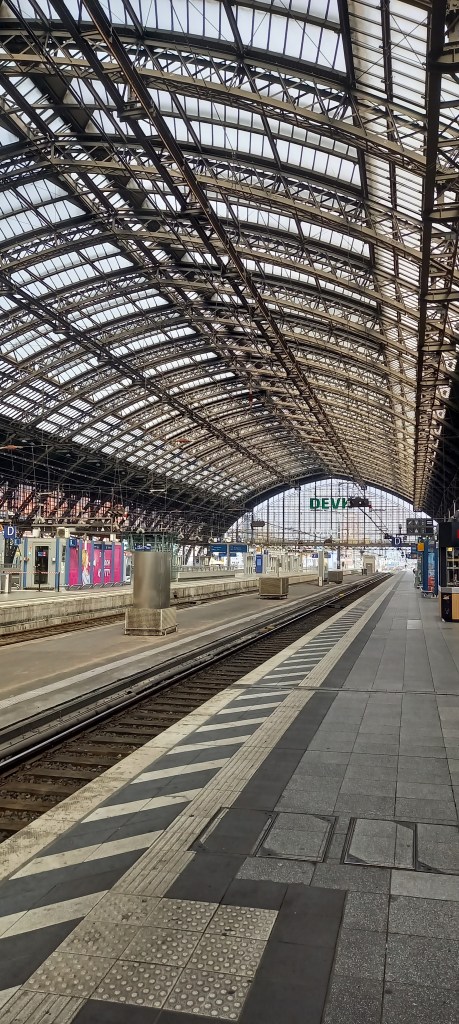
ABB and Interrail DigitalMannheim Central StationICE4 at Mannheim
Sixth Day Munich II
The train was overcrowded but interesting & ambient.
Eurail Managment
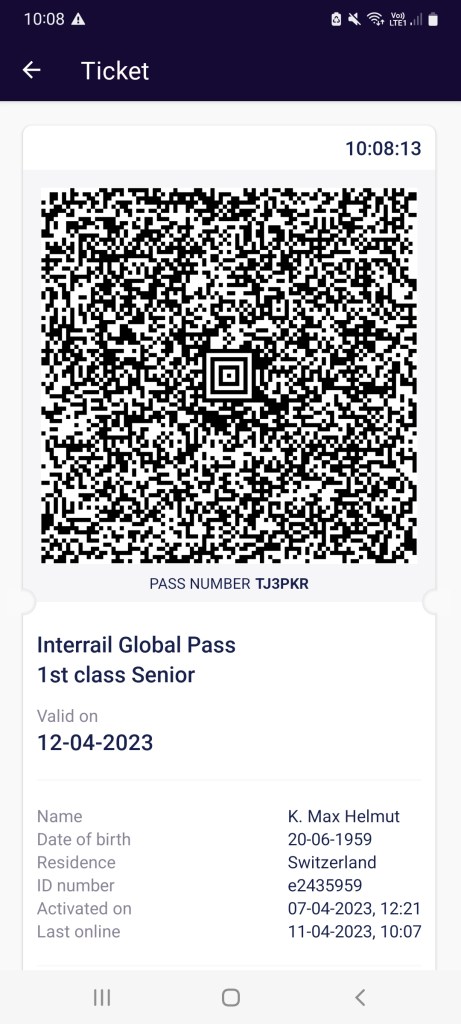
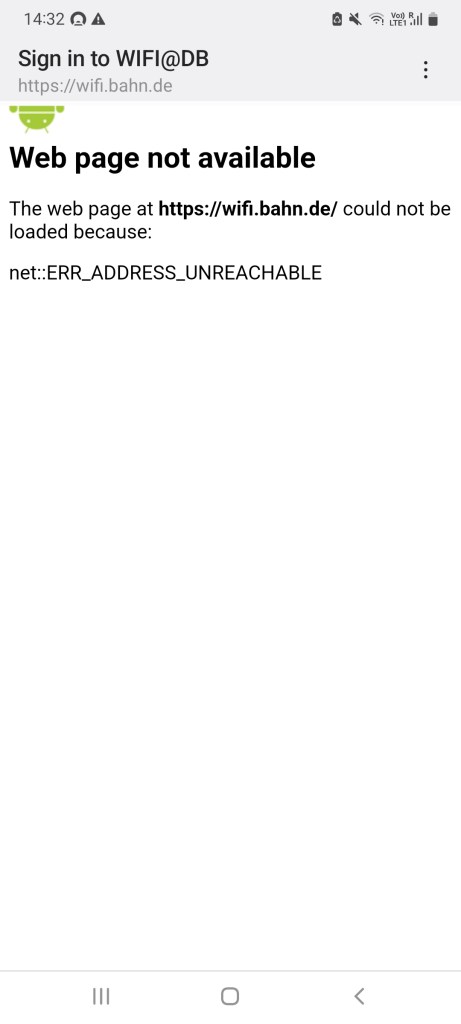
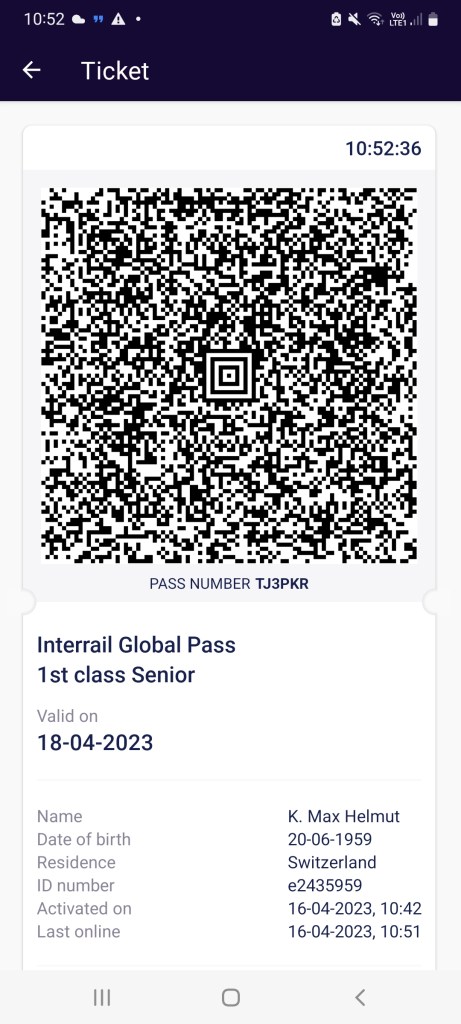
A remark about digital interrail and online connection: in my experience it is not necessary to be online on the train, it is better to take a screenshot (hardcopy) of the QR-code and then show it (the file) to the inspector. You can get a screenshot in Android by pressing volume and on/off switch at the same time. So you don’t have to rely on an online connection on the train.
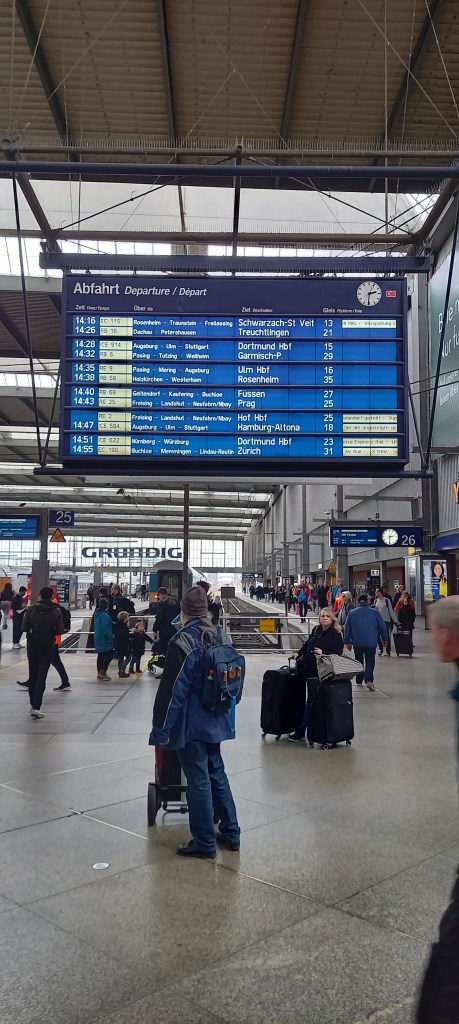
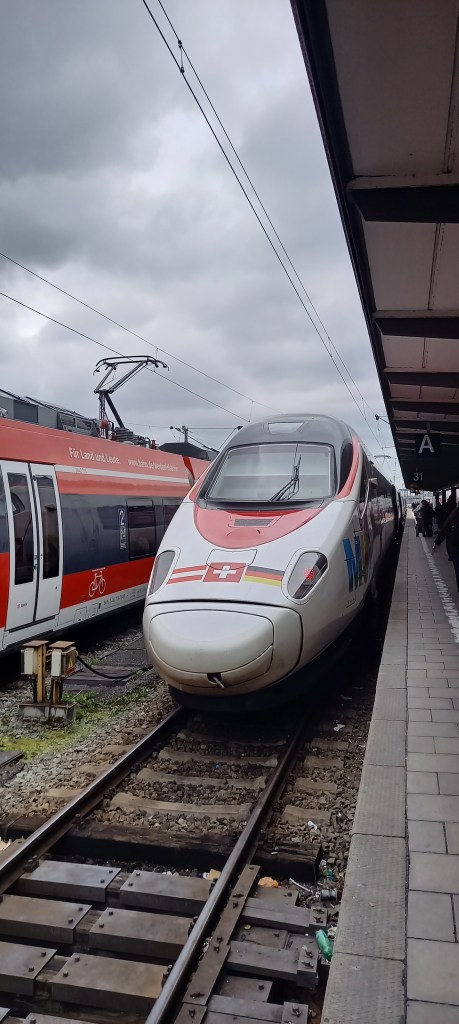
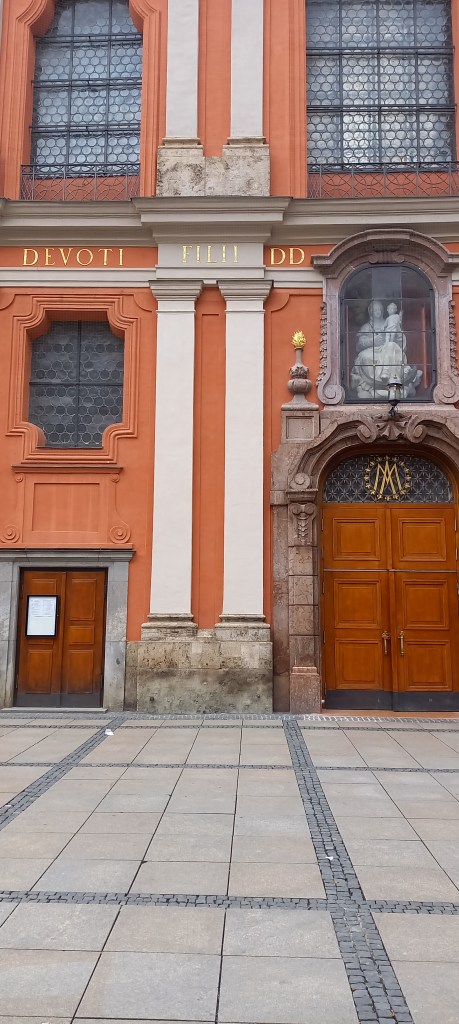
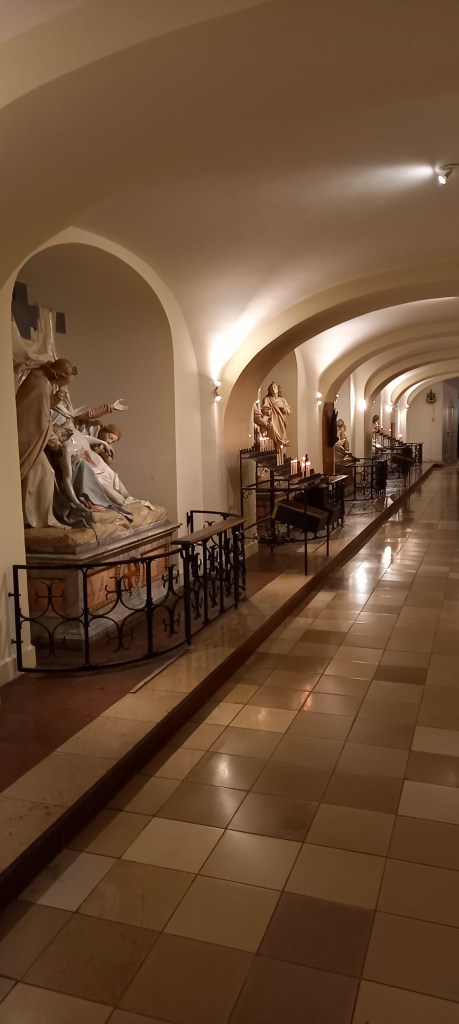
Munich with Eurocity EC 190EC 190Bürgersaalkirche München near Karlsplatz Stachus
Der Stachus, offiziell Karlsplatz, ist ein Platz im Zentrum Münchens. Er wird halbkreisförmig vom neobarocken Stachus-Rondell umgeben, das 1899–1901 nach Plänen von Gabriel von Seidl errichtet wurde. Der Stachus gehört zu den verkehrsreichsten Plätzen Europas.
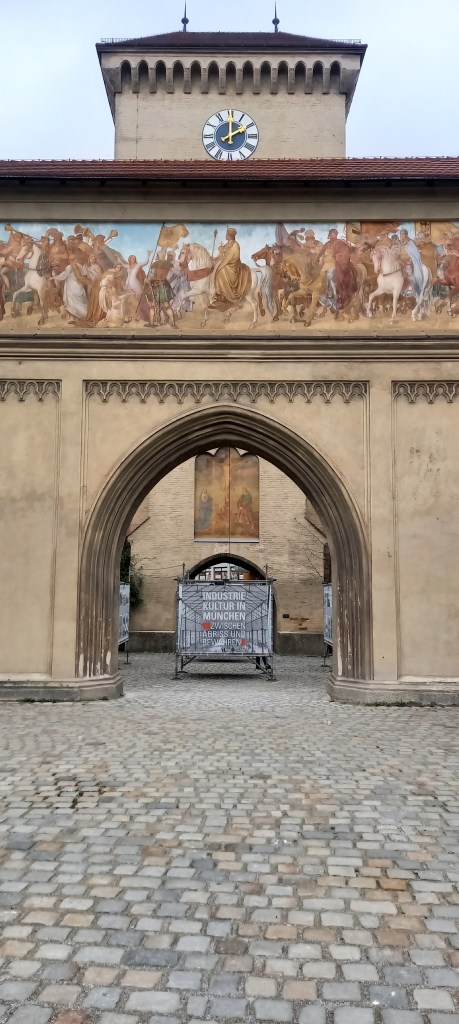
The Isartor at the Isartorplatz in Munich is one of four main gates of the medieval city wall. It served as a fortification for the defence and is the most easterly of Munich’s three remaining gothic town gates. The gate is located close to the Isar and was named after the river.
IsartorRat und Frauenkirche
Seventh Day Cologne I+II (last Days)
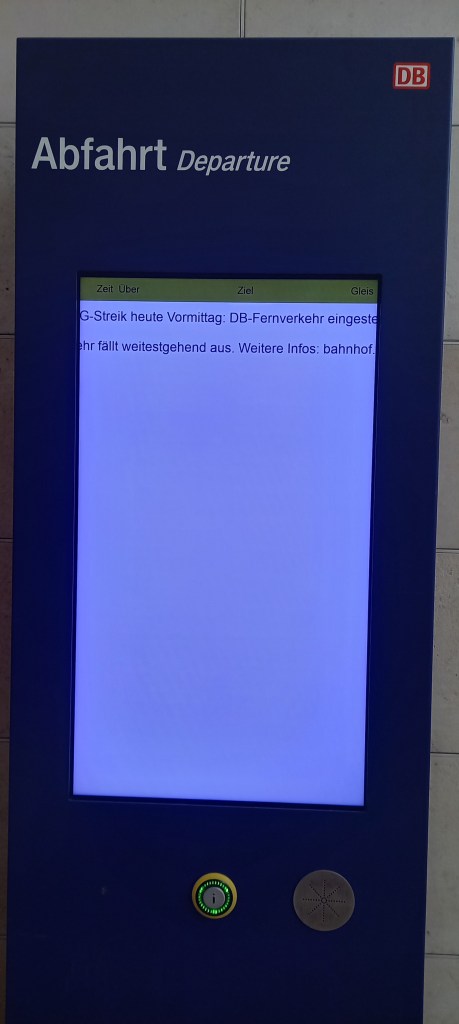
Difficult Days at Cologne due the DB strike.
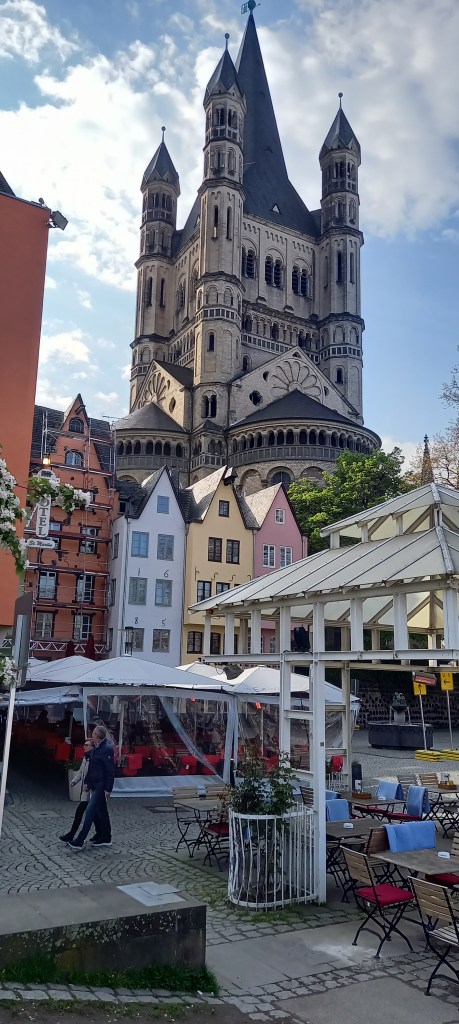
St. Martin – HohenzollernFront left sideBack right sideDOMMedia ParkSt. Ursula
The Basilica church of St. Ursula is located in Cologne, North Rhine-Westphalia, Germany. It is built upon the ancient ruins of a Roman cemetery, where the 11,000 virgins associated with the legend of Saint Ursula are said to have been buried.
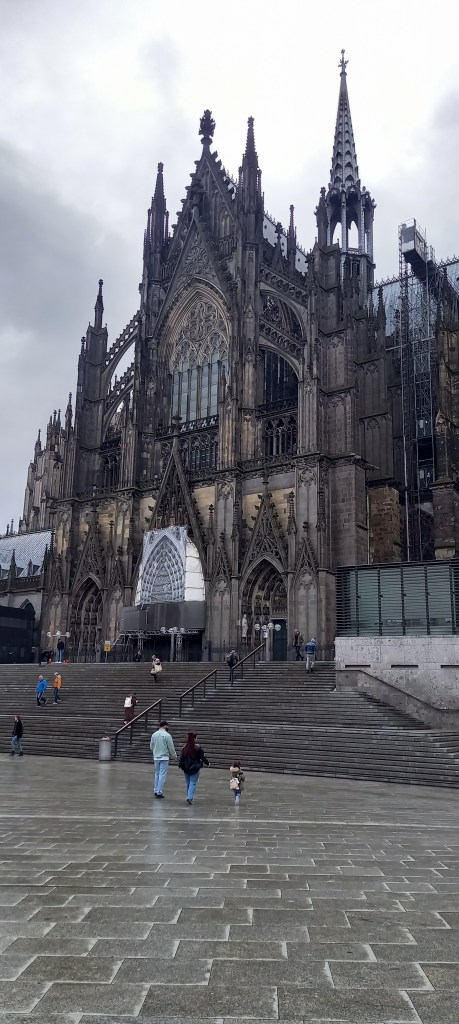
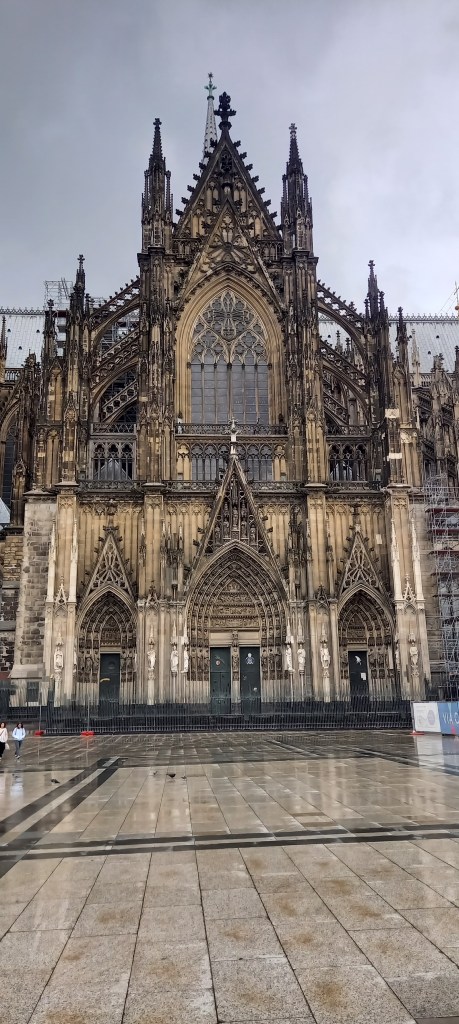
Cathedral special desertedDom
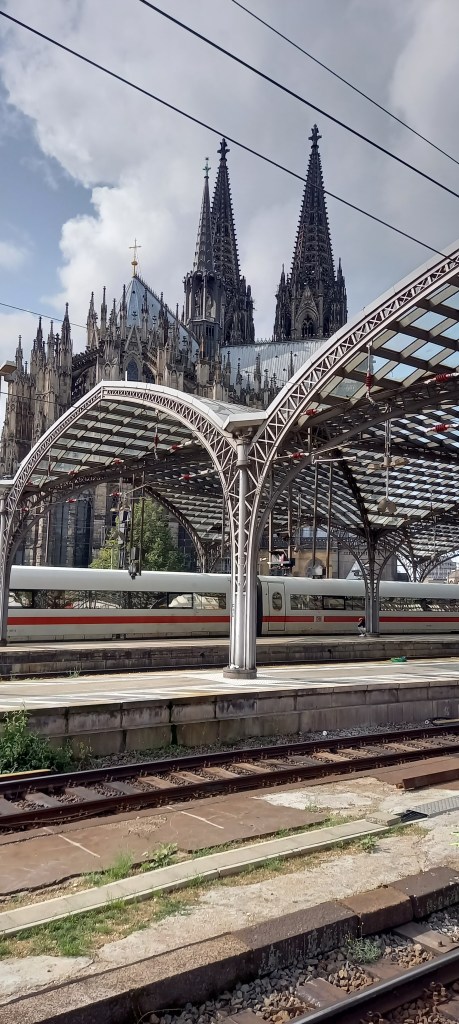
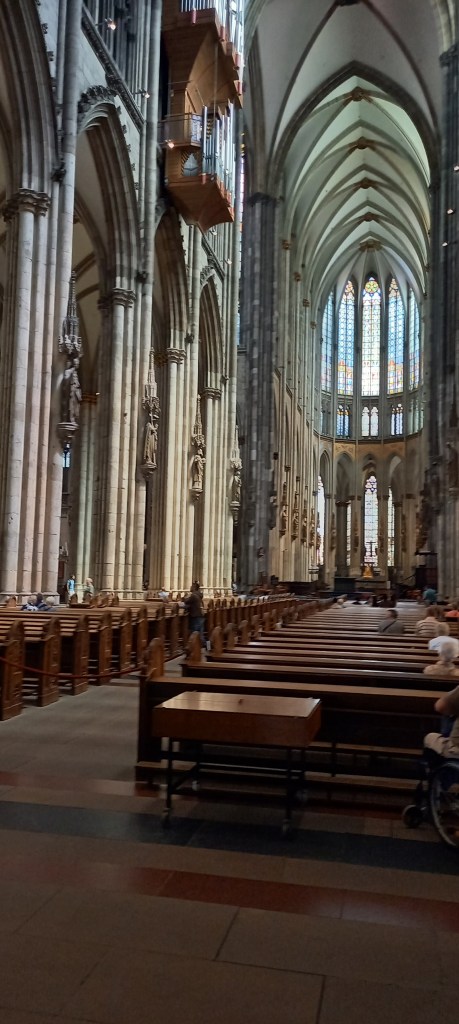
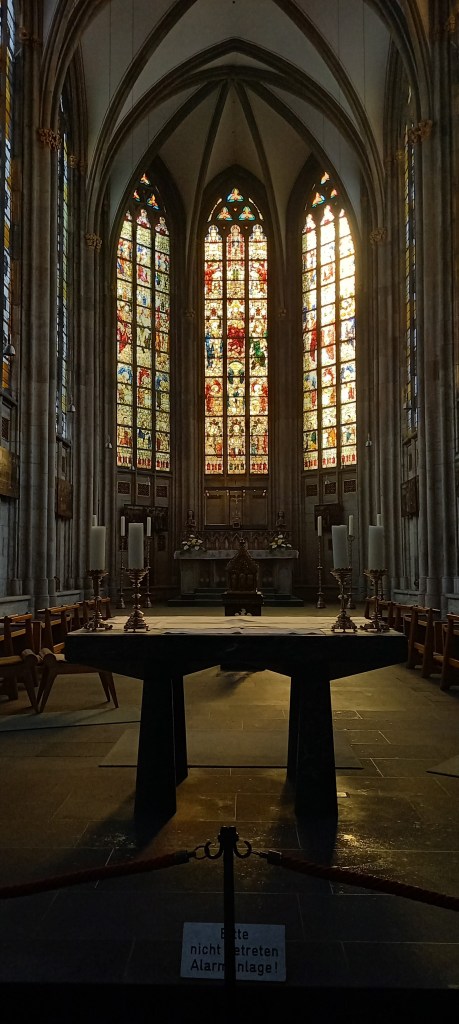
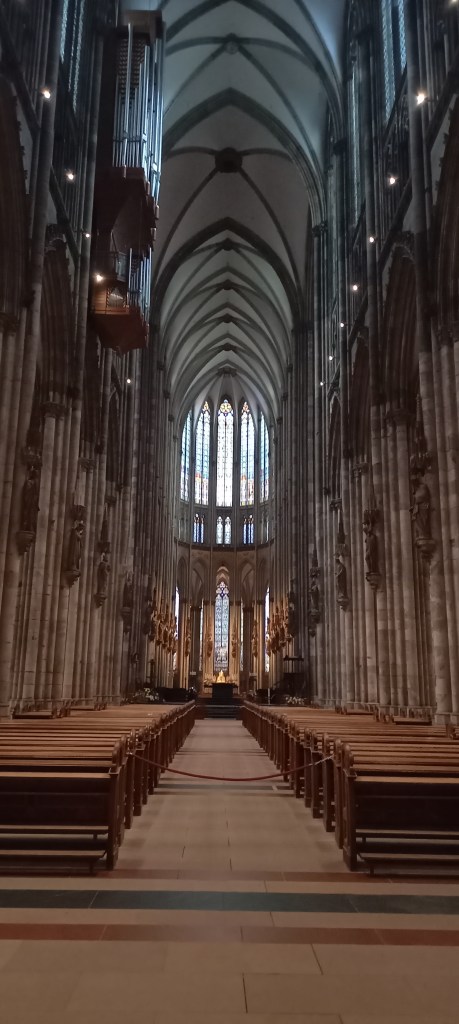
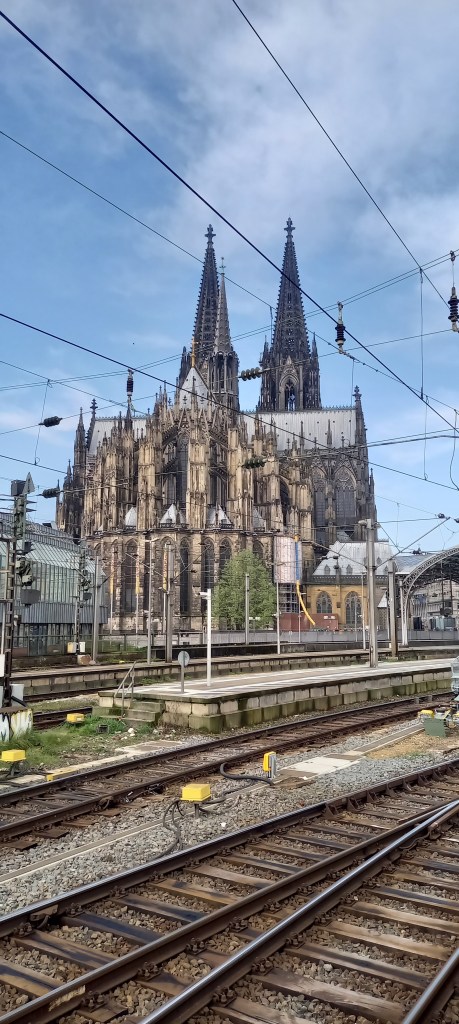
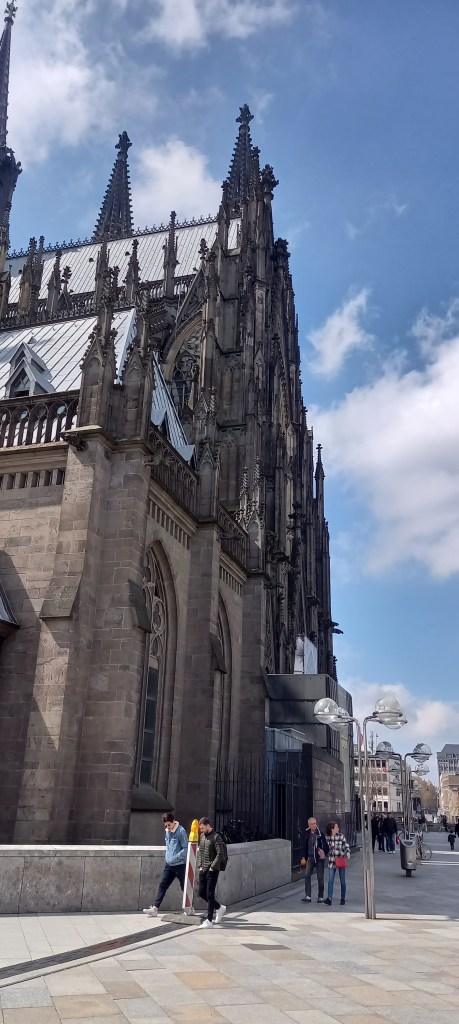
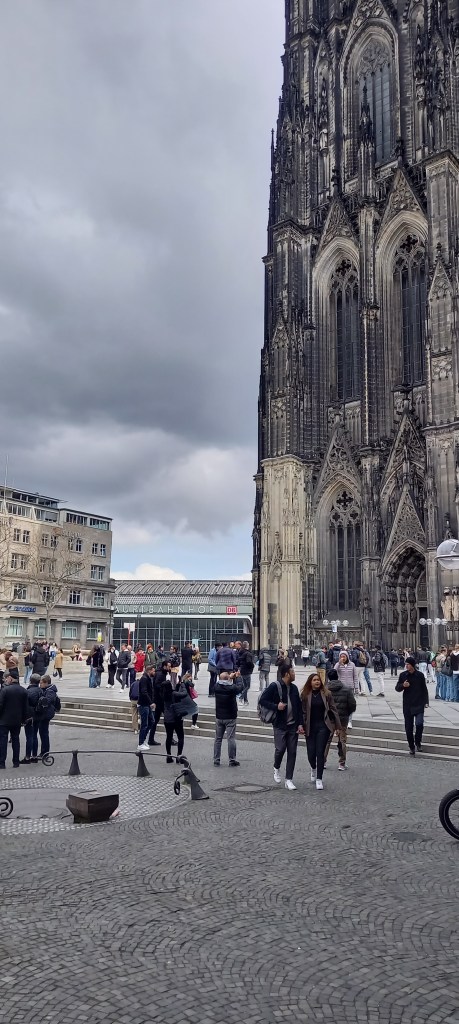
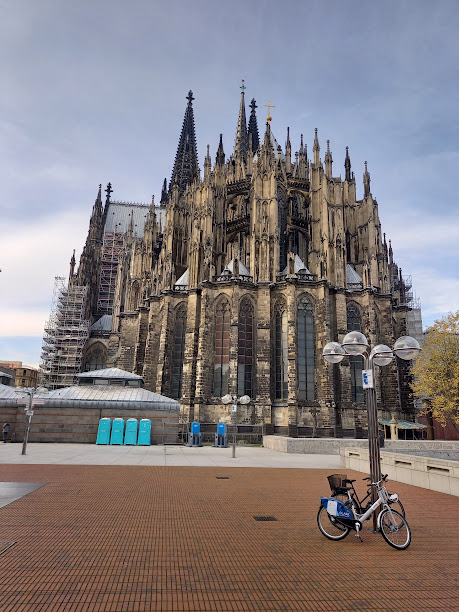
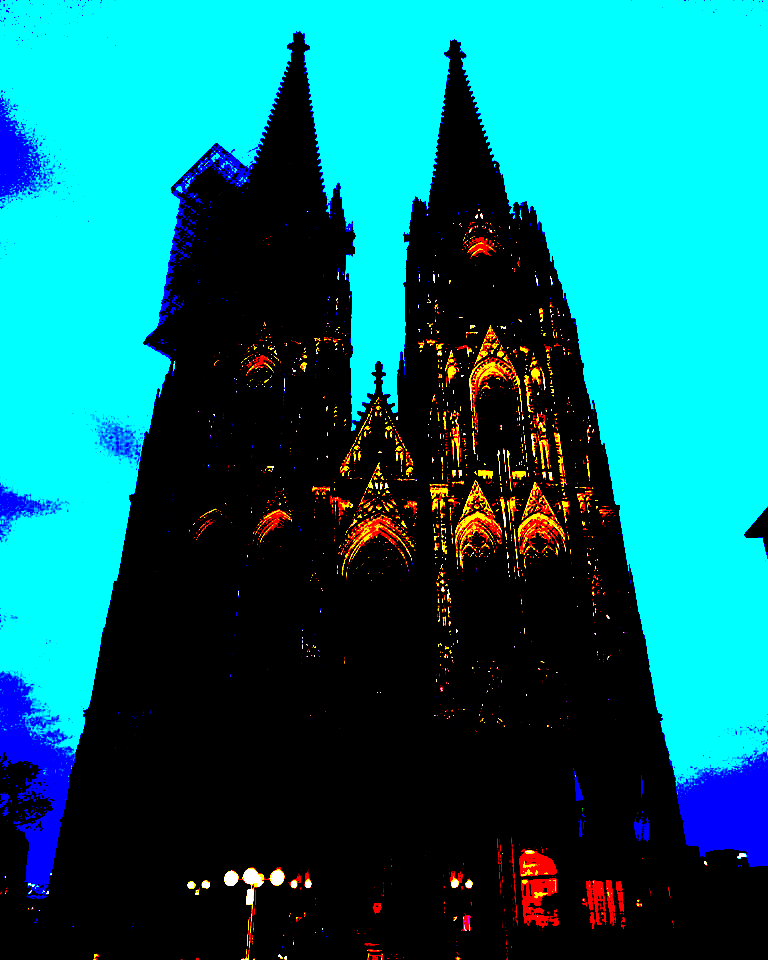
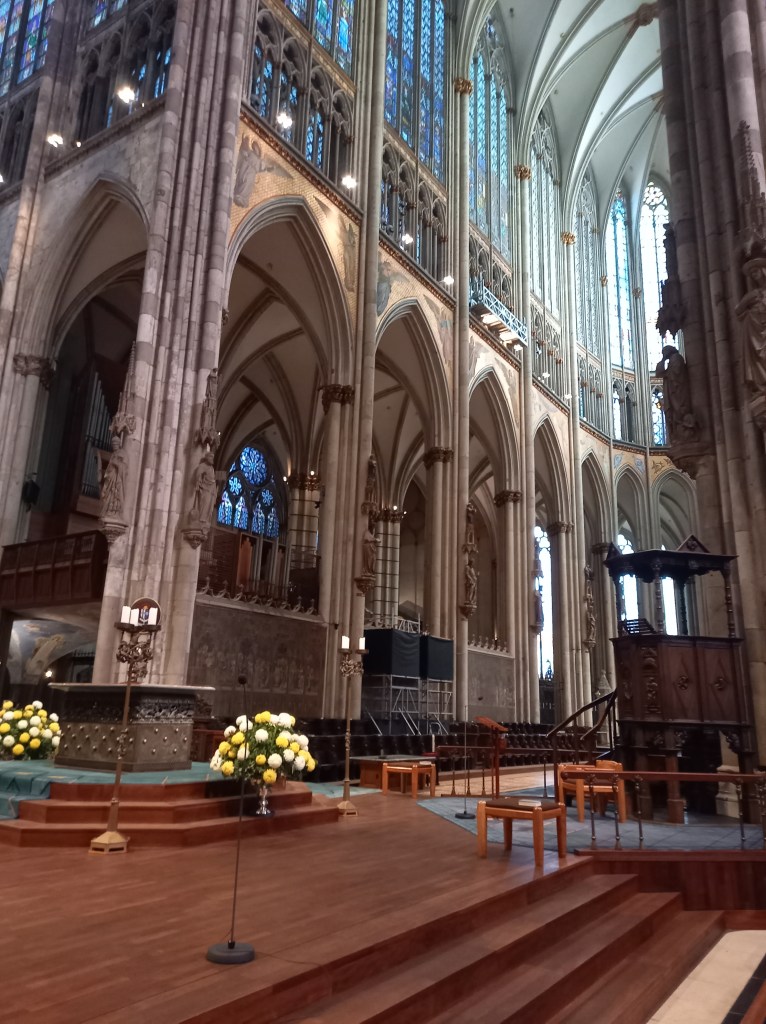
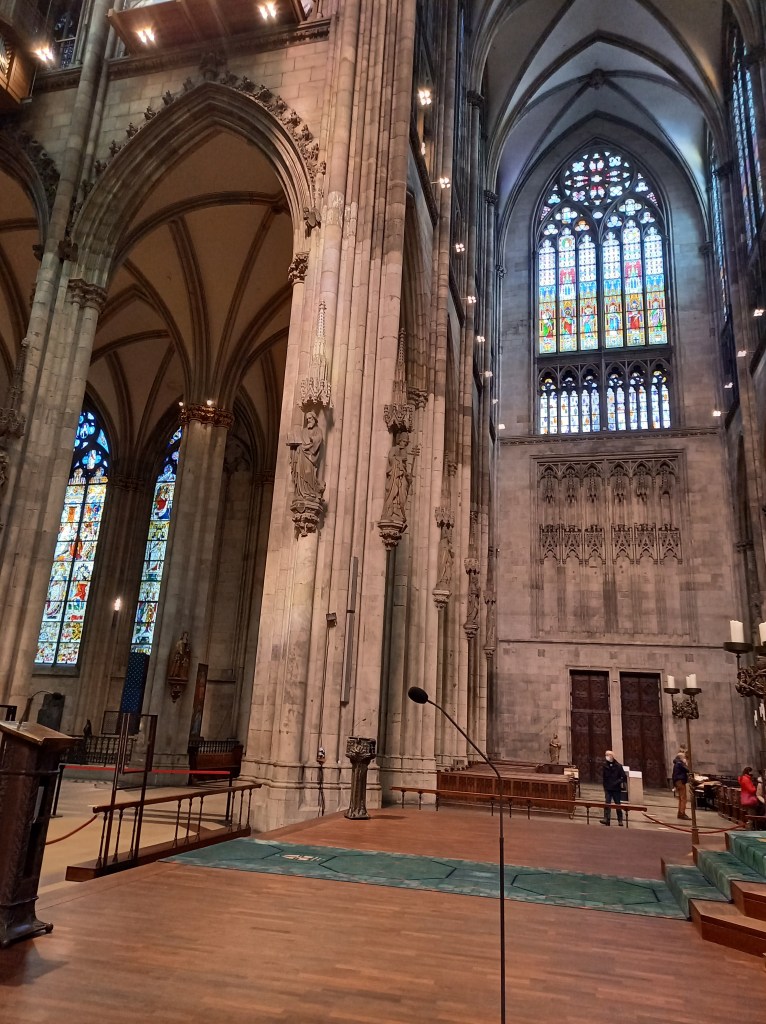
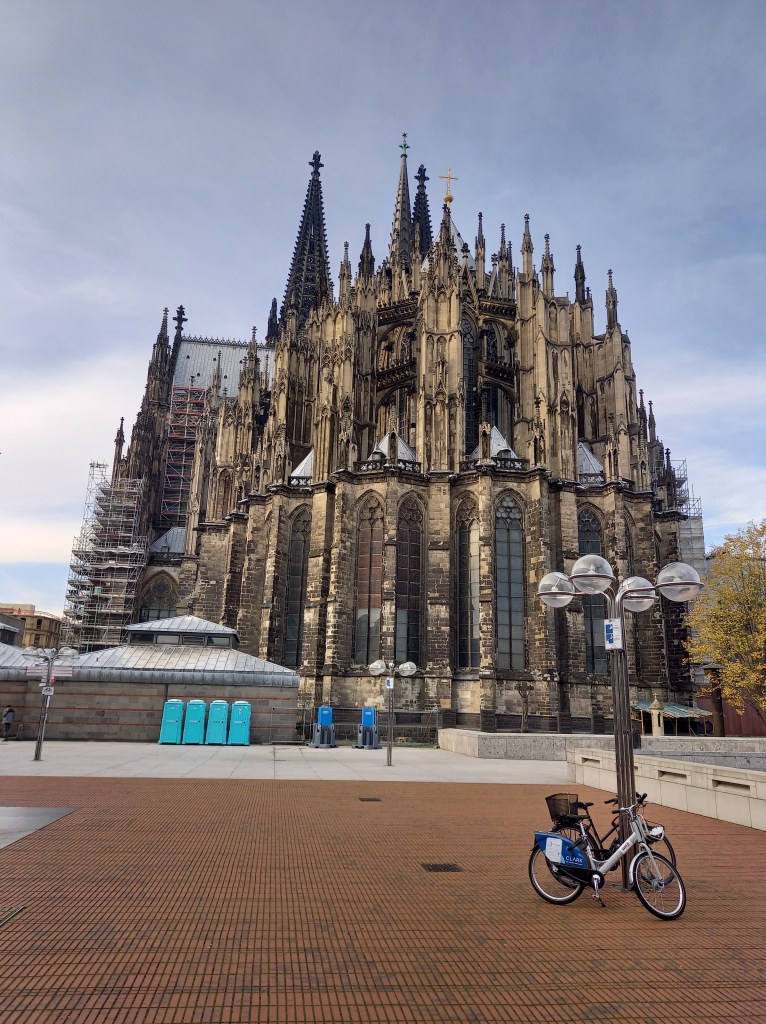
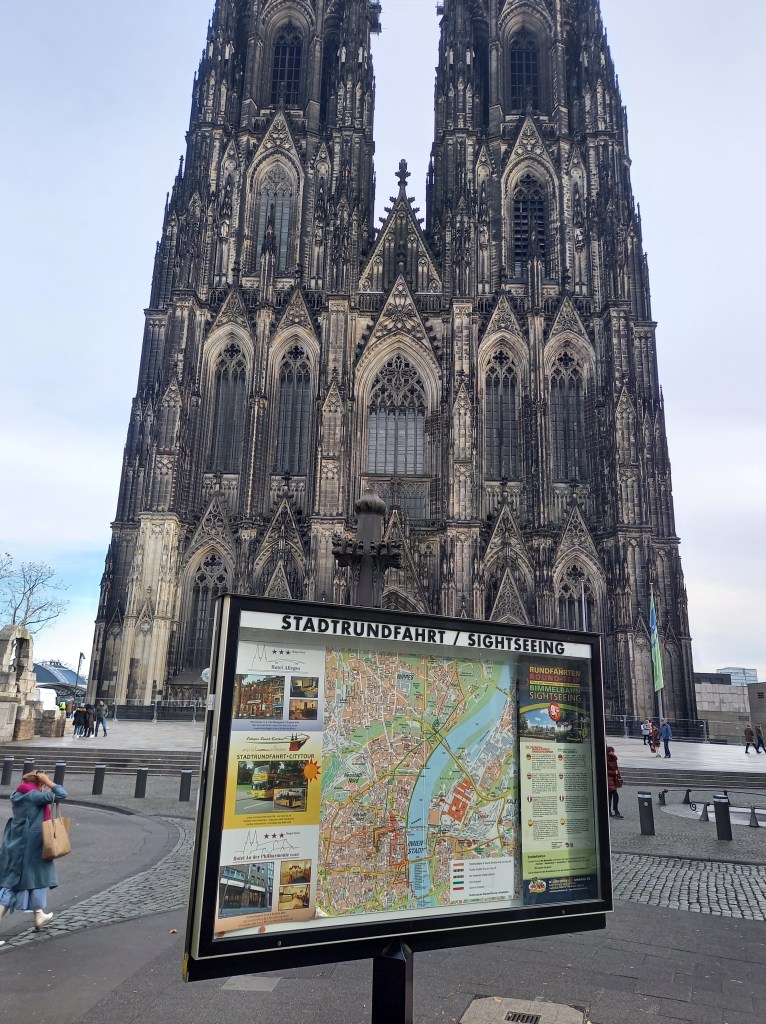
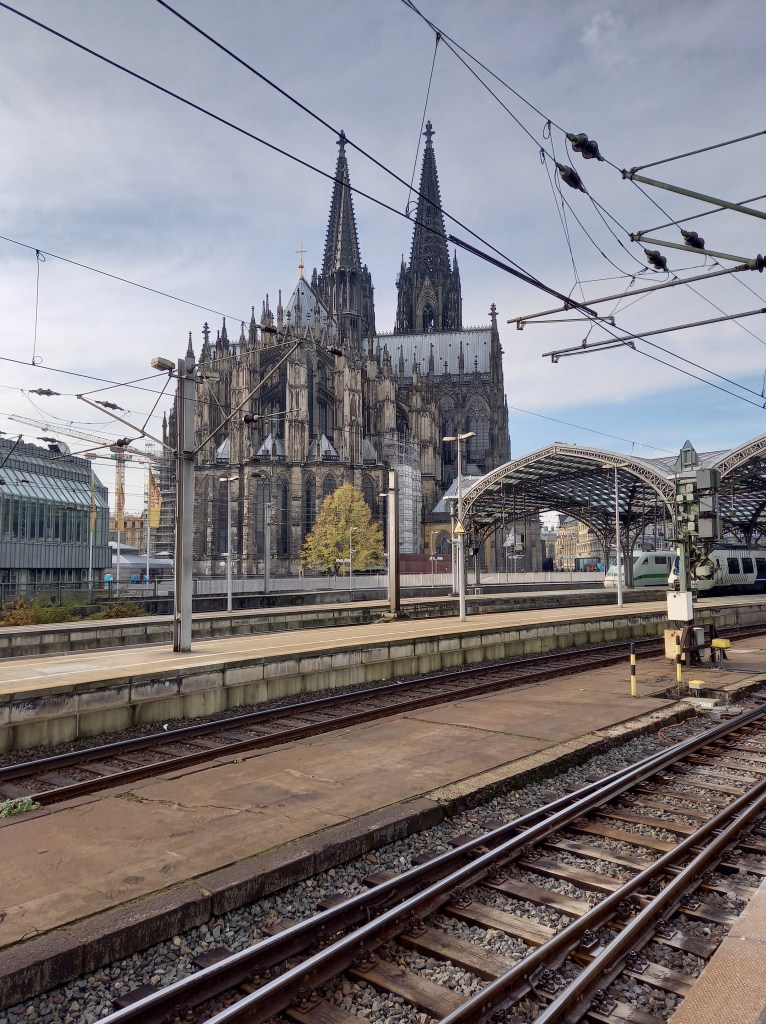
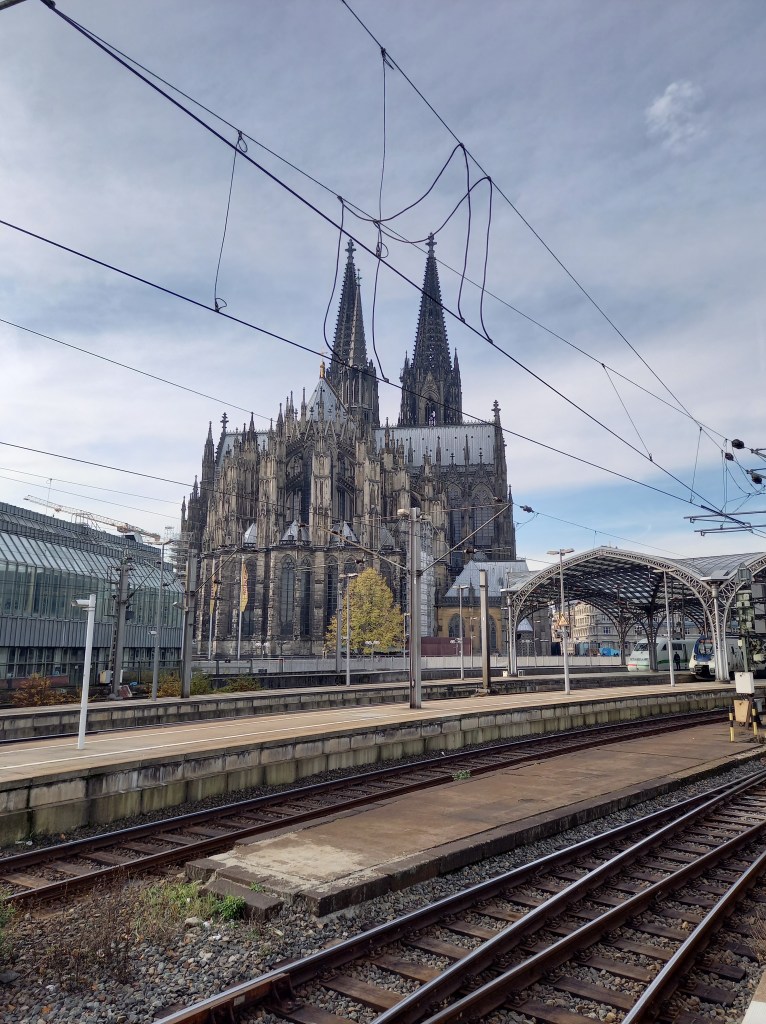
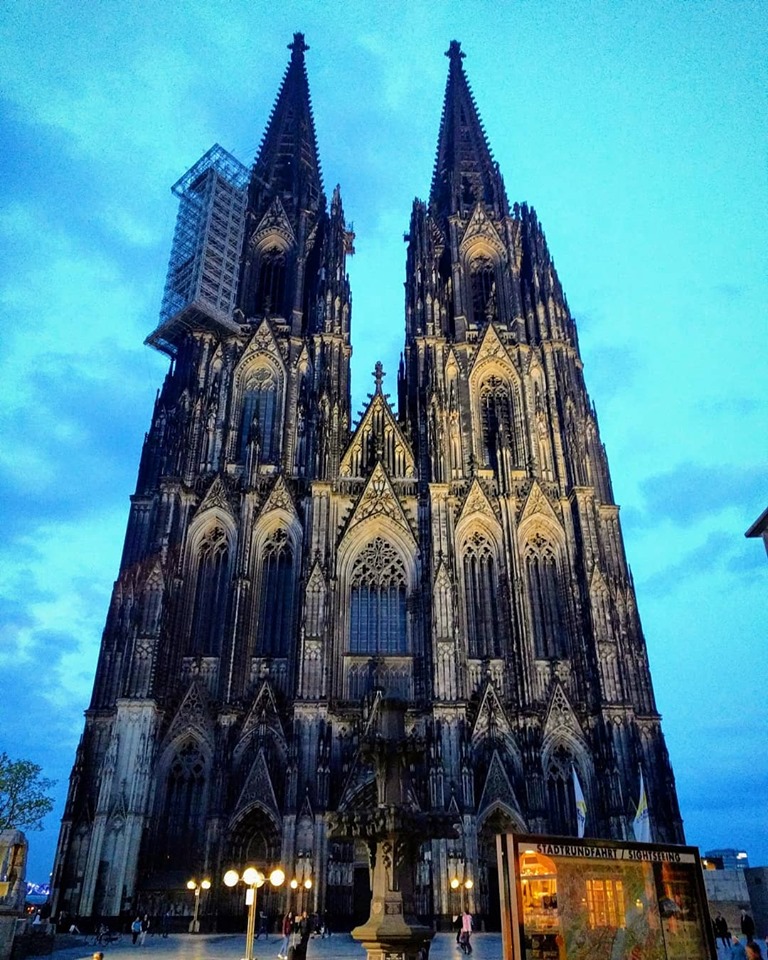
Cologne Cathedral, German Kölner Dom, Roman Catholic cathedral church, located in the city of Cologne, Germany. It is the largest Gothic church in northern Europe and features immense twin towers that stand 515 feet (157 metres) tall. The cathedral was designated a UNESCO World Heritage Site in 1996.
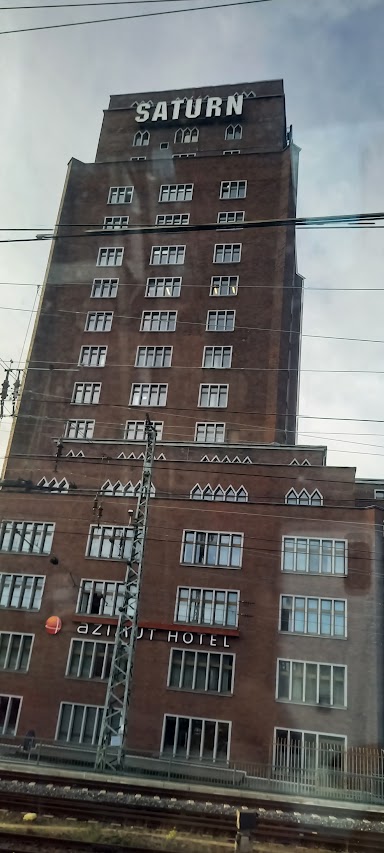
Saturn and Rhine Ship
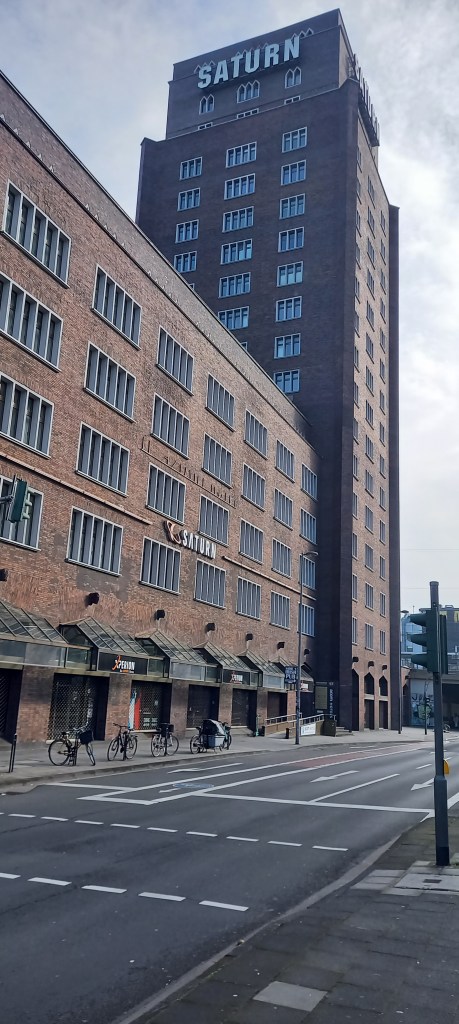
A large Saturn store has been located on the top floor of the Kaufhof department store on Hohe Strasse in Cologne since 1995. When Jacobi’s clothing store next door became vacant last year, this gave Saturn an opportunity to move into its own building in a prominent location. “The name Saturn is closely associated with the city of Cologne.
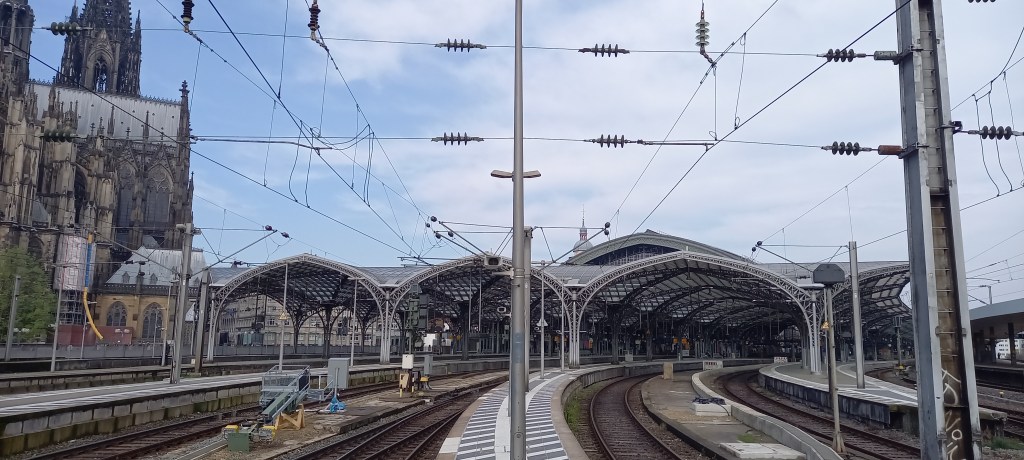
Ghost Station
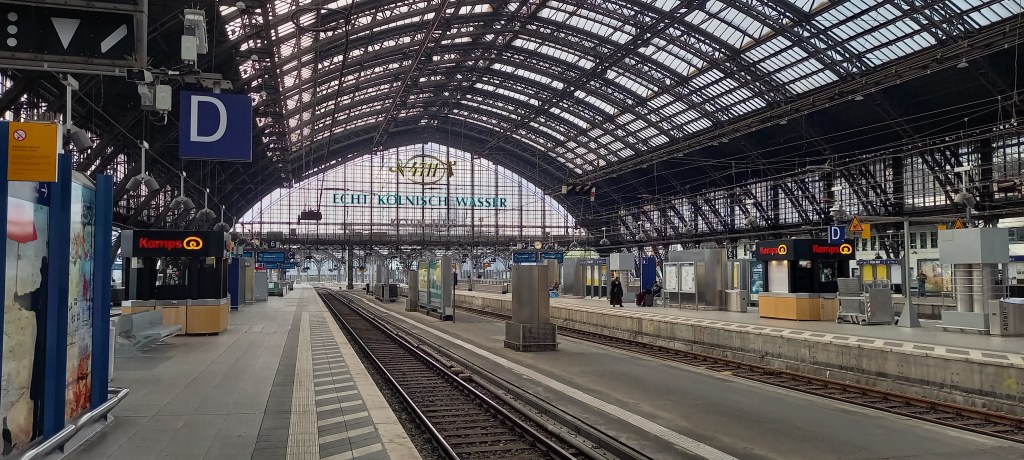
labor strikeGhost Central StationGhost Central Station II
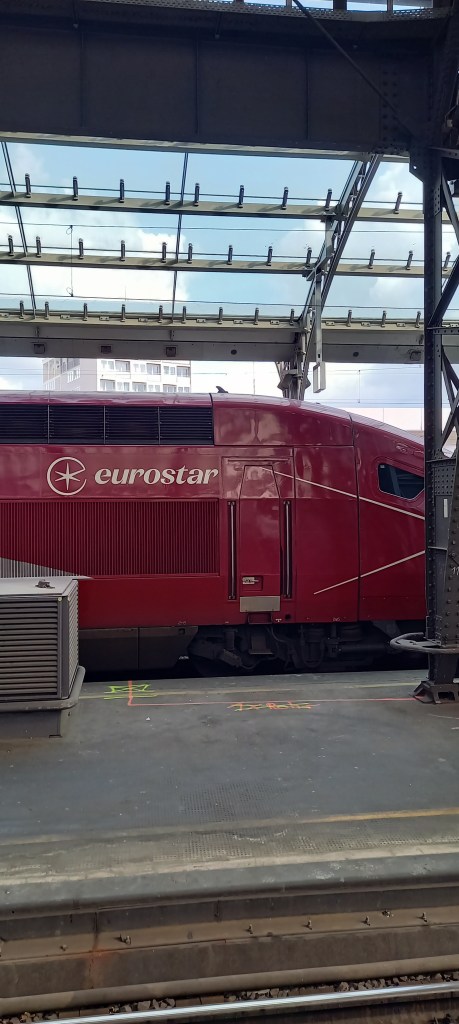
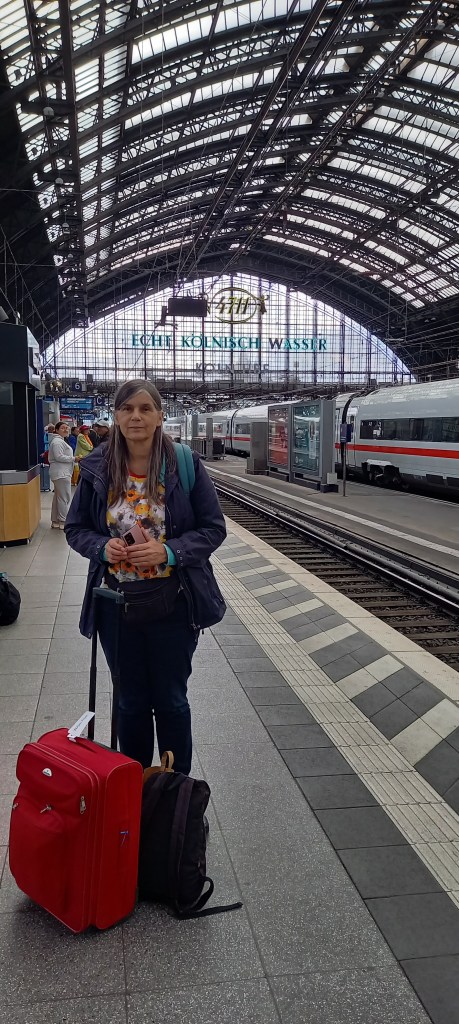
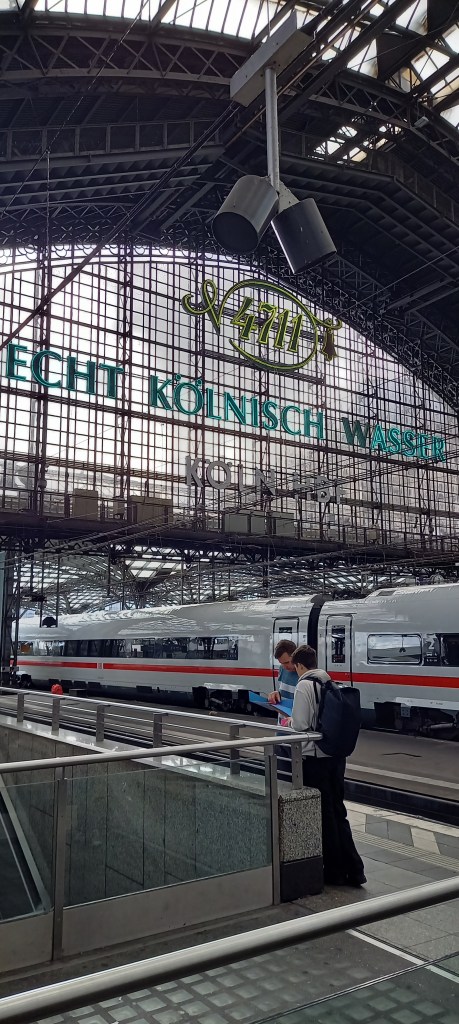
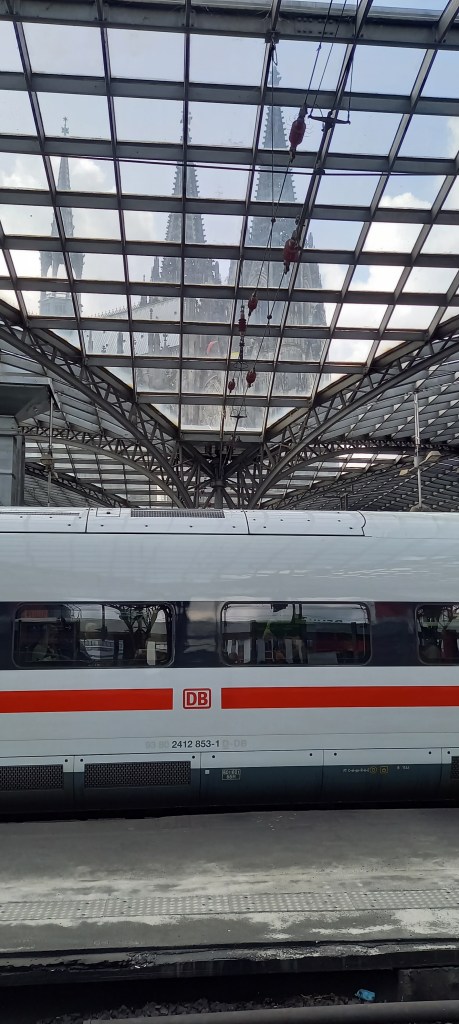
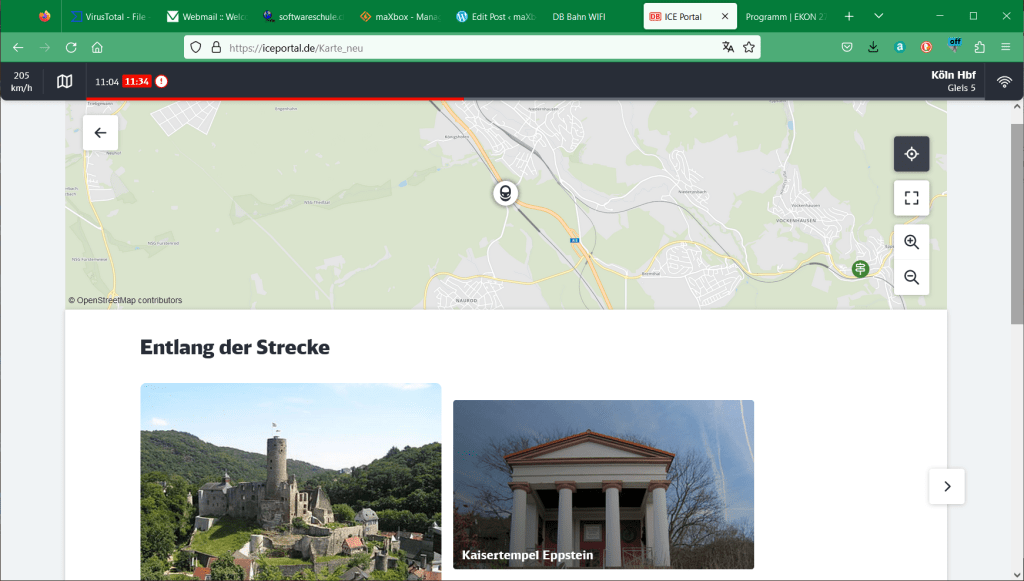
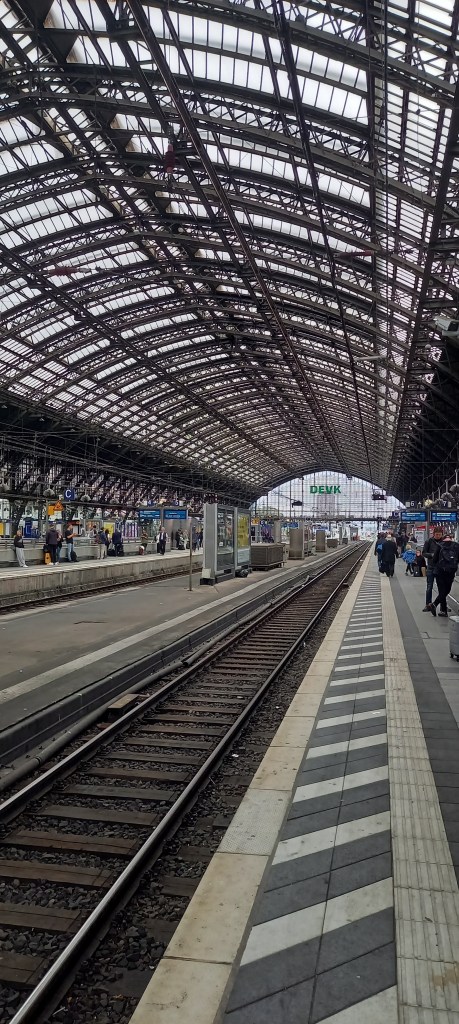
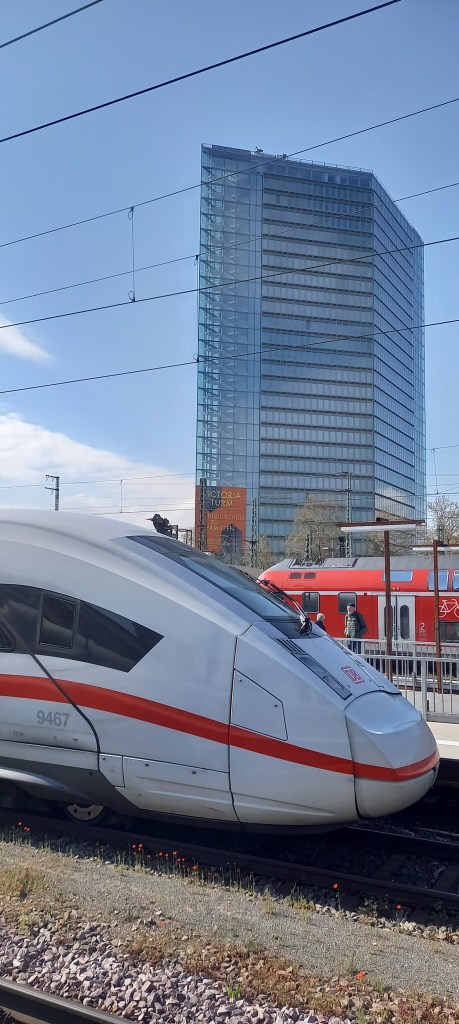
Köln Hbf is a important rail hub which is served by international Thalys, ICE and ÖBB Nightjet trains. Next the hi-speed train from Cologne to Frankfurt:
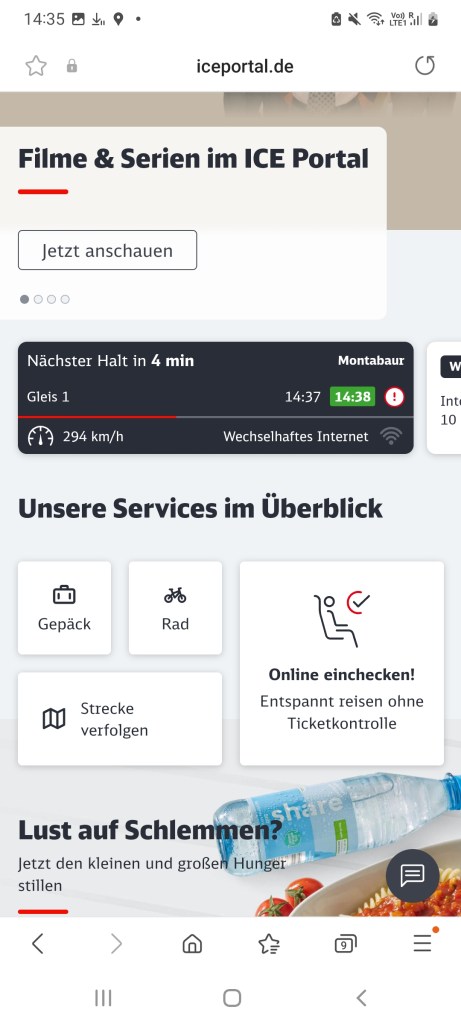
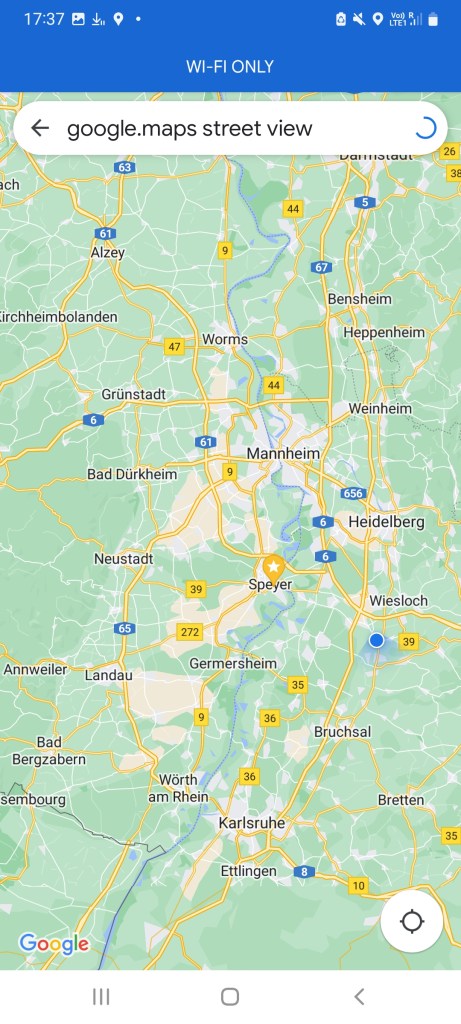
Entry to Cologneno GPS in the tunnelICE PortalWorld of GPS MAP
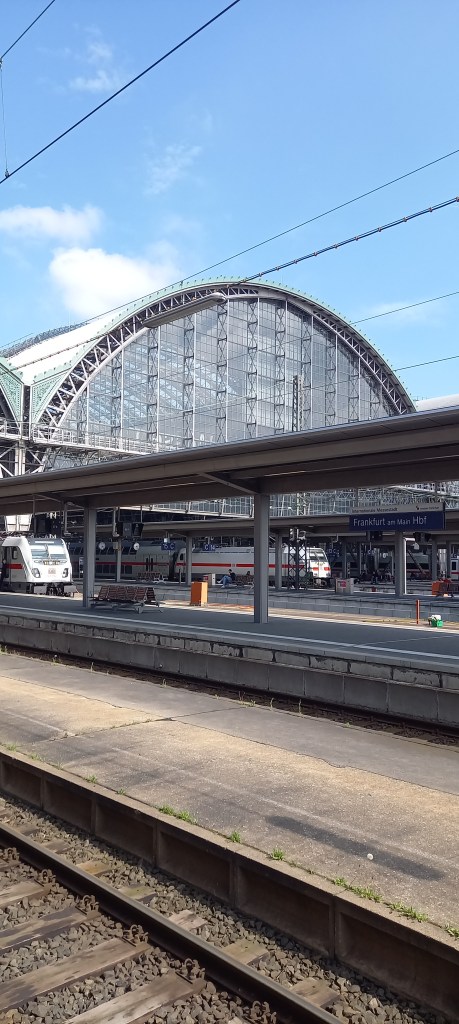
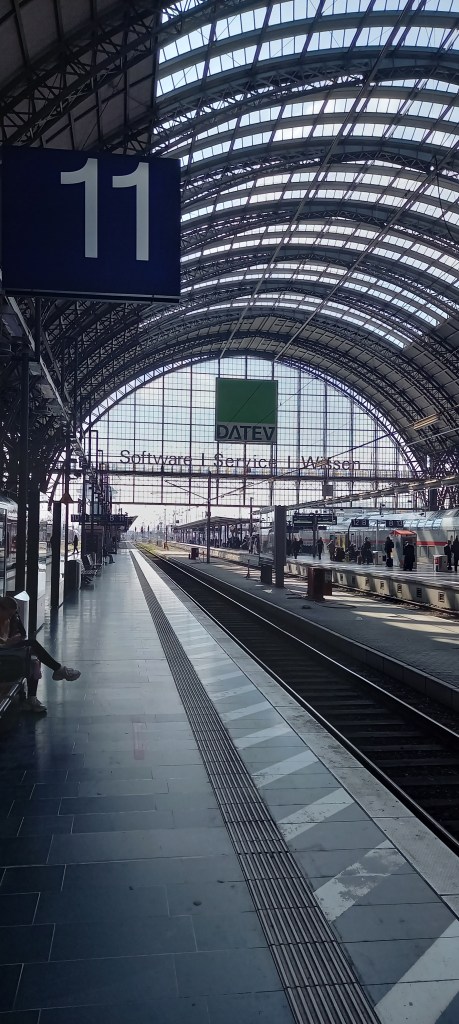
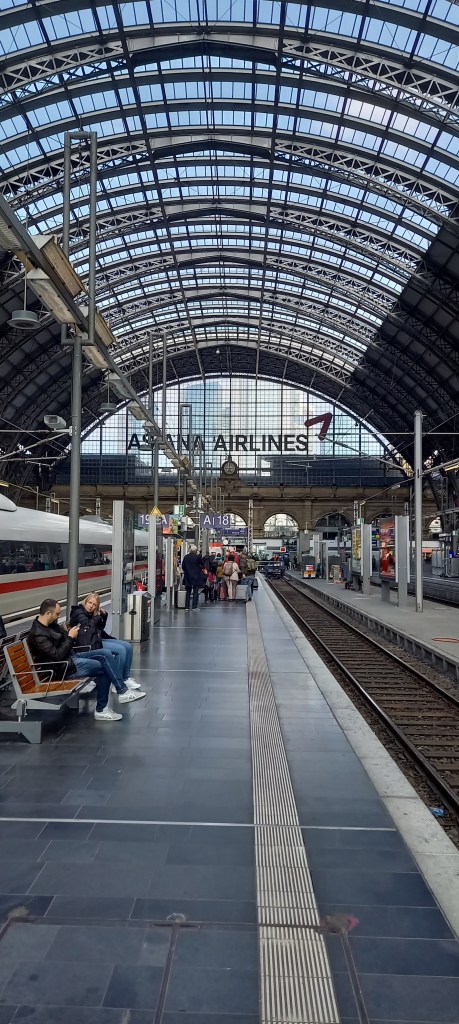
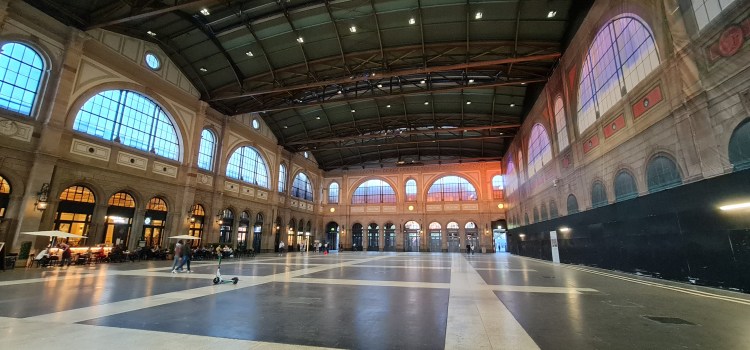
The Frankfurt Main Train Station is one of the largest train stations in Europe and is located just west of the city center. More than 350,000 travelers use this station every day. To be able to manage this great volume of traffic, the central station has more than 25 platforms in five departure halls.
Frankfurt Main Station
Tech Equipment and Scripts
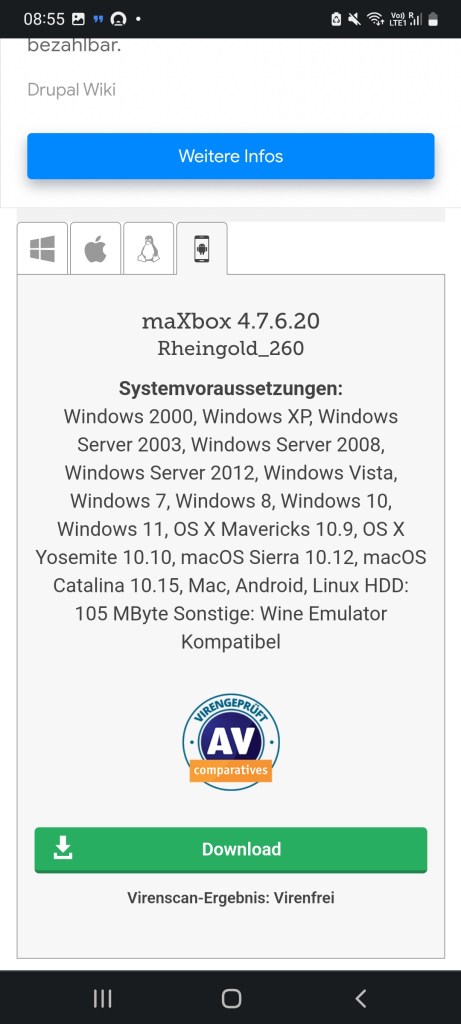
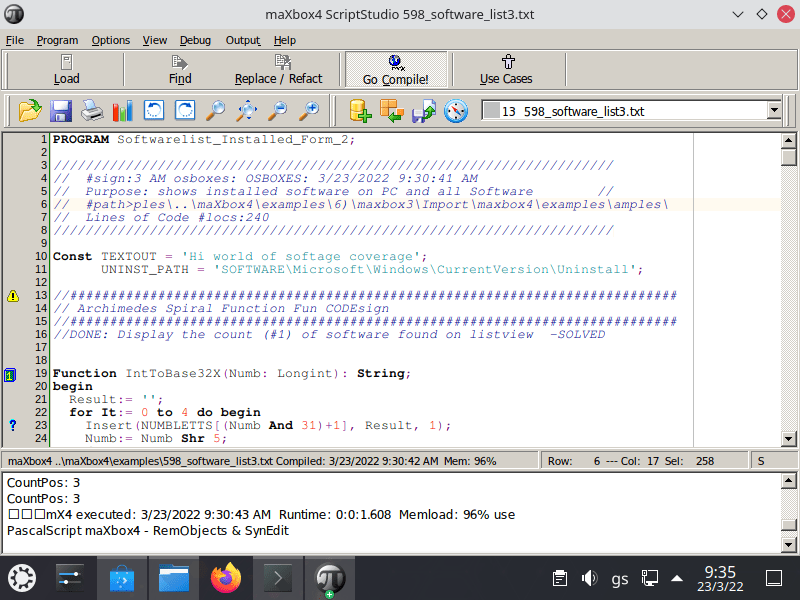
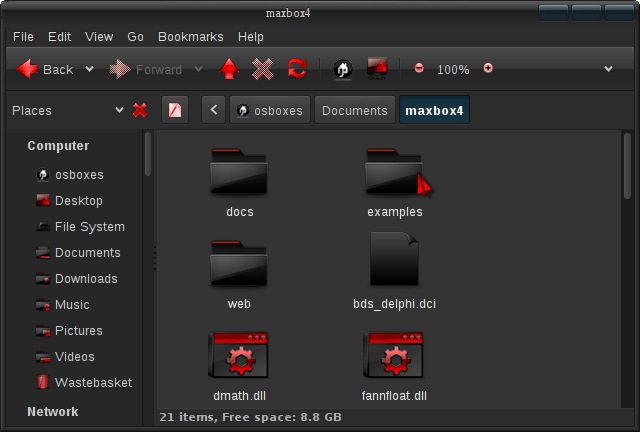
For the trips we used an Android12 with maXbox4 scripts:
Mannheim-CologneICE4 with maXbox4maXbox4 Rheingold Edition and ICE4
Last Collection Locs
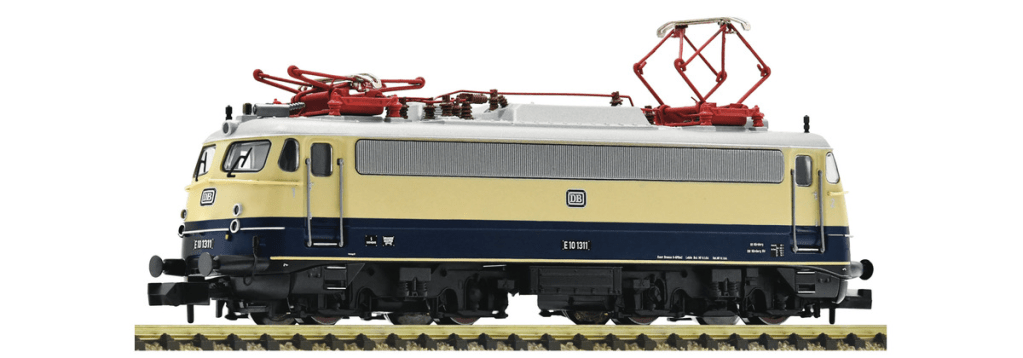
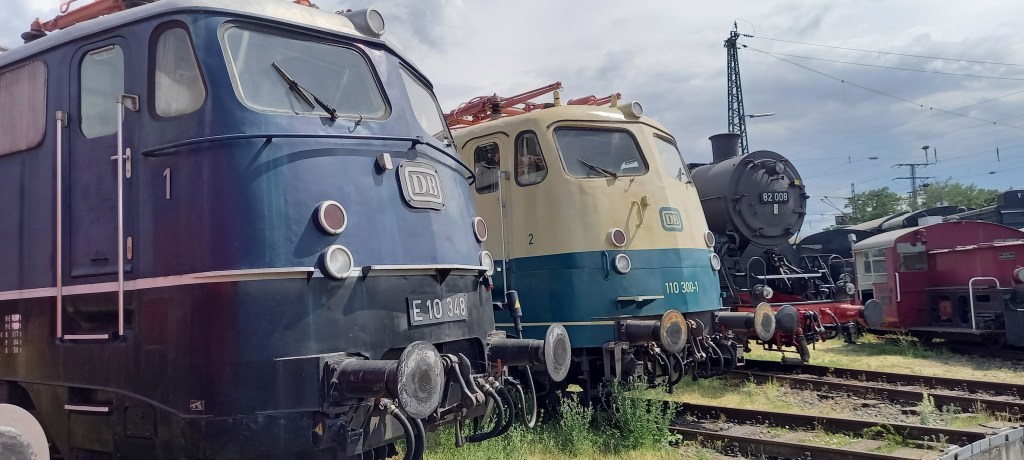
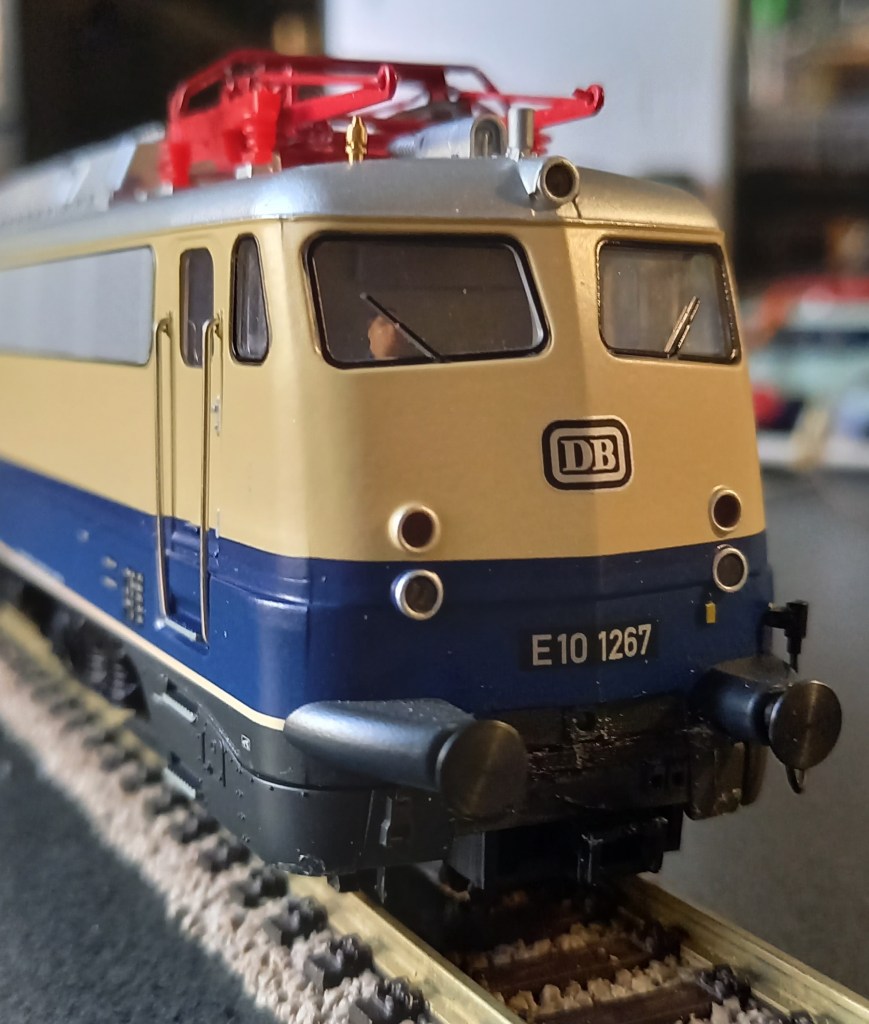
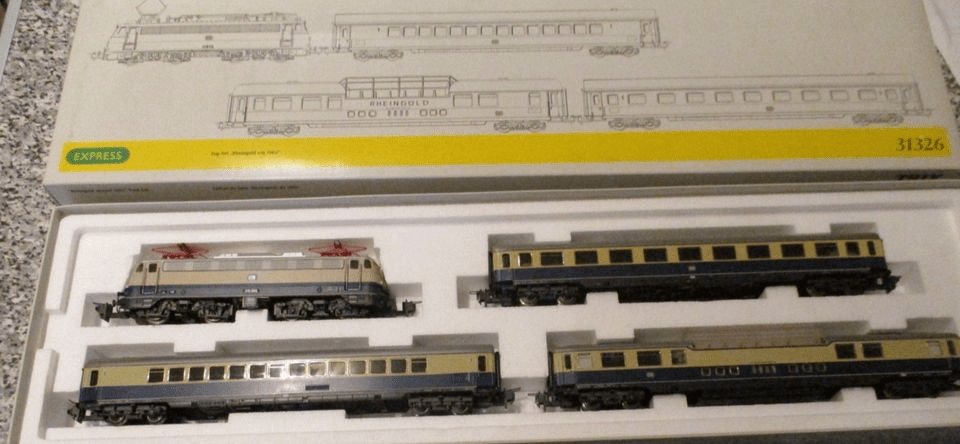
Electric locomotive E 10 1311 of the Deutsche Bundesbahn. In May 1962, the Deutsche Bundesbahn put six E 10 locomotives with special Henschel bogies and designed for a maximum speed of 160 km/h into service for the high-speed “Rheingold” and “Rheinpfeil” trains.
Fleischmann 733809
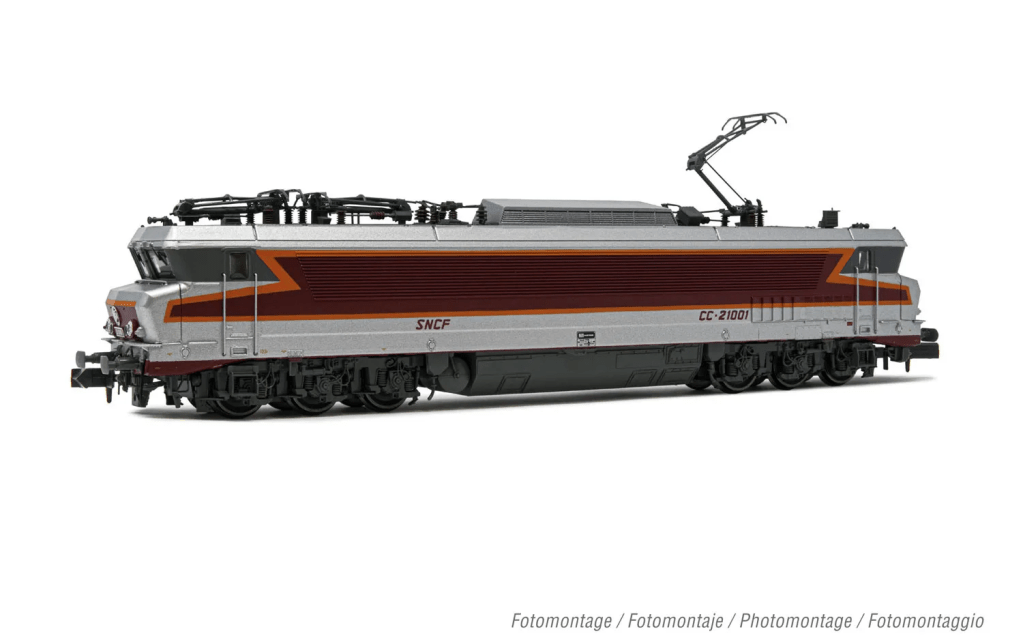
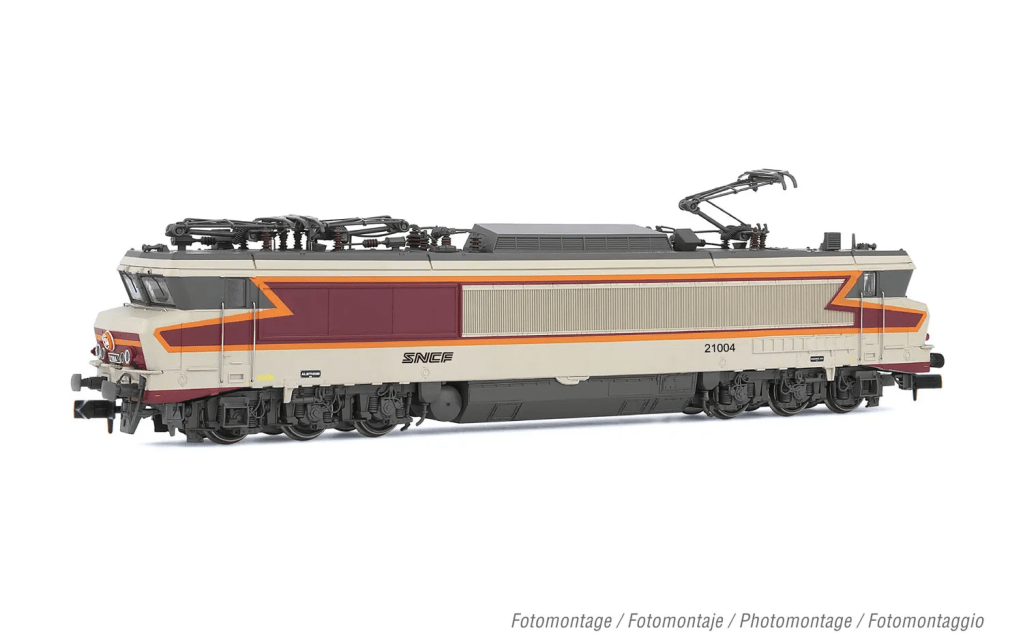
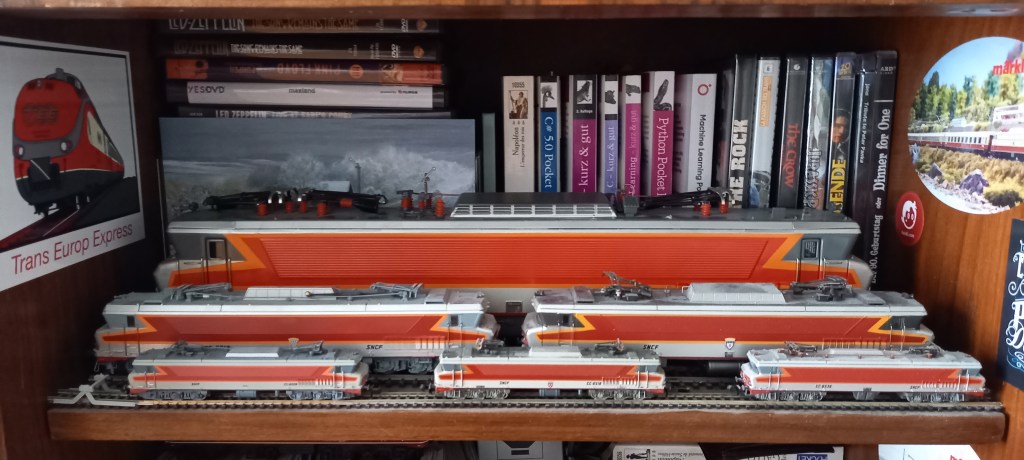
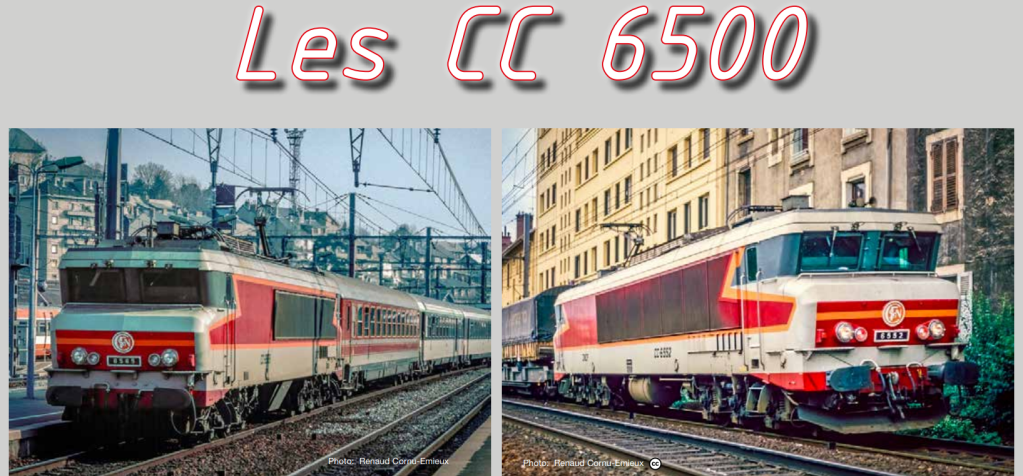
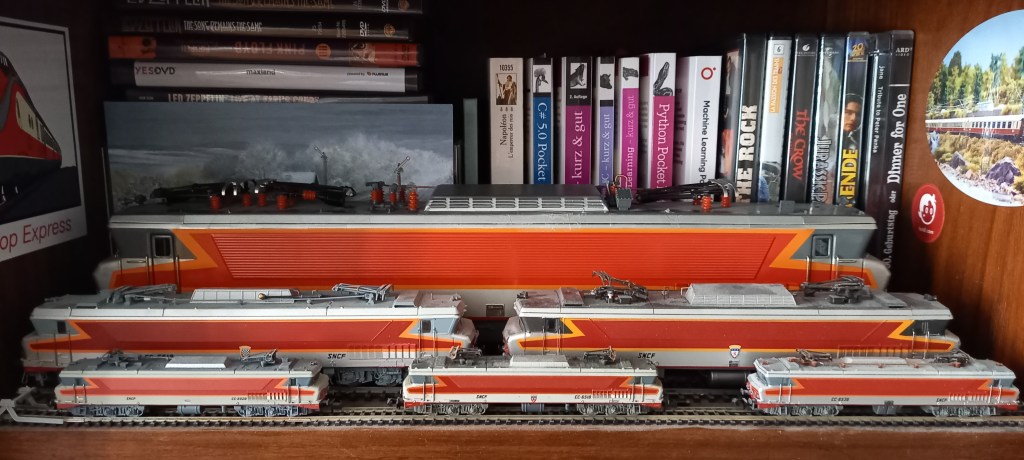
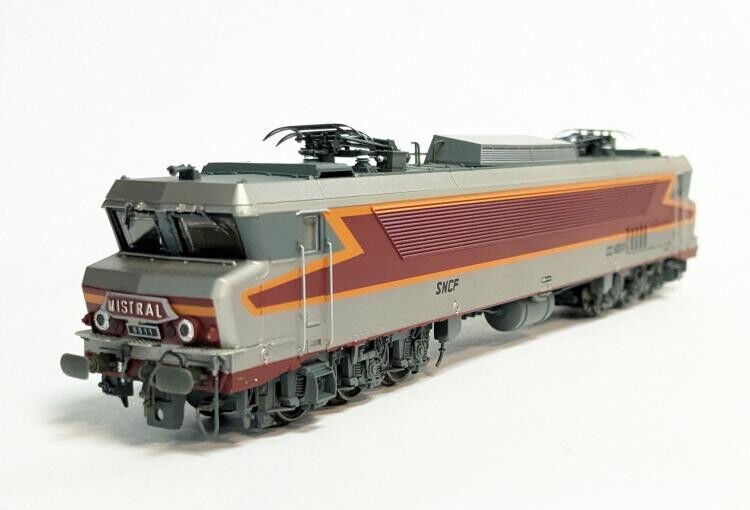
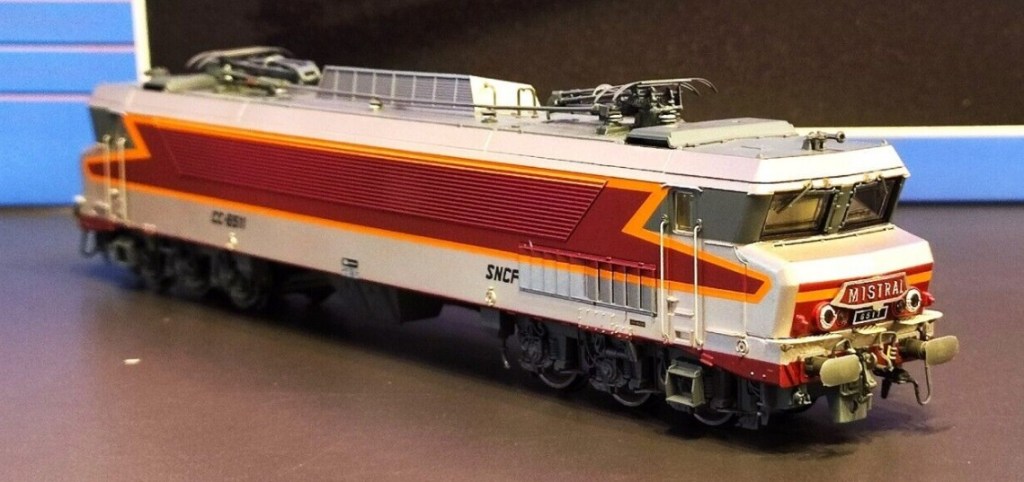
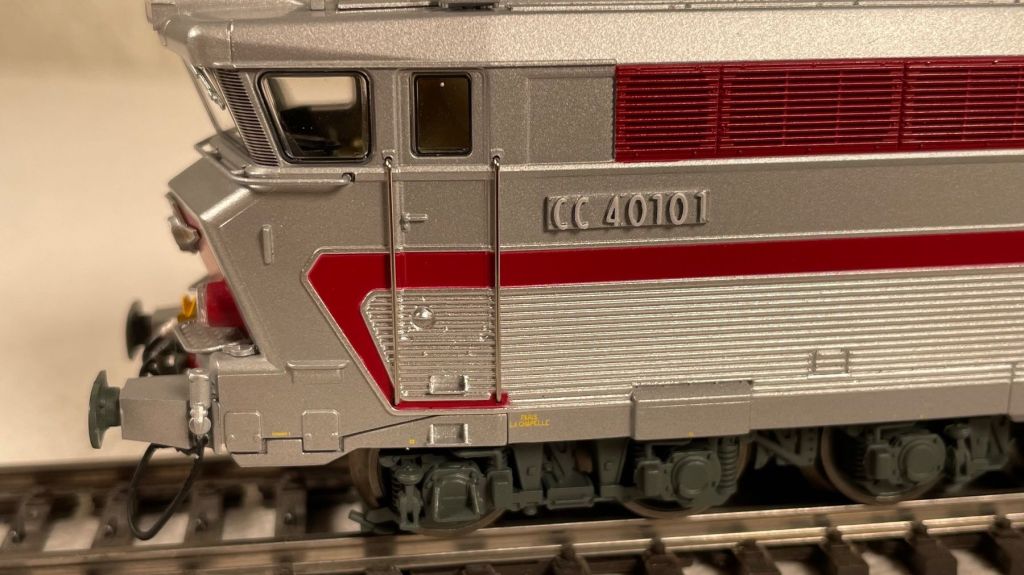
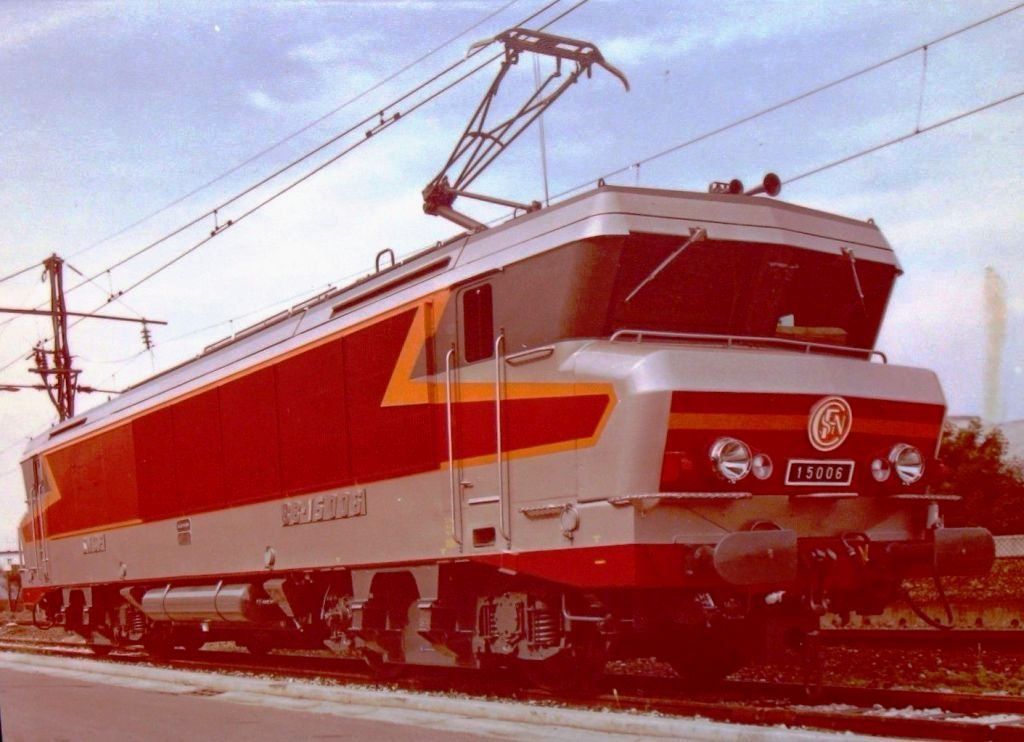
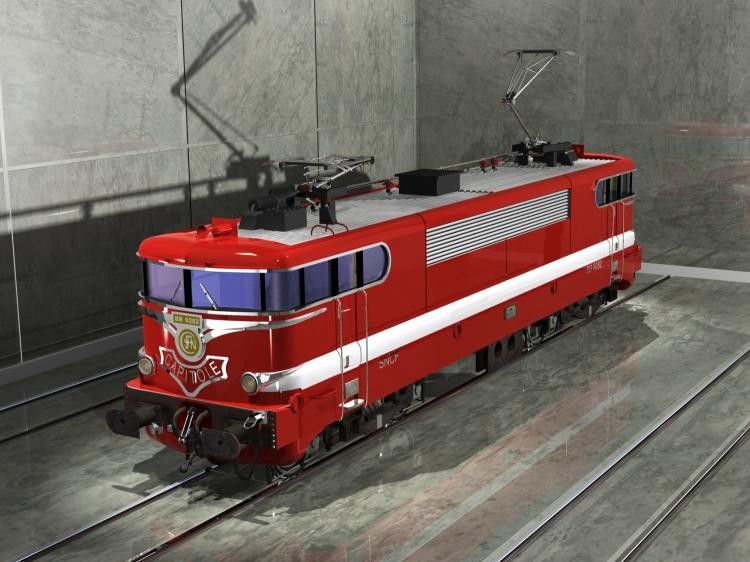
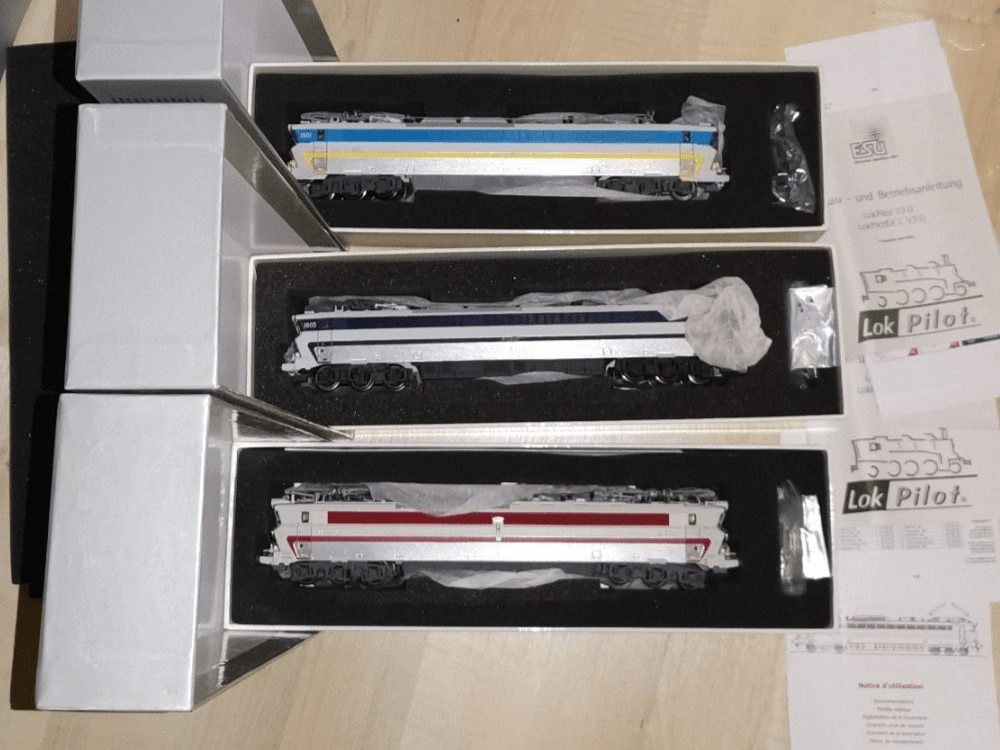
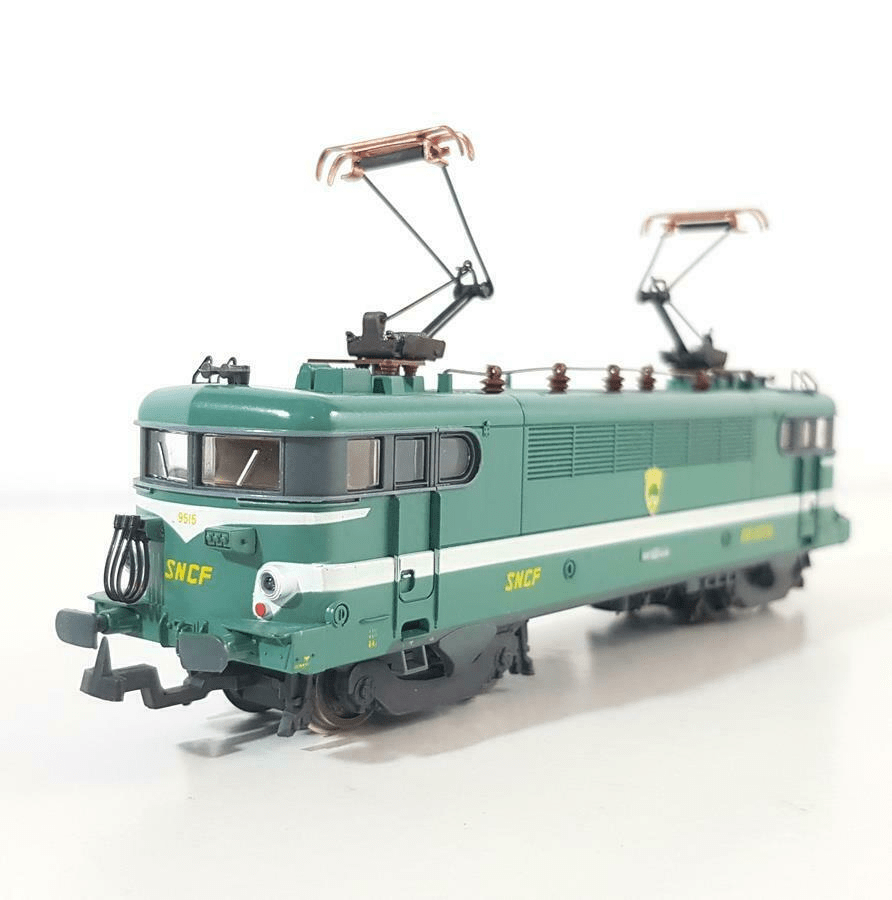
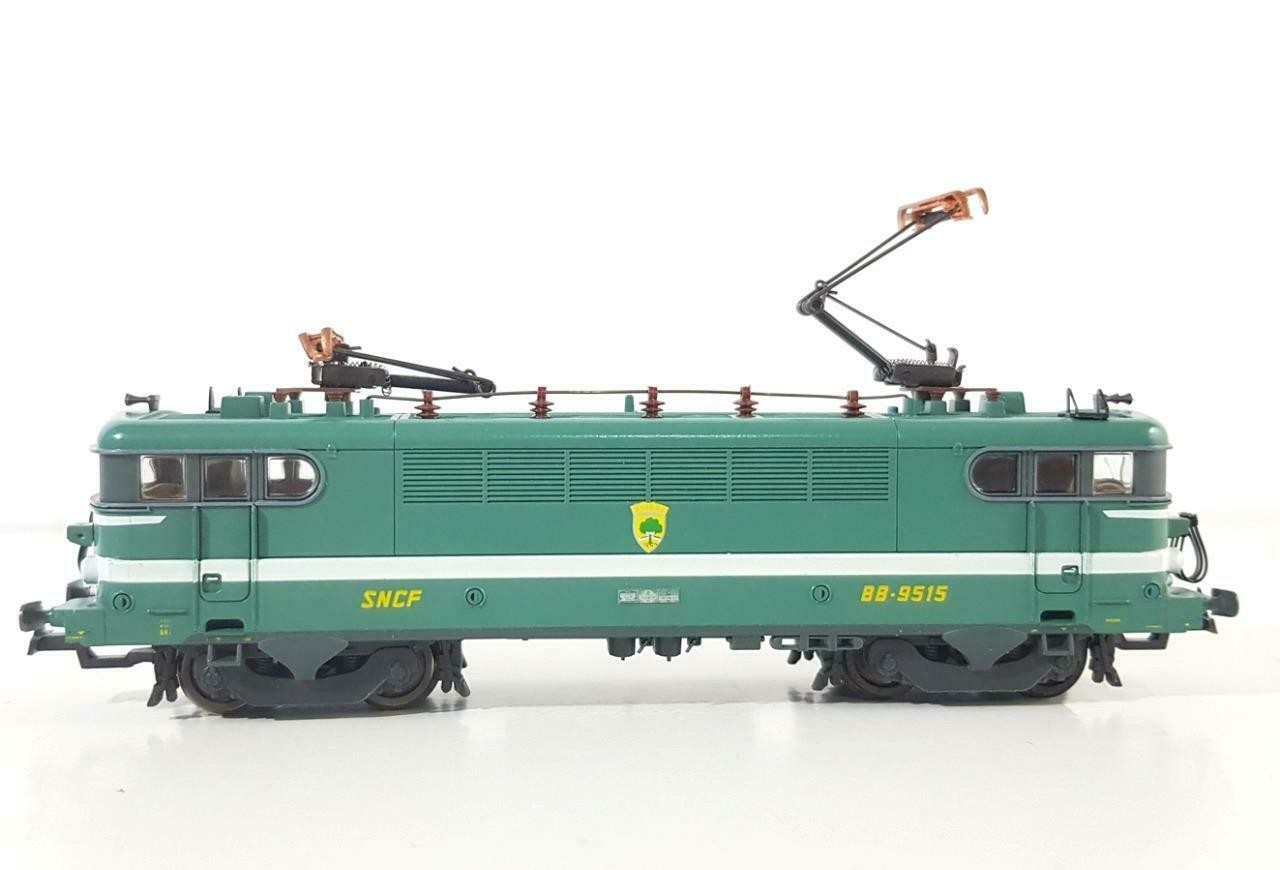
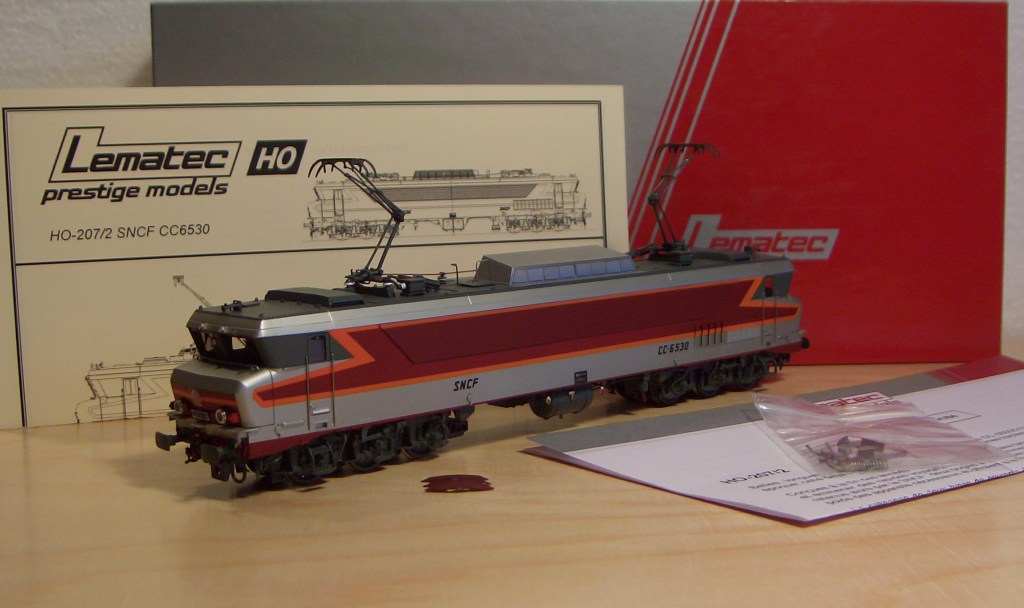
Electric locomotive CC 6574 of the French State Railways. The National French Railways (SNCF) put these electric locomotives, which were up until then the most powerful in French history, into service in 1969 as the CC 6500. A total of 74 locomotives were built in three series featuring different side wall designs. During their initial years of operation, these locomotives were used to draw renowned express trains such as the “Mistral” or the “Capitole” due to their maximum speed of 200 km/h.
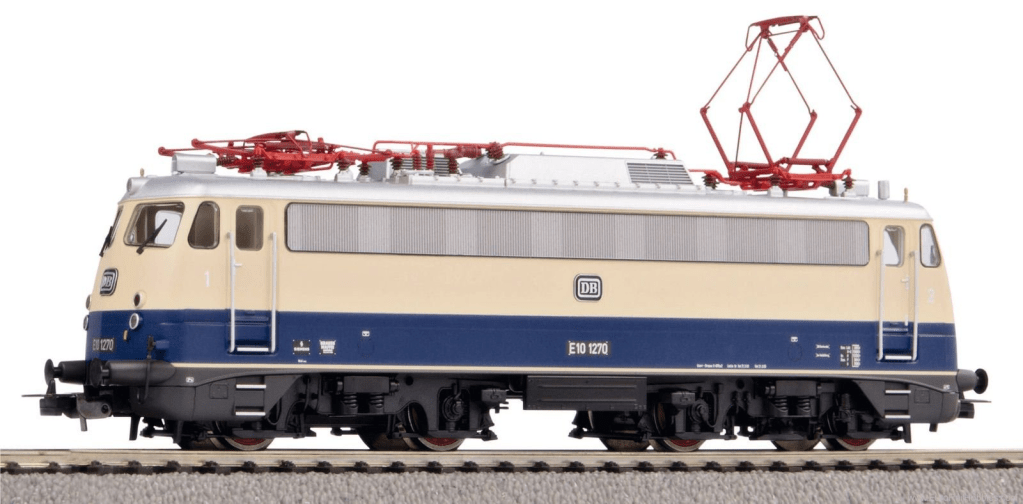
PIKO E 10 1270
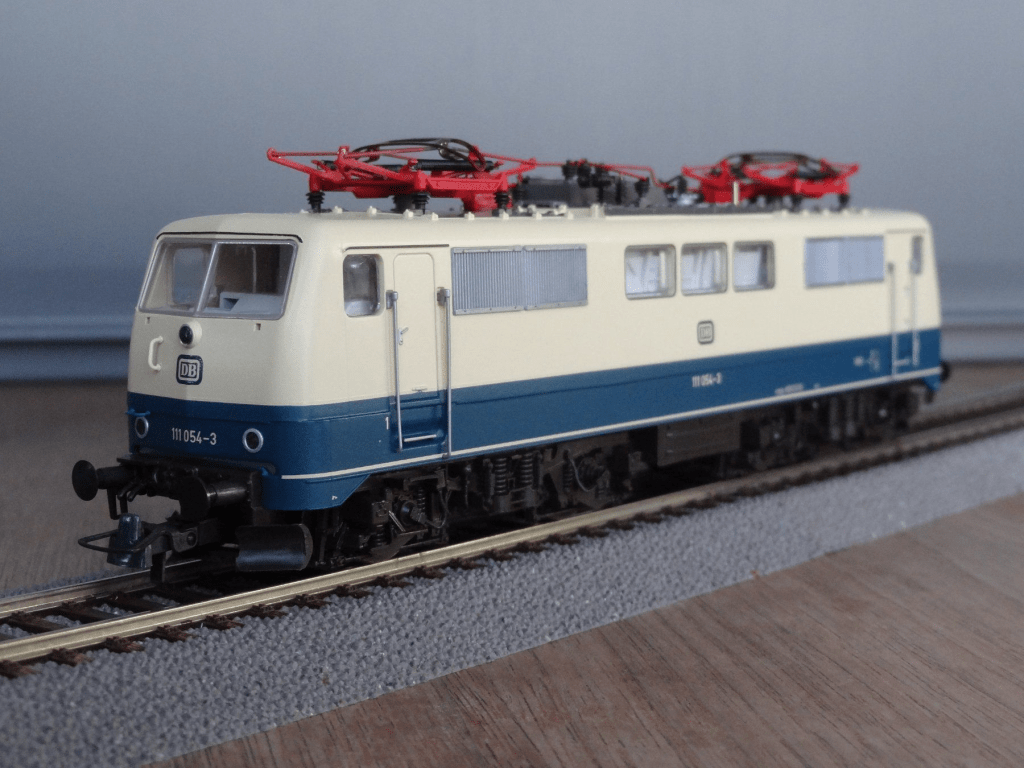
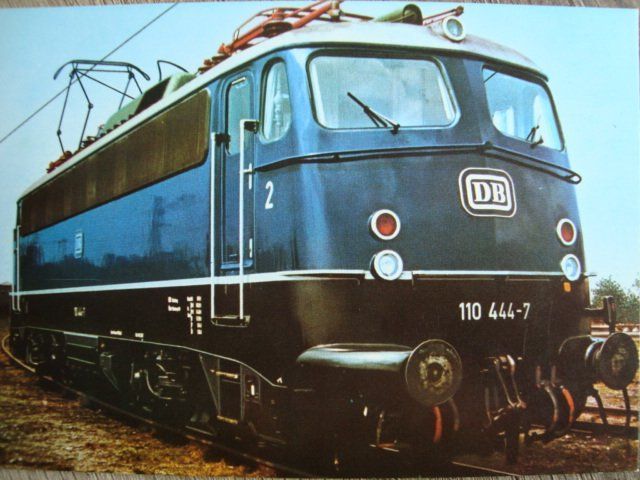
Translated Description from PIKO: New for 2022: variant of the class 110.3 as class E 10 1270 of the DB in epoch III. The model of the E 10 impresses with the exact execution of the variant with front apron, buffer cladding and raised DB logo.
Roco 70618
HN2585 SNCF, electric locomotive CC 21001 in silver livery, ep. IV
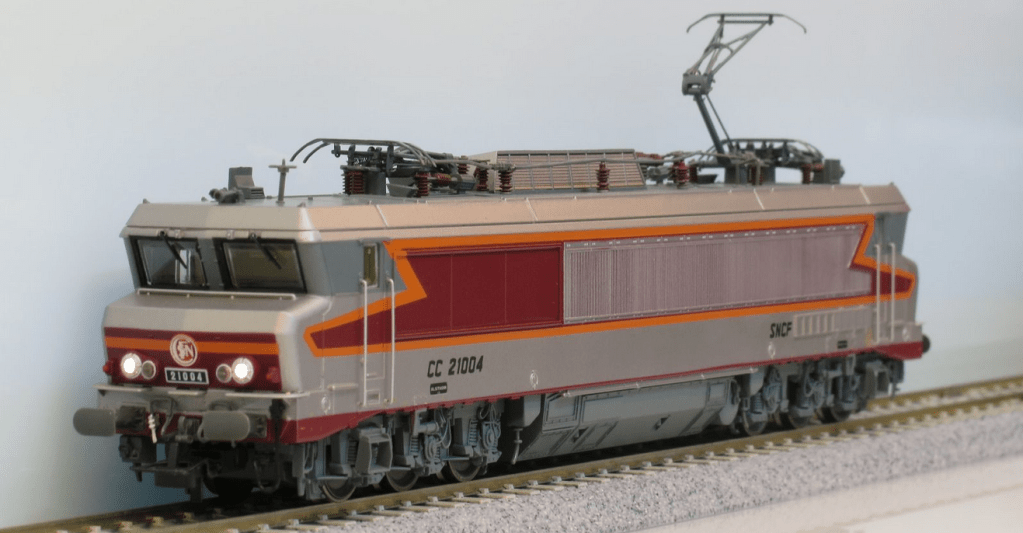
HN2586 SNCF, electric locomotive CC 21004 in beton grey livery with noodle logo, ep. IV-V
Arnold N CC 21004
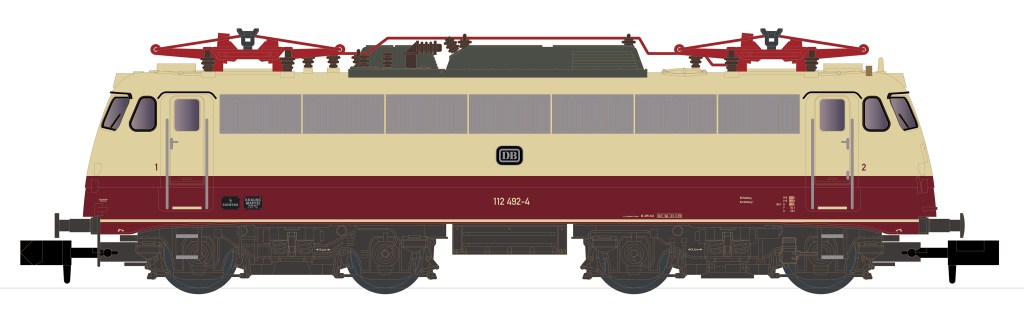
DB BR112 Electric Locomotive IV
Hobbytrain (by Lemke) H28015
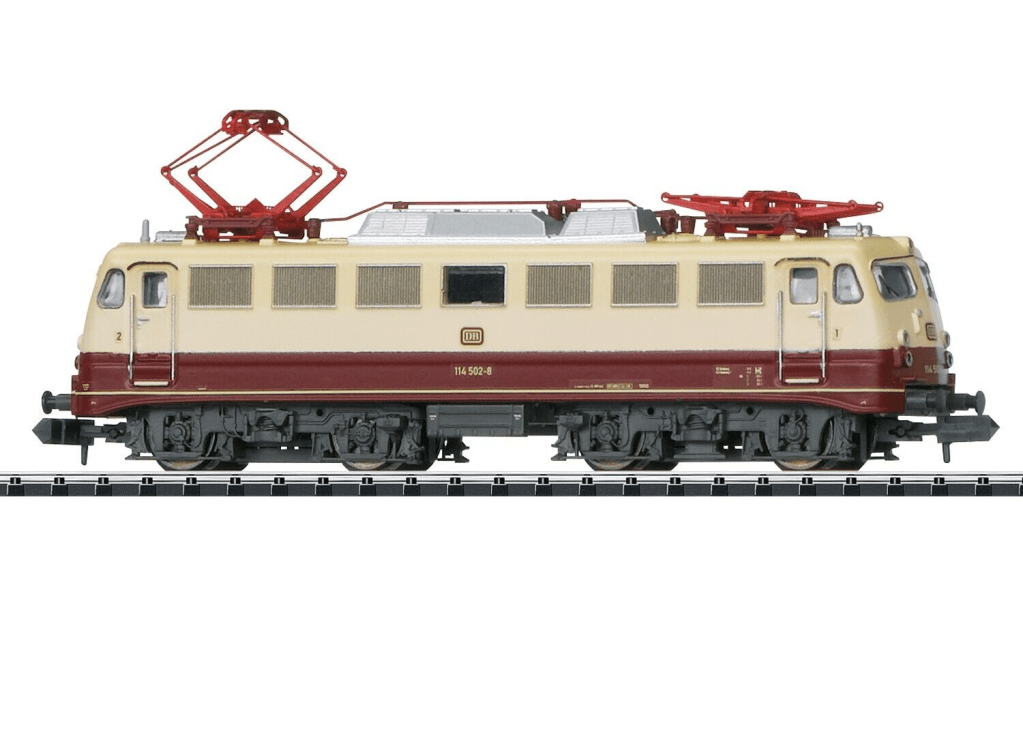
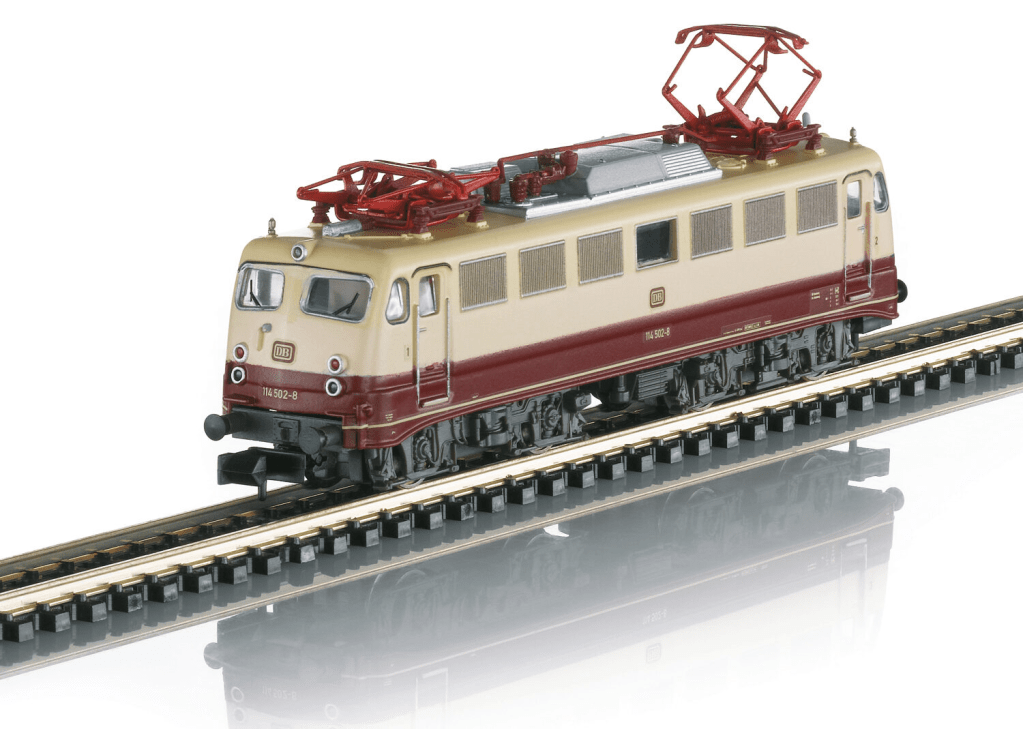
Minitrix 16265 Gauge N Electric locomotive BR 114 of the DB, epoch IV-V
Trix Minitrix 16265
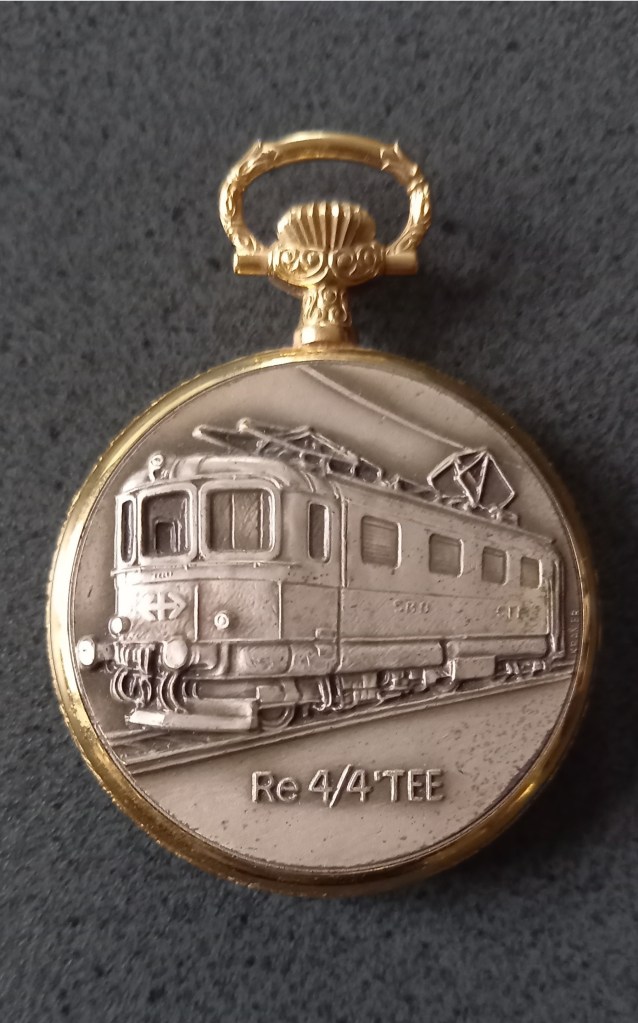
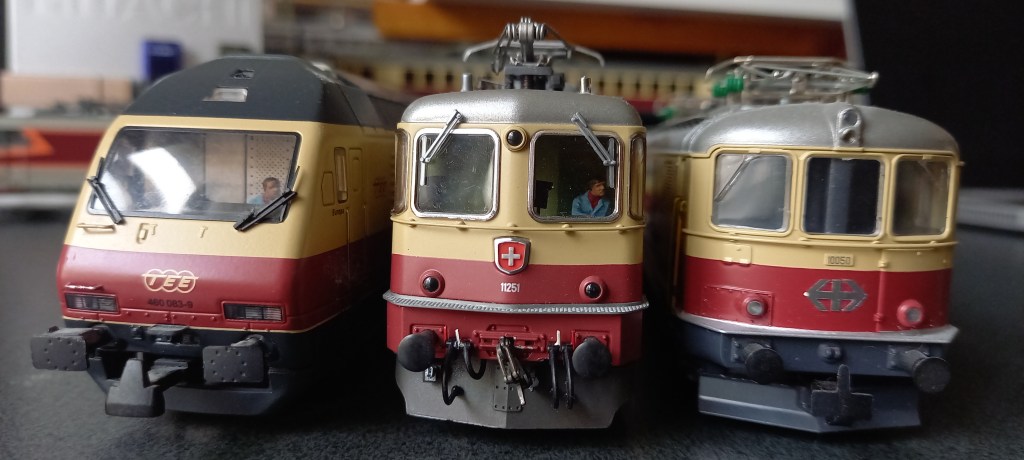
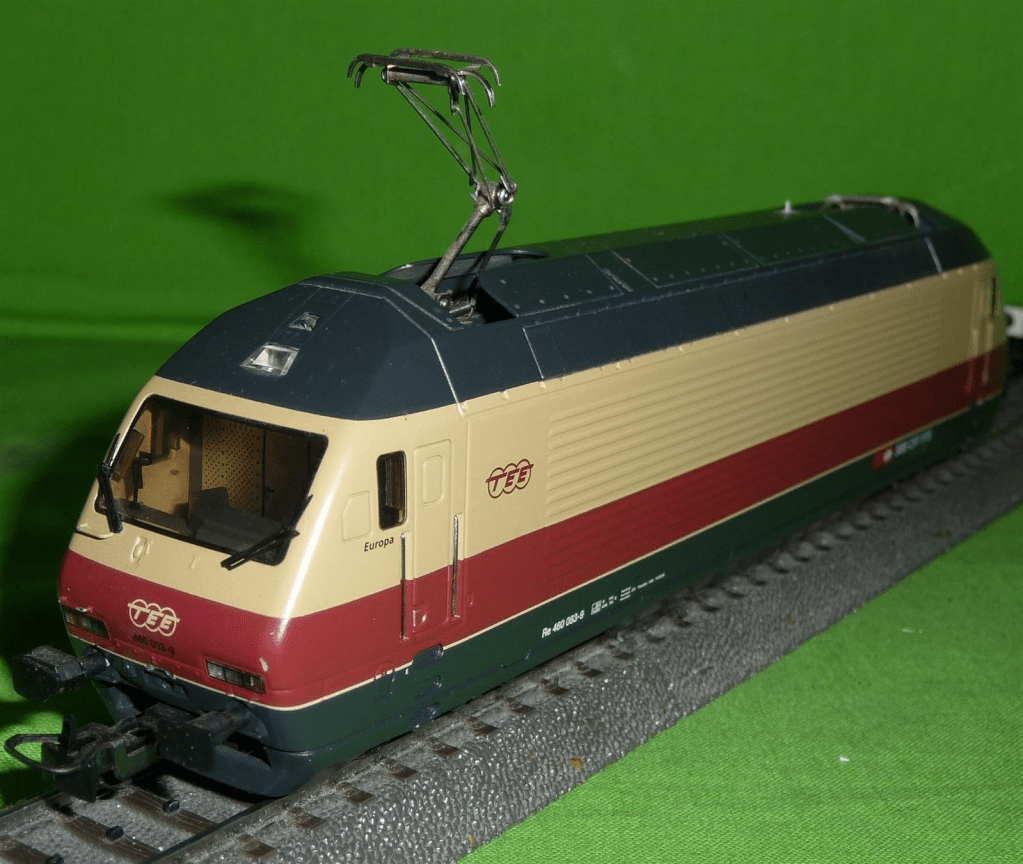
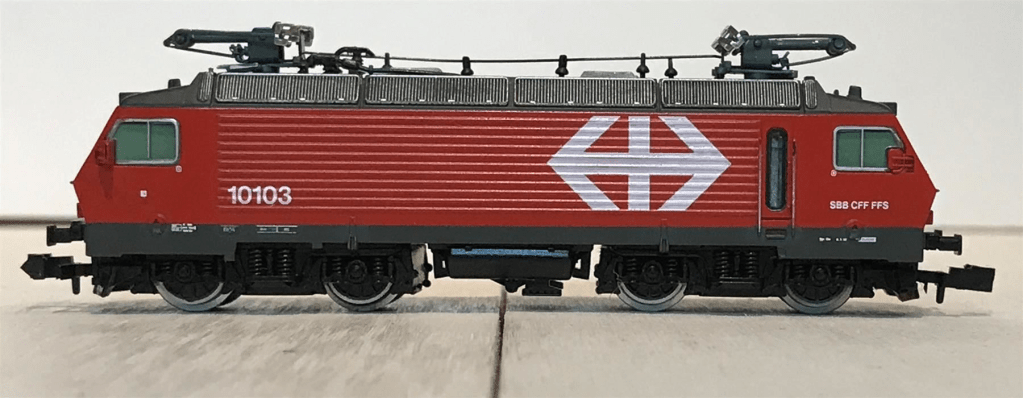
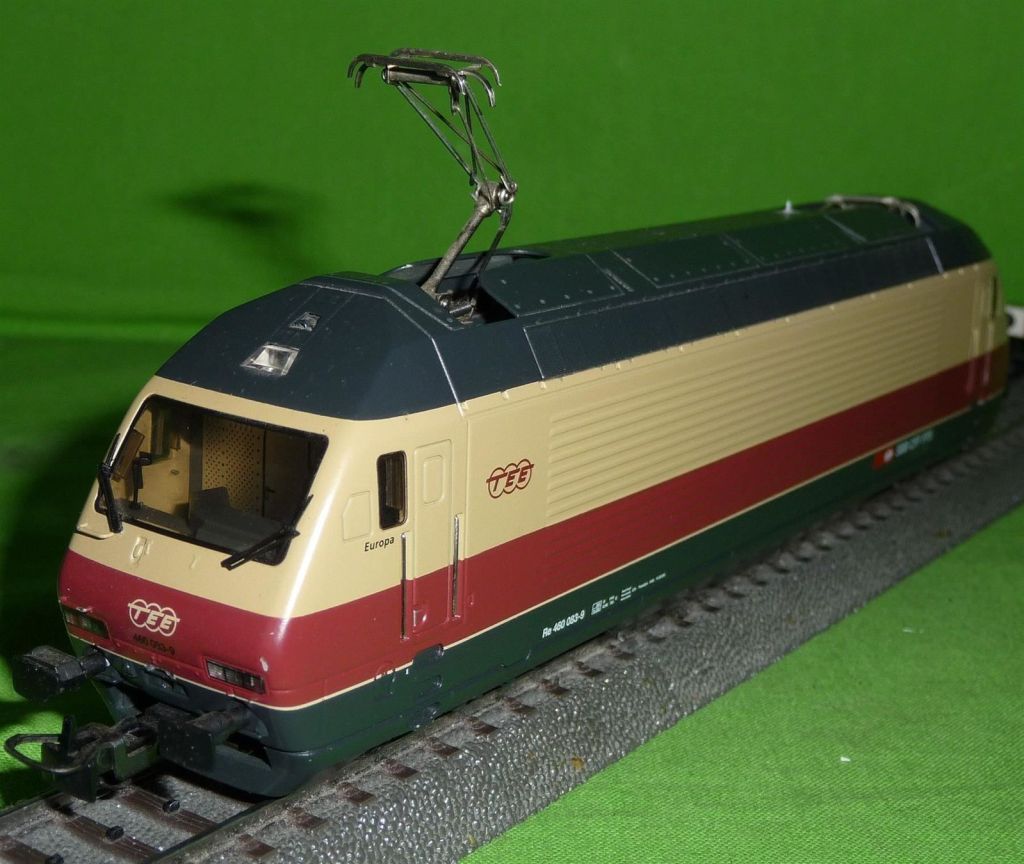
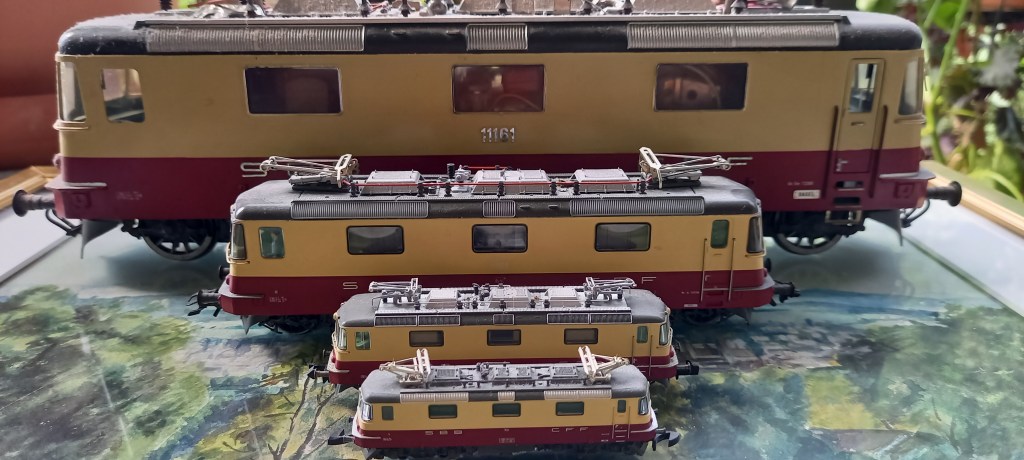
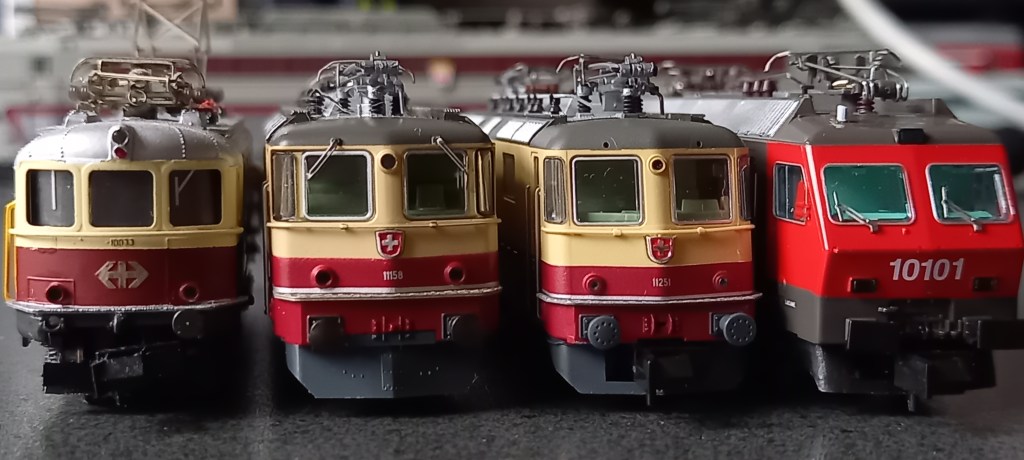
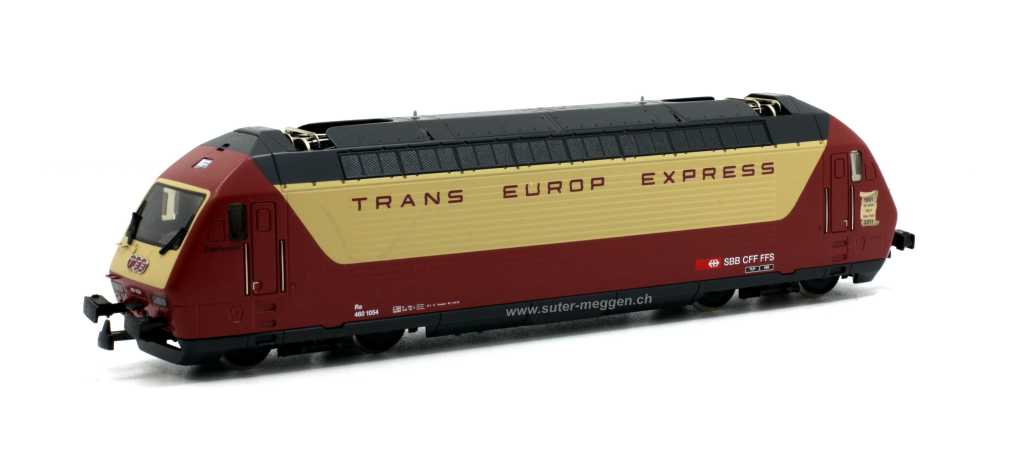
SBB Re 4/4 460 083-9 TEE Hag 280.34 Limitiert Lok Nummer; 460 083-9 ” TEE ” Lokname “Europa” – HAG 280.34 – Phantasiemodell von HAG – limitierte Auflage 350 Stück – ohne Zertifikat
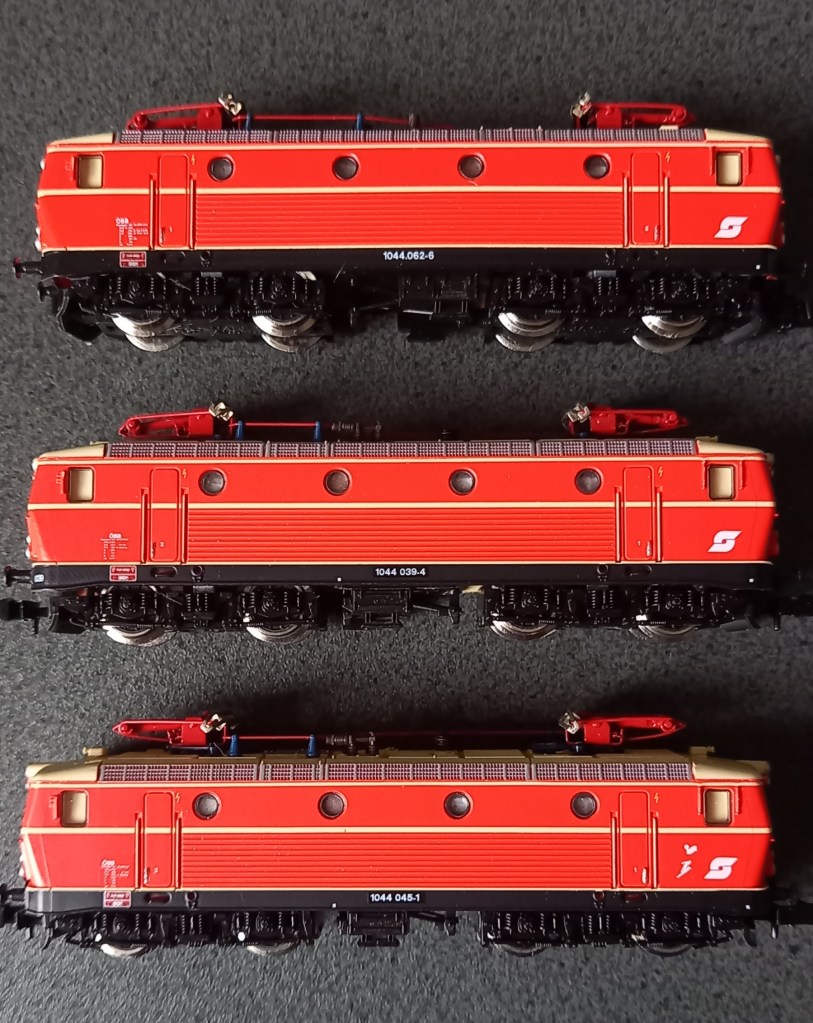
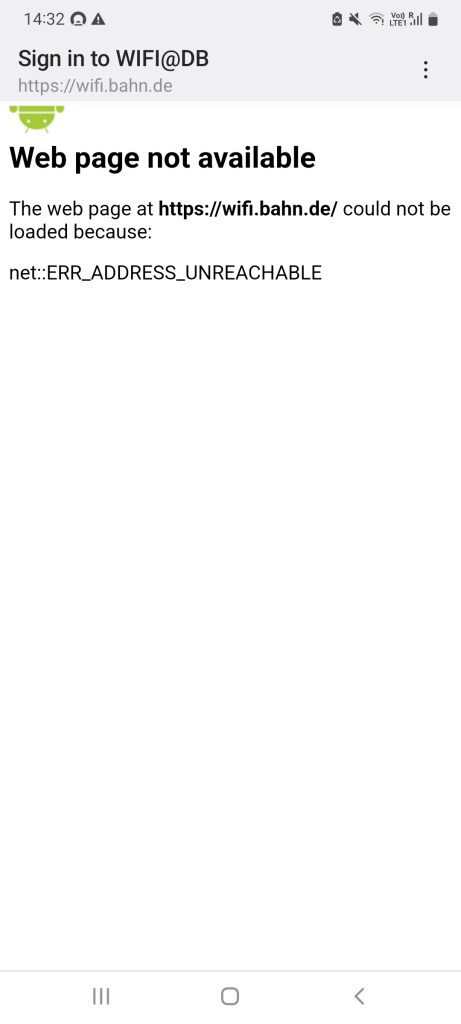
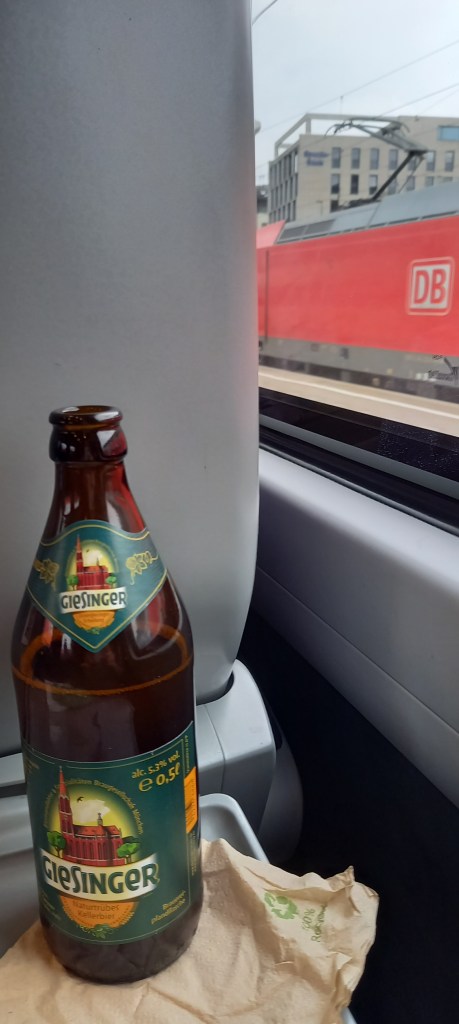
HAG 280.34 SBB Re 4/4 460Roco 23250 Re 4/4 IVRoco N 23242, 23262, 23263Fleischmann Electric loco of the ÖBB, class 1010 737301ROCO 70434 1044.01Bier & DB KeksIf address unreachable then drink Giesinger
CultureClub are an English pop band formed in London in 1981 like Grauzone or G9. The band comprises Boy George (lead vocals), Roy Hay (guitar and keyboards), and Mikey Craig (bass guitar), and formerly included Jon Moss (drums and percussion). Emerging in the New Romantic scene, they are considered one of the most representative and influential groups of the 1980s..
Concert List CologneClassic Hotel HarmonyGIN Store StrasbourgEuropean Classic Concert Culture ECCC
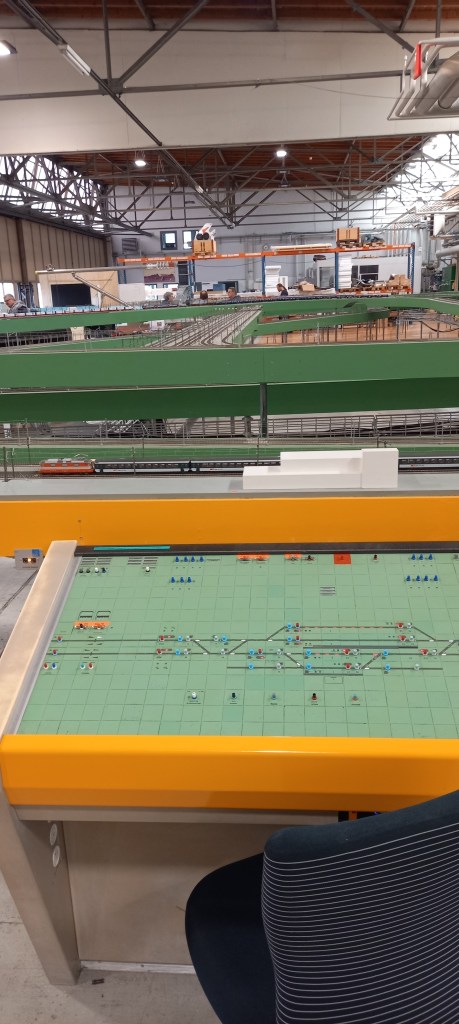
Bahn Betriebs Labor Dübendorf
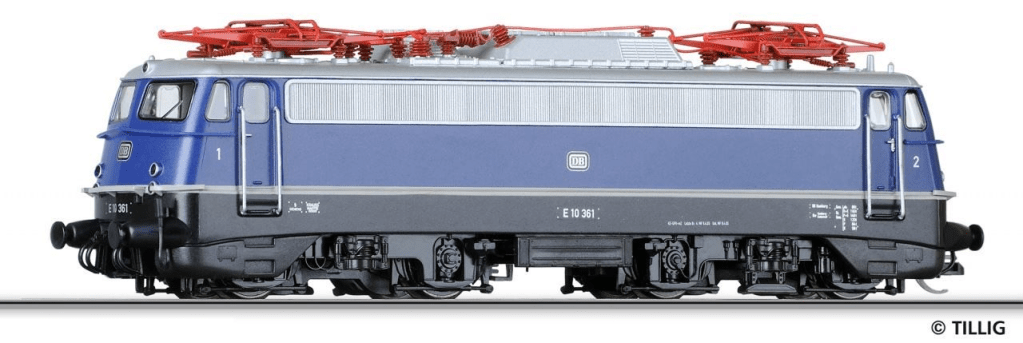
Eisenbahn Betriebslabor DübendorfTILLIG 02483 TT E-Lok E10.3 DBTrix CC 40105Veytaux GareAus https://twitter.com/DerFrankymanImage2Text API Test
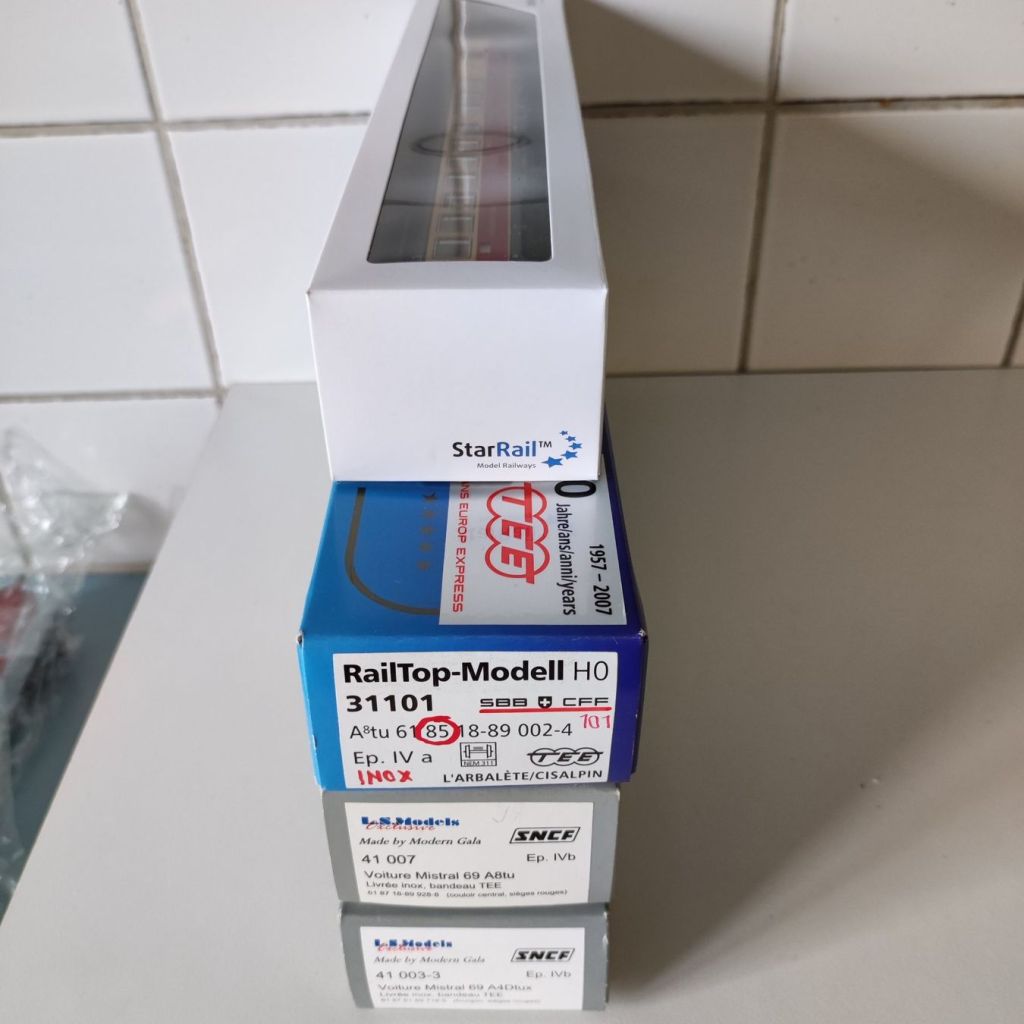
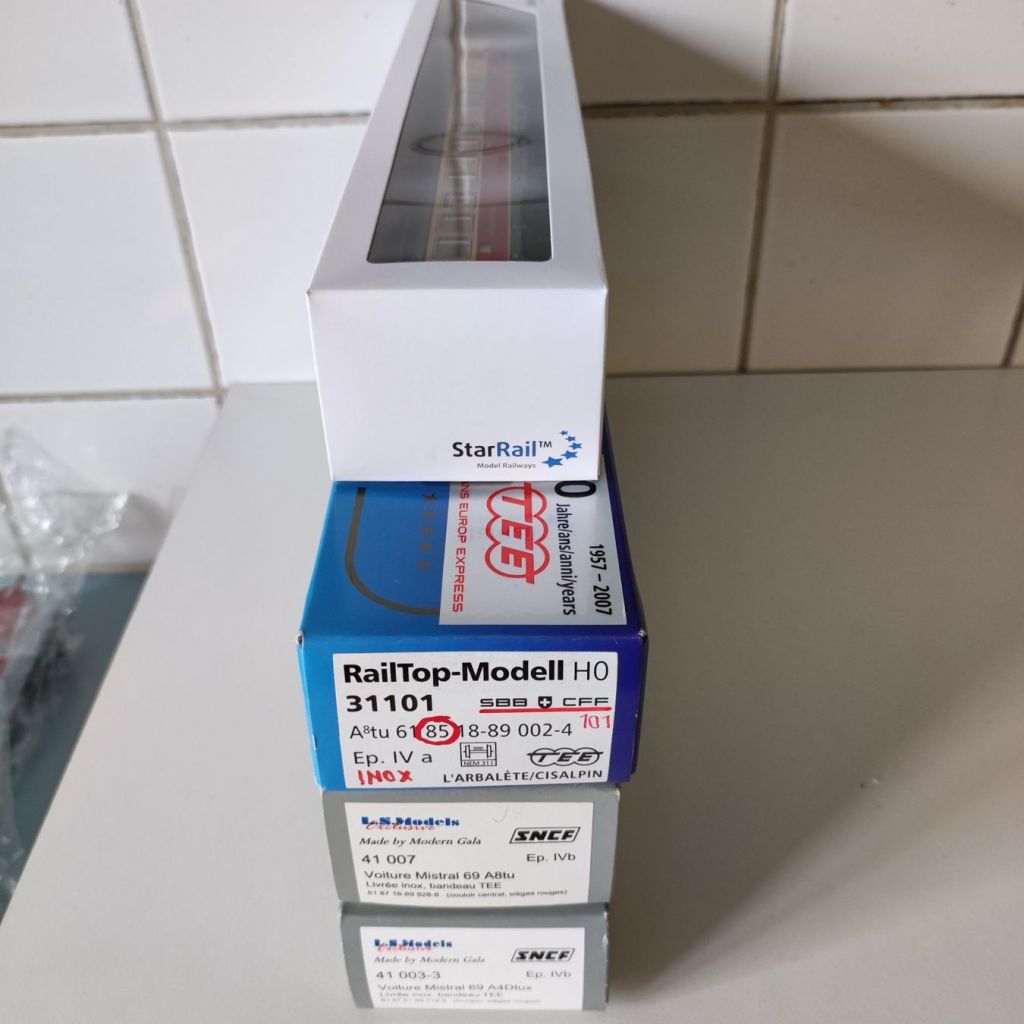
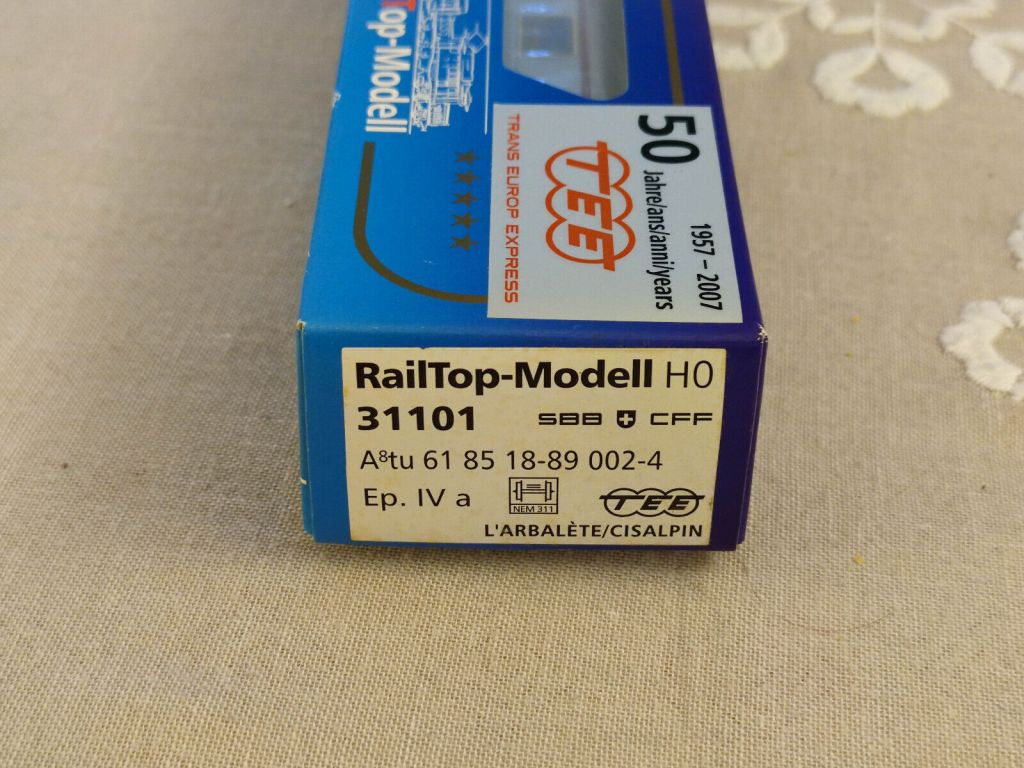
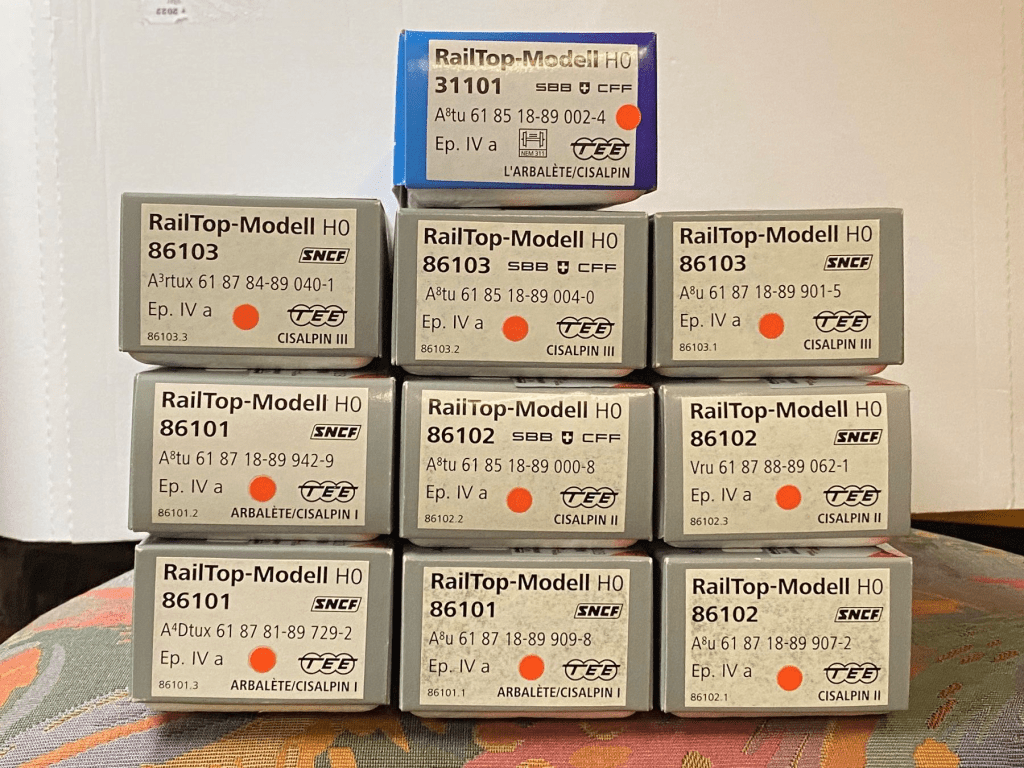
1 Wagen “Arbaléte” A8tu TEE, SNCF, RailTop, 31101
1 Wagen “Mistral” 69, A8tu TEE, SNCF, LS 41007
1 Personenwagen mit Gepäckabteil, “Mistral” 69 A4Dtux TEE, SNCF, LS 41003-3
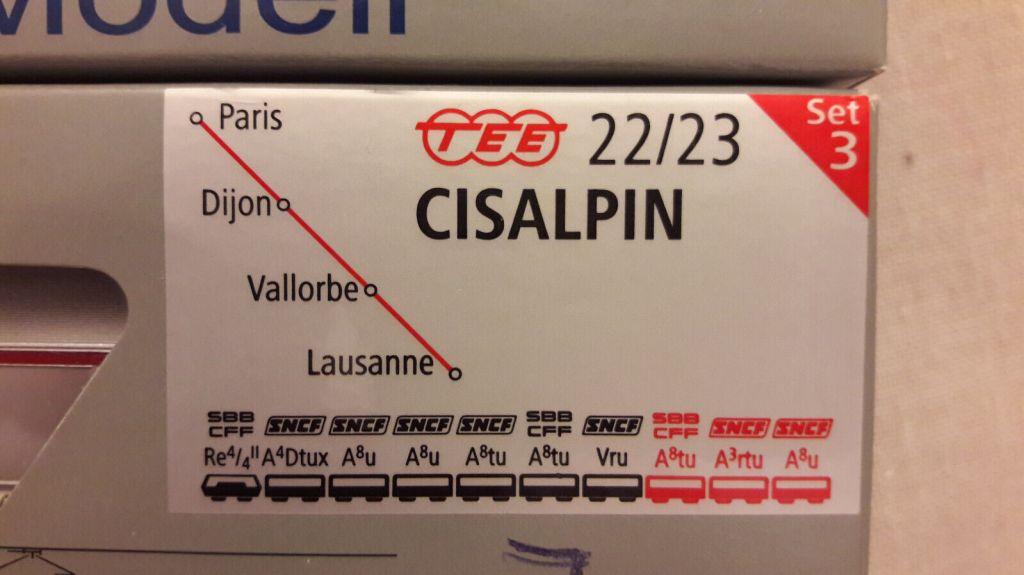
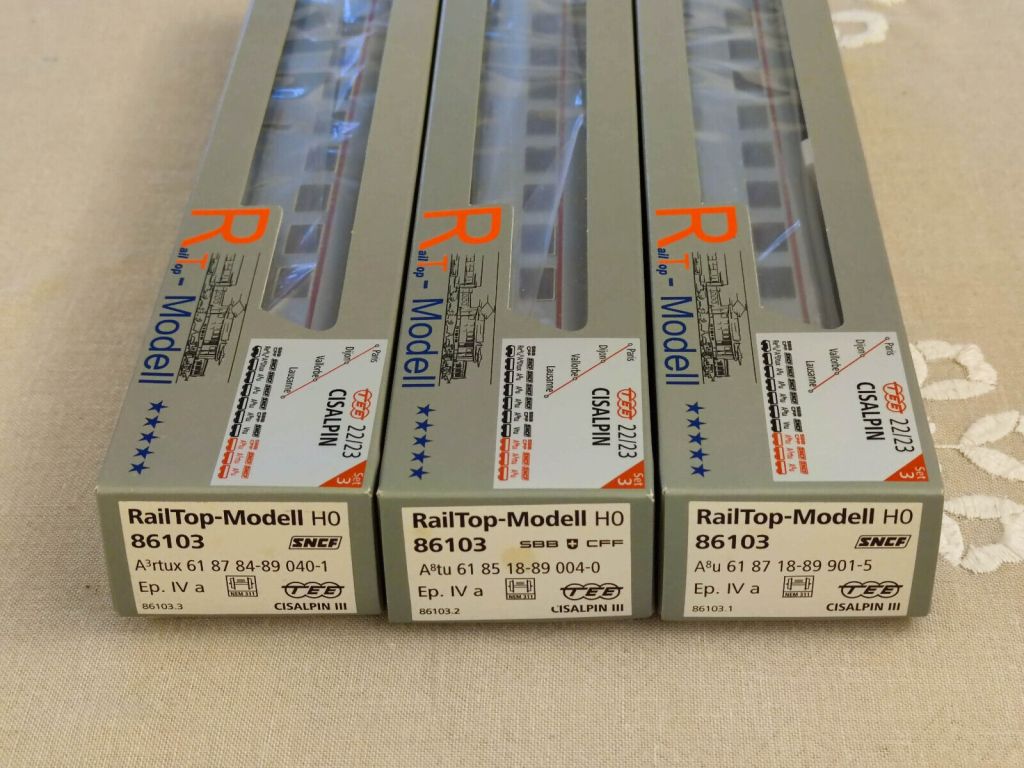
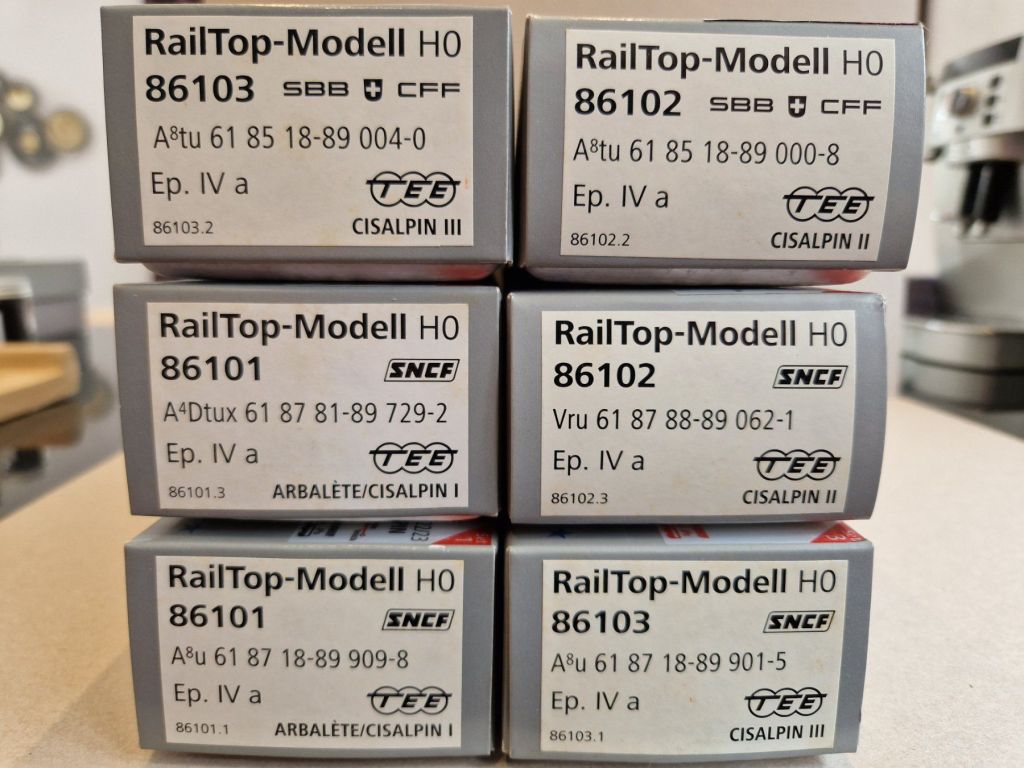
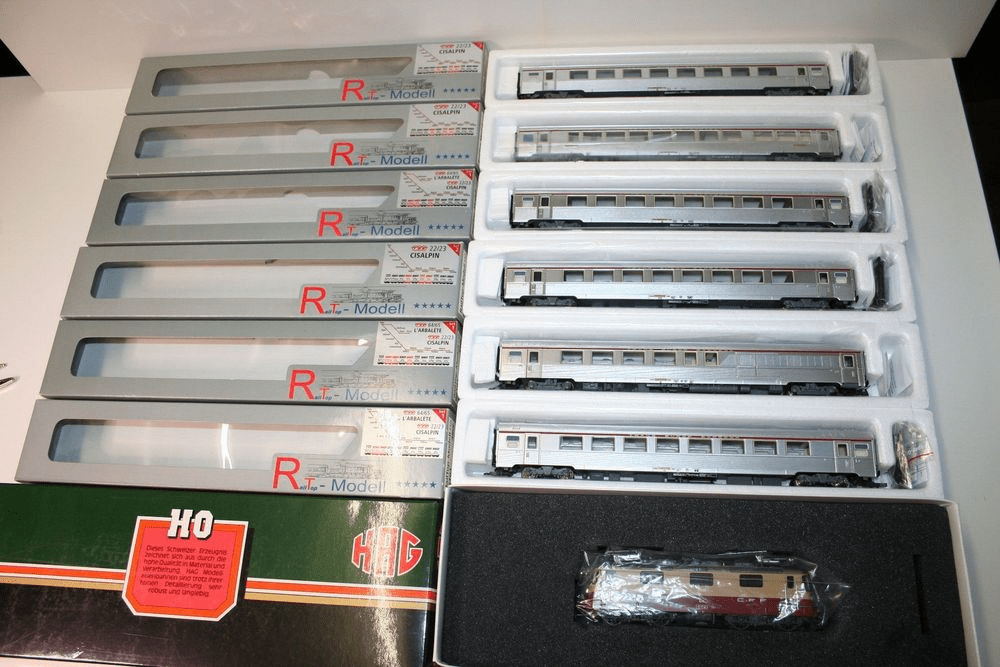
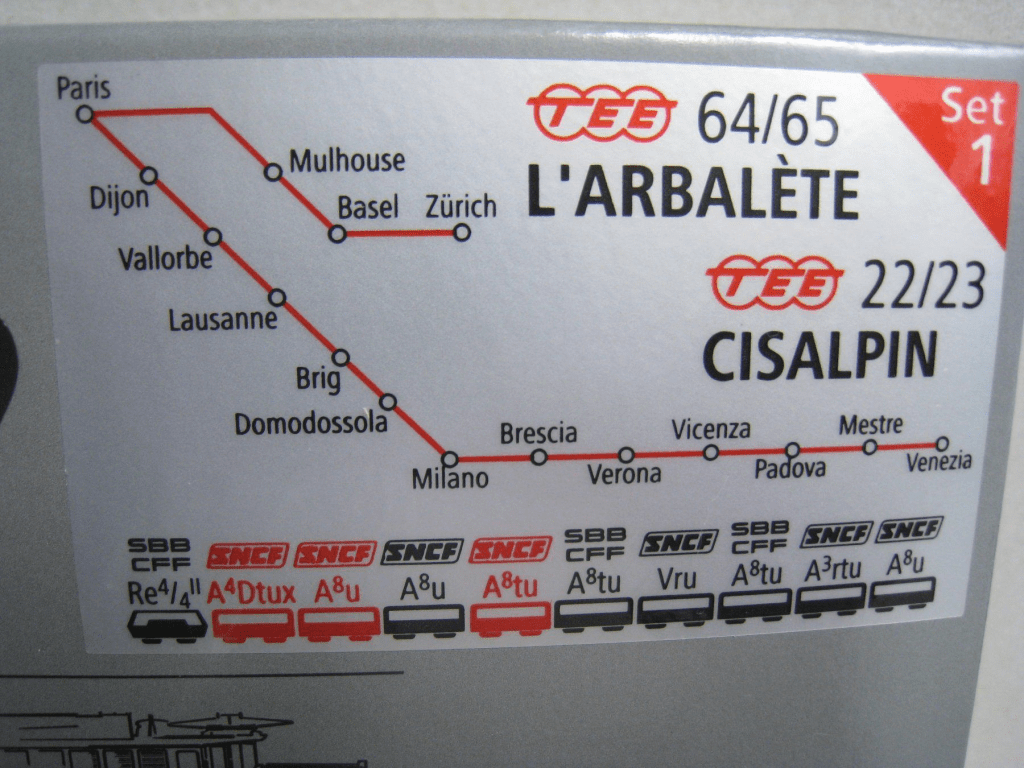
86101 SET TEE Arbalète/Cisalpin I: 3 SNCF TEE-Wagen “Mistral 69”, A8tu+A8u+A4Dtu 86102 SET TEE Cisalpin II: 3 TEE Wagen “Mistral 69”, SBB A8tu+SNCF A8u+VRu 86103 SET TEE Cisalpin III: 3 TEE Wagen “Mistral 69”, SBB A8tu+SNCF A4rux+A8u
Einzelwagen Sonderserie „50 Jahre TEE 1957 – 2007“
31101 SBB A8tu 61 85 18-89 002-4 Grossraumwagen
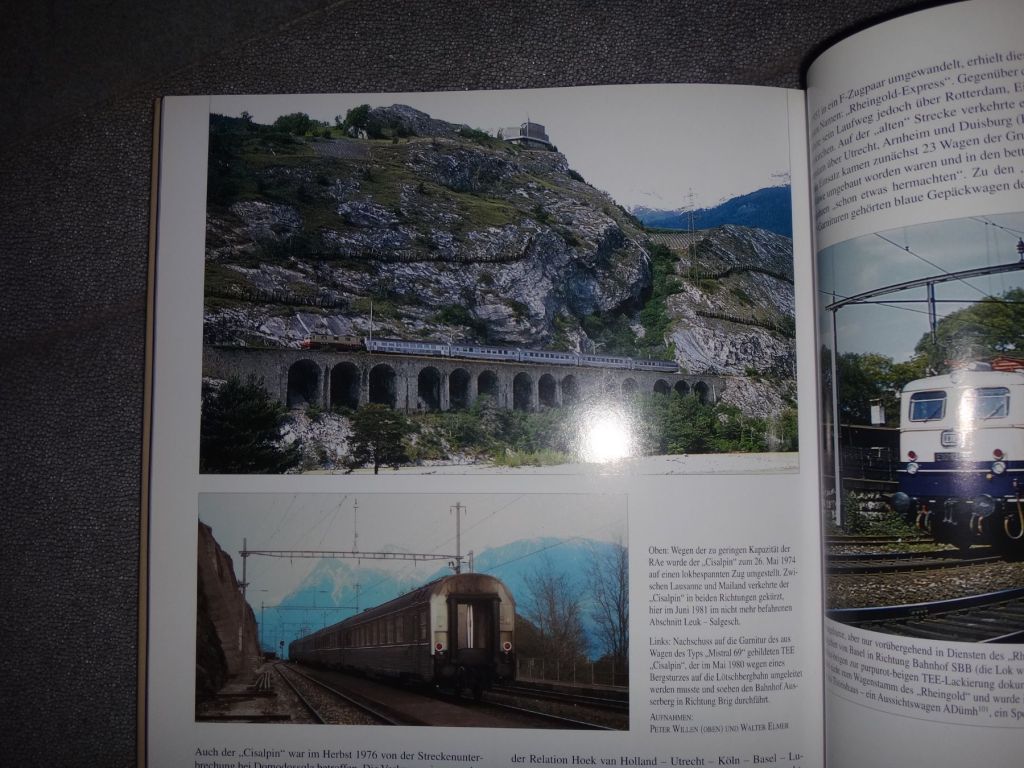
RailTop MapS. 120 TEE-Züge in der Schweiz
Sauschwänzlebahn Pfingsten 2023
Sauschwänzle Museumsbahn 2023CC 6526 CapitoleSNCF Parade ce qui sert à transmettre, à faire passer d’un lieu à un autre, à communiquer.CC 6500Second ShotJouef CC 6511 and 6568Test TEE Solver
mX4 executed: 07/06/2023 10:15:43 Runtime: 0:0:3.177 Memload: 49% use
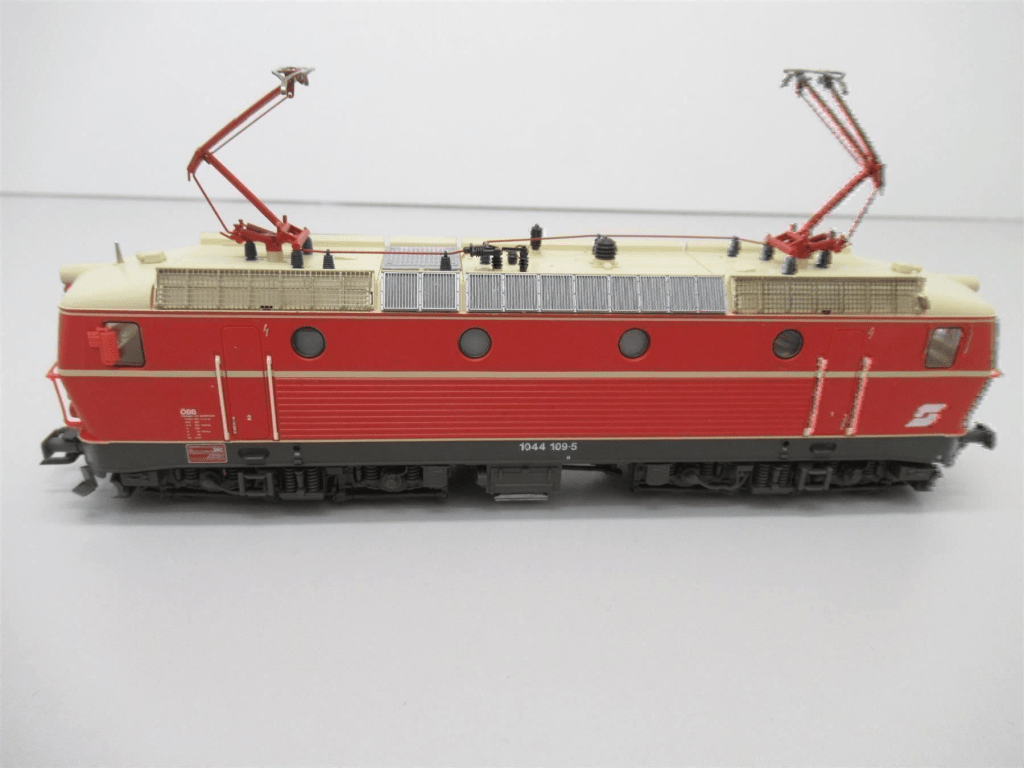
Teach at Basel June 2023Swatch Birthday 2023Koblenz DB MuseumCologne Last Day on Bike Tour Mainz-Cologne June 2023TEE HelvetiaMinitrix 12718DB and DSBRoco 63588 ÖBB 1044 109-5 DC
TEE II August 2023
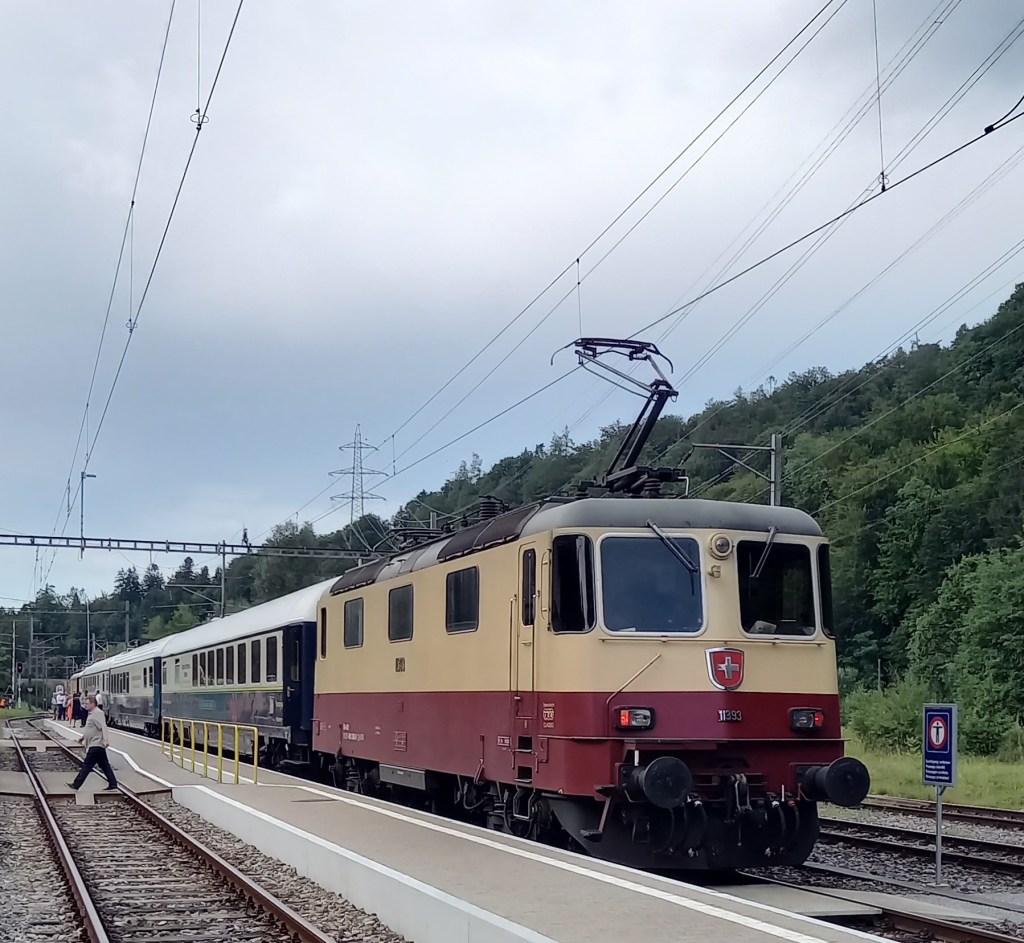
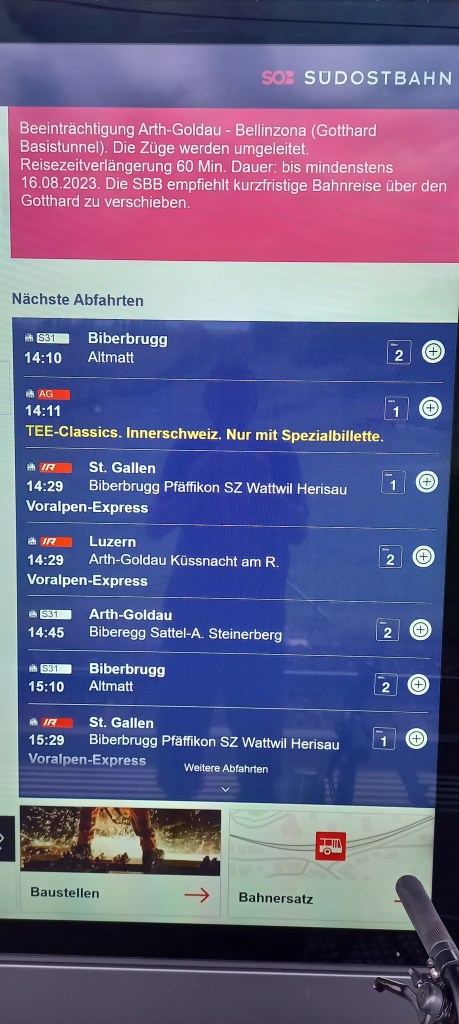
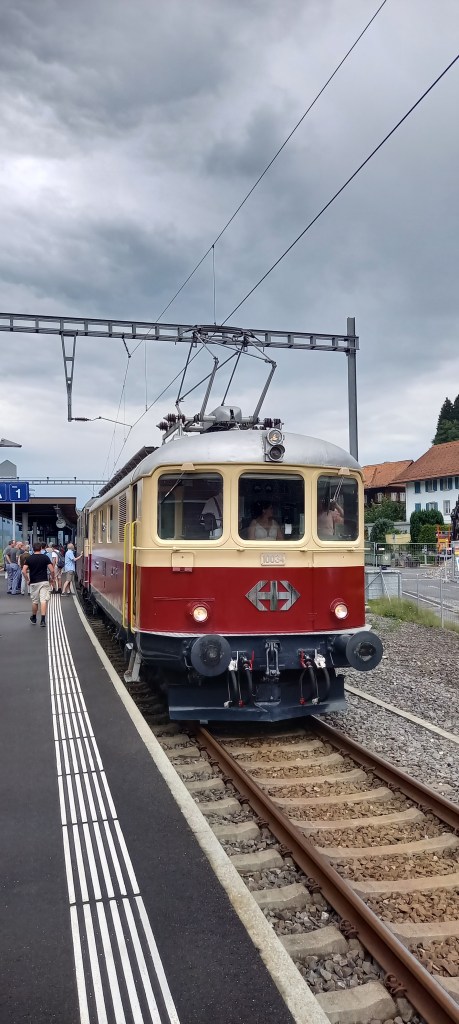
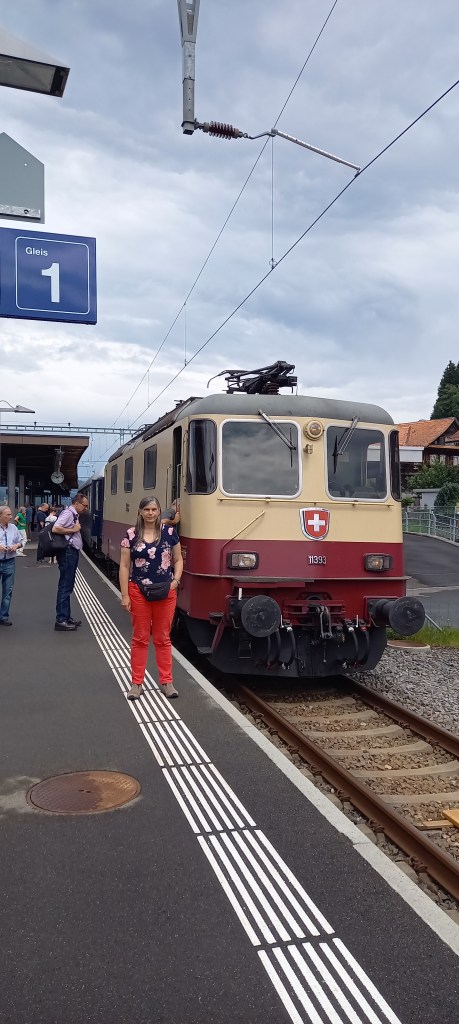
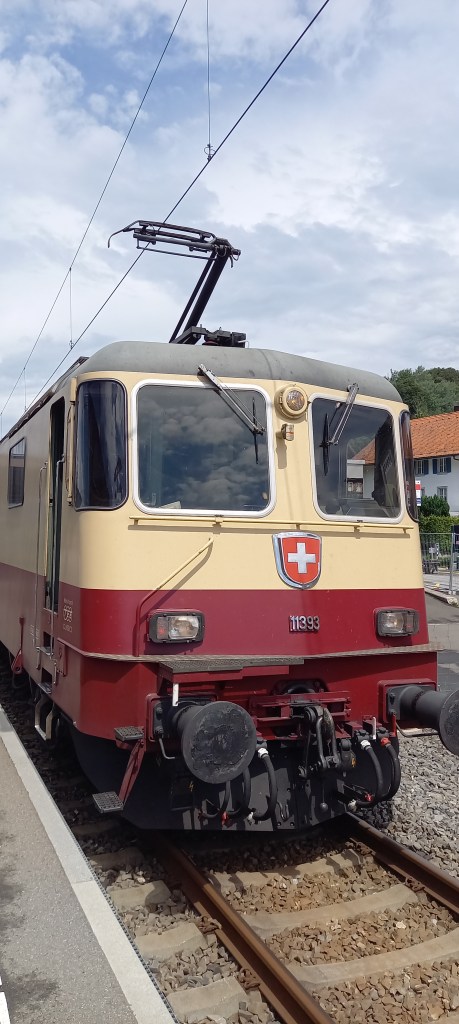
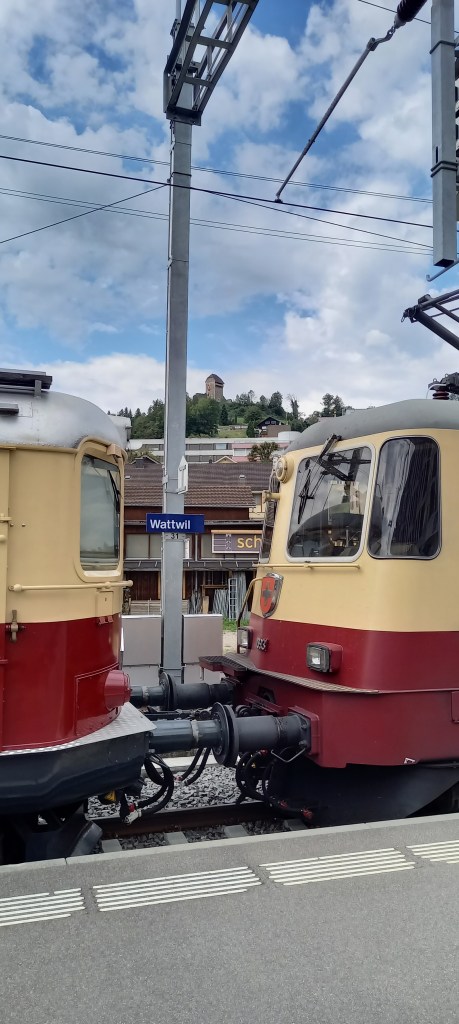
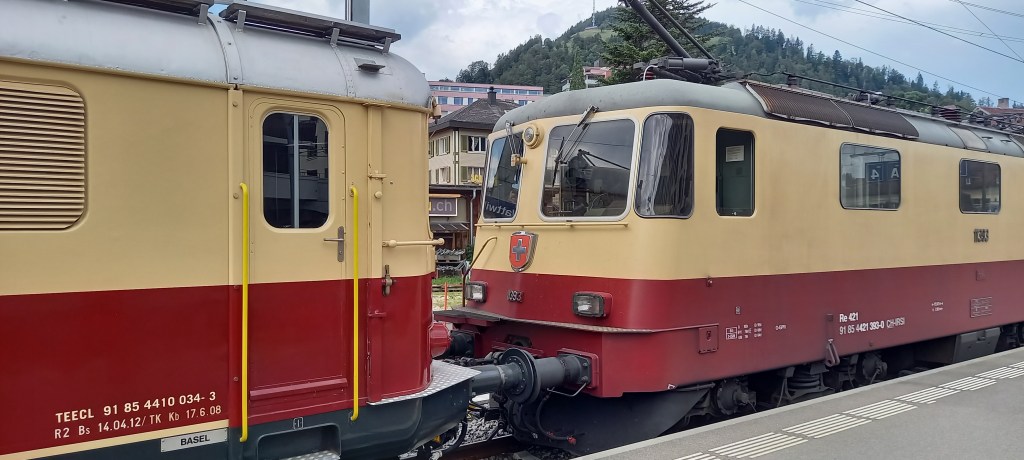
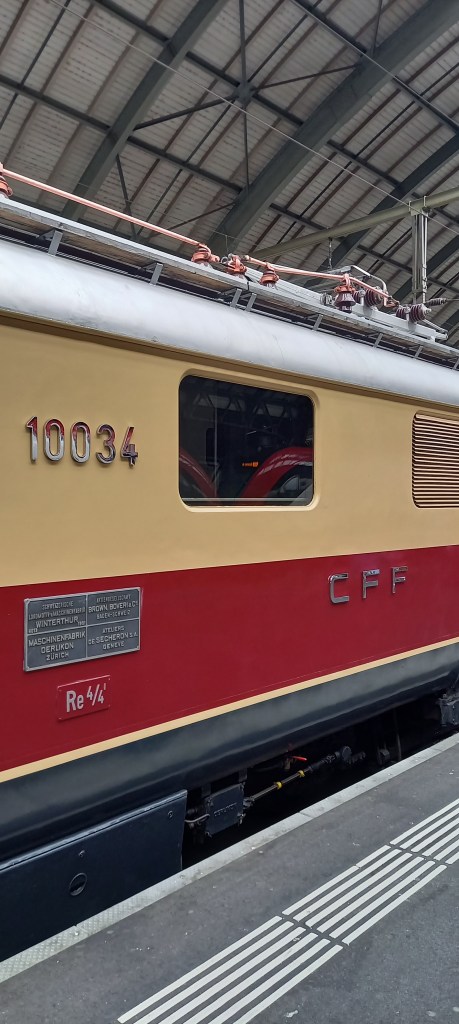
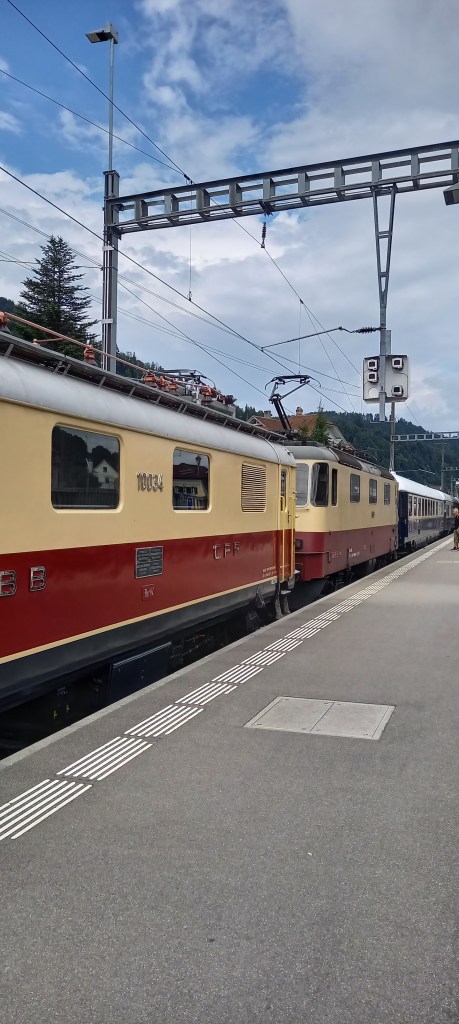
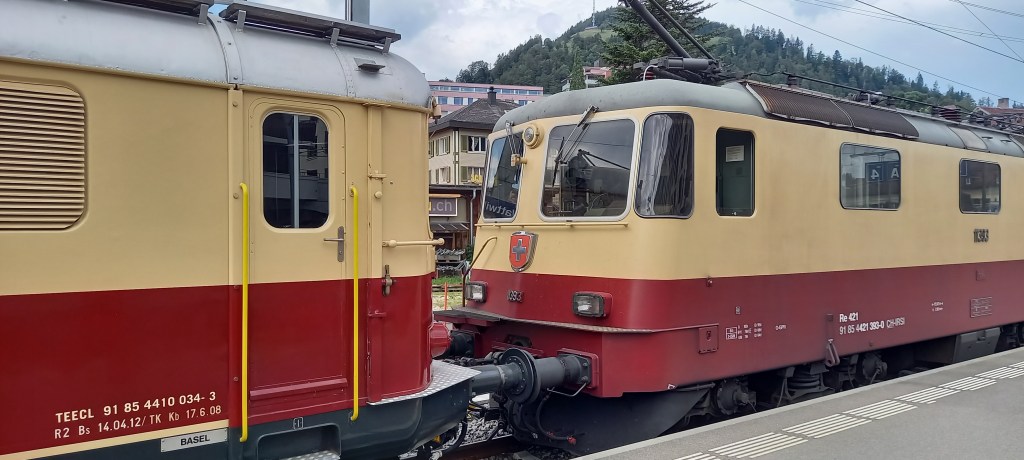
After last year’s premiere with the beautiful cars of the Prestige Continental Express with Belle Époque-style interiors, we have all three carriages available this year with the TEE Innerschweiz. Because the ambience of these cars is so unique, we as TEE-Classics ,decided to use them again for our traditional dining car ride. Our Re 4/4 | 10034 TEE leads the train together with the beautiful Re 421 393 TEE over the saddle to Arth-Goldau for the first time and after 2016 again via the beautiful lake route from Küssnacht a.R. to Lucerne.
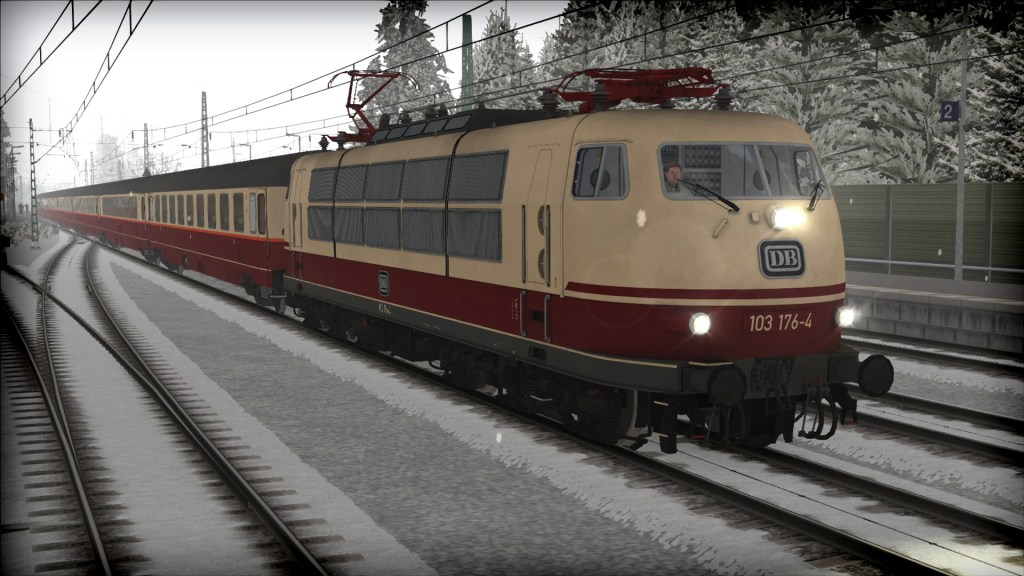
Le Salon BleuTEE II Innerschweiz10034 & 11393Garden Locs Tracks: 0-H0-N-ZRe 4/4 I-IV Track N (Lemaco, Fleischmann, Hobbytrain)Jouef CC 21004TEE Radio
As part of a unit on Trigonometry, we review compass and true bearings before working with bearings in Trigonometry problems. To start this review lesson, we looked at some images from Google Earth.
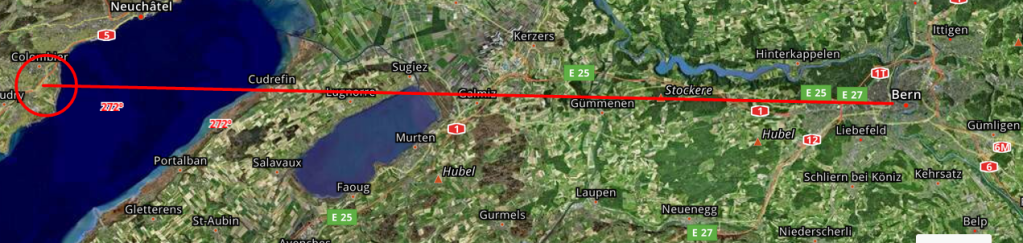
Bearing 272° Switzerland Neuchatel Airport .- Distance 23.9 Nautical Miles
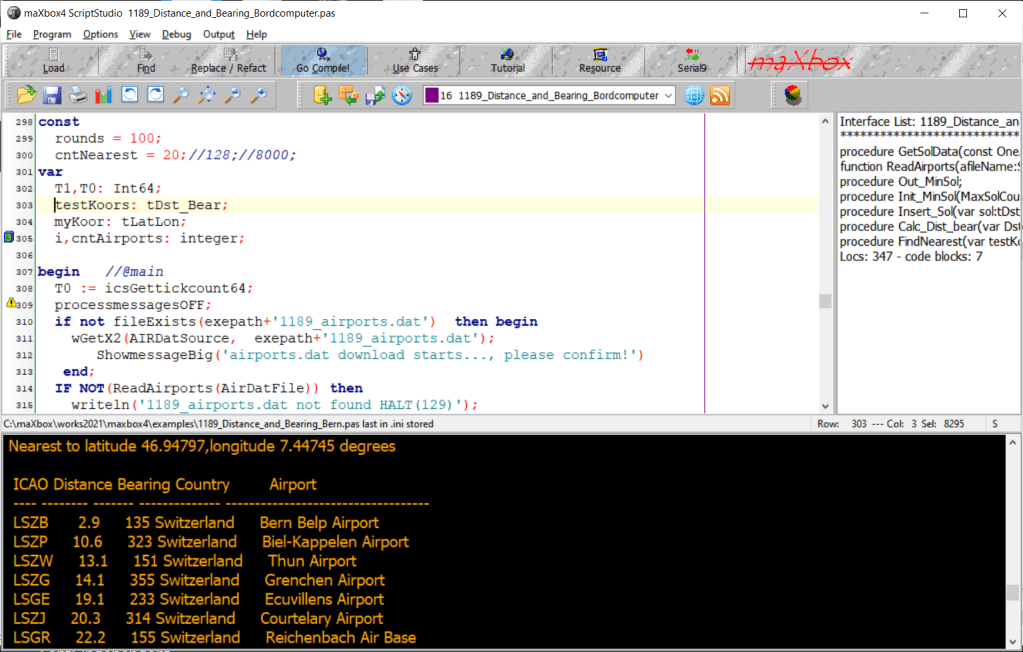
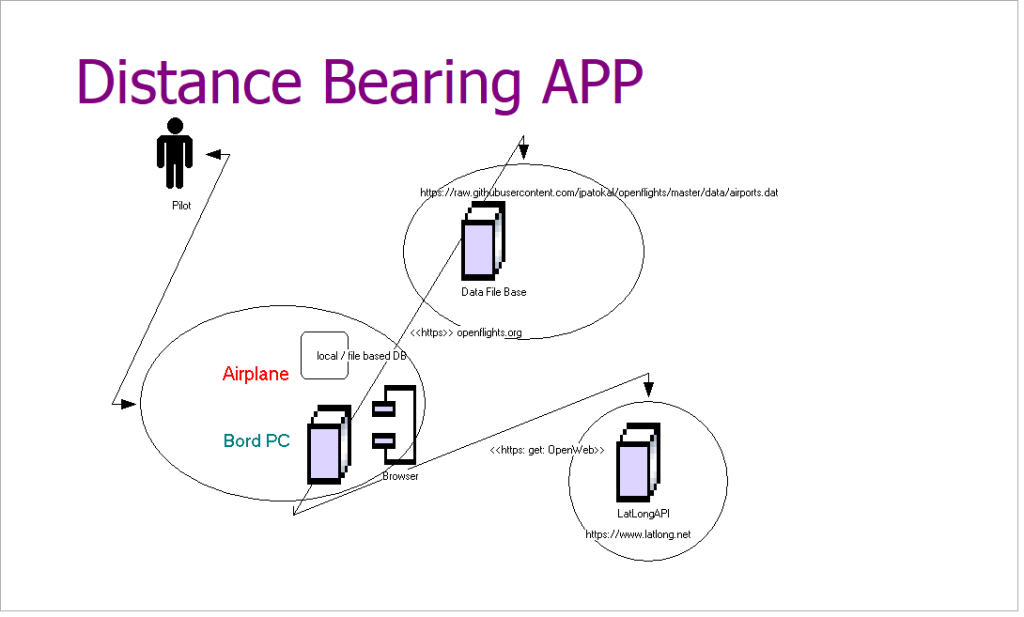
It is very important in aviation to have knowledge of the nearby airports at any time in flight. The task is the following:
Determine the distance and bearing from an Airplane to the 20 nearest Airports whenever requested. Use the non-commercial data from openflights.org airports.dat as reference.
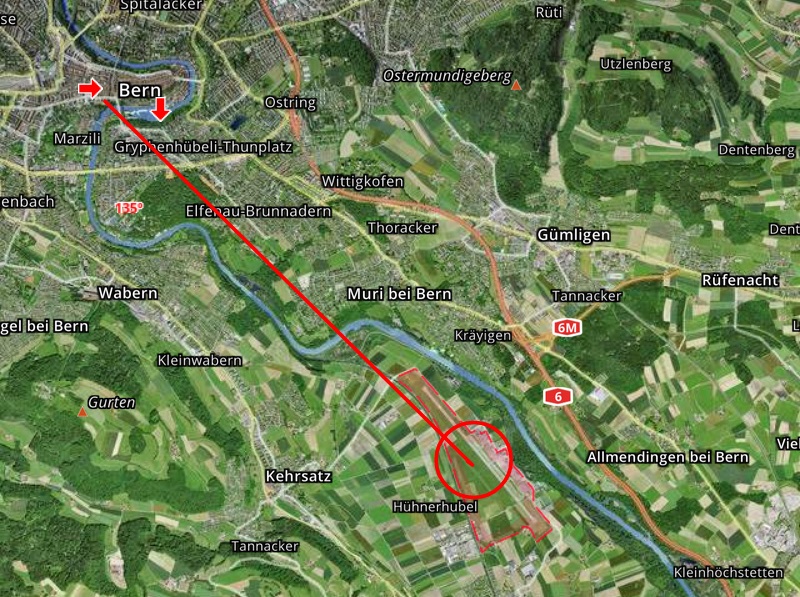
A request comes from an airplane at position ( latitude, longitude ): ( 46.94797, 7.44745 ). This is the place where the famous Zytglogge Tower (Clock Tower) at Bern Capital of Switzerland is.
Name(2), Country(4), ICAO(6), Distance and Bearing calculated from Latitude(7) and Longitude(8).
procedure FindNearest(var testKoors:tDst_Bear;cntAirports,cntNearest:Integer);
var i: Int32;
begin
  Init_MinSol(cntNearest);
  For i:= 0 to cntAirports-1 do Begin
    testKoors.Koor2:= AirPorts[i].Sol_Koor;
    Calc_Dist_bear(testKoors);
    Insert_Sol(testKoors,i);
  end;
end;
Distance is measured in nautical miles (NM). Resolution is 0.1 NM.
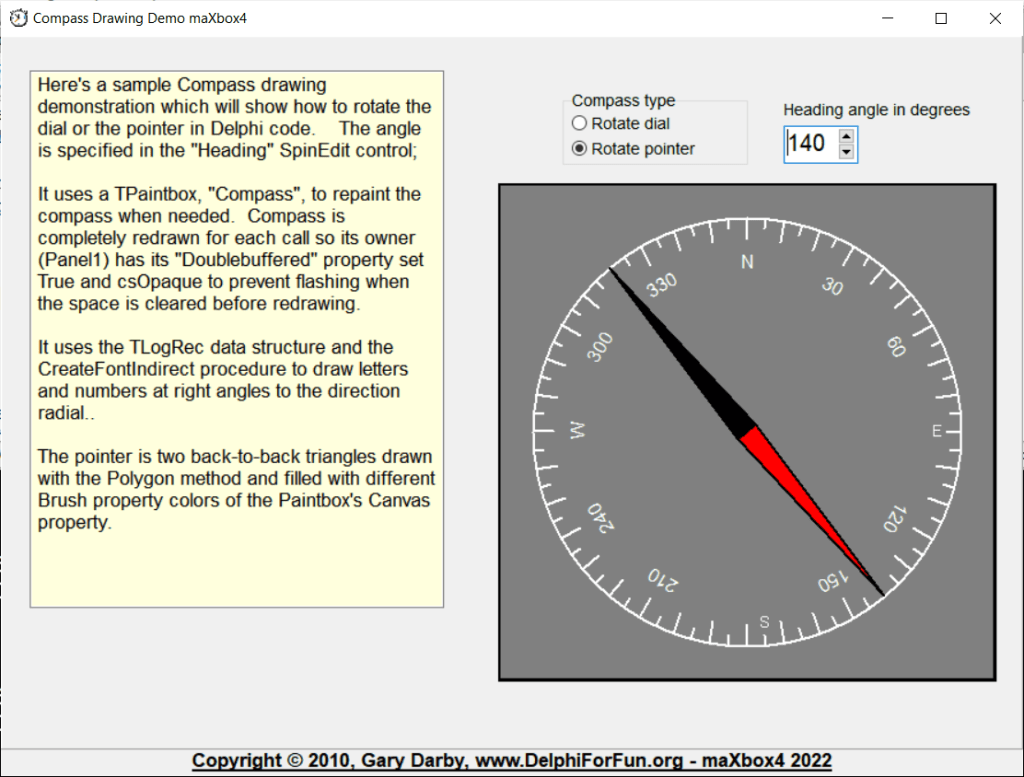
Bearing is measured in degrees (°). 0° = 360° = north then clockwise 90° = east, 180° = south, 270° = west. Resolution is 1°.
procedure Out_MinSol;
var
  i: integer;
begin
writeln(' ICAO Distance Bearing Country        Airport');
writeln(' ---- -------- ------- -------------- ---------');
  For i:= 0 to minSols.actidx do
    with AirPorts[minSols.sols[i].AirportIdx] do
      writeln(Format(' %4s %8.1f %7.0f %-14s  %-35s',
                     [Sol_ICAO,
                      Sol_dist_dir.distance*DiaEarth,
                      Sol_dist_dir.bearing*cRadToDeg,
                      Sol_Country,Sol_Name]));
  writeln('');
  writeln(itoa(cntInserts)+' inserts to find them');
end;
The output shows distance and bearing from the point of view, in our example the Zytglogge-Tower. Bearing is the angle to the next airport:
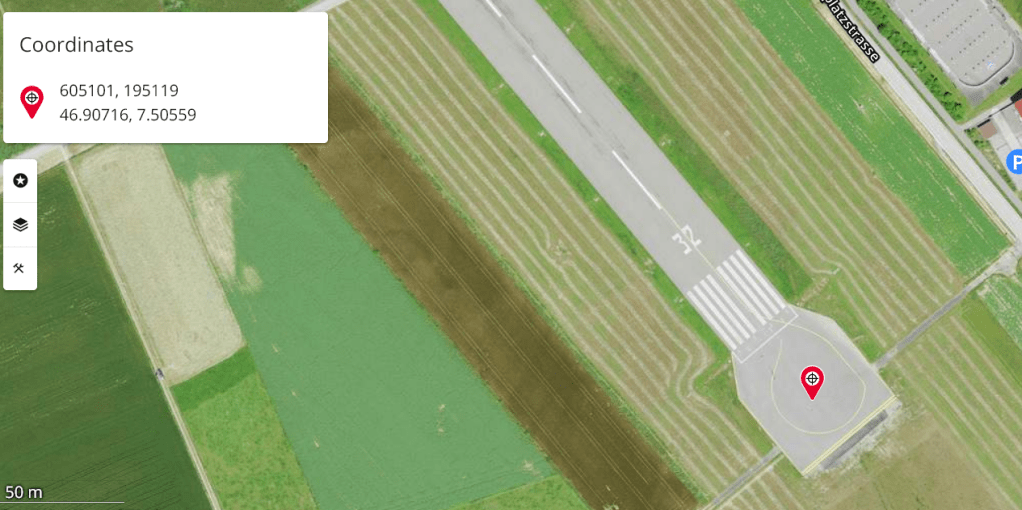
LSZB 2.9 135 Switzerland Bern Belp Airport
3469 ms for reading airports.dat 30531 ms for searching 100 times of 20 nearest out of 7698 airports 202 inserts to find them
Nearest to latitude 46.94797,longitude 7.44745 degrees
A good discussion to start thinking about bearings, how they fit into 360°, how standards are used around the world and why true bearings are often used rather than compass bearings and what’s the difference to heading.
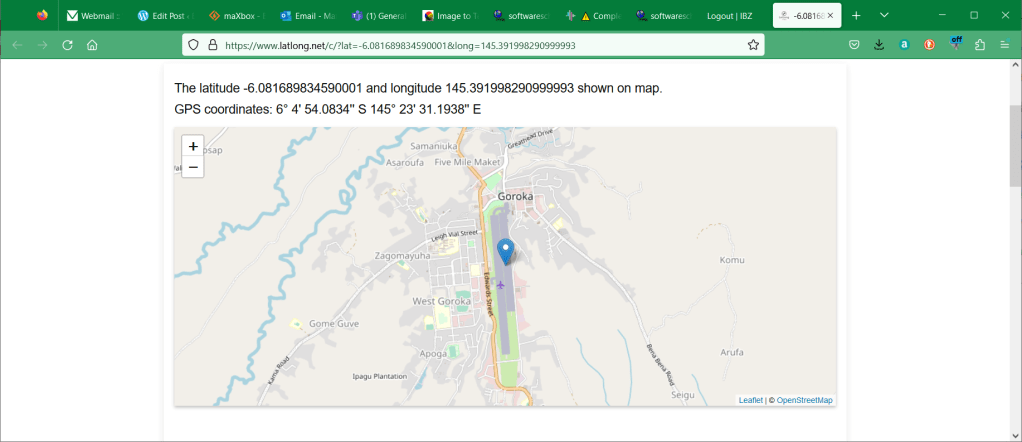
Nearest to latitude -6.08169,longitude 145.39198 degrees
ICAO Distance Bearing Country Airport
AYGA 0.0 0 Papua New Guinea Goroka Airport AYCH 25.4 278 Papua New Guinea Chimbu Airport AYMD 57.6 24 Papua New Guinea Madang Airport AYMH 67.2 283 Papua New Guinea Mount Hagen Kagamuga Airport AYNZ 84.8 110 Papua New Guinea Nadzab Airport AYBA 91.5 202 Papua New Guinea Baimuru Airport AYWD 93.1 286 Papua New Guinea Wapenamanda Airport AYKT 93.3 156 Papua New Guinea Kaintiba Airport AYBU 101.2 132 Papua New Guinea Bulolo Airport AYMN 103.6 268 Papua New Guinea Mendi Airport AYKK 105.4 220 Papua New Guinea Kikori Airport AYKM 115.1 169 Papua New Guinea Kerema Airport AYMR 129.6 262 Papua New Guinea Moro Airport AYTA 146.5 275 Papua New Guinea Tari Airport AYSS 176.5 238 Papua New Guinea Sasereme Airport AYWK 181.9 325 Papua New Guinea Wewak International Airport AYBM 188.1 231 Papua New Guinea Balimo Airport AYDU 222.2 216 Papua New Guinea Daru Airport AYBD 226.4 143 Papua New Guinea Bodinumu Airport AYKQ 227.9 144 Papua New Guinea Kagi Airport
168 inserts to find them mX4 executed: 25/04/2023 12:59:43 Runtime: 0:0:29.240 Memload: 53% use
Goroka Airport
maXbox challengeMotion Matrix Real Time Systems Scripting RTSS maXbox to work
Want to translate your Text then try this Python Script that uses the Deep-translator module which lets you use any Translator in the below example I used Google Translate to translate text
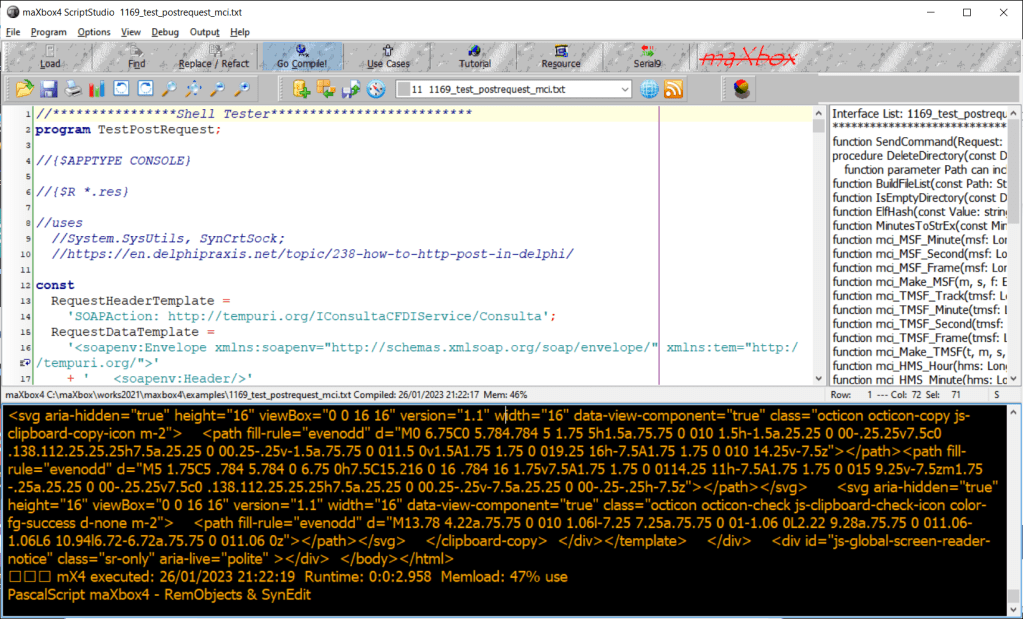
Nearly all operating systems have a simple command to open up a file, directory, or URL from the command line. But what about to send data in a body to a URL with Http POST:
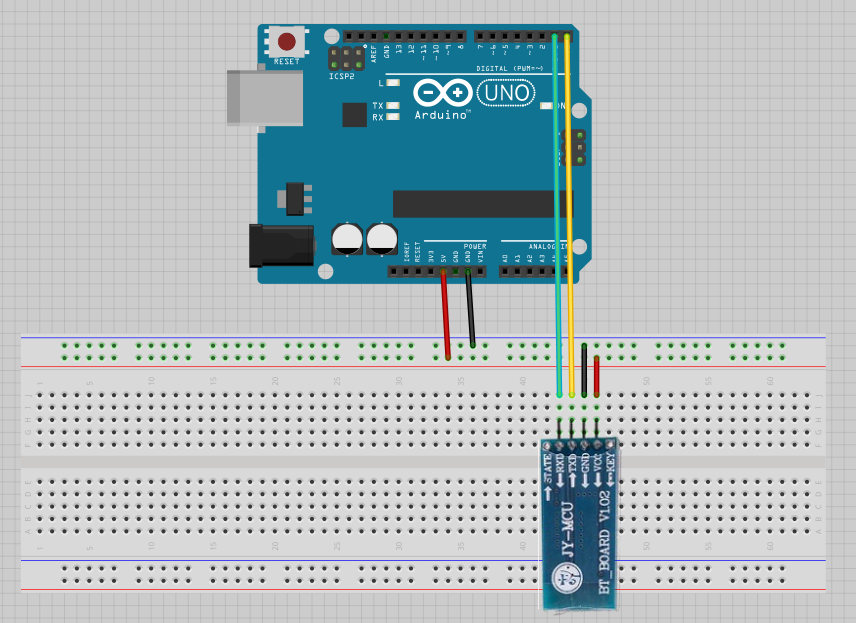
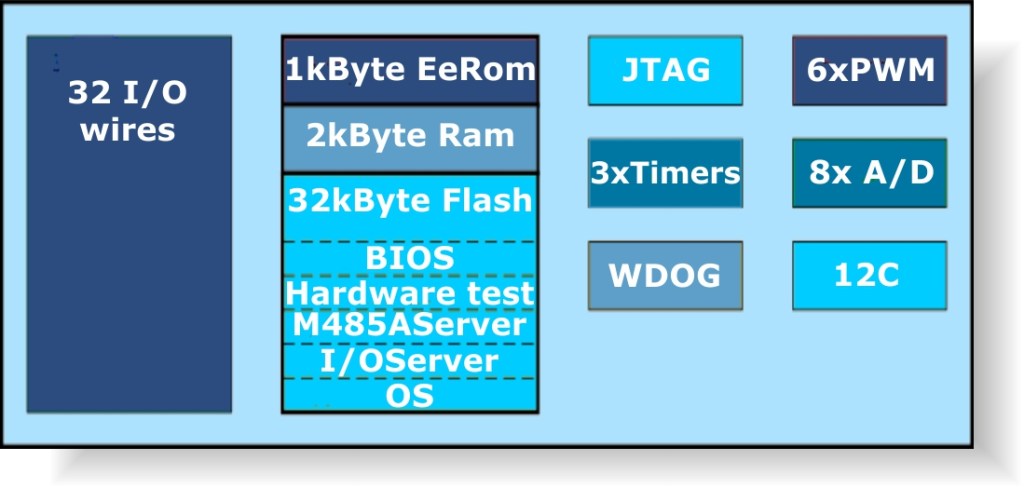
Arduino Shield
POST Schema Prototyp
A sender that generates a message containing a payload body SHOULD generate a Content-Type header field in that message unless the intended media type of the enclosed representation is unknown to the sender. If a Content-Type header field is not present, the recipient MAY either assume a media type of “application/octet-stream” ([RFC2046], Section 4.5.1) or examine the data to determine its type.
It means that the Content-Type HTTP header should be set only for PUT and POST requests.
POST is an HTTP method designed to send data to the server from an HTTP client. The HTTPPOST method requests the web server accept the data enclosed in the body of the POST message. HTTPPOST method is often used when submitting login or contact forms or uploading files and images to the server.
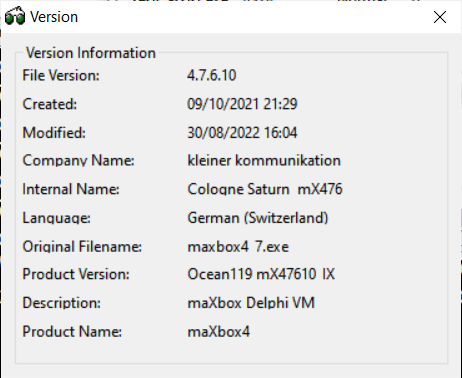
V 4.7.6.10 August 2022
V August 2022
INTERNET_FLAG_SECURE should be used in the flags for HttpOpenRequest, not InternetConnect.
Uses secure transaction semantics. This translates to using Secure Sockets Layer/Private Communications Technology (SSL/PCT) and is only meaningful in HTTP requests. This flag is used by HttpOpenRequest and InternetOpenUrl, but this is redundant if https:// appears in the URL. The InternetConnect function uses this flag for HTTP connections; all the request handles created under this connection will inherit this flag.
A pointer to a null-terminated array of strings that indicates media types accepted by the client. Here is an example.
PCTSTR rgpszAcceptTypes[] = {_T("text/*"), NULL};
Failing to properly terminate the array with a NULL pointer will cause a crash.
If this parameter is NULL, no types are accepted by the client. Servers generally interpret a lack of accept types to indicate that the client accepts only documents of type “text/*” (that is, only text documents—no pictures or other binary files).
I think I am making some progress. I changed WebPostData into a function and copied some code from elsewhere to use SSL and to return a result. It now looks like this:
function WebPostData2(const UserAgent: string; const Server: string; const Resource: string; const Data: AnsiString): String;
var
  hInet:HINTERNET;
  hHTTP:HINTERNET;
  hReq: HINTERNET;
  BufStream: TMemoryStream;
  BytesRead: Cardinal;
  aBuffer  :Array[0..4096] of Char;
  flags    :DWord;
const
  accept:packed array[0..1] of LPWSTR = (('*/*'), nil);
  header:string = 'Content-Type:text/plain';
begin
  hInet:= InternetOpen(PChar(UserAgent),INTERNET_OPEN_TYPE_PRECONFIG,nil,nil,0);
  try
    hHTTP:= InternetConnect(hInet,PChar(Server),INTERNET_DEFAULT_HTTPS_PORT,nil,nil,INTERNET_SERVICE_HTTP,0,1);
    try
      flags:= INTERNET_FLAG_SECURE or INTERNET_FLAG_KEEP_CONNECTION;
      hReq:= HttpOpenRequest(hHTTP,PChar('POST'),PChar(Resource),nil,nil,@accept,flags,1);
      try
        if not HttpSendRequest(hReq,PChar(header),length(header), PChar(Data), length(Data)) then begin
          raise Exception.Create('HttpOpenRequest failed.'+ SysErrorMessage(GetLastError));
        end else begin
           BufStream:= TMemoryStream.Create;
            try
              while InternetReadFile(hReq,@aBuffer, SizeOf(aBuffer),BytesRead) do begin
                if (BytesRead = 0) then Break;
                BufStream.Write(aBuffer, BytesRead);
              end;

              aBuffer[0]:= #0;
              BufStream.Write(aBuffer, 1);
              Result:= PChar(BufStream.Memory);
            finally
              BufStream.Free;
            end;
        end;
      finally
        InternetCloseHandle(hReq);
      end;
    finally
      InternetCloseHandle(hHTTP);
    end;
  finally
    InternetCloseHandle(hInet);
  end;
end;
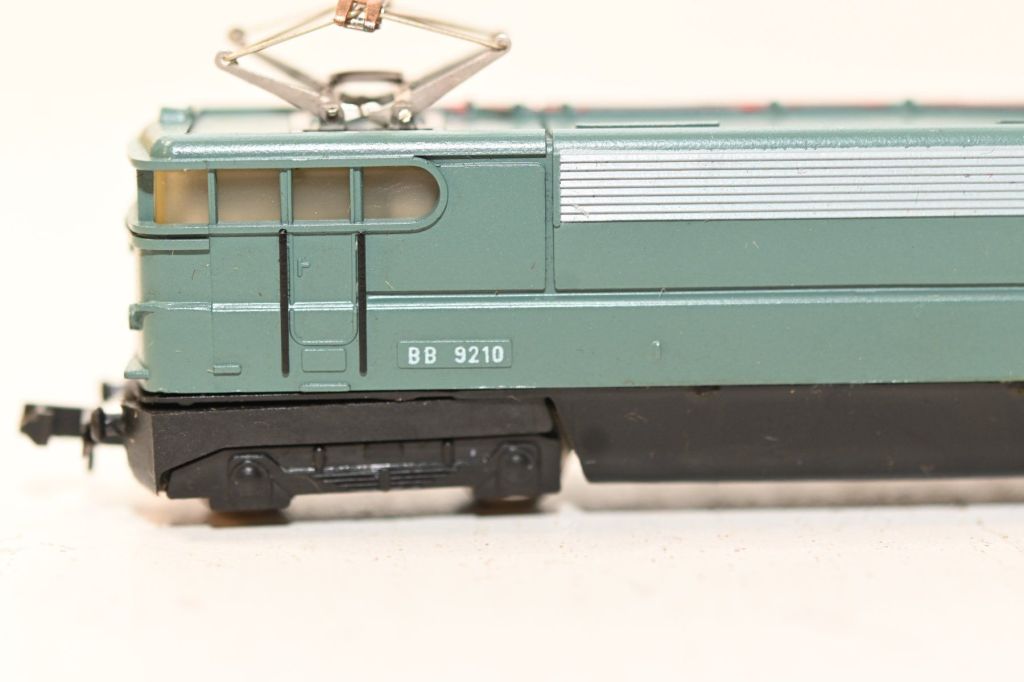
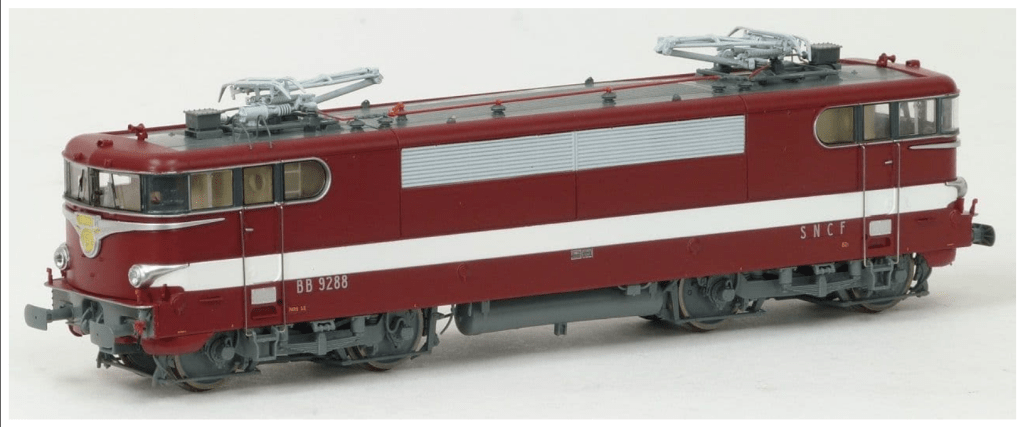
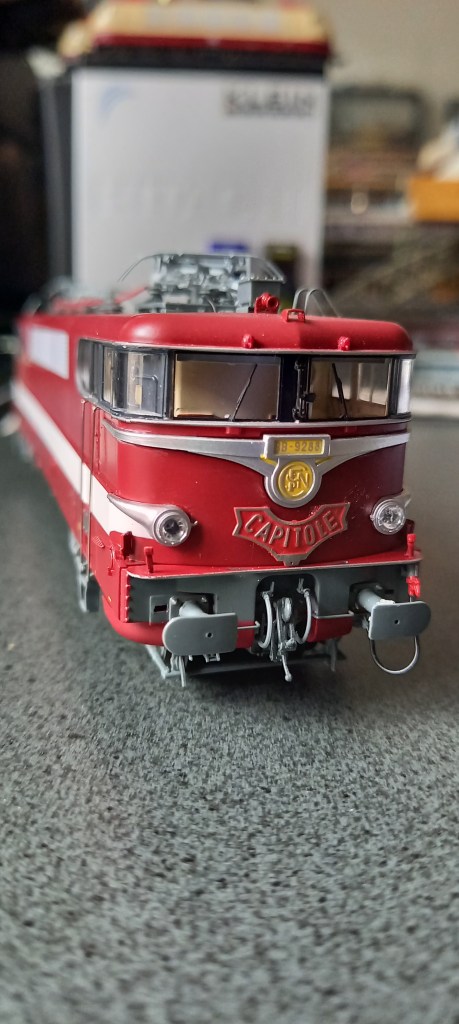
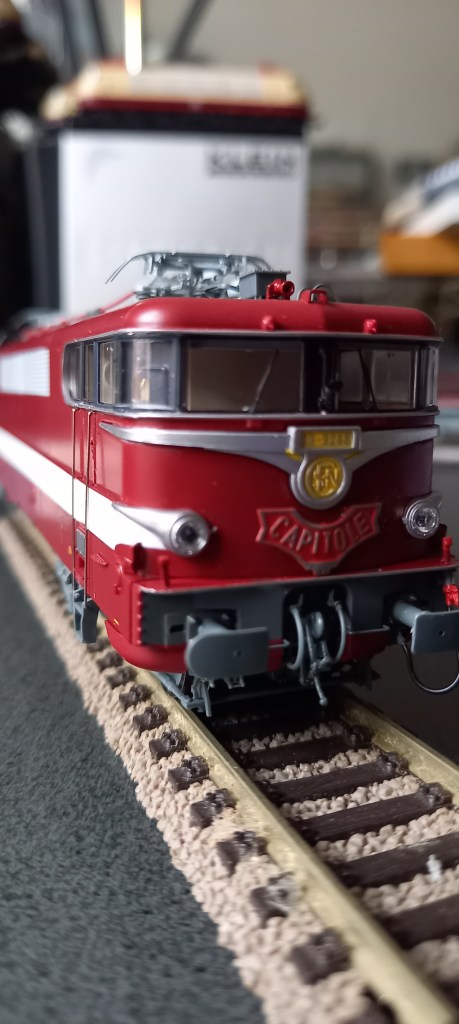
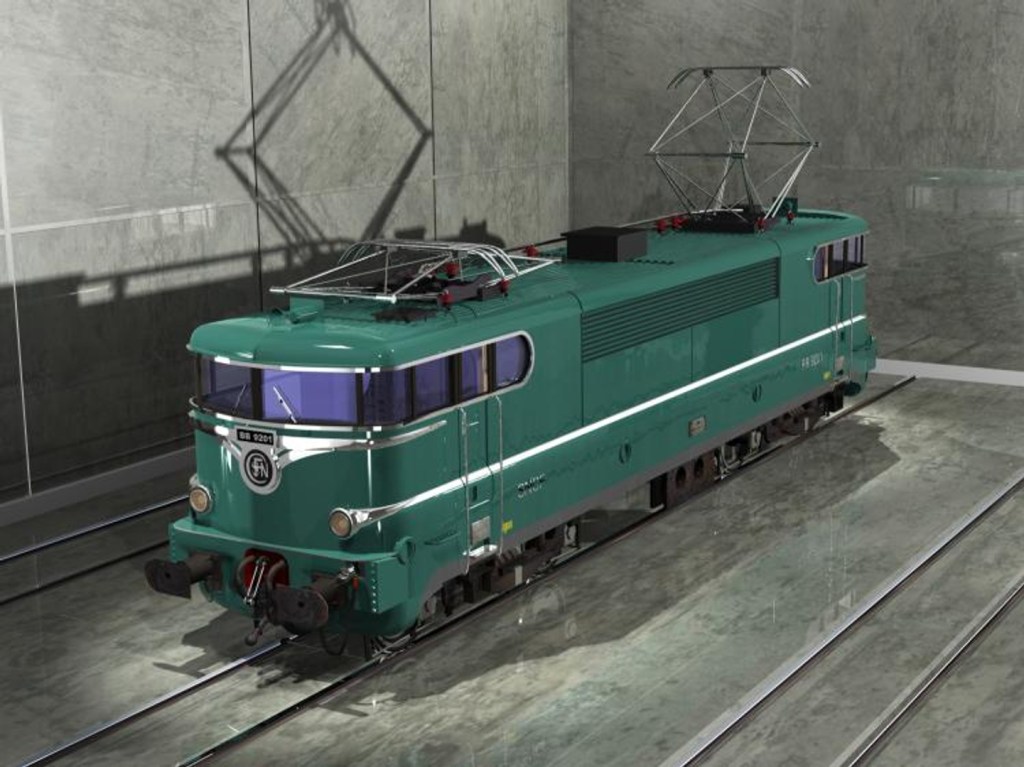
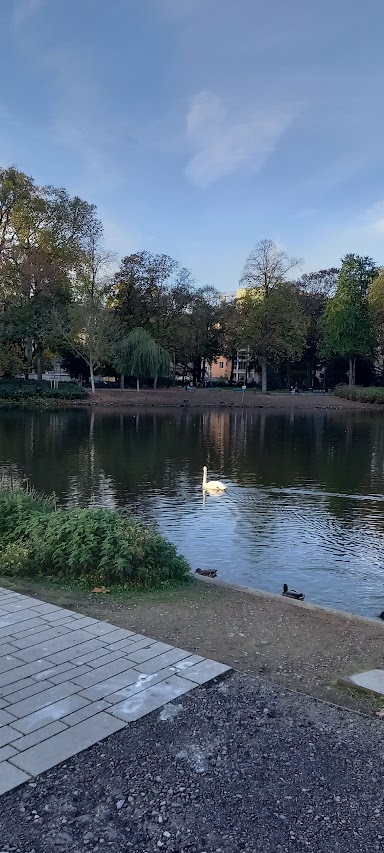
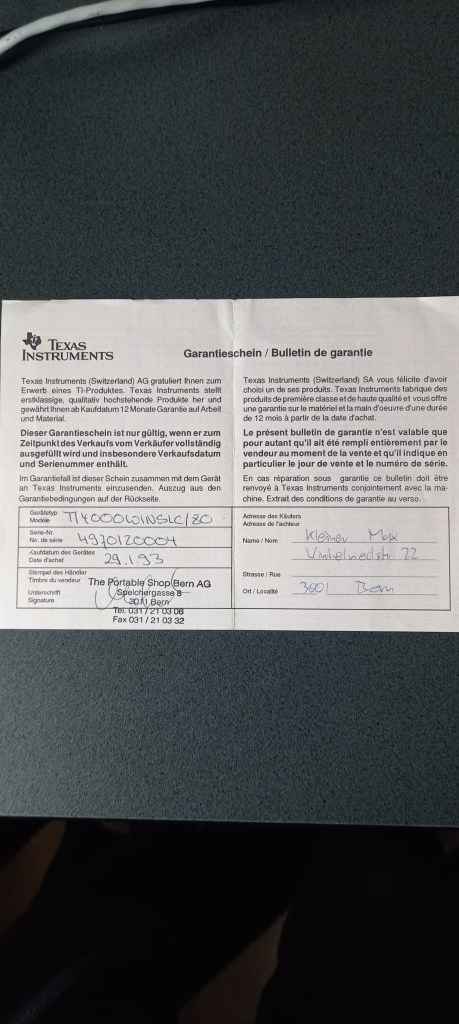
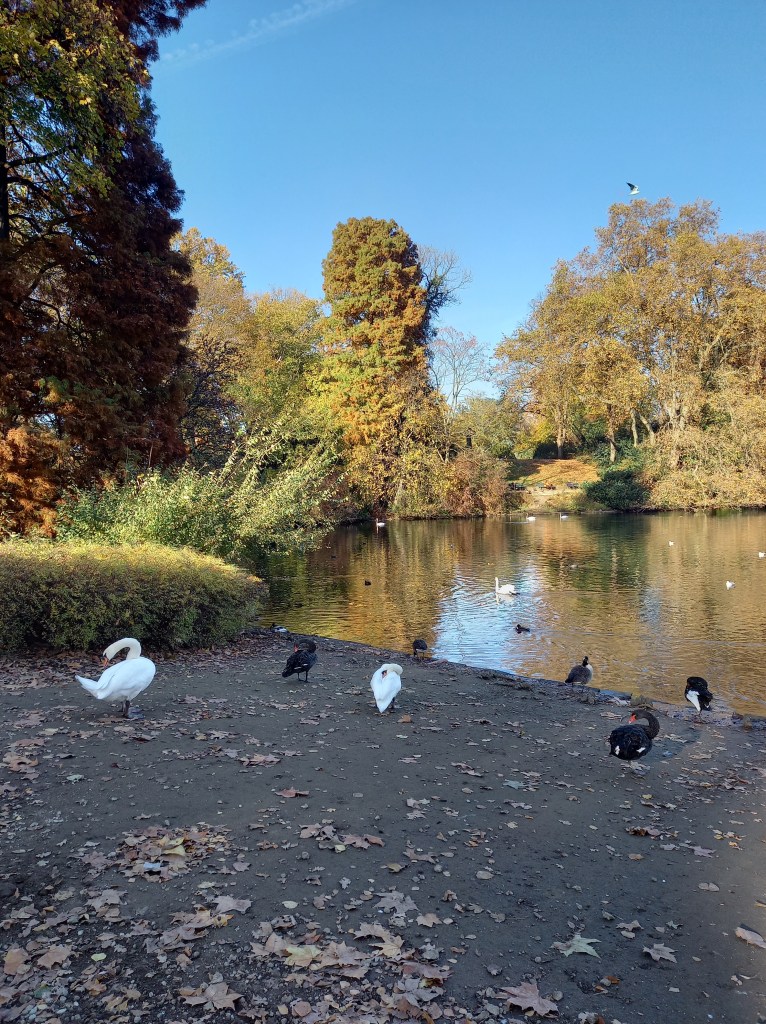
DB / SNCFBB 9288REE BB 9288 MB-082 SAC3DS Max 8 Printing Model of BB 9200BB 15015EKON 26 by Train BrainSchwan, Pempelfort, Sternstrasse, Duesseldorf, 8th November 2022First Notebook TI Travelmate
{* Extended version of JclFileUtils.BuildFileList: function parameter Path can include multiple FileMasks as: c:\aaa*.pas; pro*.dpr; *.d?? FileMask Seperator = ‘;’ *}
function IsEmptyDirectory(const DirPath, ExcludeFile: String): Boolean;
var List: TStringList;
begin
  List:= TStringList.Create;
  try
    BuildFileList(IncludeTrailingPathDelimiter(DirPath)+'*.*', List,faAnyFile,True,False);
    Result:= (List.Count = 0) or ((List.Count = 1) and
              (List.IndexOf(ExcludeTrailingPathDelimiter(ExcludeFile)) = 0));
  finally
    List.Free;
  end;
end;
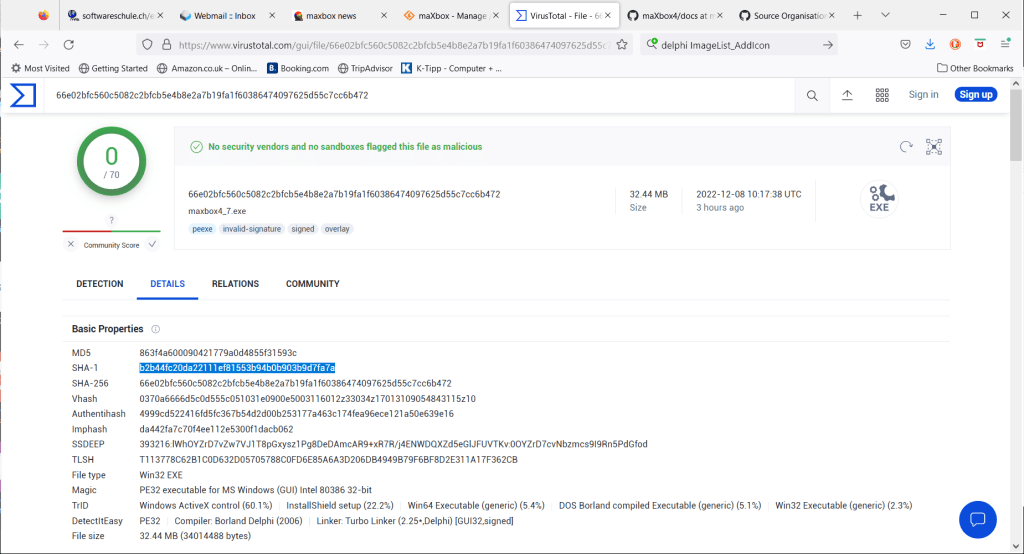
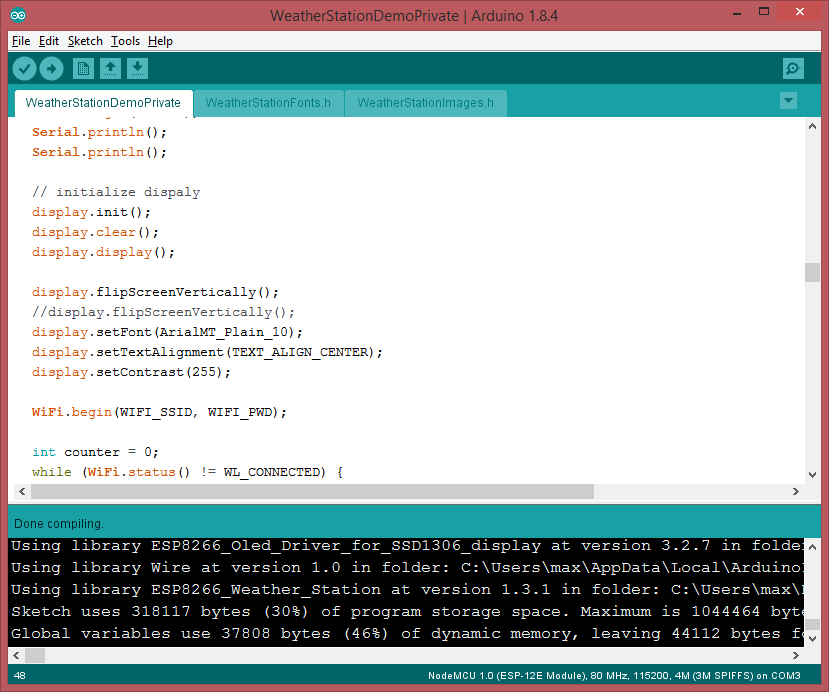
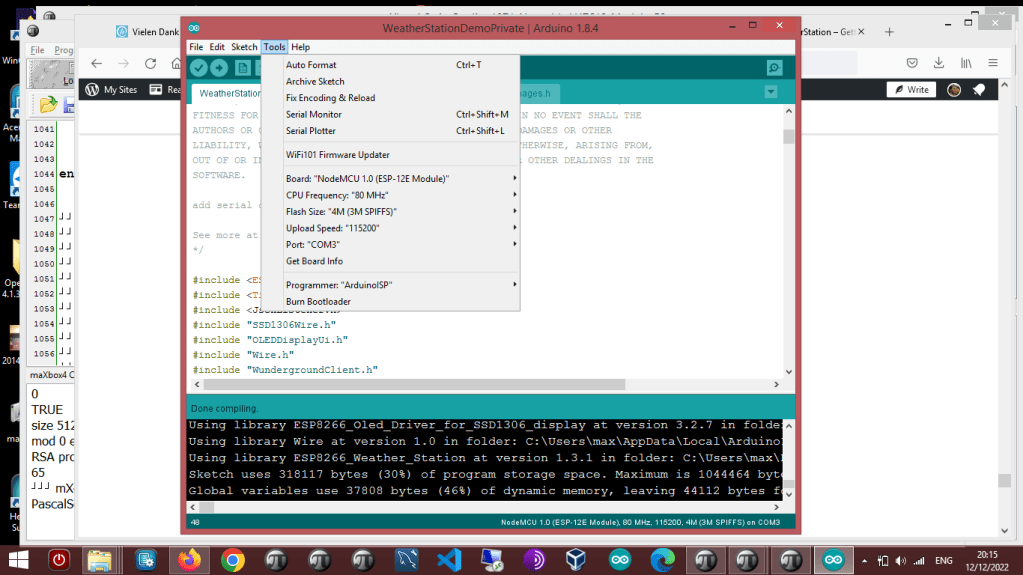
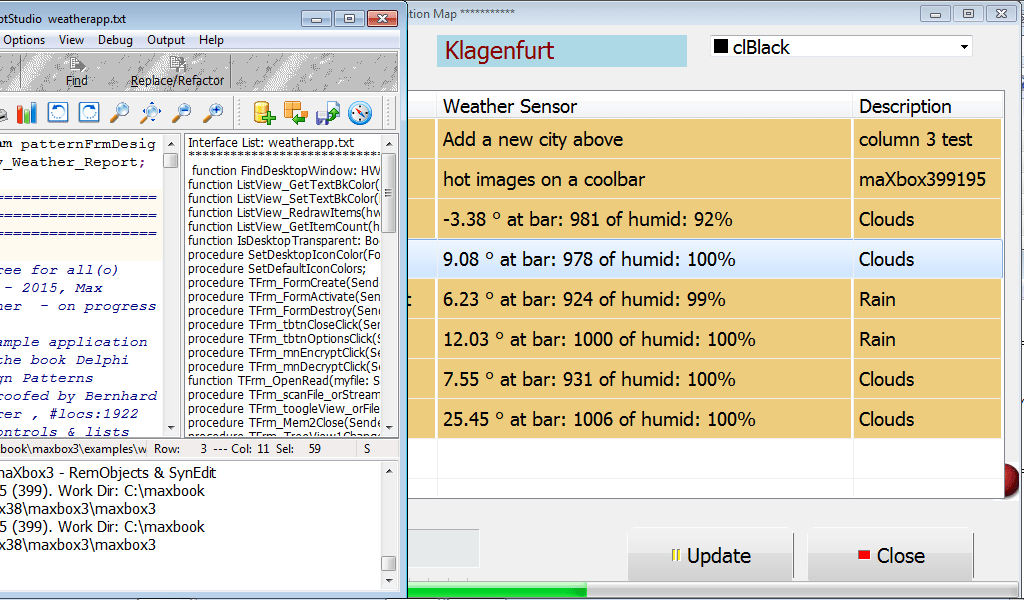
VTotal sandbox mX4Arduino Weather Station with ESP NodeMCU V1.1Tools Settings Programmerand UploadingRunaway Trainfrom wine cellarborland magazin 5/94Time for 30 Years
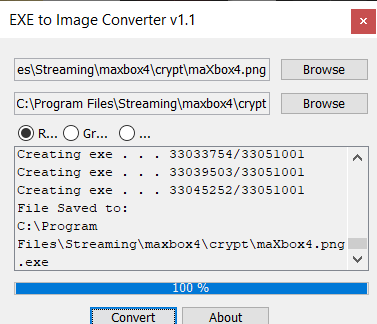
Image to Text API uses a neural net (LSTM) based OCR engine which is focused on line recognition, but also supports recognizing the character patterns. It supports both handwriting and printed materials.
The API will also work for handwritings. Even for non-English texts. The output is JSON data with all the text extracted and even the language is auto detected,
Proxies can be configured too: Pointer to a null-terminated string that specifies the name of the proxy server(s) to use when proxy access is specified by setting dwAccessType to INTERNET_OPEN_TYPE_PROXY. Do not use an empty string, because InternetOpen will use it as the proxy name. The WinINet functions recognize only CERN type proxies (HTTP only) and the TIS FTP gateway (FTP only). If Microsoft Internet Explorer is installed, these functions also support SOCKS proxies. FTP requests can be made through a CERN type proxy either by changing them to an HTTP request or by using InternetOpenUrl. If dwAccessType is not set to INTERNET_OPEN_TYPE_PROXY, this parameter is ignored and should be NULL. For more information about listing proxy servers, see the Listing Proxy Servers section of Enabling Internet Functionality.
Python Post multipart/form-data
When you make a POST request, you have to encode the data that forms the body of the request in some way. When you are writing client-side code:
use multipart/form-data when your form includes any <input type="file"> elements
otherwise you can use multipart/form-data or application/x-www-form-urlencoded but application/x-www-form-urlencoded will be more efficient.
application/x-www-form-urlencoded is more or less the same as a query string on the end of the URL.
procedure PyCode2Post(imgpath, apikey: string);
begin
  with TPythonEngine.Create(Nil) do begin
  pythonhome:= 'C:\Users\max\AppData\Local\Programs\Python\Python36-32\';
  try
    loadDLL;
    ExecString('import requests');
    ExecStr('api_url= "https://api.api-ninjas.com/v1/imagetotext"');
    ExecStr('image_file_descriptor = open(r"'+imgpath+'", "rb")');
    ExecStr('files = {"image": image_file_descriptor}');
    ExecStr('headers={"X-Api-Key":"'+apikey+'"}');
    Println(EvalStr('requests.post(api_url,headers=headers,files=files).text'));
  except
    raiseError;
  finally
    unloadDLL;
    free;
  end;
 end;
end;
twinwizard_australia_tasmania_stanley.jpe 2016LS ModelsTEE March 2016Post Data Session Connect Open (SCO)Pascal Conference Amsterdam
function postRequest(const AUrl,AData:AnsiString; blnSSL:Boolean = True): AnsiString;
var
  aBuffer     : Array[0..4096] of Char;
  Header      : TStringStream;
  BufStream   : TMemoryStream;
  sMethod     : AnsiString;
  BytesRead   : Cardinal;
  pSession    : HINTERNET;
  pConnection : HINTERNET;
  pRequest    : HINTERNET;
  parsedURL   : TStringArray;
  port,hostport: Integer;
  flags       : DWord;
  HostName,FileName,sHeader:String;
//begin
  procedure ParseURL(URL:string;var HostName,FileName:string;var HostPort:Integer);
  var
    i,p,k: DWORD;
    function StrToIntDef(const S:string; Default:Integer):Integer;
    var
      E: Integer;
    begin
      Val(S, Result, E);
      if E <> 0 then Result := Default;
    end;
  begin
    if lstrcmpi('http://',PChar(Copy(URL,1,7))) = 0 then System.Delete(URL, 1, 7);
    HostName := URL;
    FileName := '/';
    HostPort := INTERNET_DEFAULT_HTTP_PORT;
    i := Pos('/', URL);
    if i <> 0 then begin
      HostName:= Copy(URL, 1, i-1);
      FileName:= Copy(URL, i, Length(URL) - i + 1);
    end;
    p:=pos(':',HostName);
    if p <> 0 then begin
      k:=Length(HostName)-p;
      HostPort:=StrToIntDef(Copy(HostName,p+1,k),INTERNET_DEFAULT_HTTP_PORT);
      Delete(HostName,p,k+1);
    end;
  end;
  begin
  //ParsedUrl :=
  ParseUrl(AUrl, hostname, filename, hostport);
  port:= hostport;
  Result := '';
  pSession:= InternetOpen(nil,INTERNET_OPEN_TYPE_PRECONFIG,nil, nil,0);

  if Assigned(pSession) then
  try
    if blnSSL then
      Port:= INTERNET_DEFAULT_HTTPS_PORT
    else
      Port:= INTERNET_DEFAULT_HTTP_PORT;
    //pConnection:= InternetConnect(pSession,PChar(ParsedUrl[0]), port,nil,nil,INTERNET_SERVICE_HTTP,0,0);
    pConnection:= InternetConnect(pSession,PChar(hostname),port, nil,nil,INTERNET_SERVICE_HTTP,0,0);

    if Assigned(pConnection) then
    try
      if (AData = '') then
        sMethod:= 'GET'
      else
        sMethod:= 'POST';

      if blnSSL then
        flags := INTERNET_FLAG_SECURE or INTERNET_FLAG_KEEP_CONNECTION
      else
        flags := INTERNET_SERVICE_HTTP;

      pRequest:= HTTPOpenRequest(pConnection,PChar(sMethod), PChar(filename),nil,nil,nil,flags,0);

      {hRequest:= HttpOpenRequest(hConnection,  //  Function original, see http://msdn.microsoft.com/zh-cn/library/aa917871
                                  PChar(RequestMethod),
                                  PChar(FileName),
                                  HTTP_VERSION,
                                  '', //Referrer
                                  nil,//ACCEPTTYPES Accepted file type text / html * / *
                                  INTERNET_FLAG_NO_CACHE_WRITE or
                                  INTERNET_FLAG_RELOAD,
                                  0       }

      if Assigned(pRequest) then
      try
        Header:= TStringStream.Create('');
        try
          with Header do begin
            //WriteString('Host: ' + ParsedUrl[0] + sLineBreak);
            WriteString('Host: ' + hostname + sLineBreak);
            WriteString('User-Agent: Custom program 1.0'+SLineBreak);
            WriteString('Accept: text/html,application/xhtml+xml,application/xml;q=0.9,*/*;q=0.8'+SLineBreak);
            WriteString('Accept-Language: en-us,en;q=0.5' + SLineBreak);
            WriteString('Accept-Charset: ISO-8859-1,utf-8;q=0.7,*;q=0.7'+SLineBreak);
            WriteString('Keep-Alive: 300'+ SLineBreak);
            WriteString('Connection: keep-alive'+ SlineBreak);
            WriteString('Content-Type: application/x-www-form-urlencoded'+ SlineBreak+SLineBreak);
            //sHeader := 'Content-Type: application/x-www-form-urlencoded' + #13#10;
          end;

          HttpAddRequestHeaders(pRequest,PChar(Header.DataString), Length(Header.DataString),HTTP_ADDREQ_FLAG_ADD);

          if HTTPSendRequest(pRequest,nil,0,Pointer(AData), Length(AData)) then begin
            BufStream:= TMemoryStream.Create;
            try
              while InternetReadFile(pRequest,@aBuffer, SizeOf(aBuffer),BytesRead) do begin
                if (BytesRead = 0) then Break;
                BufStream.Write(aBuffer,BytesRead);
              end;

              aBuffer[0]:= #0;
              BufStream.Write(aBuffer, 1);
              Result:= PChar(BufStream.Memory);
            finally
              BufStream.Free;
            end;
          end;
        finally
          Header.Free;
        end;
      finally
        InternetCloseHandle(pRequest);
      end;
    finally
      InternetCloseHandle(pConnection);
    end;
  finally
    InternetCloseHandle(pSession);
  end;
end;
SVG Render Machine
The first “killer app” was VisiCalc for the Apple II. Businessmen and accountants ran out and bought Apple IIs in droves because all of a sudden there was a software spreadsheet that calculated ledgers instantly, a task accountants normally spent days doing.
VisiCalc on the Apple II. It wasn’t beautiful, but it was a killer app (image credit)
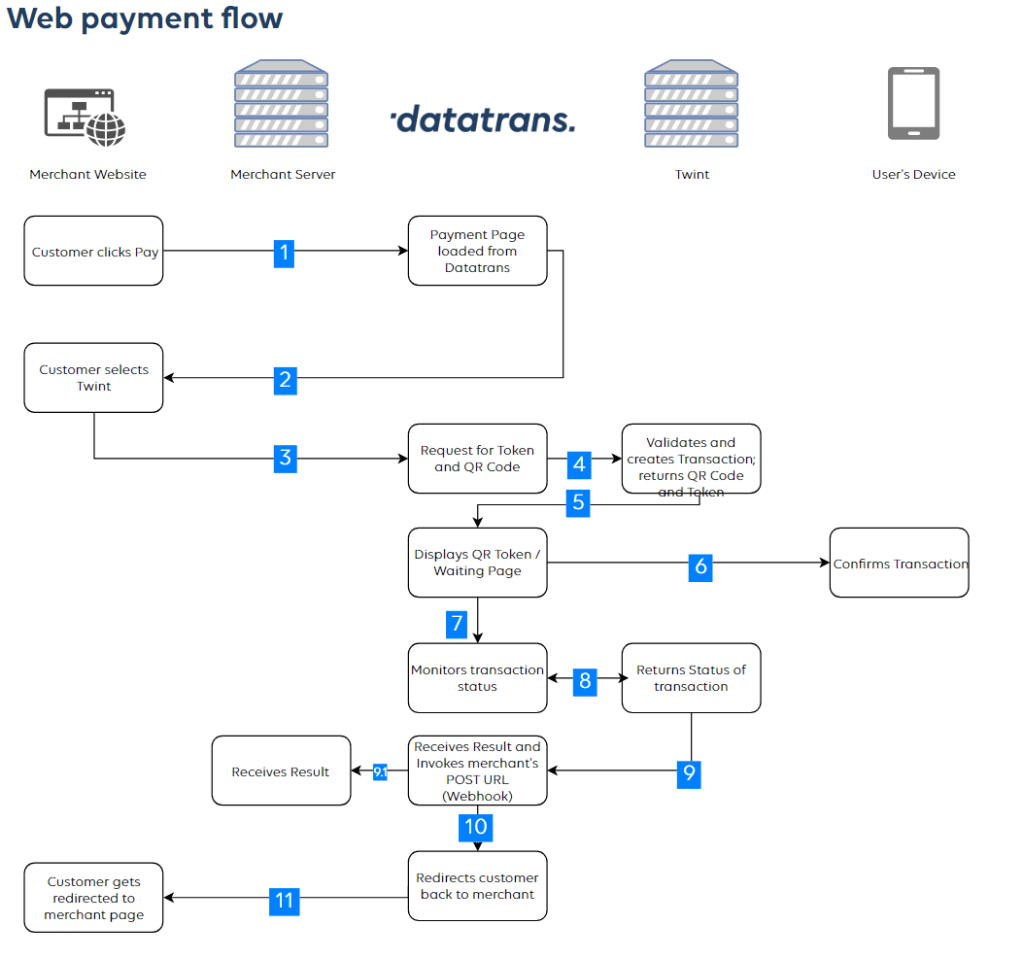
With the TWINT app, you can make payments easily and conveniently: in online shops, at supermarket cash registers, in canteens, and at vending machines. With TWINT, you can transfer money in real-time – easily from smartphone to smartphone. And you can also request and receive money from friends and family.
A solar power plant is an arrangement of various solar components including solar panel to absorb and convert sunlight into electricity, a solar inverter to convert the electricity from DC to AC while also monitoring the system, solar batteries and other solar accessories to set up a working system.
Solar power plants utilize thermal energy from the sun, which is abundant, available, intermittent, yet cheap. This thermal energy is further transformed into electrical energy using photovoltaic panels. This is one type of solar power plants.
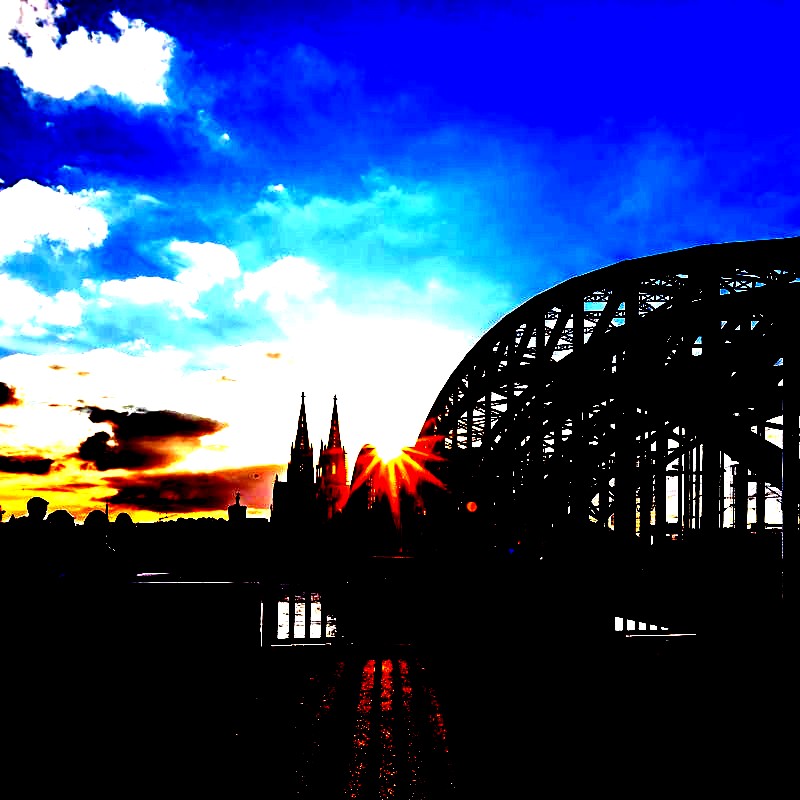
so for super solar we had to enlighten and amplify (filter) the sun source:
convert to sharpen
procedure contrastBitmap(bm: TBitmap; threshold: integer);
var jy, ix, cor: integer;
  R,G,B: byte;
begin
 for jy:= 0 to bm.Height do
   for ix:= 0 to bm.Width do begin
      cor:=bm.Canvas.Pixels[ix,jy];

      R:=GetRValue(Cor);
      G:=GetGValue(Cor);
      B:=GetBValue(Cor);

      if g>threshold then
        bm.Canvas.Pixels[ix,jy]:=clWhite
      else
        bm.Canvas.Pixels[ix,jy]:=clBlack;
    end;
end;

tbmp:= TBitmap.create;
//tbmp.loadfromfile(exepath+'examples\1138_bmp.bmp');
tbmp.loadfromfile(testmap);
processmessagesOFF;
contrastBitmap(tbmp,38);
processmessagesON;
tbmp.savetofile(exepath+'testmap2.bmp');
tbmp.free;
Complete Solar Energy Systems for Business and Public. Each component of our solar installations is built to interact flawlessly with the next, yielding dramatic efficiencies for long-term reliability and impressive returns. From hardware and electronics to energy management and storage.
Medium so farReport with my AGSI Data StorageDer Magdalensberg (slow.: Štalenska gora; 1059 m ü. A.) in Kärnten (früher Helenenberg)
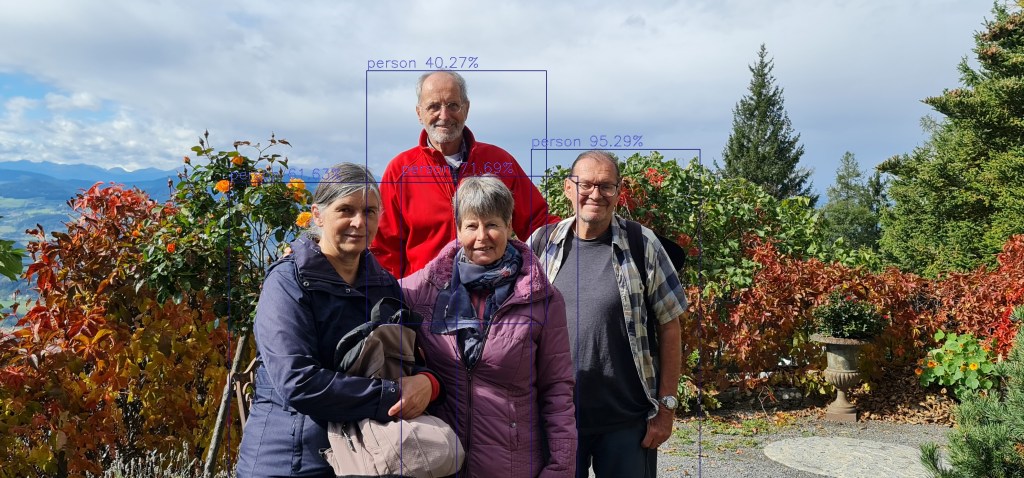
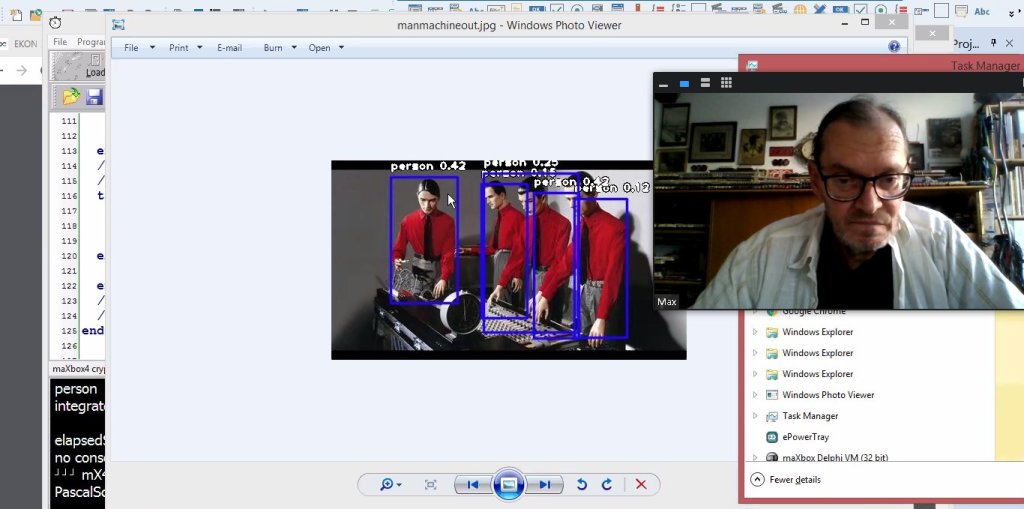
To silence this warning, decorate the function with @tf.autograph.experimental.do_not_convert this first line fine person : 40.269359946250916 person : 95.28620839118958 person : 61.63168549537659 person : 71.69047594070435 integrate image detector compute ends…
Roco 63748Train Simulator Seasons
Release Notes maXbox 4.7.6.20 January 2023 mX476
Add 86 Units + 25 Tutorials
1441 unit uPSI_neuralgeneric.pas; CAI 1442 unit uPSI_neuralthread.pas; CAI 1443 unit uPSI_uSysTools; TuO 1444 unit upsi_neuralsets; mX4 1445 unit uPSI_uWinNT.pas mX4 1446 unit uPSI_URungeKutta4.pas ICS 1447 unit uPSI_UrlConIcs.pas ICS 1448 unit uPSI_OverbyteIcsUtils.pas ICS 1449 unit uPSI_Numedit2 mX4 1450 unit uPSI_PsAPI_3.pas mX4 1451 unit uPSI_SeSHA256.pas 1452 unit IdHashMessageDigest_max2; 1453 unit uPSI_BlocksUnit.pas 1454 unit uPSI_DelticsCommandLine.pas 1455 unit uPSI_DelticsStrUtils; 1456 unit uPSI_DelticsBitField; 1457 unit uPSI_DelticsSysUtils; 1458 unit uPSI_ALIniFiles2.pas 1459 unit uPSI_StarCalc2.pas 1460 unit uPSI_IdHashMessageDigest2.pas 1461 unit uPSI_U_Splines; 1462 unit uPSI_U_CoasterB.pas; 1463 U_SpringMass2.pas 1464 uPSI_MARSCoreUtils; 1465 unit uPSI_clJsonParser.pas 1466 unit uPSI_SynHighlighterPython.pas 1467 unit uPSI_DudsCommonDelphi; 1468 unit uPSI_AINNNeuron; 1469 unit uPSI_PJConsoleApp2; 1470 unit uPSI_PJPipeFilters2; 1471 unit uPSI_uHTMLBuilder; 1472 unit uPSI_PJPipe2; 1473 uPSI_WinApiDownload, 1474 uPSI_pxQRcode, //beta 1475 unit uPSI_neuralplanbuilder2 1476 unit uPSI_DelphiZXingQRCode; 1477 unit uPSI_RestJsonUtils; 1478 unit UtilsTimeCode; 1479 unit uPSC_classes2.pas; //TList 1480 unit uPSC_std2.pas 1481 unit uPSI_maxIniFiles.pas 1482 unit uROPSImports.pas 1483 unit uROPSServerLink.pas 1484 unit uPSI_KLibUtils; 1485 unit uPSI_PathFunc2; //inno setup 1486 unit KLibVC_Redist.pas; 1487 unit HTTPApp2.pas; 1488 unit uPSI_XCollection2; 1489 unit uPSI_KLibWindows; 1490 unit KlibConstants; 1491 unit uPSI_AzuliaUtils.pas 1492 unit uPSI_ALHttpClient2; 1493 unit uPSI_ALWininetHttpClient2; 1494 unit uPSI_UtilsMax41.pas 1495 unit uPSI_JclSysUtils1; 1496 unit uPSI_RestUtils; 1497 unit uPSI_TeEngine2.pas 1498 unit uPSI_Chart2.pas; (uPSI_TeCanvas2.pas) 1499 unit uPSI_PSResources.pas 1500 unit uPSI_TeCanvas2_1.pas 1501 unit uPSI_DataSetConverter4DUtil; 1502 unit uPSI_neuralfit2.pas; 1503 unit uPSI_SynCrtSock.pas 1504 uPSI_RunElevatedSupport.pas 1505 unit synTHttpRequest.pas; 1506 unit uPSI_VelthuisFloatUtils.pas 1507 unit HttpConnection.pas 1508 unit uPSI_HttpConnectionWinInet.pas 1509 unit UHexUtils.pas 1510 unit UExeFileType.pas 1511 unit uPSI_UConsoleApp.pas 1512 unit uPSI_CompilersURunner.pas 1513 unit uPSI_HttpConnection.pas 1514 unit uPSI_DataSetUtils.pas 1515 unit uPSI_HTTPSender.pas 1516 unit AES_Cryptobox4.pas 1517 unit uPSI_JsonConverter.pas 1518 unit uPSI_RestClient.pas 1519 unit JsonToDataSetConverter; 1520 unit JsonListAdapter; (superobject) 1521 unit uPSI_OpenApiUtils.pas; 1522 unit uPSI_WinHttp_TLB.pas; 1523 unit uPSI_NovusConsole; 1524 unit NovusShell.pas; 1525 unit NovusWebUtils.pas; 1526 unit NovusStreamUtils.pas;
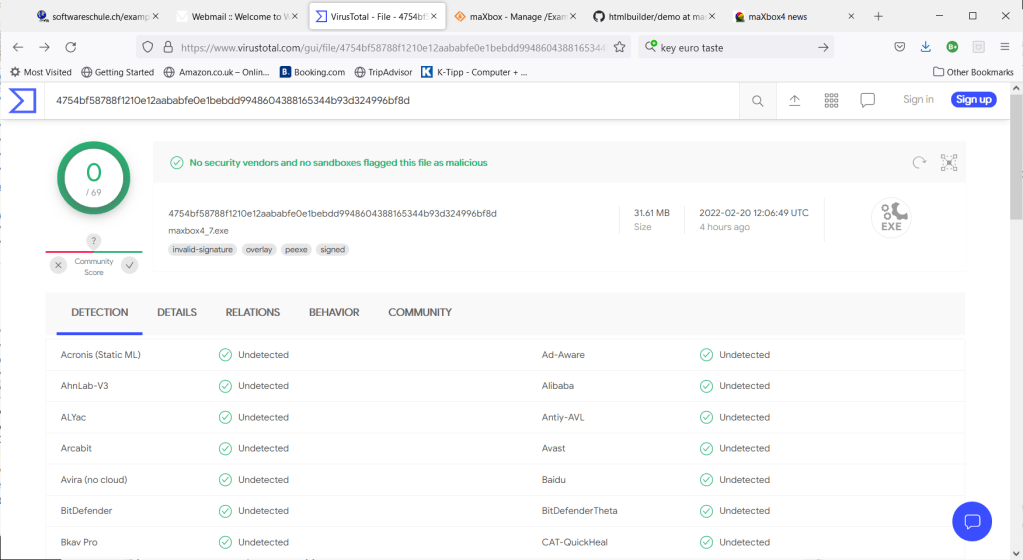
Total of Function Calls: 36354 SHA1: 4.7.6.20 F60338A77B77F2032061BF72A545AFB727F6395F CRC32: 48455EF8 32.8 MB (34,419,992 bytes) Compilation Timestamp 2023-01-26 15:36:15 UTC Signtime 26 Jan. 2023 16:41:42 Entry Point 25033256 – Contained Sections 10 Docu: http://www.softwareschule.ch/maxbox_functions.txt ZIP maxbox4.zip SHA1: CCFC28FE69E5F62590335C406171500ADDE08A9A
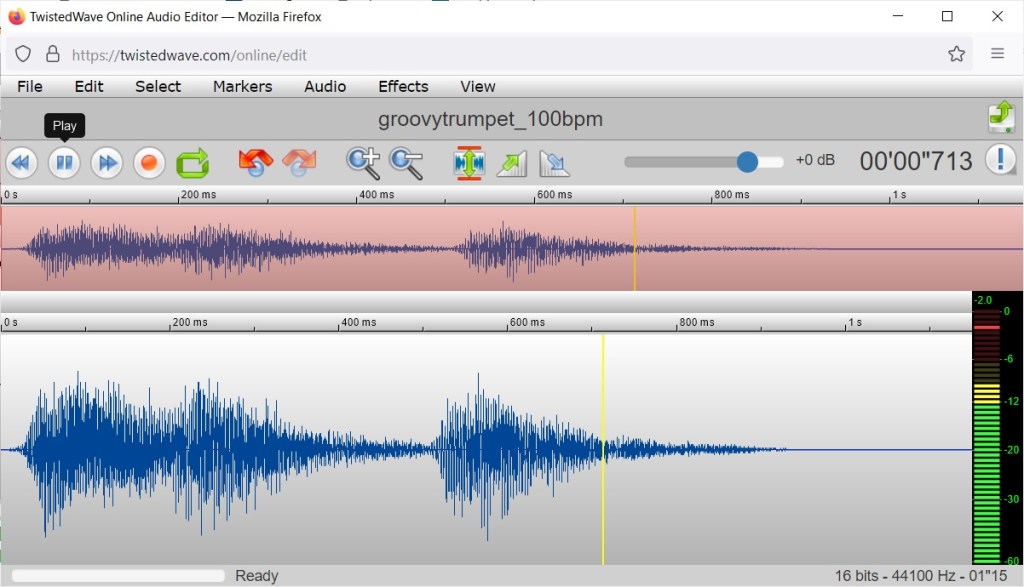
Wave EditorSNCF and DBMax at SolothurnCologne meets SolothurnTopics in 2023SimpleImageClassifierEKON26-19560_.nn
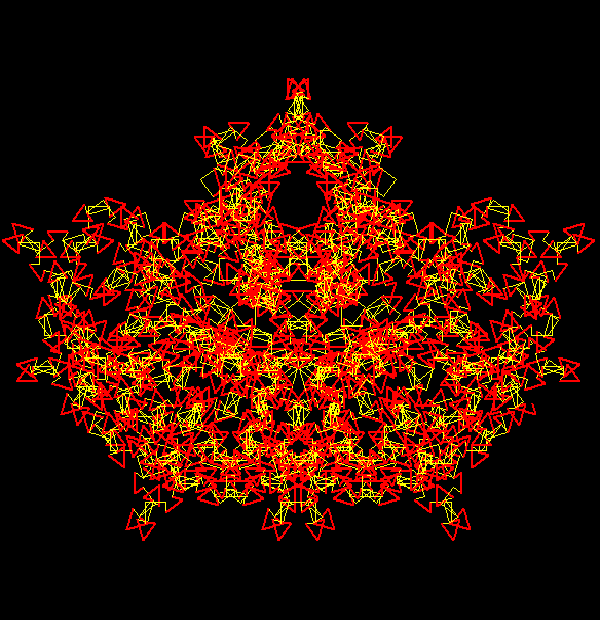
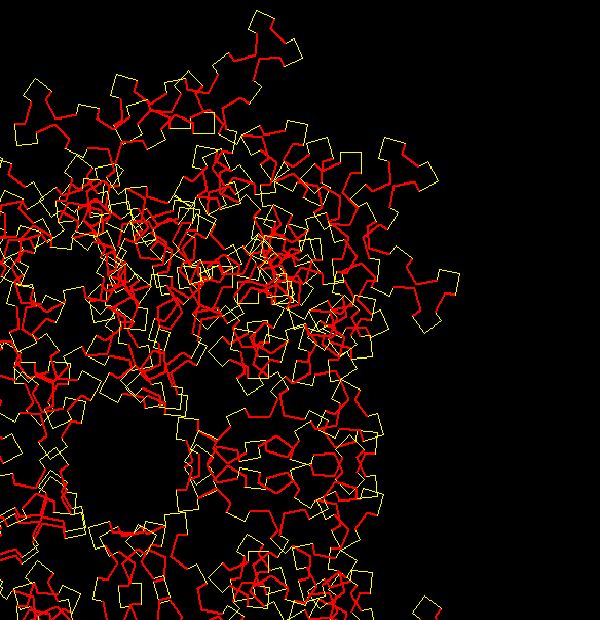
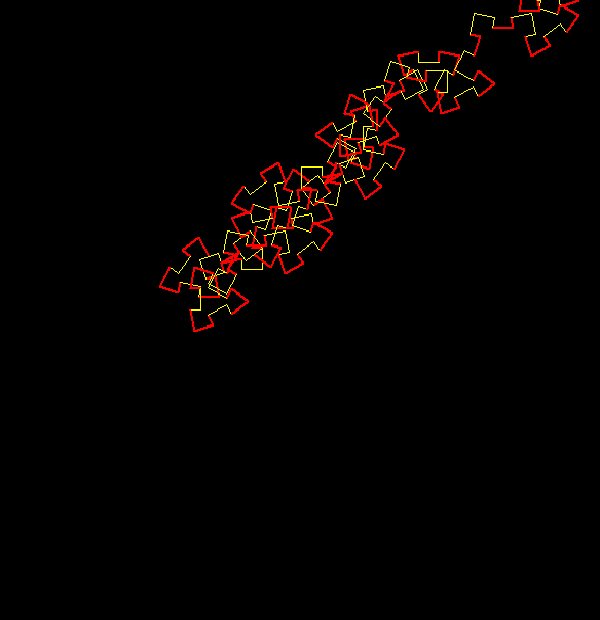
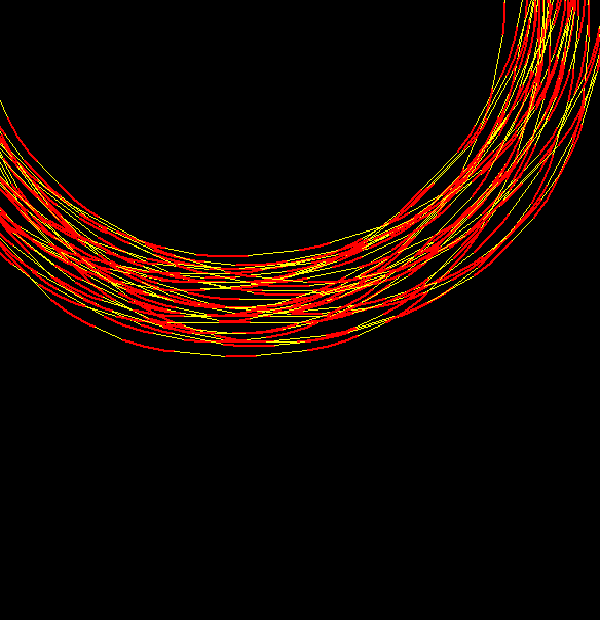
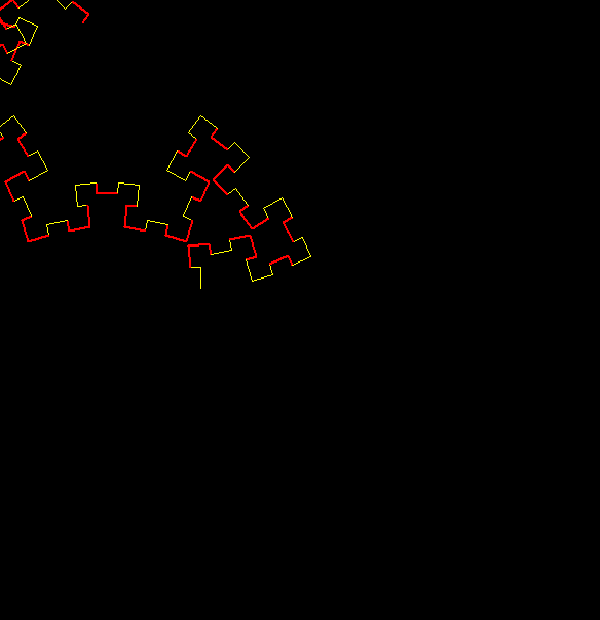
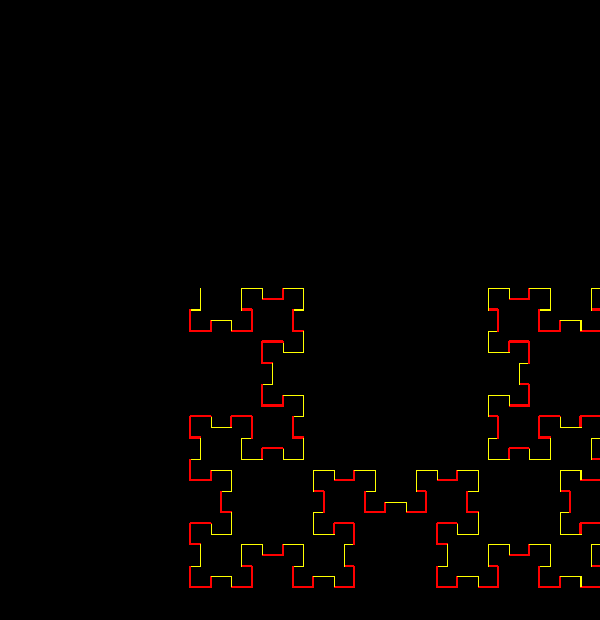
function WordFractal2Bitmap(n,x,y, width,height, arun: Integer): TBitmap;
begin
  Result:= TBitmap.Create;
  Result.SetSize(width, height);
  DrawWordFractal2TurtleForm(n, Result, x, y, 1, 0, arun);
  //result:= TurnBitmap(result, -90);
end;

var runidx: byte;
    bmpname, pngname: string;

begin  //@main
  runidx:= 8
  bmpname:= '1183_WordFractalanimate.bmp';
  pngname:= '1183_WordFractalanimate'+itoa(runidx)+'.png';
  with WordFractal2Bitmap(23,20,20,600,620, runidx) do begin   //450*620
    SaveToFile(exepath+bmpname);
    Free;
  end;
  ConvertImage(Exepath+bmpname,Exepath+pngname)
  openDoc(exepath+pngname);
  writeln(Sha1(exepath+pngname));
End.
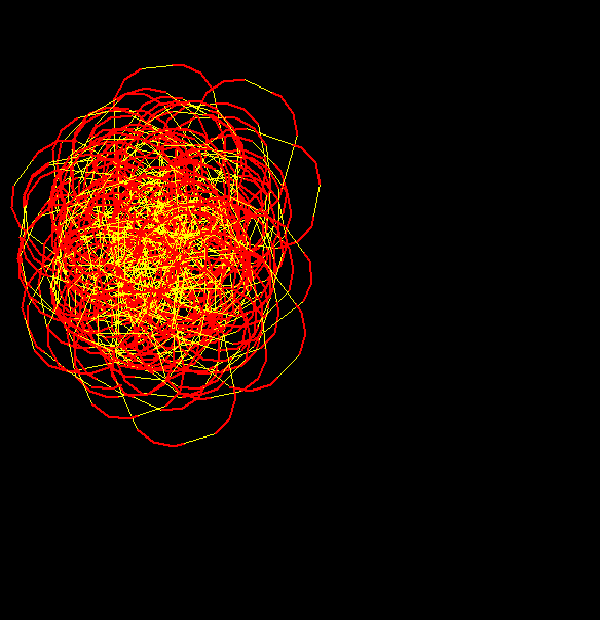
98765432101183_WordFractalanimate’+itoa(runidx)+’.png [0..9]3D Lollo from MehanoSpiders from MarsModel World
– Are there other classifications or what is best?
– What is the random by RandomForest?
– Implicit or explicit screen image classification?
– Which TF Tutorials are available?
1.————————————— CaseCrunch is proud to announce the results of the lawyer challenge. CaseCruncher Alpha scored an accuracy of 86.6%. The lawyers scored an accuracy of 62.3%. Over 100 commercial London lawyers signed up for the competition and made over 750 predictions over the course of a week in an unsupervised environment. The problems were real complaints about PPI mis-selling decided and published by the Financial Ombudsman Service under the FOIA. The main reason for the large winning margin seems to be that the network had a better grasp of the importance of non-legal factors than lawyers.
2.———————————————- Question about weights at the beginning I know initializations define the probability distribution used to set the initial random weights of layers. The options gives are uniform lecun_uniform, normal, identity, orthogonal, zero, glorot_normal, glorot_uniform, he_normal, and he_uniform. How does my selection here impact my end result or model? Shouldn’t it not matter because we are “training” whatever random model we start with and come up with a more optimal weighting of the layers anyways?
3.——————————————-
How to change Stochastic Gradient Steps
Is the learning rate related to the shape of the error gradient, as it dictates the rate of descent? Yes >>>
There are three training modes for neural networks stochastic gradient descent: Adjust the weights after every single training example batch training: Adjust the weights after going through all data (an epoch) mini-batch training: Adjust the weights after going through a mini-batch. This is usually 128 training examples.
Training for 1,000 steps means 128,000 training examples with the default # batch size. This is roughly equivalent to 5 epochs since the training dataset contains 25,000 examples.
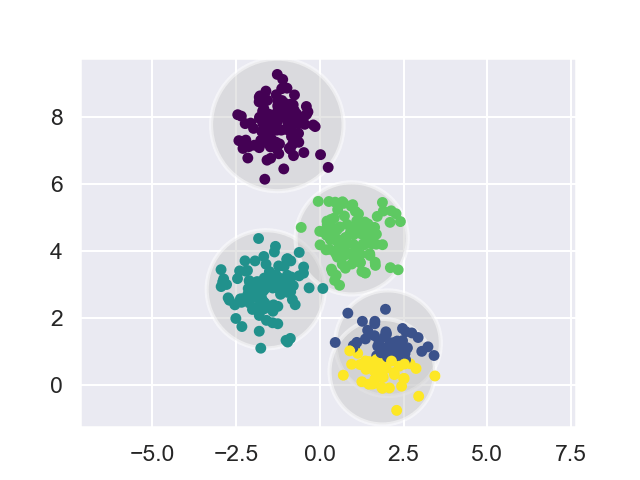
I have tried using Naive bayes on a labeled data set of crime data but got really poor results (7% accuracy). Naive Bayes runs much faster than other alogorithms I’ve been using so I wanted to try finding out why the score was so low.best? After reading I found that Naive bayes should be used with balanced datasets because it has a bias for classes with higher frequency. Since my data is unbalanced I wanted to try using the Complementary Naive Bayes since it is specifically made for dealing with data skews. Note that if your algorithm returns everything, it will return every relevant result possible, and thus have high recall, but have very poor precision. On the other hand, if it returns only one element, the one that it is the most certain is relevant, it will have high precision but low recall. In order to judge such algorithms, the common metric cost function is the F-score!
have high precision, not return irrelevant information
have high recall, return as much relevant results as possible
6.—————————————————————–
What is the random by RandomForest?
A: The sub-sample size is always the same as the original input sample size but the samples of a decision tree are drawn by random.
n_estimators=10 or n
Random forests or random decision forests are an ensemble learning method for classification, regression and other tasks, that operate by constructing a multitude of decision trees at training time and outputting the class that is the mode of the classes or mean prediction of the individual trees.
Also, you should be aware of the most amazing feature of random forests in Python: instant parallelization! Those of us who started out doing this in R and then moved over are always amazed, especially when you get to work on a machine with a few dozen cores. You can use decision tree methods, specifically Random Forests for calculating the most important attributes based on information gain if you have already found a way to identify how to label a person. However, if you do not have any label information maybe you can use some expert view for preliminary attribute selection. After that you make unsupervised classification in order to retrieve your labels. Lastly, you can select the most important fields using Random Forest or other methods like Bayesian Belief Networks.
from sklearn.ensemble import RandomForestClassifier y = df[“Relevance”] X = df[features] clf = tree.DecisionTreeClassifier() clf = clf.fit(X,y) clf = RandomForestClassifier(n_estimators=10) clf = clf.fit(X, y)
Class Map Assume 25.5.2018 their domain or source decisions:
ID Sentiment Relates KWords Topic[%] Corpus Crime Class Relevance
1 bad many 61 A small 1 Yes 2 good few 39 B medium 0 No 3 good few 82 A big 1 No 4 bad many 75 C medium 1 Yes 5 bad many 66 A big 1 Yes 6 good many 77 A small 0 Yes 7 good few 92 B big 0 No
I would recommend training on more balanced subsets of data. Training random forest on sets of randomly selected positive example with a similar number of negative samples. In particular if the discriminative features exhibit a lot of variance this will be fairly effective and avoid over-fitting.
7.——————————————————————–
Implicit or explicit screen classification?
Best classification algorithms store the knowledge implicitly. This means, that they are not able to convert this knowledge to rules, which could be expressed explicitly in the form of if-then sentences or decision trees. If an algorithm is able to express its knowledge in explicit form, it is called ‘a machine learning algorithm’. While extracting explicit rules from large databases may be interesting in some cases, the resulting classification success using these explicit rules is usually lower then when using classifiers, which store the knowledge implicitly.
7.1 General recommendations and info on different algorithms
Naive Bayes The veteran of classification. It will furnish best classificaiton results, regardless of the many methods introduced, especially due to the use of m-estimate of probability and Laplace-law of propability. It is very fast in learning and classification. Natively handles only discrete attributes and requires a special discretization engine for real valued attributes. The algorithm will compute probability distributions for all attributes for each class and classify in to the most probable class.
K-NN or K nearest neighbors Another veteran of classification. Gives best classification results especially with real valued attributes. Its biggest setback is performance. The learning phase is fast, but each classification requires that all the examples are read again. (Naive Bayes requires only that all the classes are read again.) As the name suggests, the algorithm will search up K nearest neighbors and then classify in to the majority class in this selection of K neighbors.
Linear Classifier Specifically designed to address the problems of prior probabilities of classes and is prior probability invariant. (Solves problems of majority class prevalance and differences in probability distribution of classes between acquired and test examples). As fast as Naive bayesian and also able to handle real valued attributes. It is a compromise between the speed of naive bayesian and the ability of K-NN to handle real valued attributes. The algorithm will compute probability distributions for all attributes for each class and classify to the most probable class. Main difference to the Naive Bayes: Training one class does affect the response of other classes. This allows the response of specific classes to be hand engineered (fuzzy logic design). The response of the class is interpreted as: Average probability across all attributes, that this new example belongs to this class. We classify to the class with the strongest response.
Decision trees can be thought as a collection of ‘if-then’ statements. They take an input data set and try to match the output data-set through a tree-like structure of if-then statements. Each node on the tree is known as a ‘leaf’ and each leaf assigns a value in a regression tree. The algorithm finds the best place to create a split in order to minimize the loss function (error) in the actual output vs. the output the decision tree creates. This is very similar to the game of 20 questions – you have to find the best questions in order to optimize the tree for new, unseen data http://martinsiron.com/2017/11/25/using-tensorflows-cnn-vs-sklearns-decision-tree-regressor/
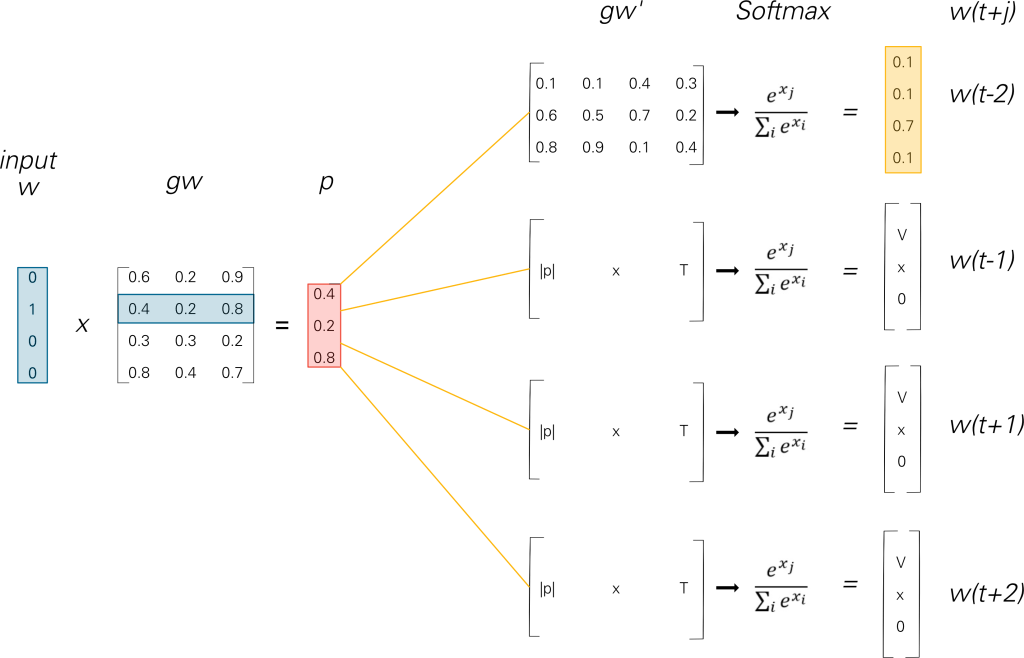
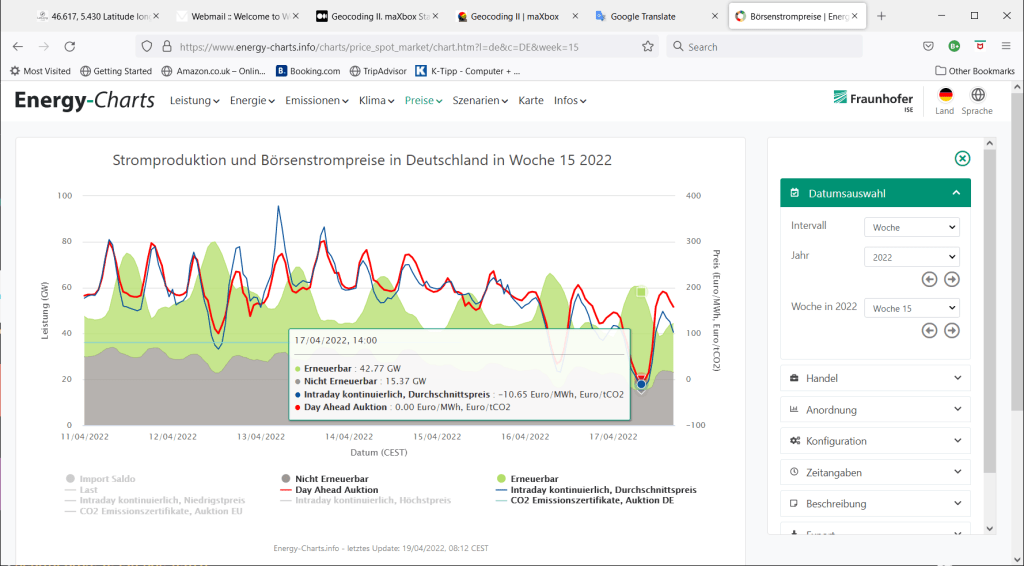
Not IceSkipgram word2vecRenewable more than double
Reflection Code
FUNCTION GetIDE_Editor2maXbox3 : HWnd;
VAR W : HWnd;
    ClassName : string; //ARRAY[0..32] OF Char;
BEGIN
   setLength(classname,32)
   W := GetWindow(FindWindow('TMaxForm1', ''), GW_Child);
   WHILE W <> 0 DO BEGIN
     GetClassName(W, ClassName, 32);       //fix
     //IF StrComp(ClassName, 'TEditControl') = 0 THEN BEGIN
      IF StrComp(ClassName, 'TMemo') = 0 THEN BEGIN    //TSynMemo is here
       Result := W;
       writeln('subclass TMemo/memo2 found');
       Exit;
      END;
     W:= GetWindow(W, GW_HWNDNext);
   END;  {WHILE}
   Result := 0;
 MessageBeep(mb_IconInformation);
END;  {F }


PROCEDURE {tCodeWizard.}InsertMessageBeep3;
VAR
  S : string; //ARRAY[0..255] OF Char;
  itemindex: integer;
BEGIN
  itemindex:= 1;
  setlength(S, 255)
  //CASE MBeeps_RG1.ItemIndex OF
  CASE ItemIndex OF
  0 : StrCopy(S, 'MessageBeep(mb_IconInformation);'#13#10);
  1 : StrCopy(S, 'MessageBeep(mb_IconExclamation);'#13#10);
  2 : StrCopy(S, 'MessageBeep(mb_IconQuestion);'#13#10);
  3 : StrCopy(S, 'MessageBeep(mb_IconStop);'#13#10);
  4 : StrCopy(S, 'MessageBeep(0);'#13#10);
  5 : StrCopy(S, 'MessageBeep(65535);'#13#10);
  END;  {CASE}
  Spaces(S, 2);
  ClipBoard.SetTextBuf(S);
  SendMessage(GetIDE_Editor2maXbox3, wm_Paste, 0, 0);
  //writeln('debug strcopy: '+S);
END;  {PROCEDURE tCodeWizard.InsertMessageBeep}


var teststring: string;

Begin //@main

   teststring:= 'maXbox4 1123_CODEWIZU.PAS Compiled done';
   writeln(itoa(length(teststring)));
   setlength(teststring,30)
   writeln(itoa(length(teststring)));
   writeln(teststring)
   maxform1.memo2.color:= clgreen;
   //InsertSeparatorHeader;
   MaxForm1.ReadOnly1click(self);  //set menu/output/read_only_output  false
   InsertMessageBeep3;
   MaxForm1.ReadOnly1click(self);  // toogle back
   //MaxForm1.Savescreenshotclick(self);  //
   MessageBeep(mb_IconExclamation);

END.
Sends the specified message to a window or windows. The SendMessage function calls the window procedure for the specified window and does not return until the window procedure has processed the message.
procedure RemoveFromRunKey(ApTitle: string);
var
  Reg: TRegistry;
  TheKey: string;
  ListOfEntries: TStringList;
  i: integer;
begin
  Reg:= TRegistry.Create;
  Reg.RootKey:= HKEY_LOCAL_MACHINE;
  TheKey := 'Software\Microsoft\Windows\CurrentVersion\Run';
  // Check if key exist...
  // ...if yes, try to delete the entry for ApTitle
  if not Reg.OpenKey(TheKey, False) then
    ShowMessage('Key not found')
  else begin
    if Reg.DeleteValue(ApTitle) then
      ShowMessage('Removed: ' + ApTitle)
    else
      ShowMessage('Not found: ' + ApTitle);
  end;
  Reg.CloseKey;
  Reg.Free;
end;
1998 – 2022
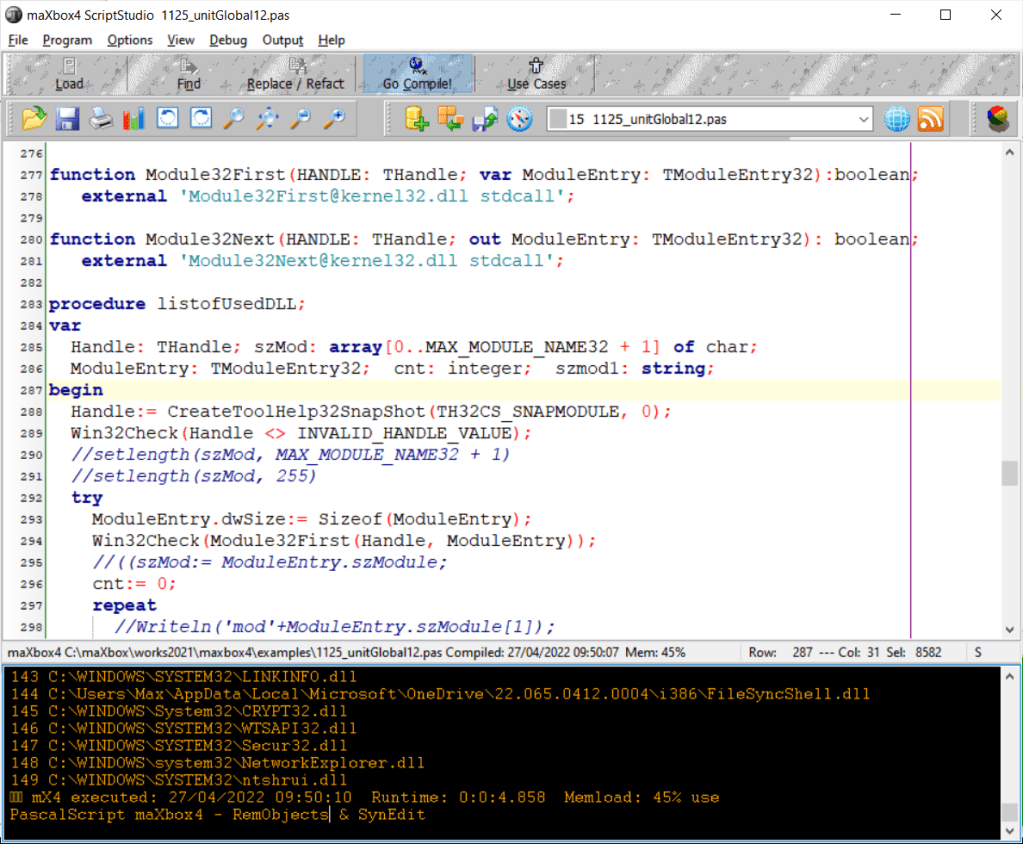
MODULEENTRY32 structure
Describes an entry from a list of the modules belonging to the specified process.
//https://docs.microsoft.com/en-us/windows/win32/api/tlhelp32/nf-tlhelp32-module32first

function Module32First(HANDLE: THandle; var ModuleEntry: TModuleEntry32):boolean;
   external 'Module32First@kernel32.dll stdcall';

function Module32Next(HANDLE: THandle; out ModuleEntry: TModuleEntry32): boolean;
   external 'Module32Next@kernel32.dll stdcall';

procedure listofUsedDLL;
var
  Handle: THandle; szMod: array[0..MAX_MODULE_NAME32 + 1] of char;
  ModuleEntry: TModuleEntry32;  cnt: integer;  szmod1: string;
begin
  Handle:= CreateToolHelp32SnapShot(TH32CS_SNAPMODULE, 0);
  Win32Check(Handle <> INVALID_HANDLE_VALUE);
  //setlength(szMod, MAX_MODULE_NAME32 + 1)
  //setlength(szMod, 255)
  try
    ModuleEntry.dwSize:= Sizeof(ModuleEntry);
    Win32Check(Module32First(Handle, ModuleEntry));
    //((szMod:= ModuleEntry.szModule;
    cnt:= 0;
    repeat
      szmod1:= '';
      for it:= 3 to length(ModuleEntry.szModule) -1 do
         szmod1:=  szmod1 + ModuleEntry.szModule[it];
      inc(cnt);
      Writeln('mod: '+ itoa(cnt)+' '+szmod1);
      //Writeln('procid: '+ itoa(cnt)+' '+GetModuleName(ModuleEntry.hmodule));
      //GetModuleName( Module : HMODULE) :Str
    until not Module32Next(Handle, ModuleEntry);
  finally
    CloseHandle(Handle);
  end;
end;
The modBaseAddr and hModule members are valid only in the context of the process specified by th32ProcessID.
Module32First function (tlhelp32.h)
Retrieves information about the first module associated with a process.
A handle to the snapshot returned from a previous call to the CreateToolhelp32Snapshot function.
The calling application must set the dwSize member of MODULEENTRY32 to the size, in bytes, of the structure.
 listofUsedDLL;
  List:= TStringList.Create;
  if LoadedModulesList(List, getProcessID, false) then
    for I:= 0 to List.Count - 1 do
       writeln(itoa(i)+' '+list[i]);
   list.Free;
procedure ListDLLFunctions(DLLName: String; List: TStrings);
type
  chararr = array [0..$FFFFFF] of Char;
var
  H: THandle;
  I, fc: integer;
  st: string;
  arr: Pointer;
  ImageDebugInfo: PImageDebugInformation;
begin
  List.Clear;
  DLLName:= ExpandFileName(DLLName);
  if FileExists(DLLName) then begin
    H:= CreateFile(PChar(DLLName),GENERIC_READ,FILE_SHARE_READ or
      FILE_SHARE_WRITE,nil,OPEN_EXISTING,FILE_ATTRIBUTE_NORMAL,0);
    if H<>INVALID_HANDLE_VALUE then
      try
        ImageDebugInfo:= MapDebugInformation(H,PChar(DLLName),nil,0);
        if ImageDebugInfo<>Nil then
          try
            arr:= ImageDebugInfo^.ExportedNames;
            fc:= 0;
            for I:= 0 to ImageDebugInfo^.ExportedNamesSize - 1 do
              if chararr(arr^)[I]=#0 then begin
                st:= PChar(@chararr(arr^)[fc]);
                if Length(st)>0 then
                  List.Add(st);
                if (I>0) and (chararr(arr^)[I-1]=#0) then
                  Break;
                fc:= I + 1
              end
          finally
            UnmapDebugInformation(ImageDebugInfo)
          end
      finally
        CloseHandle(H)
      end
  end
end;
To retrieve information about other modules associated with the specified process, use the Module32Next function.
Module List
Sonar’s industry leading solution enables developers and development teams to write clean code and remediate existing code organically, so they can focus on the work they love and maximize the value they generate for businesses. Its open source and commercial solutions – SonarLint, SonarCloud, and SonarQube – support 29 programming languages. Trusted by more than 300,000 organizations globally, Sonar is considered integral to delivering better software.
SONARSOURCE – Zürich: Die Programmierplattform für Entwickler hat 412 Millionen Dollar frisches Kapital eingesammelt. Die Bewertung steige damit auf 4,7 Milliarden Dollar, wie die in Genf ansässige Firma mitteilte. Im Rahmen der Finanzierungsrunde stiegen die Finanzinvestoren Advent International und General Catalyst neu ein. Die Aktionäre Insight Partners und Permira beteiligten sich an der Geldspritze. Das Geld soll in den Ausbau des Vertriebs fließen. SonarSource-Chef Olivier Gaudin, einer der Gründer, erklärte, dass sich das Unternehmen auch auf einen Börsengang vorbereite. Das Unternehmen, zu dessen Kunden etwa IBM, Microsoft und die Google-Mutter Alphabet gehören, peilt einen Umsatz von einer Milliarde Dollar an.
Lima N LIMA 20 8162L
Jane – Fire, Water, Earth & Air (1976)Progressive Rock
4 ElementsFeusi Meeting 2015
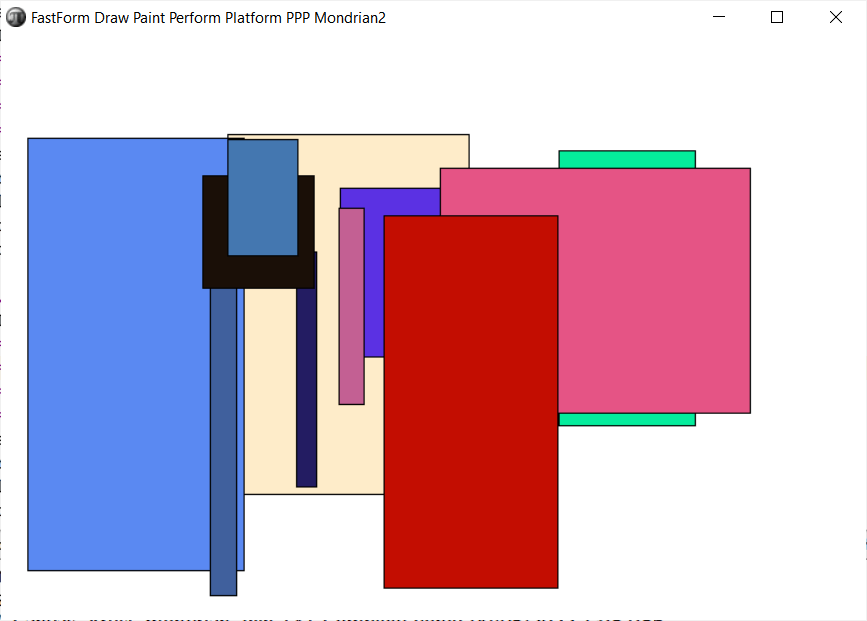
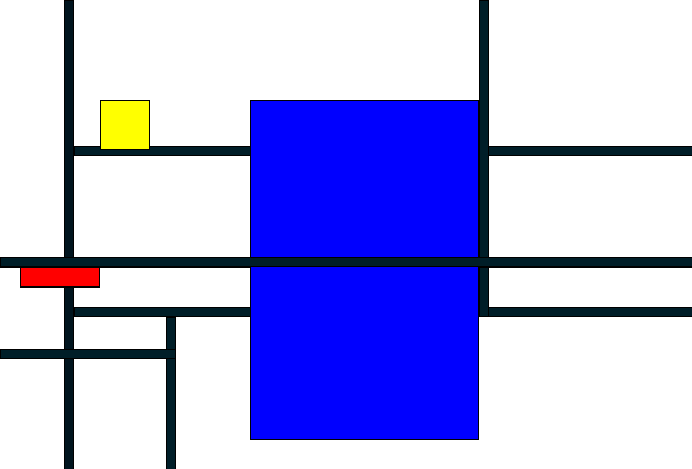
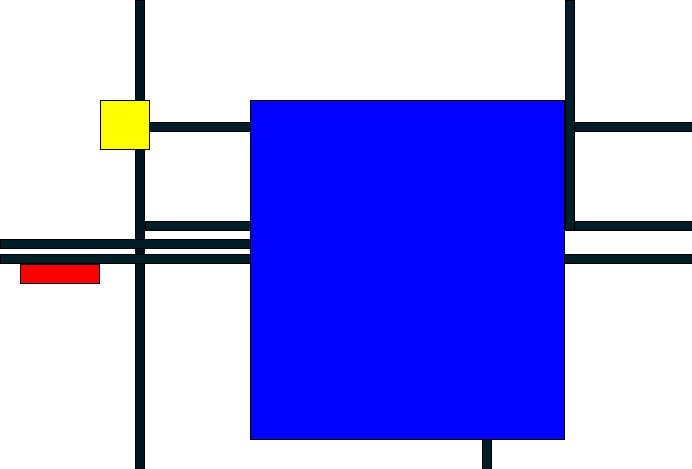
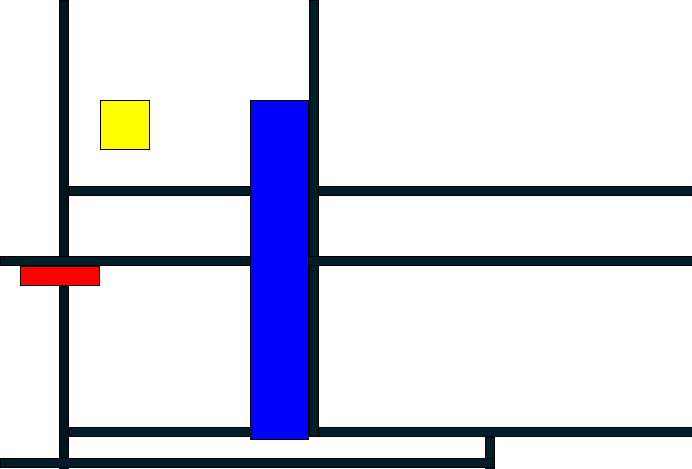
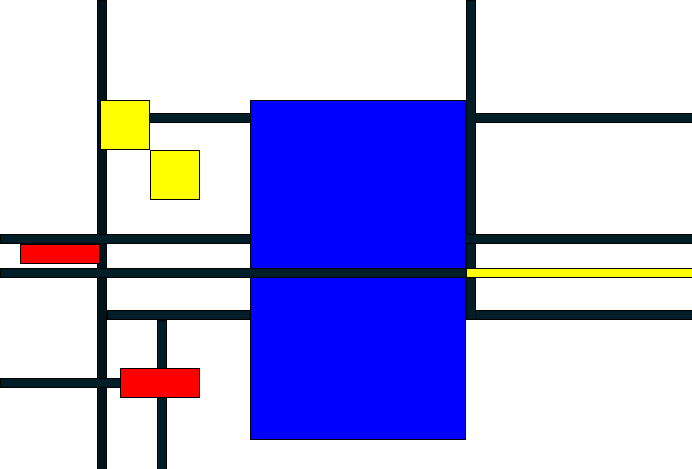
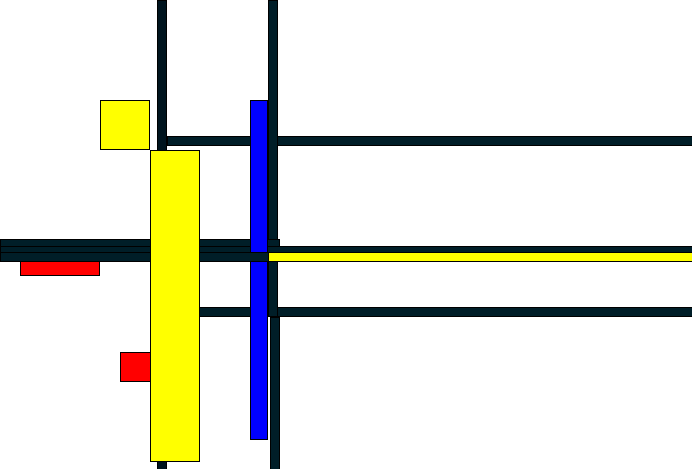
Mondrian Next Art Generator
How can we capture the unpredictable evolutionary and emergent properties of nature in software? How can understanding the mathematical principles behind our physical world help us to create digital worlds like an mondrian art generator?
procedure createBitmapsampleArtist(sender: TObject);
var
  Bitmap: TBitmap;
  I, X, Y, W, H: Integer;
  aRed, aGreen, aBlue: Integer;
  afrm: TForm;
begin
  afrm:= getform2(700,500,123,'FastForm Draw Paint Perform Platform PPP Mondrian2');
  afrm.ondblclick:= @createBitmapsampleArtist;
  Bitmap:= TBitmap.Create;
  Bitmap.Width:= 700;
  Bitmap.Height:= 700;
  for I:= 0 to 9 do begin
    X:= Random(450);
    Y:= Random(430);
    W:= Random(150)+ 150;
    H:= Random(150)+ 50;
    aRed:= Random(255);
    aGreen:= Random(255);
    aBlue:= Random(255);
    Bitmap.Canvas.Brush.Color:= RGB(aRed, aGreen, aBlue);
    Bitmap.Canvas.Rectangle(X+20, Y+30, W, H);
  end;
  afrm.Canvas.Draw(0, 0, Bitmap);
  for I:= 0 to 3 do begin
    X:= Random(450)+220;
    Y:= Random(210)+220;
    W:= Random(300)+ 150;
    H:= Random(100)+ 50;
    aRed:= Random(255);
    aGreen:= Random(255);
    aBlue:= Random(255);
    Bitmap.Canvas.Brush.Color:= RGB(aRed, aGreen, aBlue);
    Bitmap.Canvas.Rectangle(X+10, Y+20, W, H);
  end;
  afrm.Canvas.Draw(0, 0, Bitmap);
  SaveCanvas2(afrm.canvas,Exepath+'examples\727_mondrian_randomboxartist.png')
  //openFile(Exepath+'examples\randomboxartist.png')
  Bitmap.Free;
end;
Mondrian Art Next GeneratorMondrian Next SelectionMondrian Next 2 Selection
Mondrian2
Mondrian Machine Learning Creator
Real
Mondrian Composition 9Composition 11
Angle Numerical Solver
function SolveNumericallyAngle(ANumericalEquation: TNumericalEquation;
  ADesiredMaxError: Double; ADesiredMaxIterations: Integer {= 10}): Double;
var
  lError, lErr1, lErr2, lErr3, lErr4: Double;
  lParam1, lParam2: Double;
  lCount: Integer;
begin
  lErr1 := ANumericalEquation(0);
  lErr2 := ANumericalEquation(Pi/2);
  lErr3 := ANumericalEquation(Pi);
  lErr4 := ANumericalEquation(3*Pi/2);
  // Choose the place to start
  if (lErr1 < lErr2) and (lErr1 < lErr3) and (lErr1 < lErr4) then  begin
    lParam1 := -Pi/2;
    lParam2 := Pi/2;
  end
  else if (lErr2 < lErr3) and (lErr2 < lErr4) then begin
    lParam1 := 0;
    lParam2 := Pi;
  end
  else if (lErr2 < lErr3) and (lErr2 < lErr4) then begin // wp: same as above!
    lParam1 := Pi/2;
    lParam2 := 3*Pi/2;
  end
  else begin
    lParam1 := Pi;
    lParam2 := TWO_PI;
  end;

  // Iterate as many times necessary to get the best answer!
  lCount := 0;
  lError := $FFFFFFFF;
  while ((ADesiredMaxError < 0 ) or (lError > ADesiredMaxError))
    and (lParam1 <> lParam2)
    and ((ADesiredMaxIterations < 0) or
                    (lCount < ADesiredMaxIterations)) do begin
    lErr1 := ANumericalEquation(lParam1);
    lErr2 := ANumericalEquation(lParam2);
    if lErr1 < lErr2 then
      lParam2 := (lParam1+lParam2)/2
    else
      lParam1 := (lParam1+lParam2)/2;
    lError := MinFloat(lErr1, lErr2);
    Inc(lCount);
  end;
  // Choose the best of the last two
  if lErr1 < lErr2 then
    Result := lParam1
  else
    Result := lParam2
end;
You have to define procedural types:
type TNumericalEquation= function(AParameter:Double):Double;

function numcalsin(AParameter: Double): Double;
begin
  result:= sin(Aparameter);
end;

function numcalcos(AParameter: Double): Double;
begin
  result:= cos(Aparameter);
end;
One can assign the following values to a proceduraltype variable: Nil, for both normal procedure pointers and method pointers. A variable reference of a proceduraltype, i. e. another variable of the same type. A global procedure or function address, with matching function or procedure header and calling convention.
writeln('cos test '+flots(numcalcos(0)));
writeln('cos test '+flots(numcalcos(120)));
writeln('cos test '+flots(numcalcos(3.141592653589793)));
writeln('sin test '+flots(numcalsin(6.283185307179586)));
writeln('sin test '+format('%2.16f ',[numcalsin(6.283185307179586)]));

writeln('solve num angle: '+flots(SolveNumericallyAngle(@numcalsin, 0.01, 10)));
writeln('solve num angle: '+flots(SolveNumericallyAngle(@numcalcos, 0.01, 10)));
writeln('solve num angle: '+flots(SolveNumericallyAngle(@numcalln, 0.01, 10)));
Output:
cos test 1 cos test 0.814180970526562 cos test -1 sin test -2.44921270764475E-16 sin test -0.0000000000000002 solve num angle: 6.283185307179586 solve num angle: 3.141592653589793 solve num angle: 0 mX4 executed: 13/05/2022 11:46:14 Runtime: 0:0:1.766 Memload: 46% use
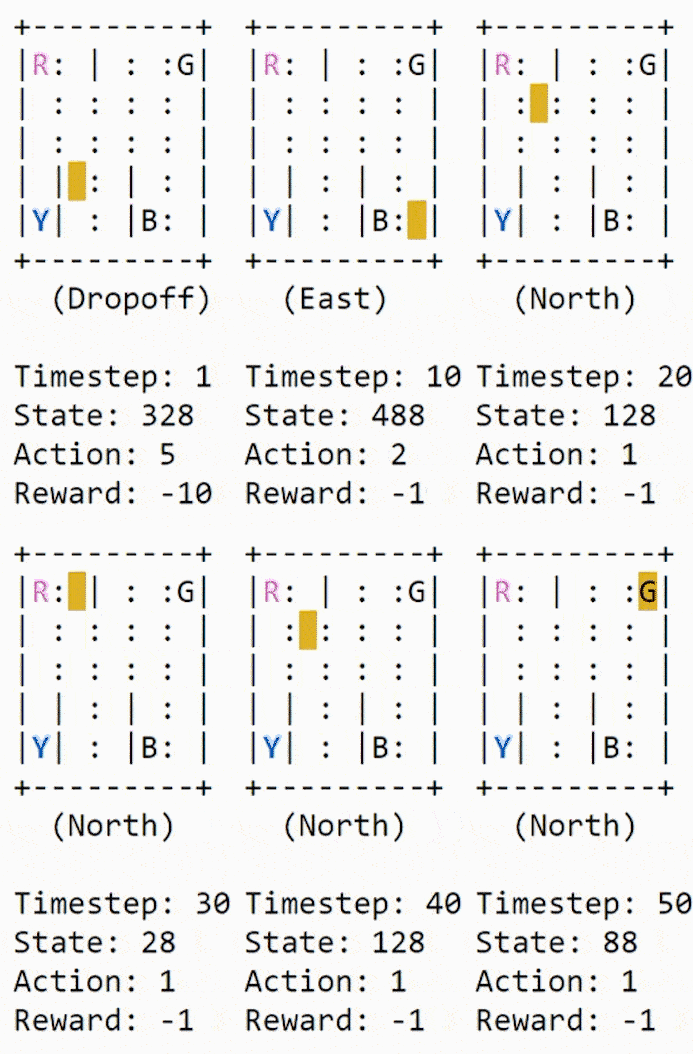
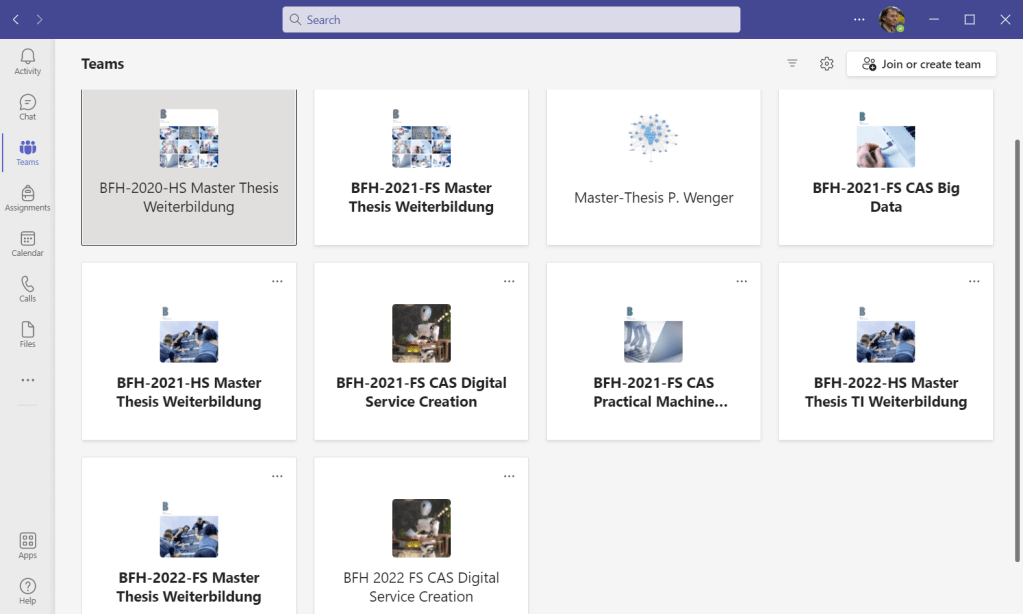
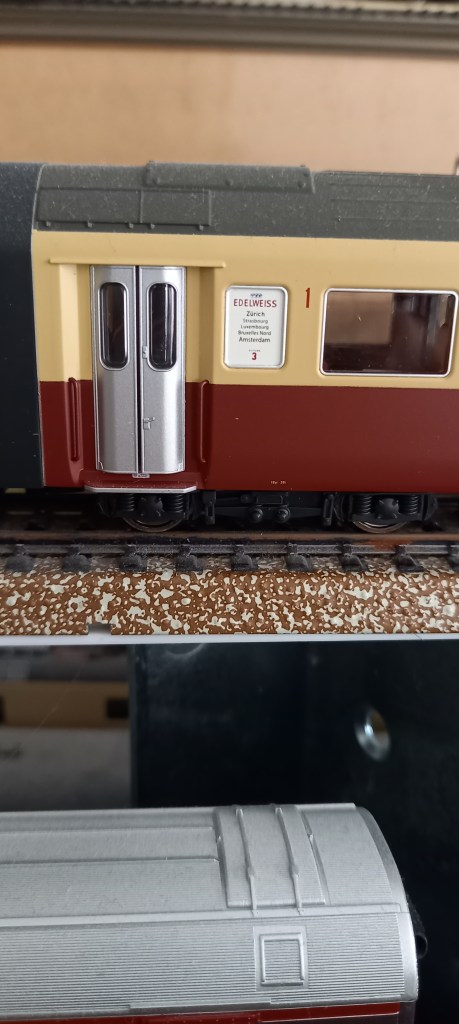
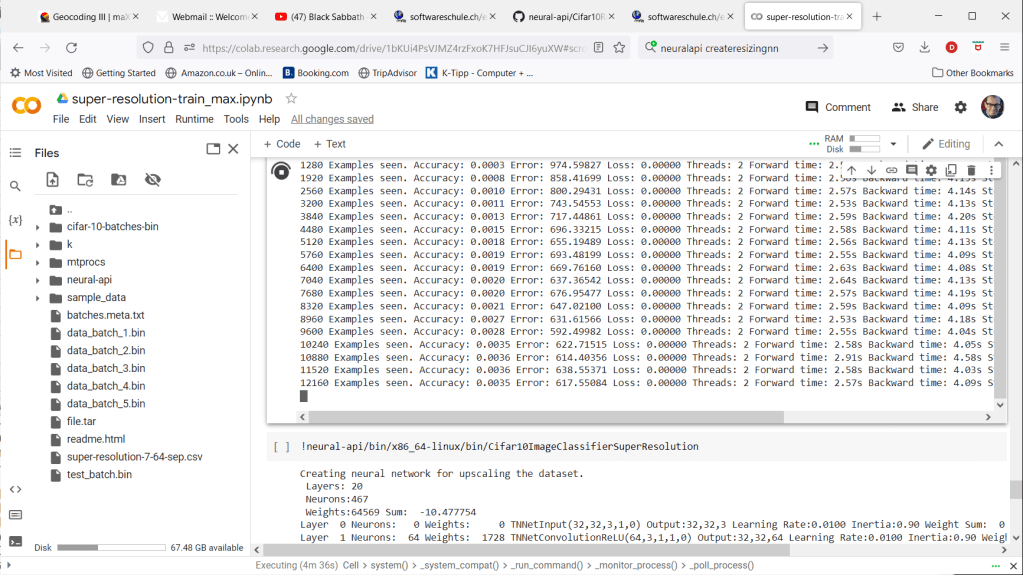
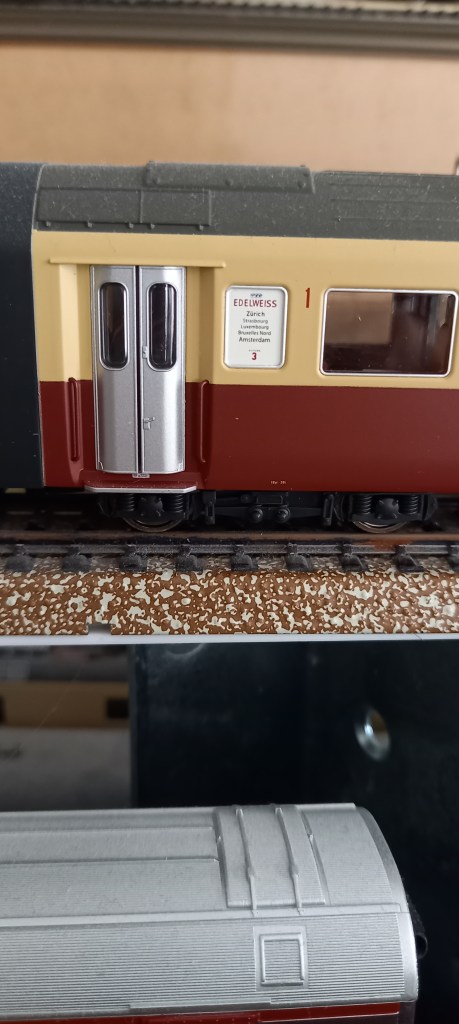
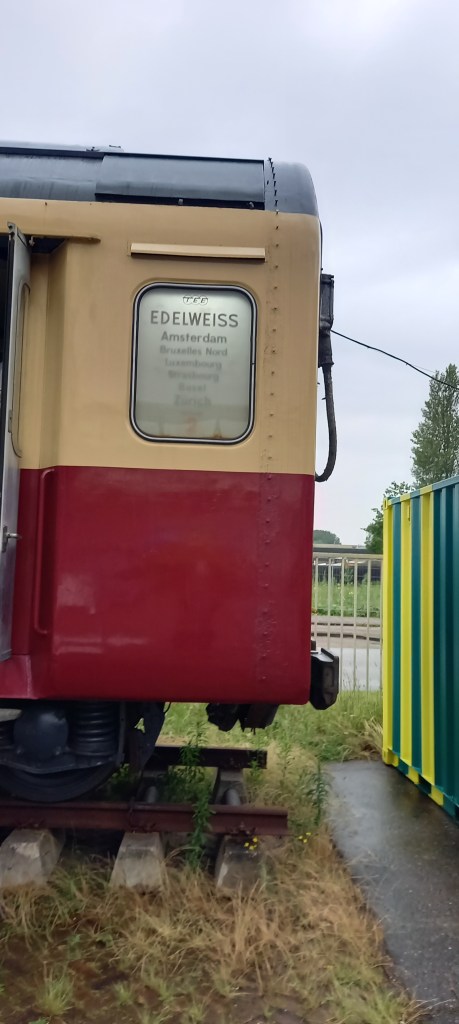
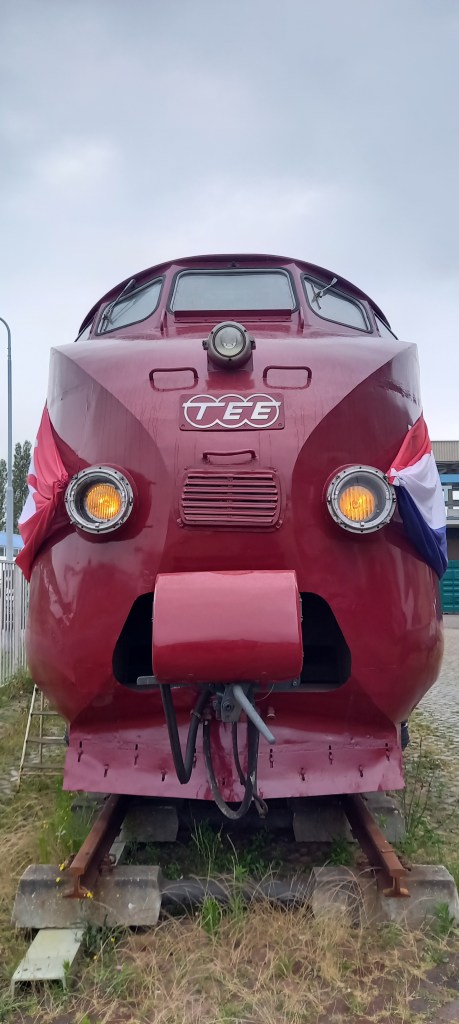
Reinforcment Agent OpenAI_Gym_Taxi_-Animation.gifBFH TeamsTEE RAM Edelweiss Netherlands Transport MuseumTrain NN on ColabRAm TEE Edelweiss Netherlands Transport Museum
function GetBit(idx: Integer): Boolean;
  var tmp: PChar;
  begin
    if idx >= size*8 then begin
      Result:= False;
      Exit;
    end;
    tmp:= PChar(data);
    tmp:= tmp+(idx div 8);
    Result:= (Ord(tmp^) and (1 shl (idx mod 8))) <> 0;
  end;
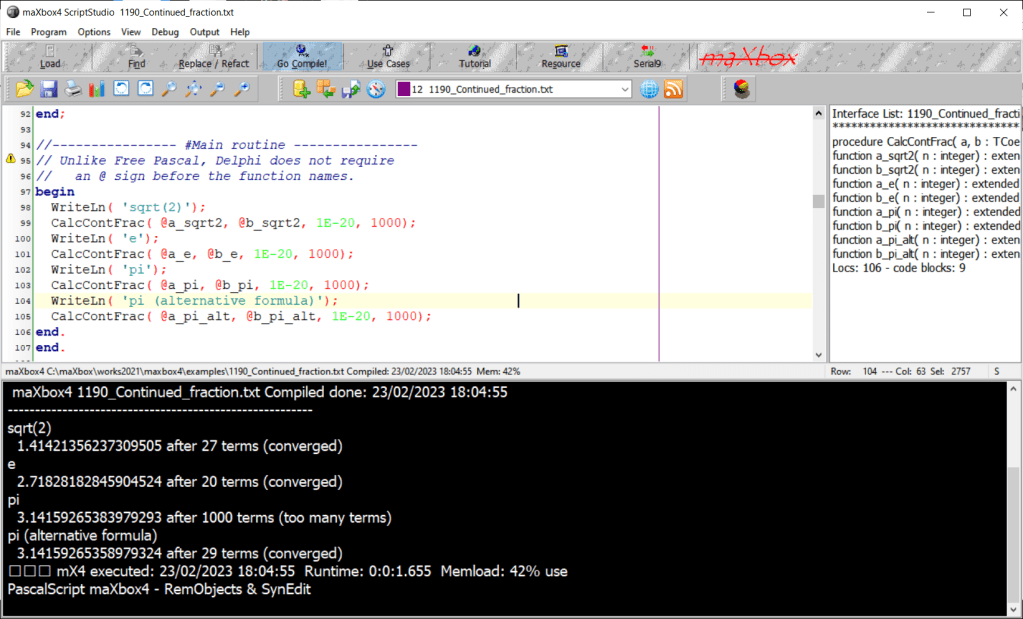
In calculus there is a thing called Taylor Series which provides an easy way to calculate many irrational values to arbitrary precision. Pi/4 = 1 – 1/3 + 1/5 – 1/7 + …But this Taylor series is probably also one of the worst ways to generate PI on a computer. You have to have huge precision on your calculations and it’ll take many billions of iterations to get past 3.14159. Next try could be the use of atan, trouble is, the Taylor series for atan (PI/4 = atan(1) = 1 – 1/3 + 1/5 – 1/7 + 1/9… )converges very slowly for values of x near one, and it converges extremely slowly when x is equal to one.So how we did it: with the AGM calculation of Pi. In 1799, Gauss was startled to discover that his arithmetic-geometric mean connected, the half-circumference of a curve known as the lemniscate, with π, the half-circumference of a unit circle. procedure TBigFloat.PiConst(const MaxSig: TMaxSig);begin self.CheckPiPlaces(MaxSig);end; procedure TBigFloat.CheckPiPlaces(const MaxSig: TMaxSig);var localPrecision: word;begin localPrecision:= MaxSig+2; if localPrecision>zpi.sigdigits then calculate_PI_AGM(localPrecision+5) else begin self.Assign(zpi); self.RoundToPrec(MaxSig); end;end; Then we compare the result of the code with the wolfram alpha link above to make sure we get the right 1000 places in it: writeln(‘sha test1: ‘+sha1tohex(synsha1(tostring(normal)))); writeln(‘sha test2: ‘+sha1tohex(synsha1(PI1000))); >>> sha test1: b7805c4fb1662666d7741fa8f915daacf706cd01 >>> sha test2: b7805c4fb1662666d7741fa8f915daacf706cd01 Got it. So why doesn’t Pi have a 0 in its first 30 digits? 3.141592653589793238462643383279502884
Let’s assume (likely but is not proven at present) that Pi is a Normal Number1. Amongst other things, this means that the frequency of occurrence of any digit in its decimal range is precisely 1/10. This assumption is in accord with statistical analysis of many trillions of decimal places of Pi. We can use this to calculate the probability that there are no zeros in the first thirty digits of our π; In order for this to happen, zero cannot appear in the first place, a probability of 9/10 and also not in the second place, also a probability of 9/10 and so on. We get the overall probability to be: (9/10)^30 = ˜ 4.24% //4.23911 So it is unlikely that no zero (or another selected number) appears in the first thirty digits.Can we say there is even less of interest in the decimal digits as a particular transcendental number, except that so many people think there is something special about it, for example you find your birth date (as 8 digits) in it.What can we do? We can count the frequency of each digit of Pi to assume a uniform distribution and independence and non predictability of each digit:
Piconst(10000) writeln(‘zero count: ‘+ itoa(StrCharCount(toString(normal), ‘0’))); forit:=0to9doprintln(itoa(it)+‘count: ‘+ itoa(StrCount(toString(normal),+itoa(it)[1])));ref: zero count:9680 count:9681 count:10262 count:10223 count:9764 count:10125 count:10476 count:10237 count:9718 count:9489 count:1014 But wait a second. Why does zero lag behind in the count. It is a perfectly non number digit? Just had to ask, its a rhetorical question. Lets check it with only 1000 digits: zero count: 930 count: 931 count: 1162 count: 1033 count: 1034 count: 935 count: 976 count: 947 count: 958 count: 1009 count: 106 forit:=0to9doFormatF(‘%d count: %d’,[it,StrCount(toString(normal),+itoa(it)[1])]); Obviously, some digit will lag. Which digit has a reason to lag? None has a reason to lag. Zero is none. Therefore, zero lags. — Larry Hosken This means as said before that each number is equally likely to be the next number so each has a 1/10 chance. Therefore, the occurrence of each digit should be equal once we reach an infinite number of decimal places. http://www.eveandersson.com/pi/precalculated-frequencies But Pi is obviously going to look different if we calculate it in base 8 or base 12 or any base other than 10. I was also reading a recent blog post by Evelyn Lamb where she mentioned in passing that 314159 is a prime number and that made me curious how many such primes there are. https://www.johndcook.com/blog/2018/09/04/pi-primes/ Formulas for prime-counting functions come in two kinds: arithmetic formulas and analytic formulas, see appendix prime-counting.
Prime-counting
def is_prime(n):if n>1: divs=[k for k in range(2,n)if n%k==0] return len(divs)==0else: return False def nth_prime(n): primes=[p for p in range(n*n+2)if is_prime(p)] return primes[n-1]NativeWriteln(‘Start with maXbox4 Console Output—>’);forit:= 1to50doif IsPrime(it)then NativeWriteln(IntToStr(it)+‘ is prime’);NativeWriteln(‘—–end—–‘); FreeConsole(); This is OK if you are just wanting to display output into the command line. But operations like redirecting output into a file for example are not working e.g.: start /wait Checker.exe > out.txt would still output into console and not into file out.txt. Different solution exists for PowerShell: If you are lost into the source code then you could easily add parameters to your app to write output to a file instead of the console: -o out.txt, since it’s your tool doing the writing, you can build wherever you want for example to start out of the shell and get output to the shell and in the end plot an image to another file output as a graphic like below: Call the script from the shell with>>> .\maxbox4.exe ..\examples\866_native_console.txtThe script can be found:http://www.softwareschule.ch/examples/1093_XMLUtils_Tutor92tester.txthttp://www.softwareschule.ch/examples/866_native_console.txt Author: Max Kleiner Ref: http://www.softwareschule.ch/box.htmhttps://scikit-learn.org/stable/modules/ Doc: https://maxbox4.wordpress.com >>> from geopy.geocoders import Nominatim>>> geolocator = Nominatim(‘maxbox-app’)>>> place,(lat,lng) = geolocator.geocode(“Breitenrainplatz 2 Bern”)>>> print (“%s: %.5f, %.5f” % (place, lat, lng)) Release Notes maXbox 4.7.6.10 IV Jan. 2022 mX476 ************************************************** Add 25 Units + 6 Tutorials Total of Function Calls: 35371 SHA1: of 4.7.6.10 A2B2B2D1596C6A5F3ACCED90D0C2246172A3DE2CCRC32: 285ACBCB 31.3 MB (32,921,928 bytes) ZIP file maxbox4.zip sha1 E267EB40AA945AD10B88EF8274C837F510DD96D4 https://www.virustotal.com/gui/file/3080a507b536ff12ec70e9a8df9eba27aca5c90709d73f42a5ad02211342bd64/details
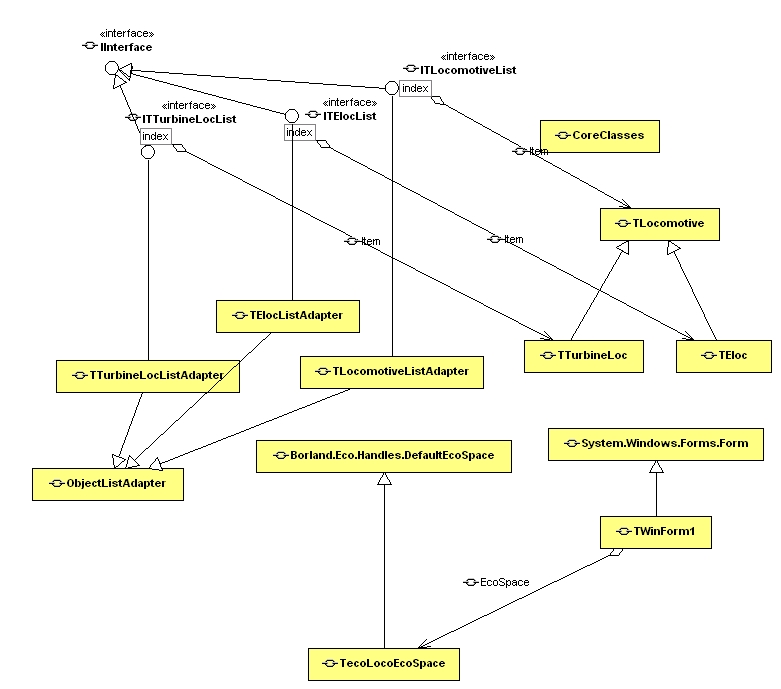
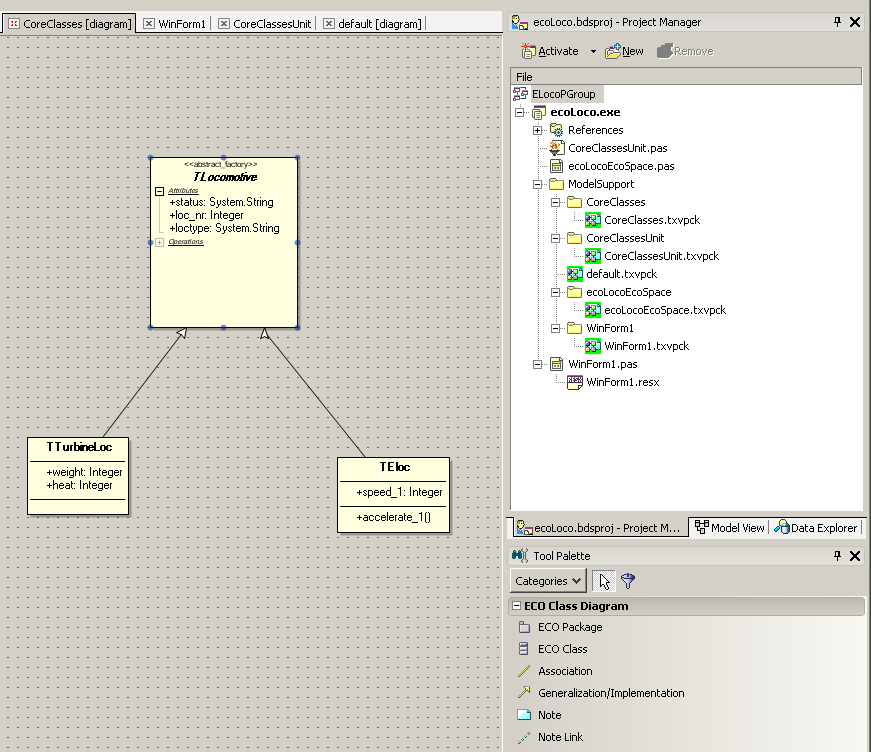
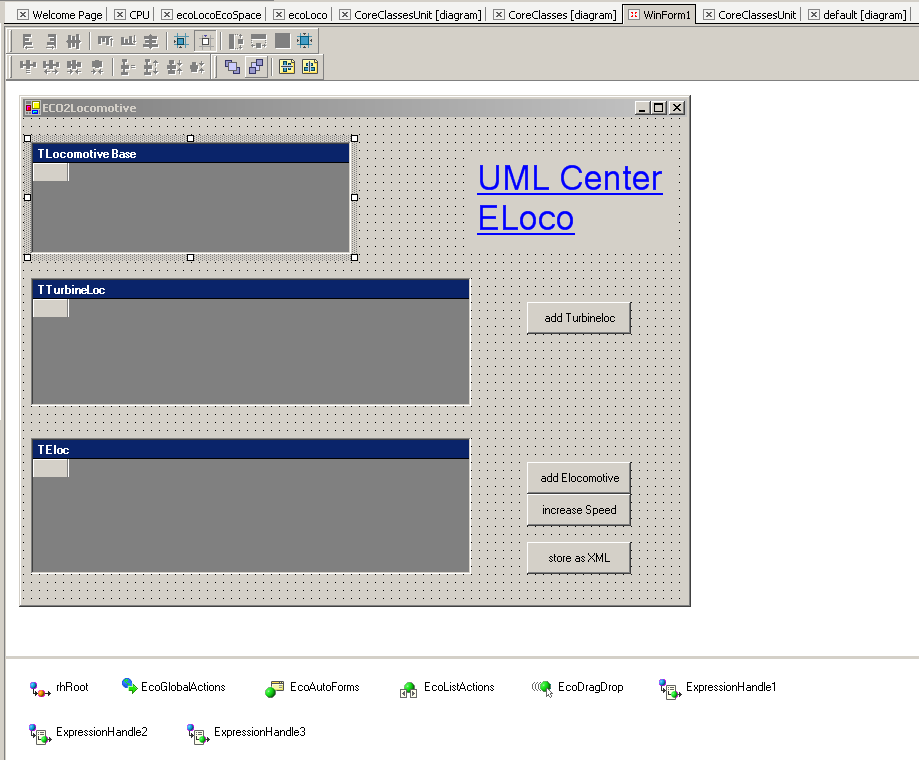
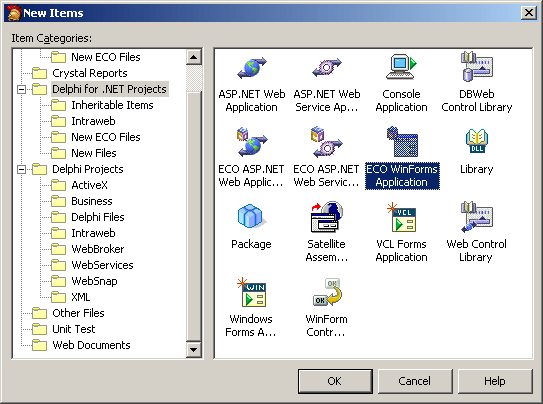
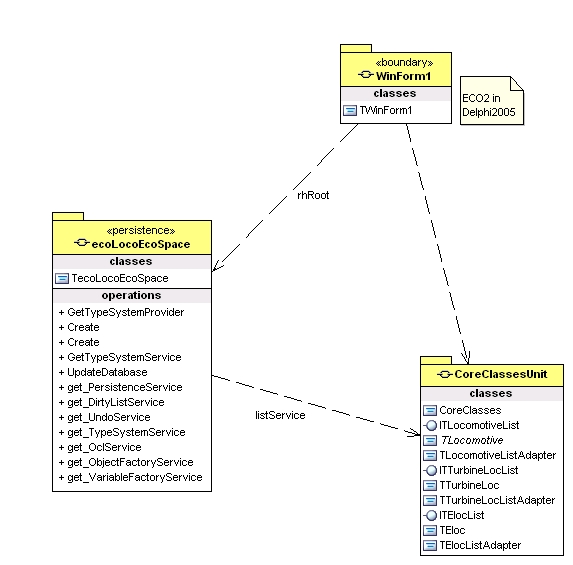
In this report, I want to use model-driven to show you how to set up a persistent and object-oriented application with Delphi 2005 and ECO II. The automatisms of the MDD (model driven development) in ECO are an enormous support for business objects or data-intensive systems, especially since ASP.net pages or web services can also be generated with it.
1.1 Entry with class ECO (stands for Enterprise Core Objects) enables the implementation and control of an MVC (Model View Controller) architecture, i.e. a middle layer of control classes (presentation, mapping and handles) mediates between the business objects and the graphical representation. In addition, ECO offers sophisticated database handling that, in addition to “class to table mapping” in a relational database, will also allow cached updates and transaction handling in the future.
ECO Space
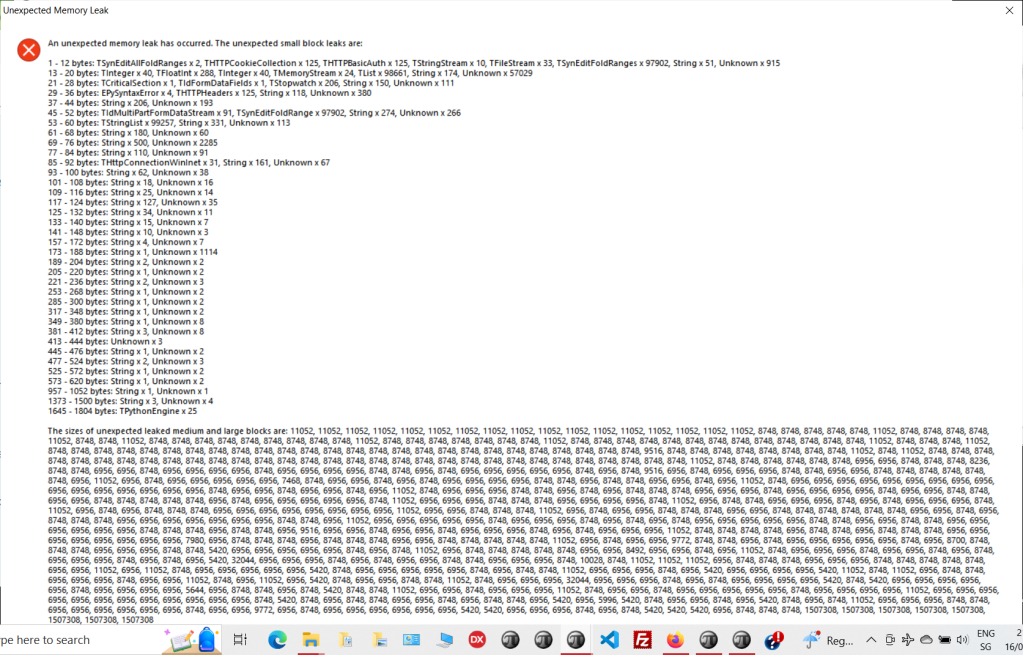
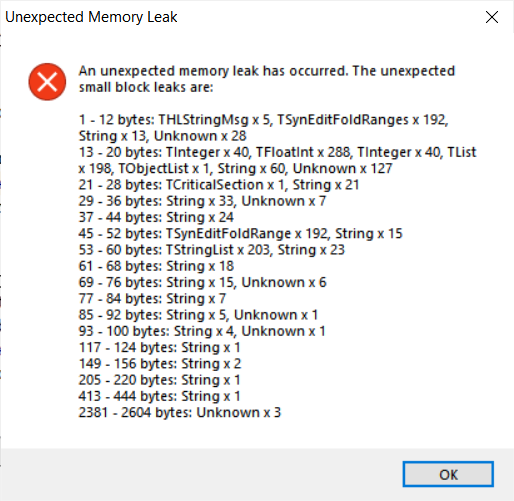
Memory Manager Test
ObjectList with 1500 StringStream Items
procedure TestTObjectList;
var  objl: TObjectList; i: integer;
begin

 objl:= TObjectList.Create1(True);
 objl.OwnsObjects:=true;

 writeln('capacity '+itoa(objl.capacity));

 for i:=0 to 1500 do begin {o:= TObj.Create();}
  //objl.Add(TStringStream.create('this is a smart stream')); end;
  objl.Add(TStringStream.create(filetoString(exepath+'firstdemo.txt')));
 end;

 writeln('capacity '+itoa(objl.capacity));
 writeln('count '+itoa(objl.count));
 writeln('last func:'+objtostr(objl.last))
 writeln('items last '+objtostr(objl.items[1500]))
 //function IndexOf(AObject: TObject): Integer; inline;
 writeln('idx of: '+itoa(objl.IndexOf(objl.last)));

 objl.Clear;
 objl.Free;

end;
capacity 0
capacity 1695
count 1501
last func:TStringStream@0AEE0130
items last TStringStream@0AEE0130
idx of: 1500
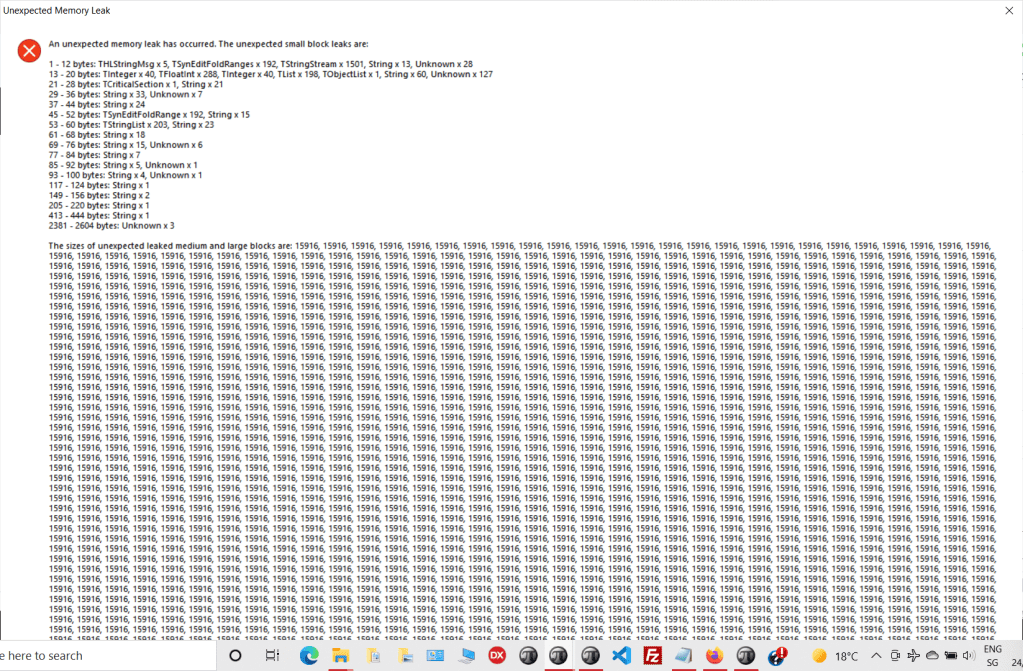
Now the same code without free of the objects. Use this one to specify if you want the list to own its content (means: it takes care of destroying an item when it is removed from the list or the list is destroyed) or not. The constructor without parameter (which you probably used) sets this to true. Now we set it to false (objl.OwnsObjects:=true; )and compare.
without Object freeing
This is due the filetoString(exepath+’firstdemo.txt’) so each file on the StringStream object allocates 15,914 bytes on the objectlist.
Mem Check
When I set the ‘OwnsObjects’ property to true and then attempt TObjectList.Free, sometimes (not always) I get an ‘invalid pointer | operation’ error. | Any clue? If you have already freed, but not nilled any of the items in the list, then this will cause an AV when the list tries to free it a second time.
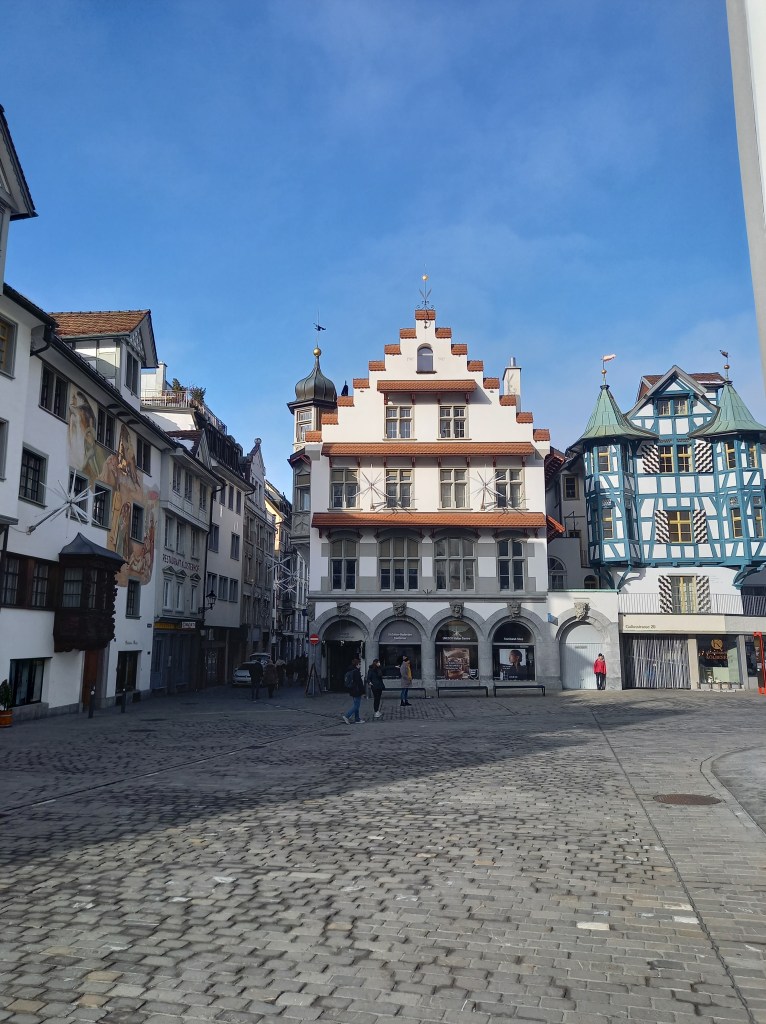
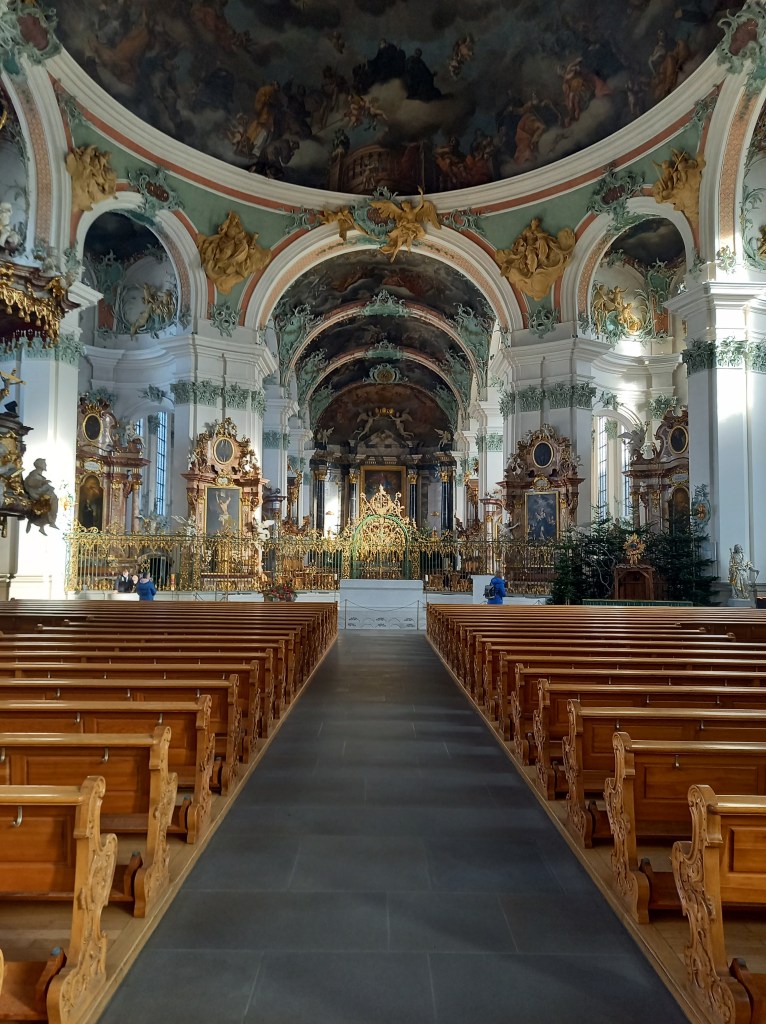
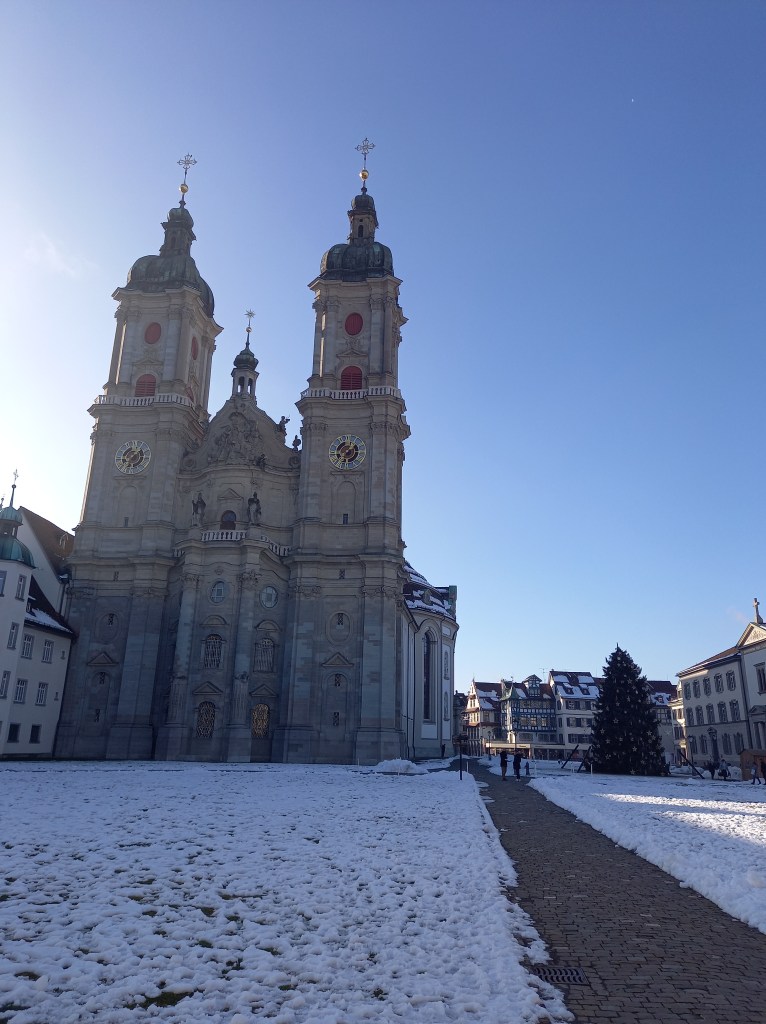
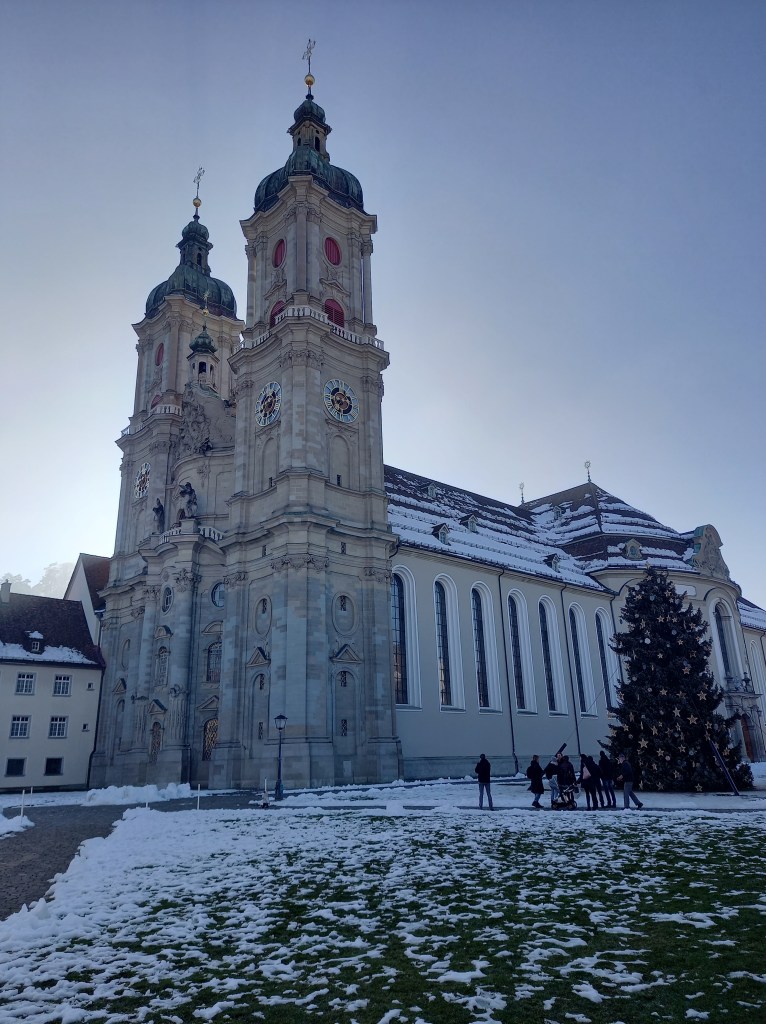
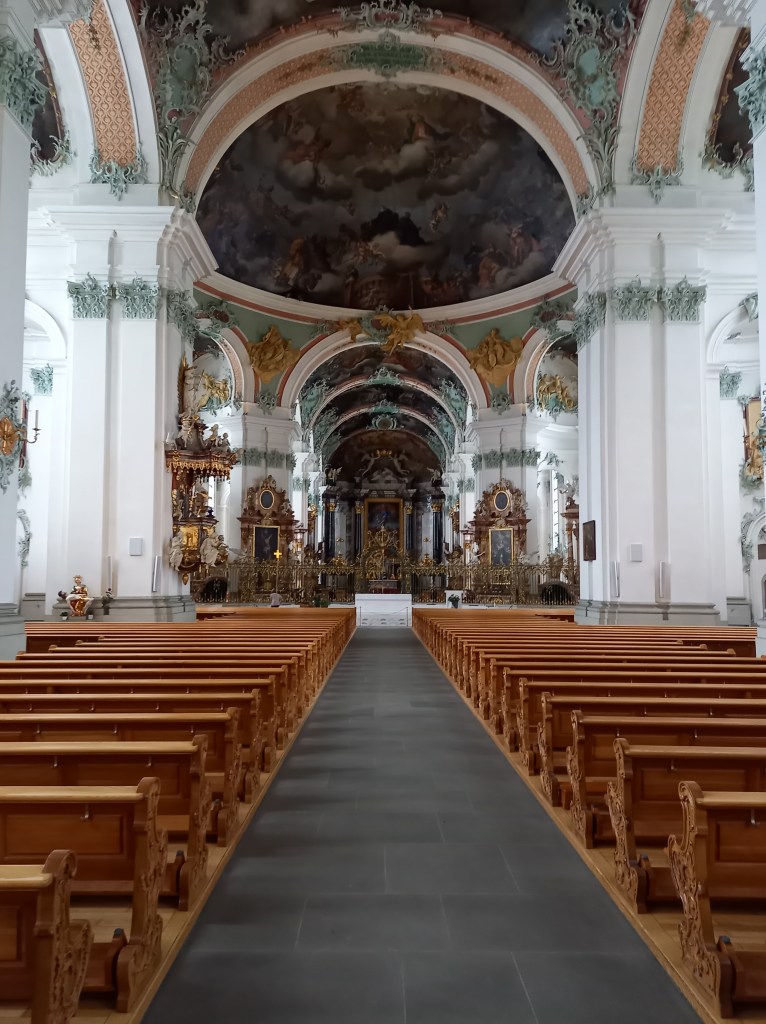
The main tourist attraction is the Abbey of Saint Gall, a UNESCOWorld Heritage Site. The Abbey’s (Stiftskirche) renowned library contains books from the 9th century. The official language of St. Gallen is (the Swiss variety of Standard) German, but the main spoken language is the local variant of the AlemannicSwiss German dialect (Erdbeertörtle).
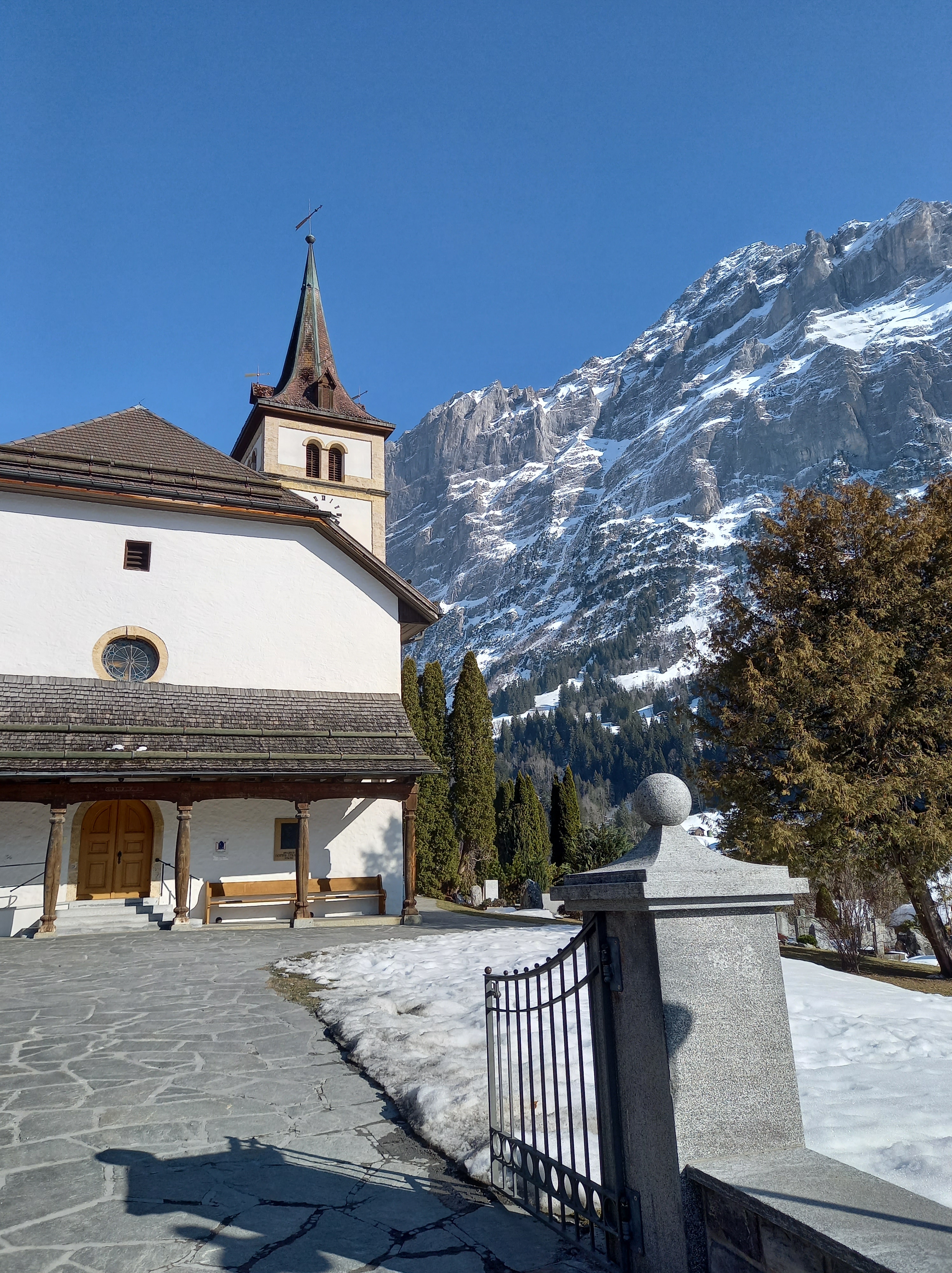
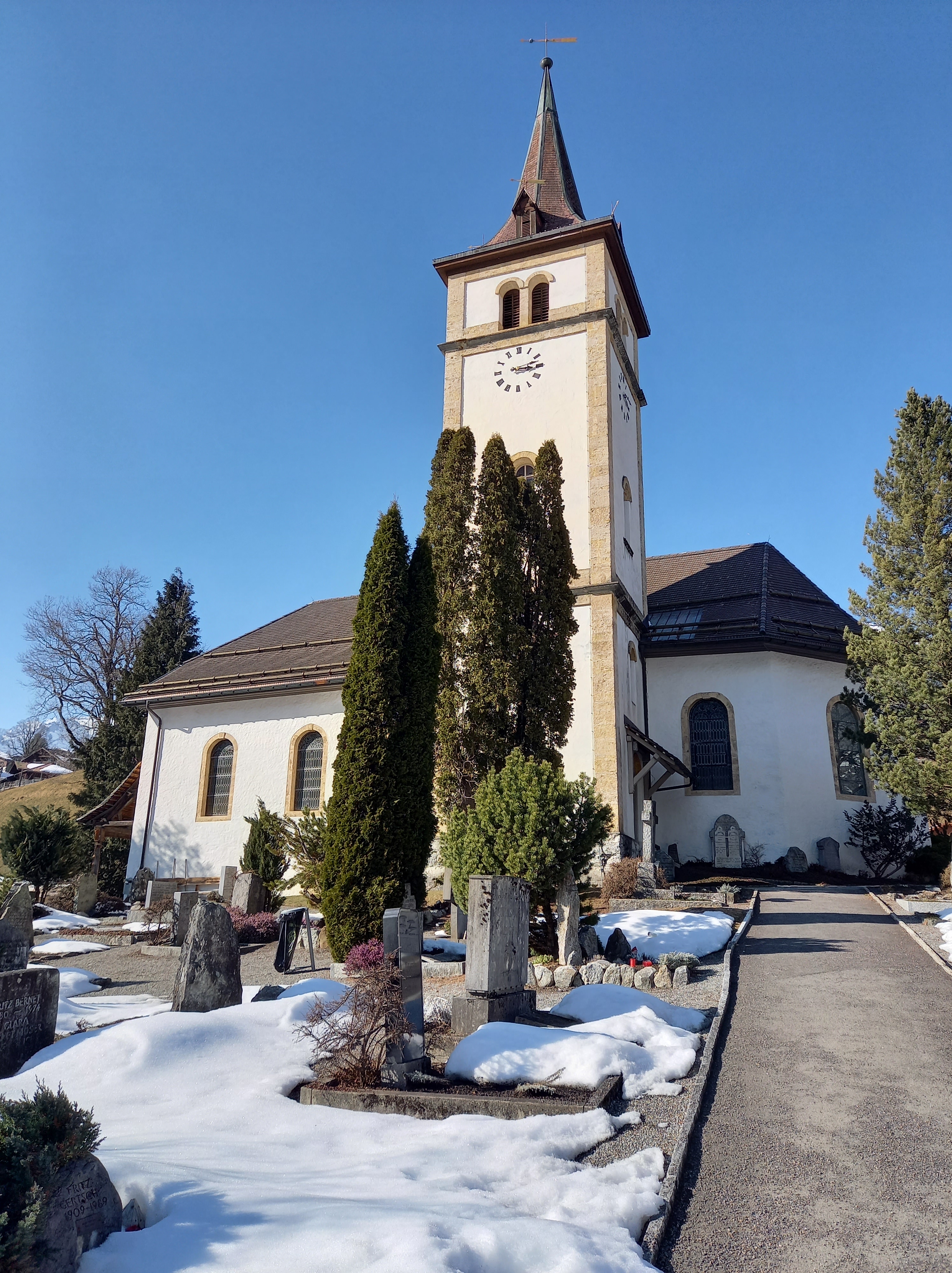
Freshly made of 4. th. Advent 19/12/2021San Gallo 2022 ZH Central StationSan Gallo GhostMax at Solothurn FilmtageBlaise MagazineKonstanz 201960 Years old PartyCH-ToursGSTComposite 2022 Holy HellGrindelwald ChurchKubuntu 21, Wine 5.1, maXbox 47610 VIIfrom Train to Bike to BFHKandersteg TraumClass Meeting Sek Wankdorf
TEE-Time
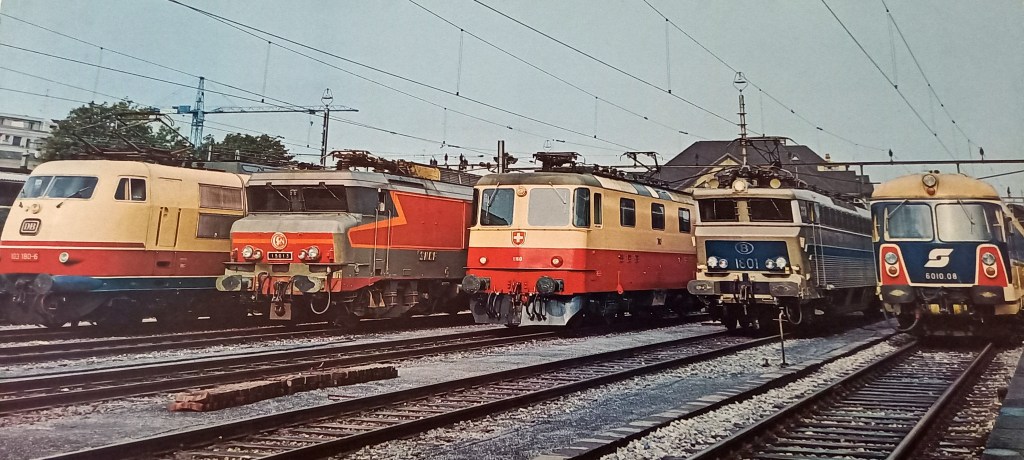
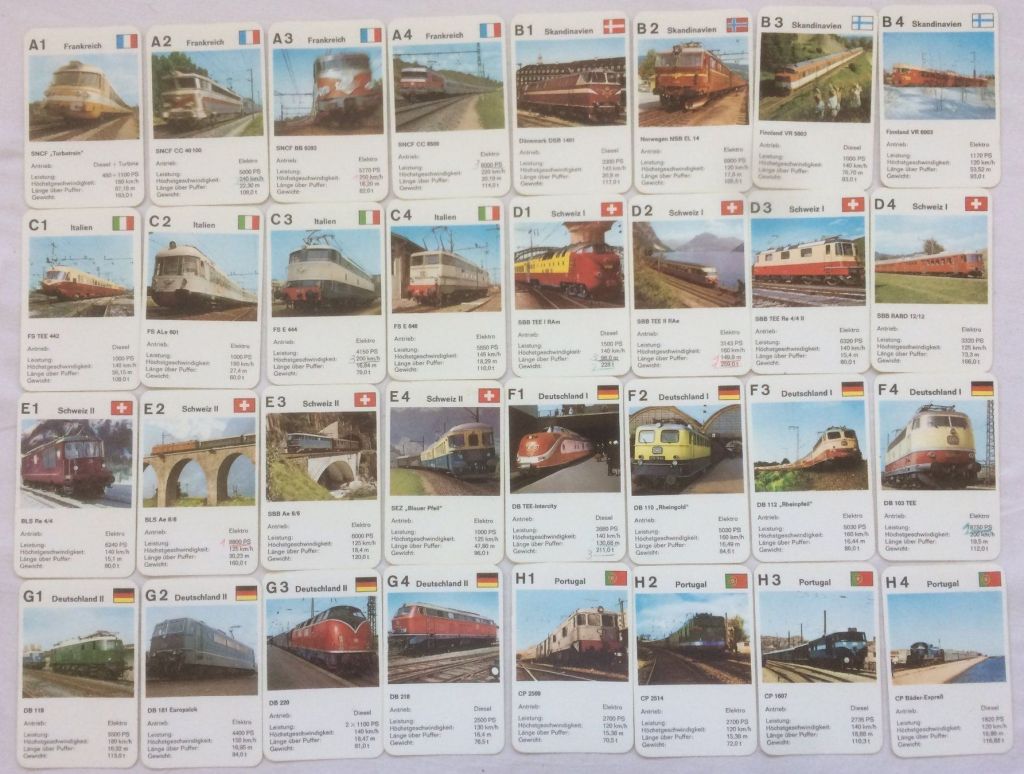
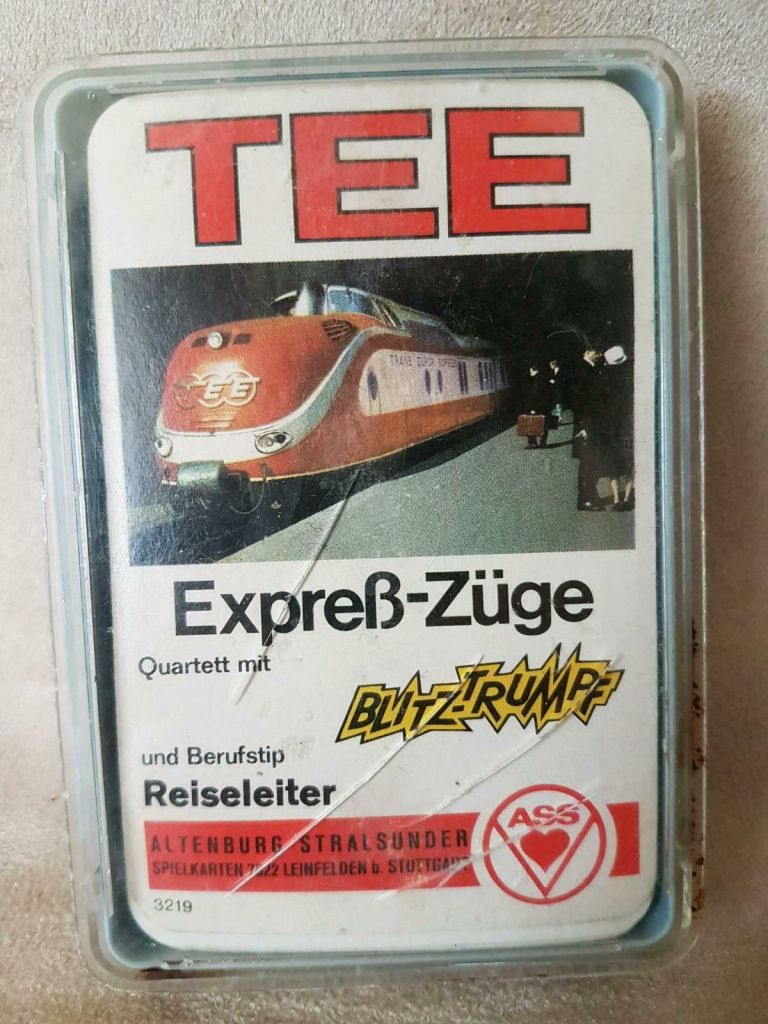
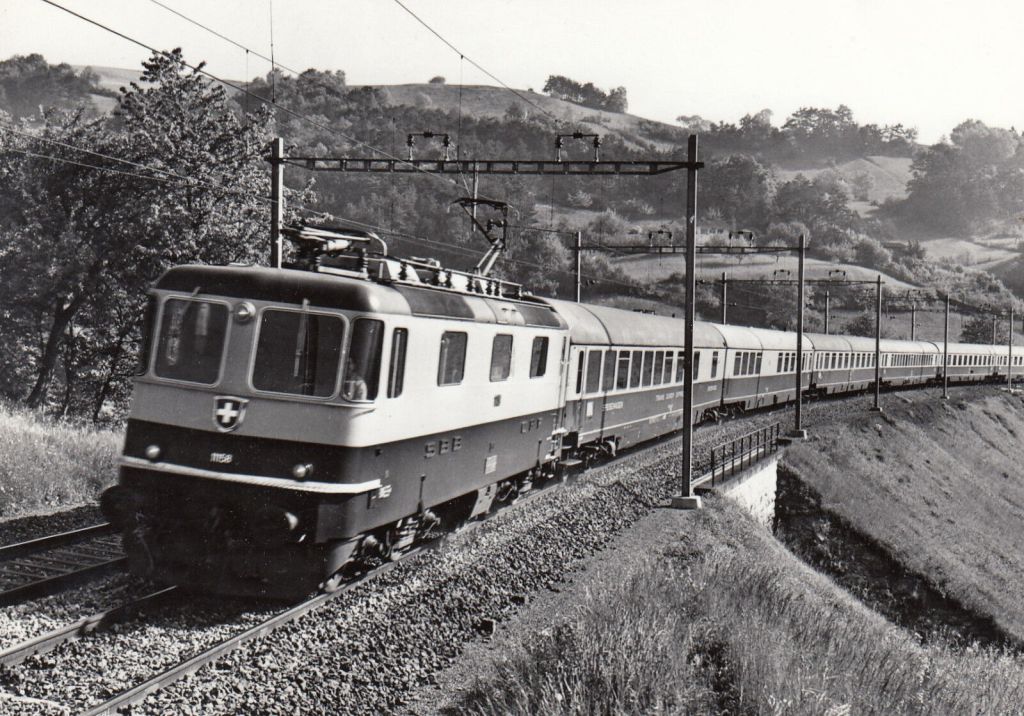
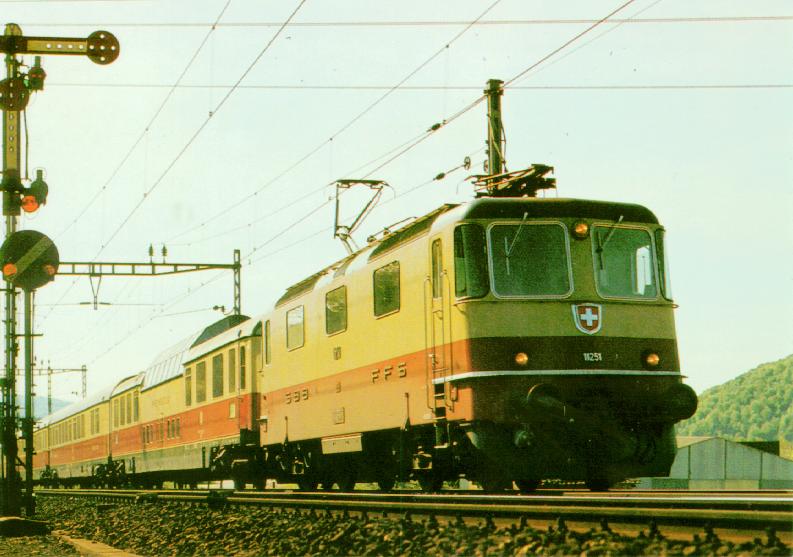
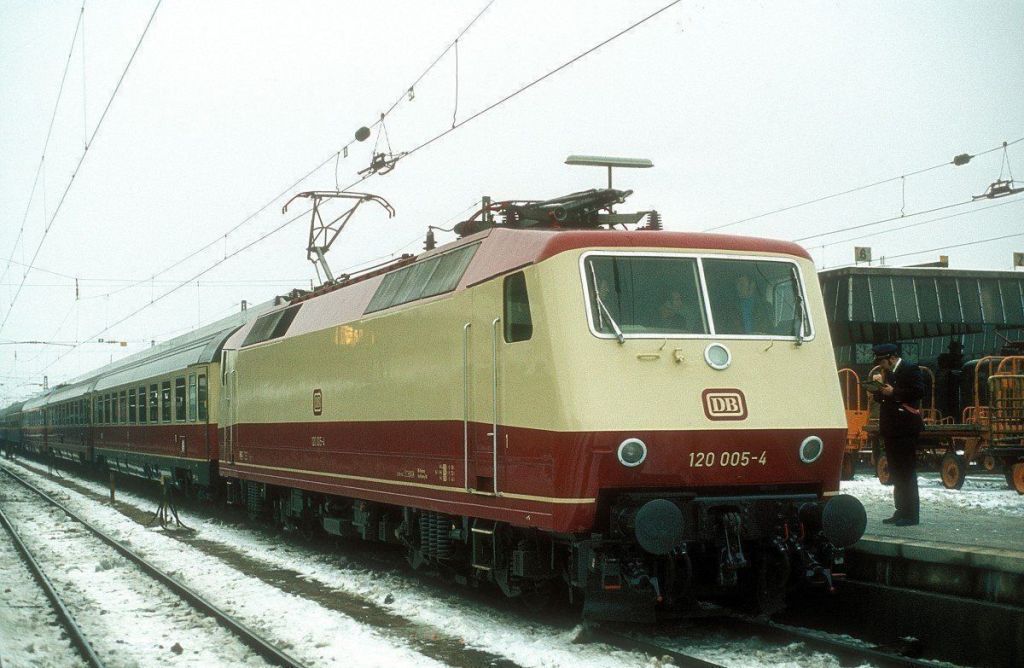
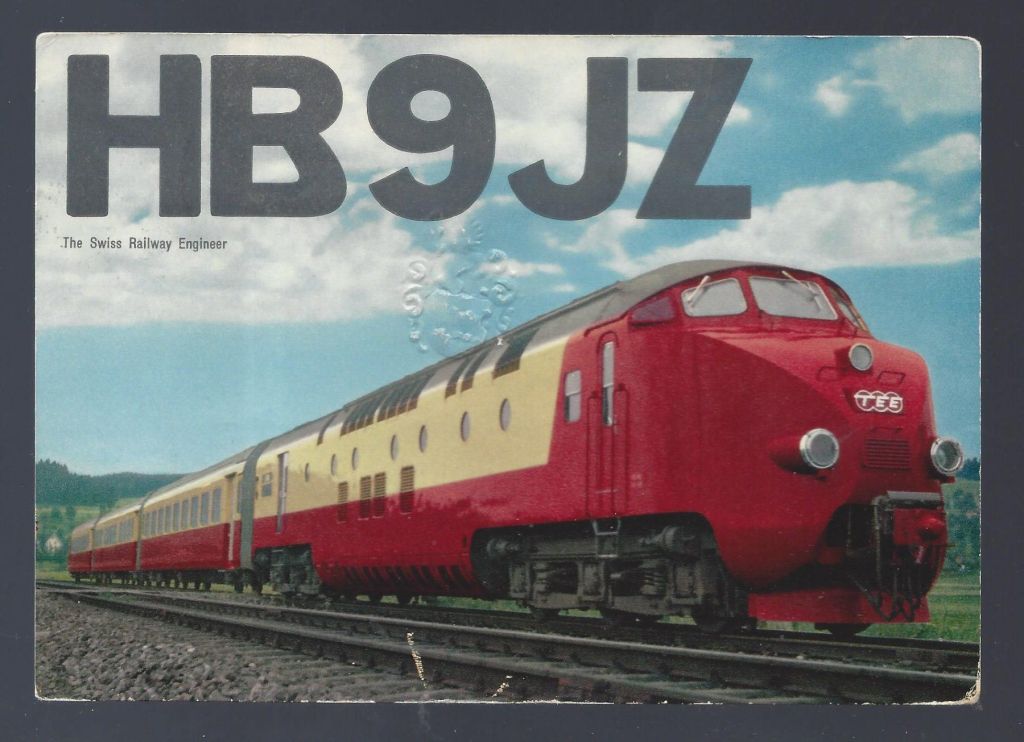
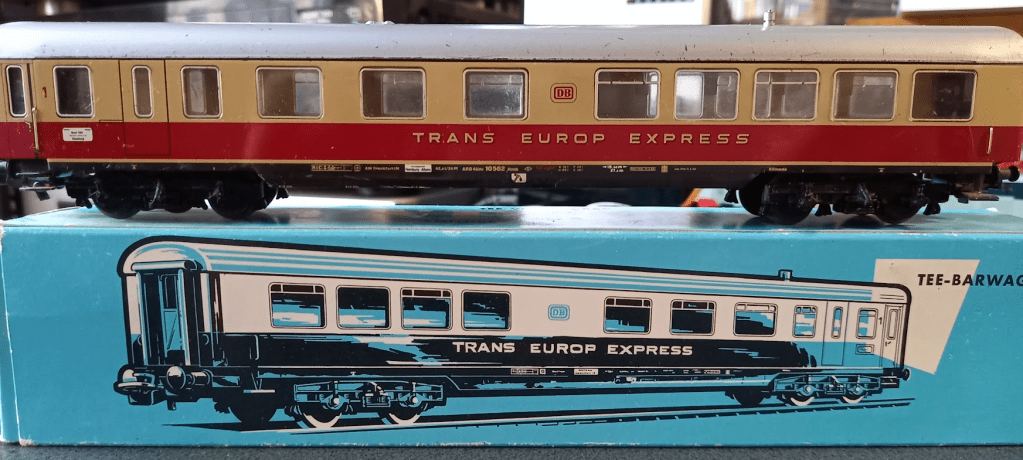
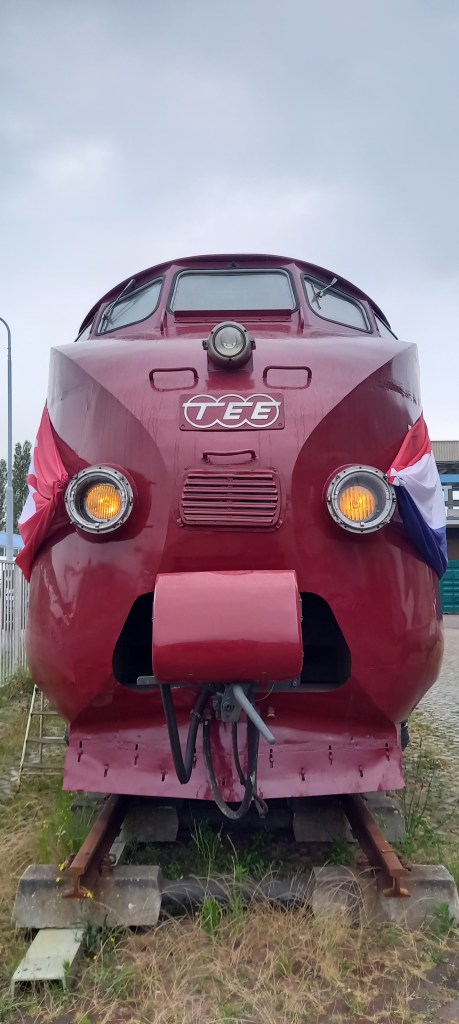
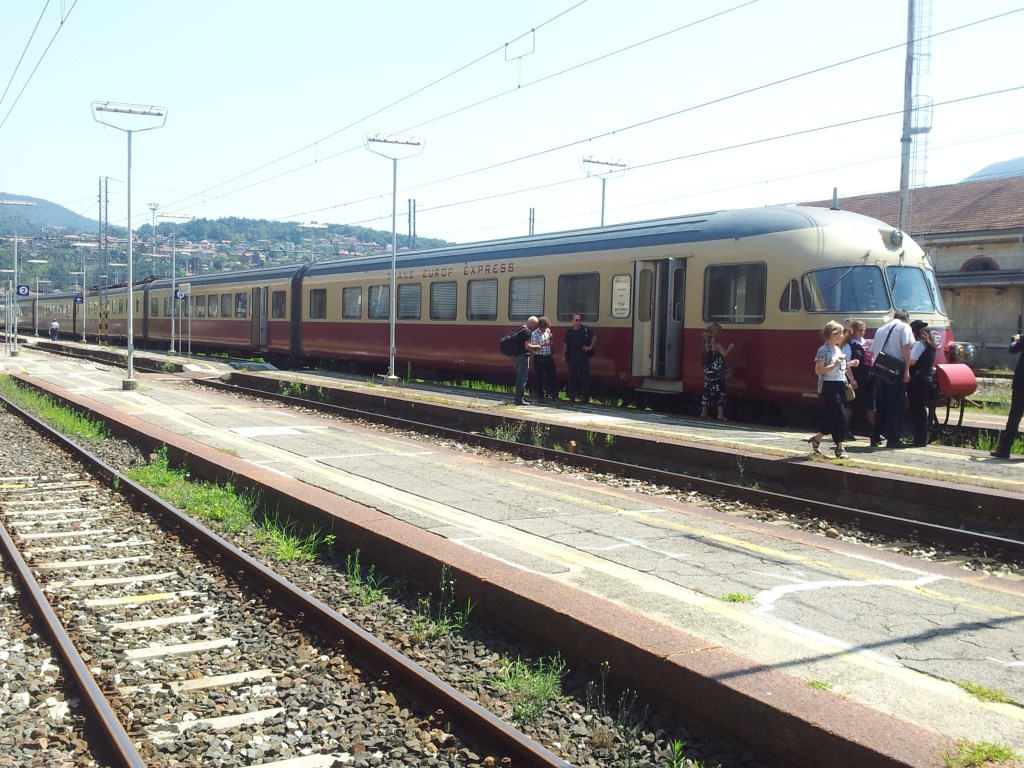
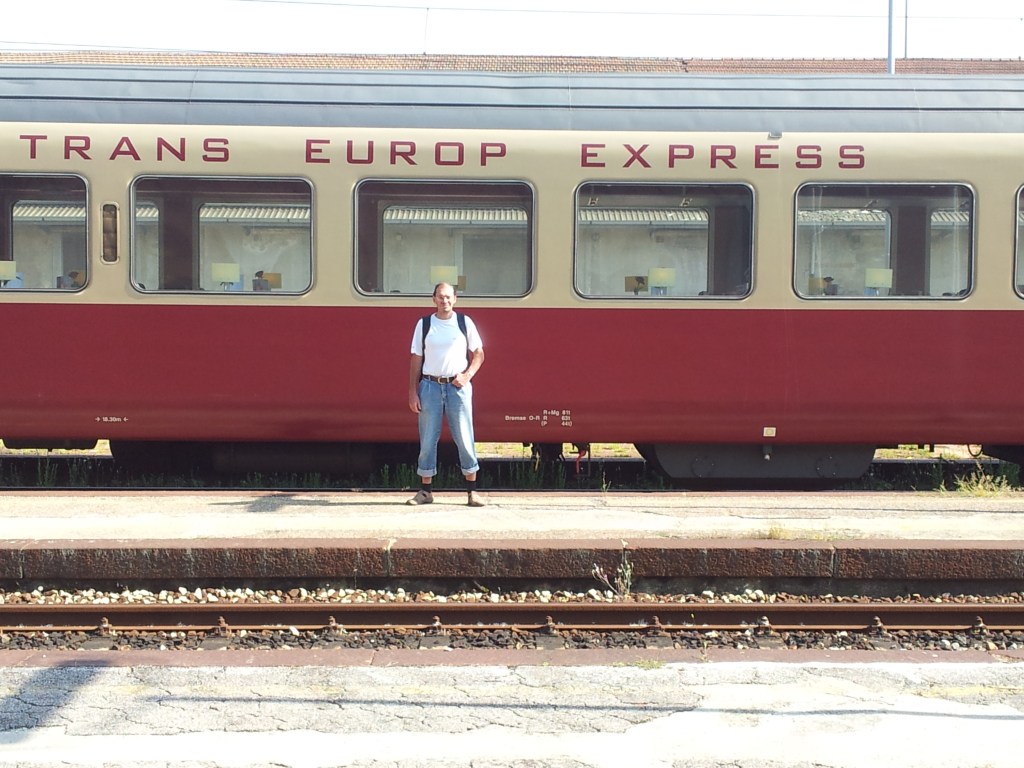
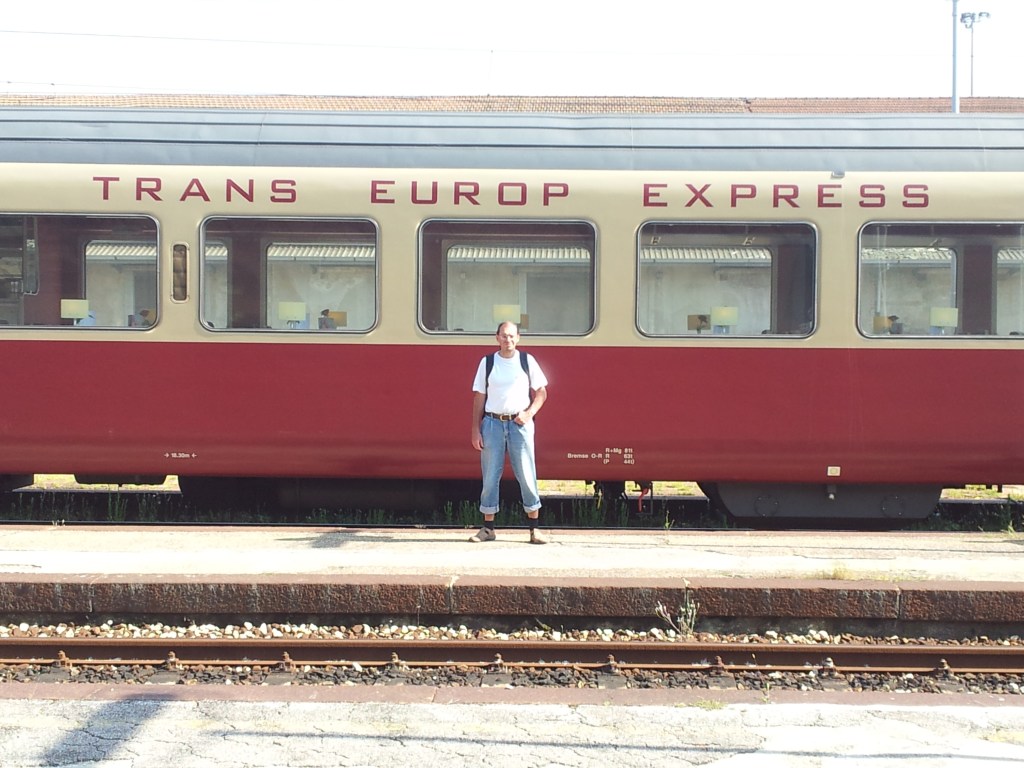
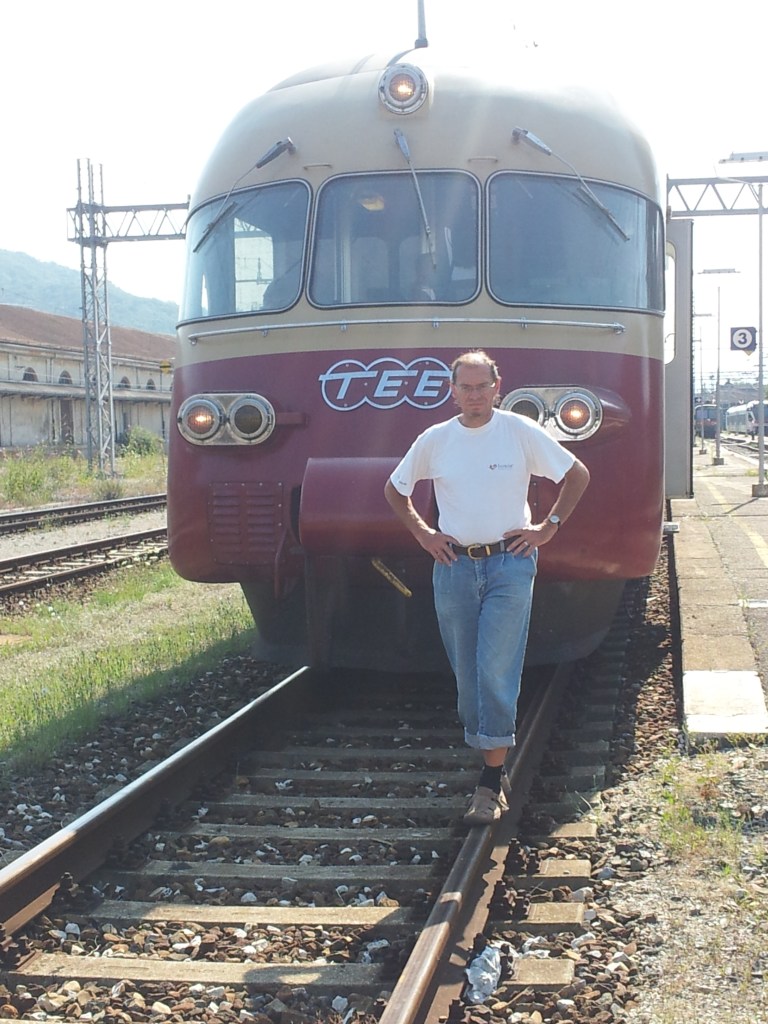
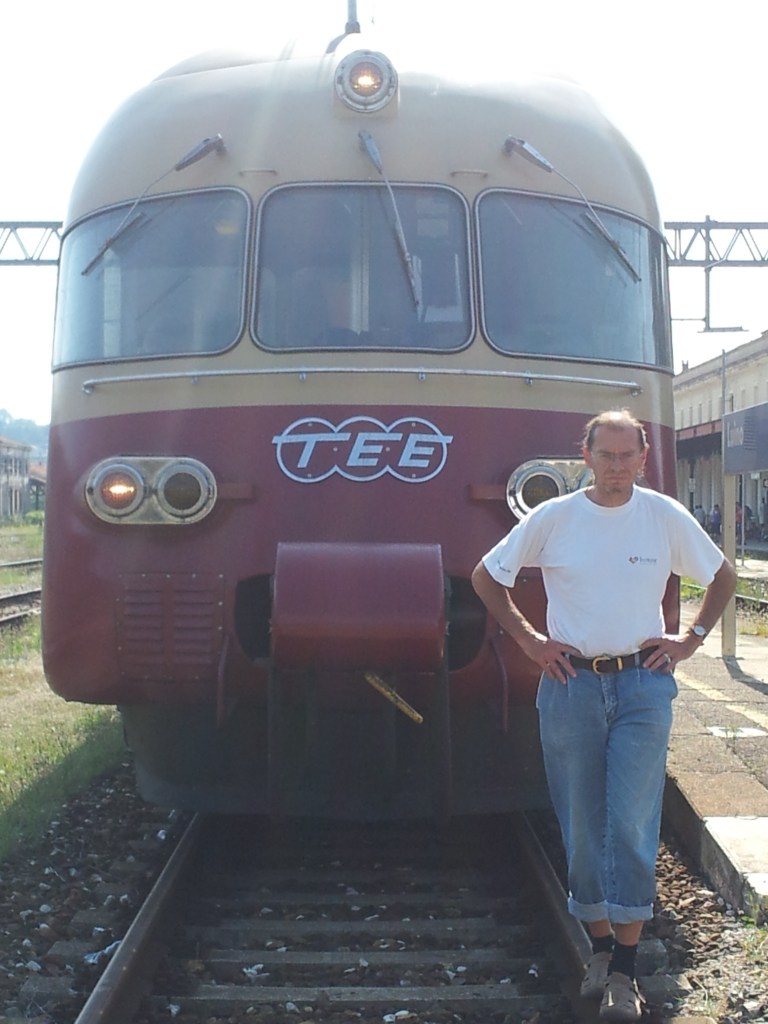
TEE was a network jointly operated by the railways of West Germany ( DB ), France ( SNCF ), Switzerland ( SBB-CFF-FFS ), Italy ( FS) and the Netherlands. Although some trains passed through Belgium from the beginning, the Belgian national railway company ( NMBS/SNCB) joined the program only in 1964. Luxembourg ( CFL) also joined at a later date.
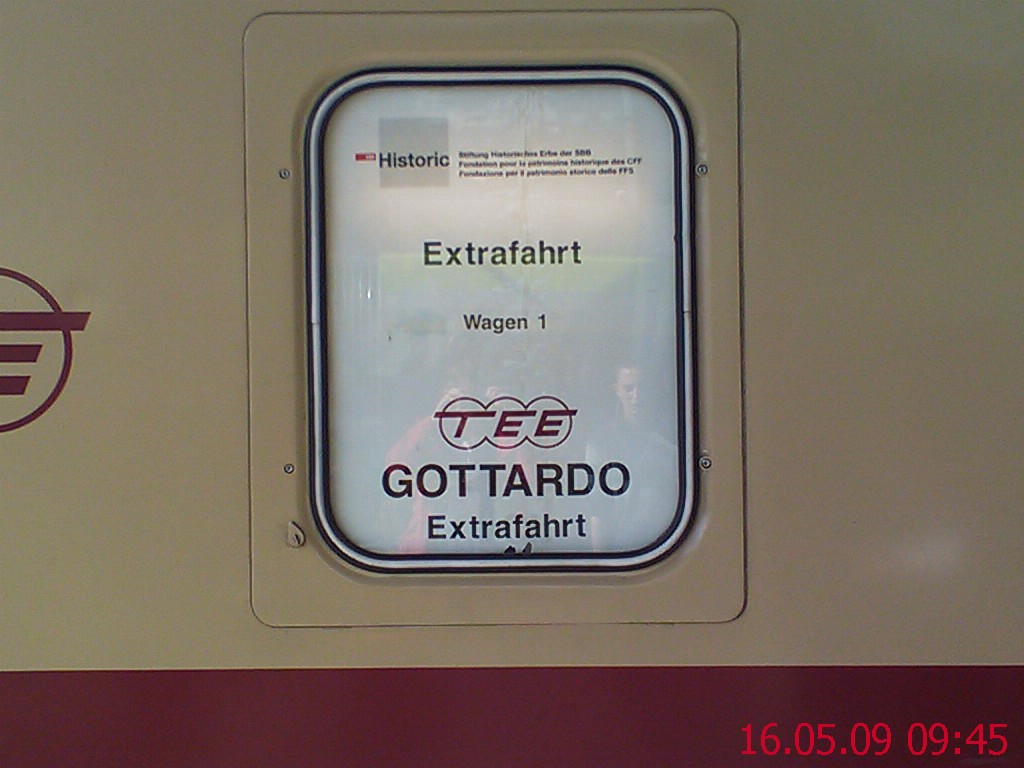
RAm TEE Edelweiss Netherlands Transport Museum June 2022TEE Gottardo in Luino Italy 25.07.2012
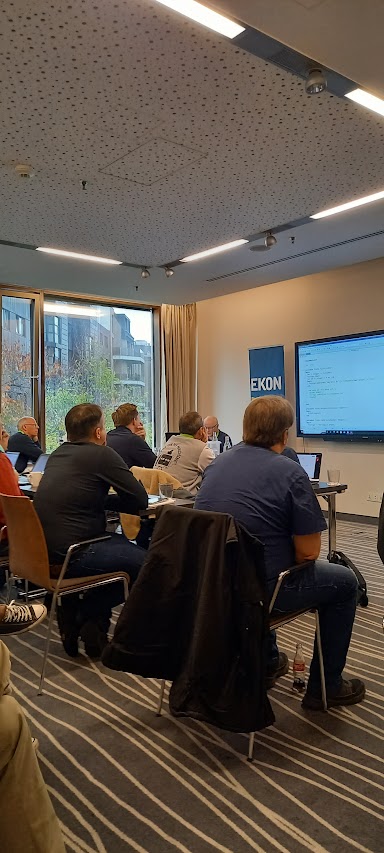
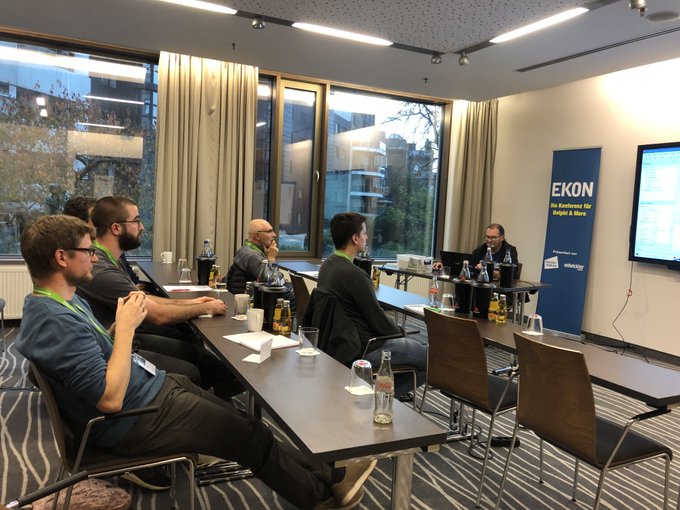
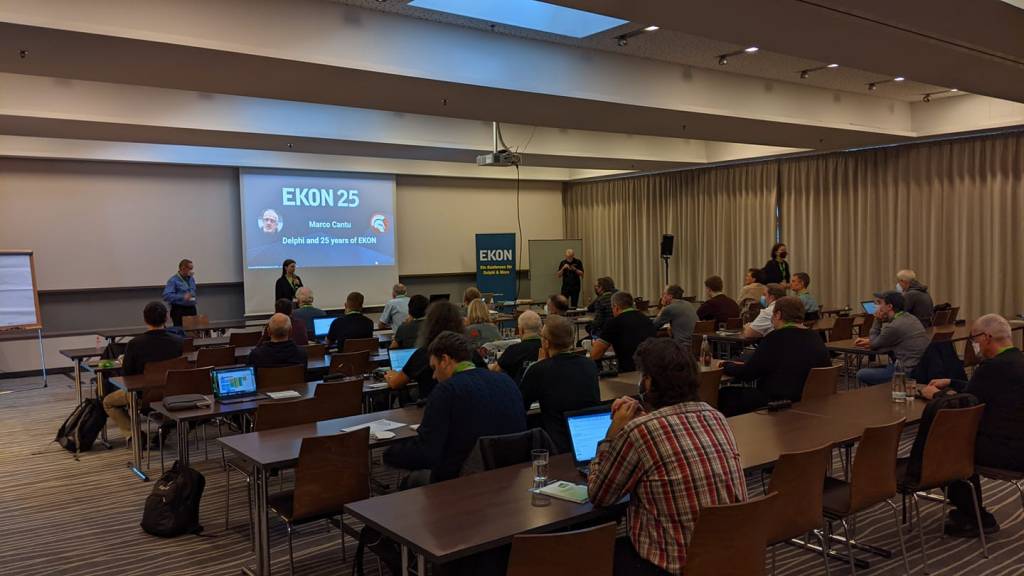
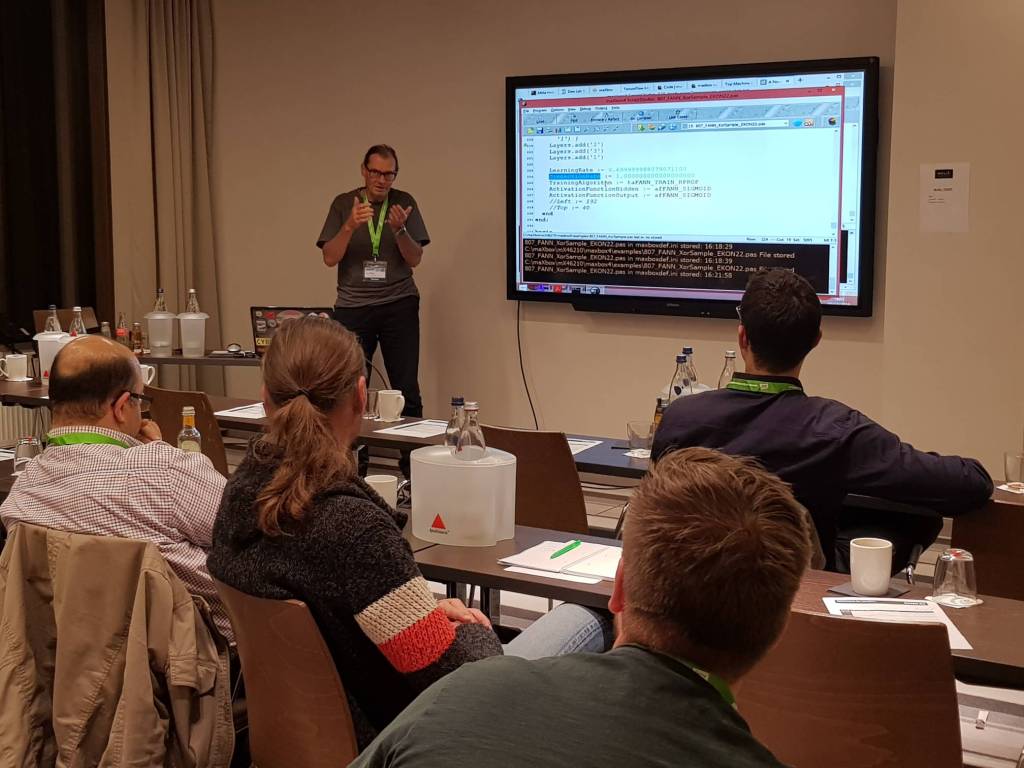
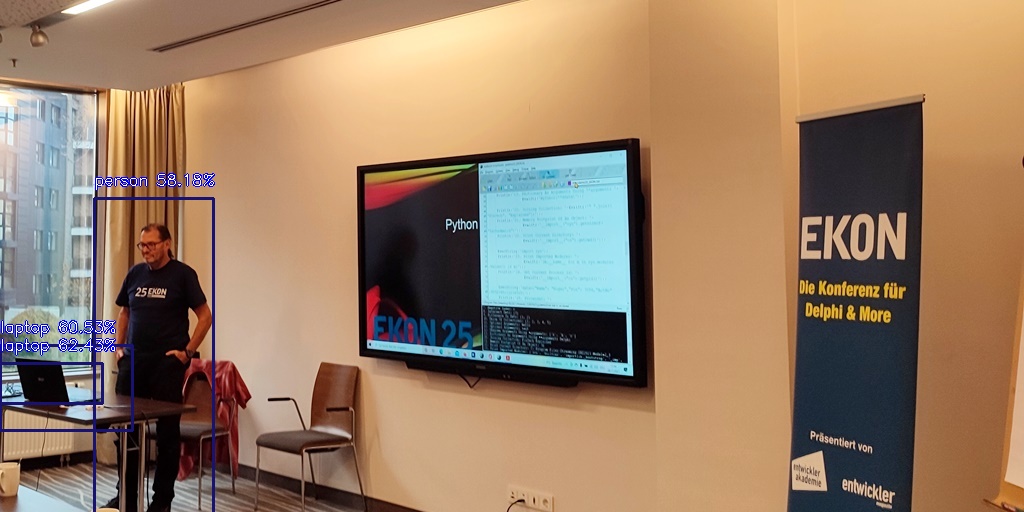
EKON25 is the most traditional Delphi conference and offers a deep dive for the modern developer and architect aiming to transform technologies into valuable business solutions. We always focus on the big picture: Delphi innovations, Cross platforms, IoT, Data Bases, Frameworks, Tools, Delphi fundamentals, Web, maXbox and Cloud technologies, as well as professional insights into the very latest … like Python4Delphi.
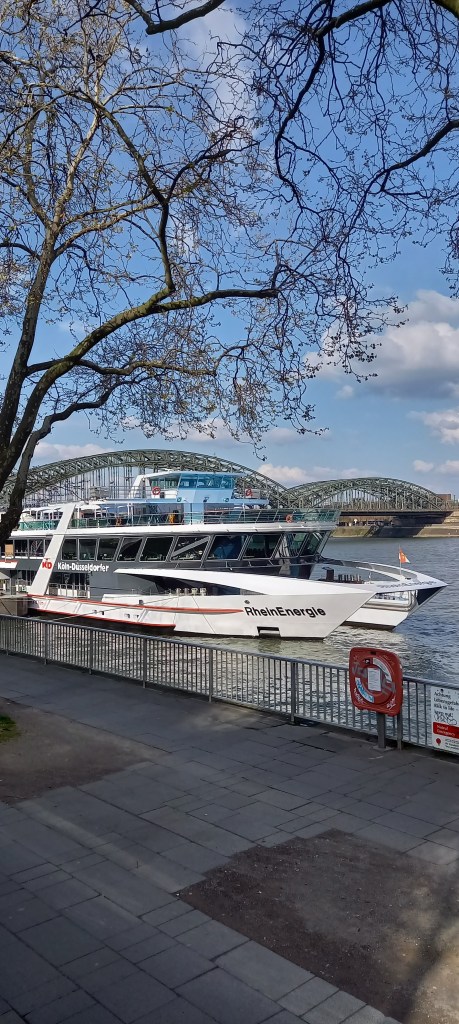
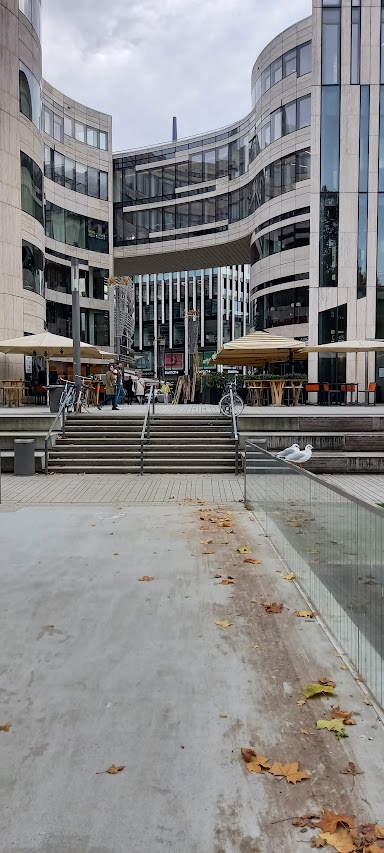
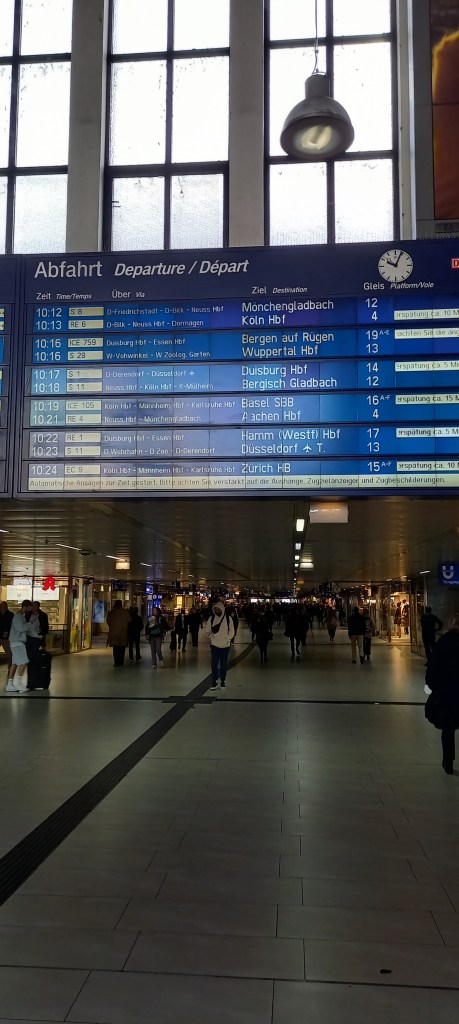
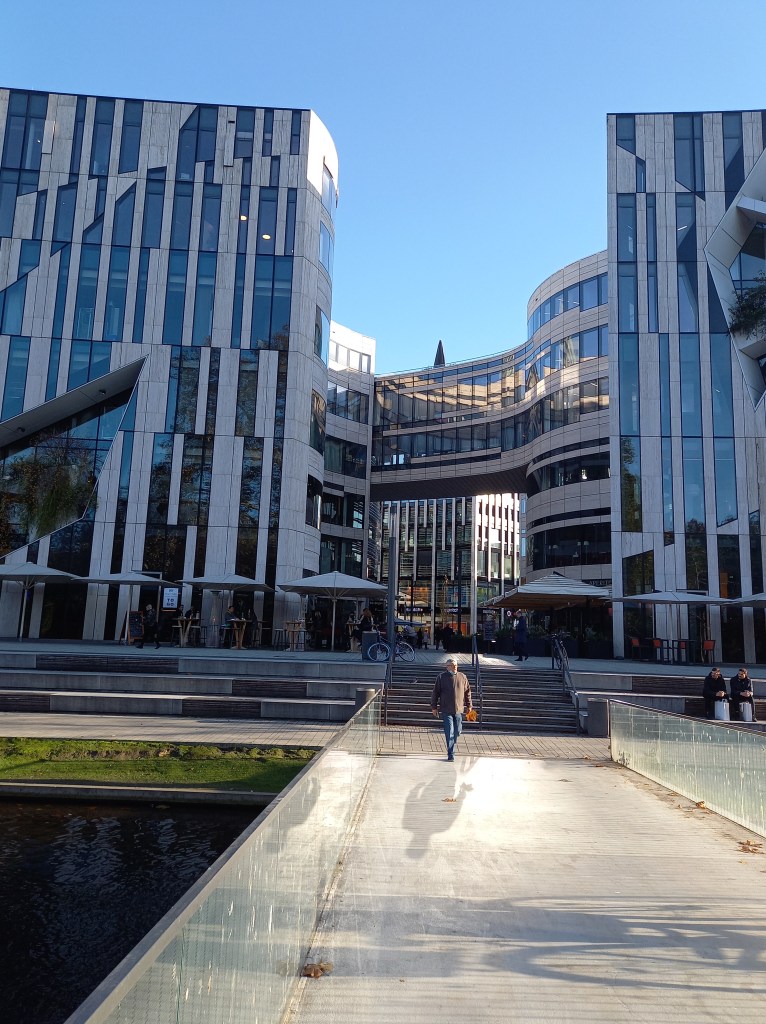
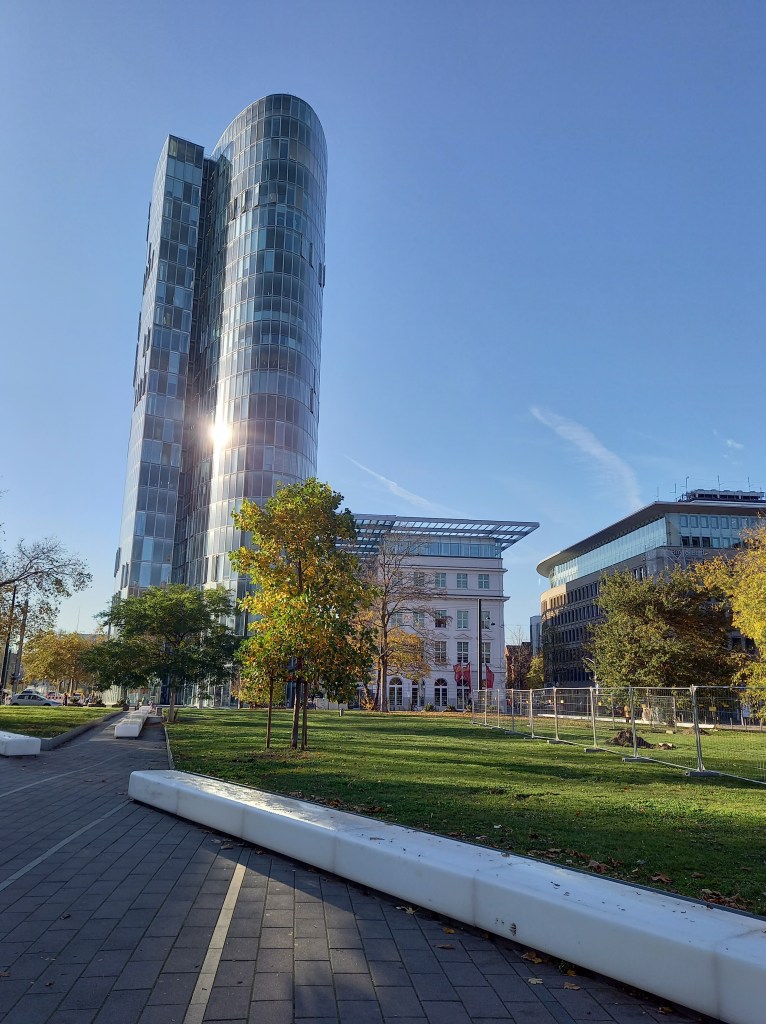
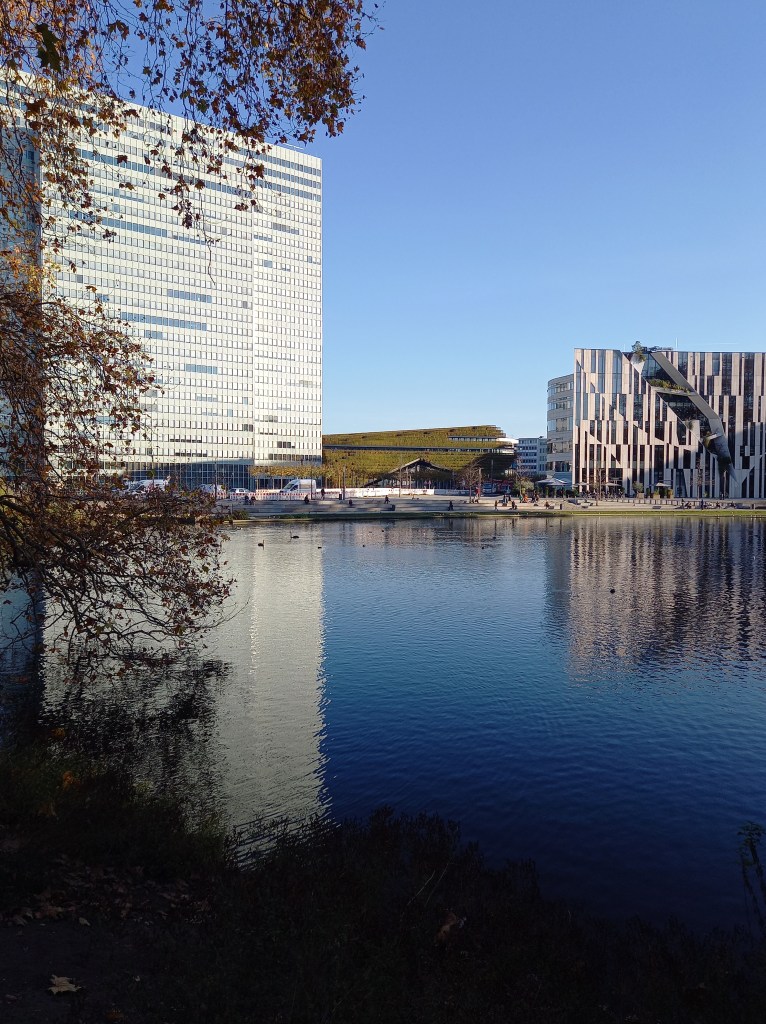
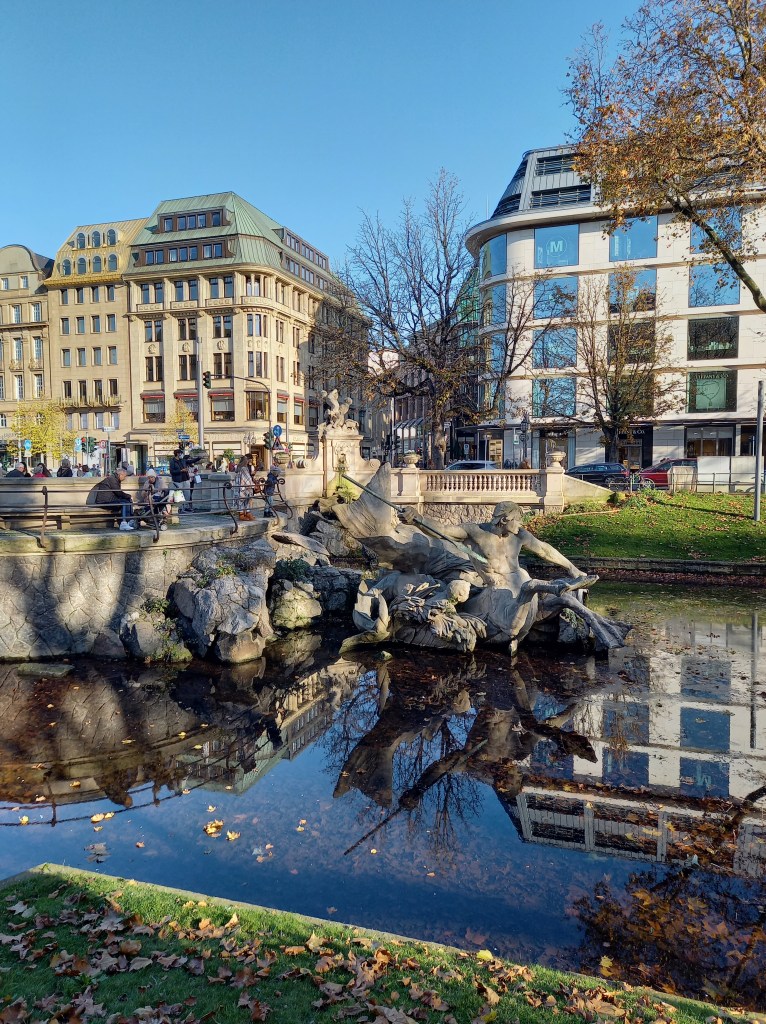
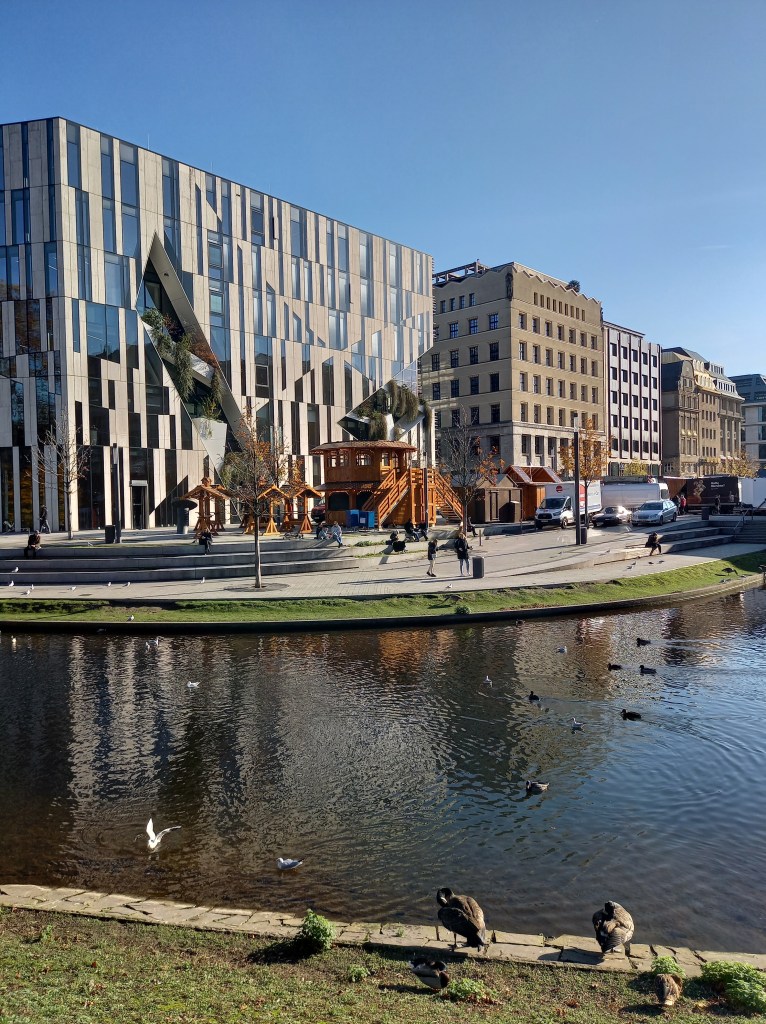
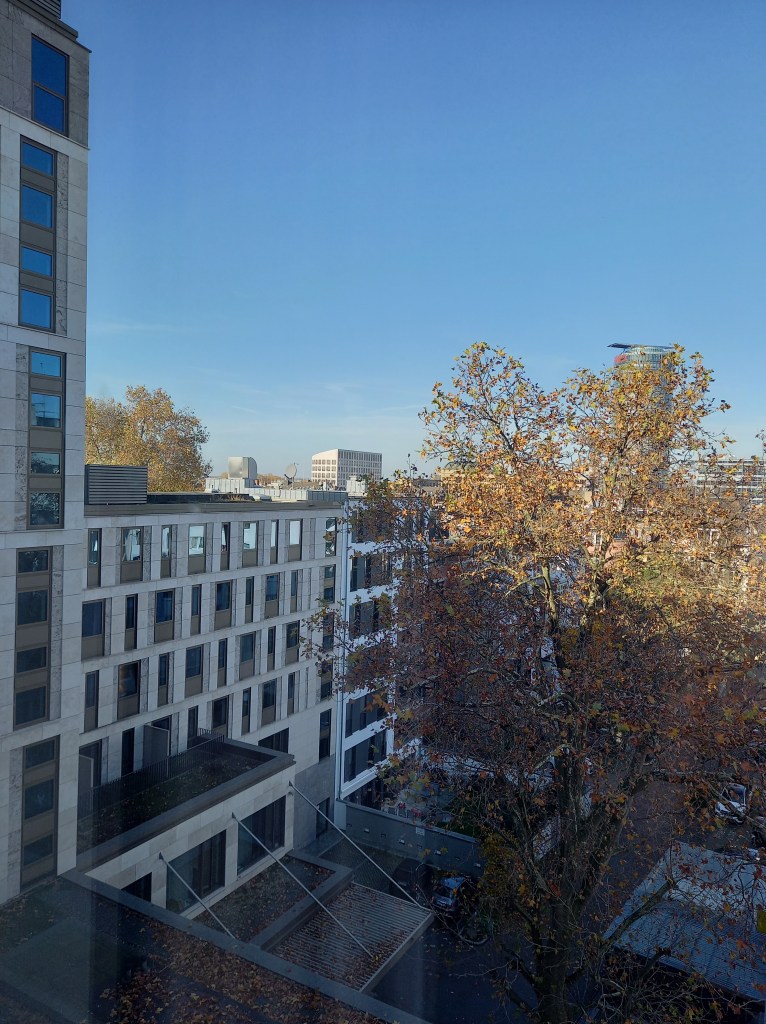
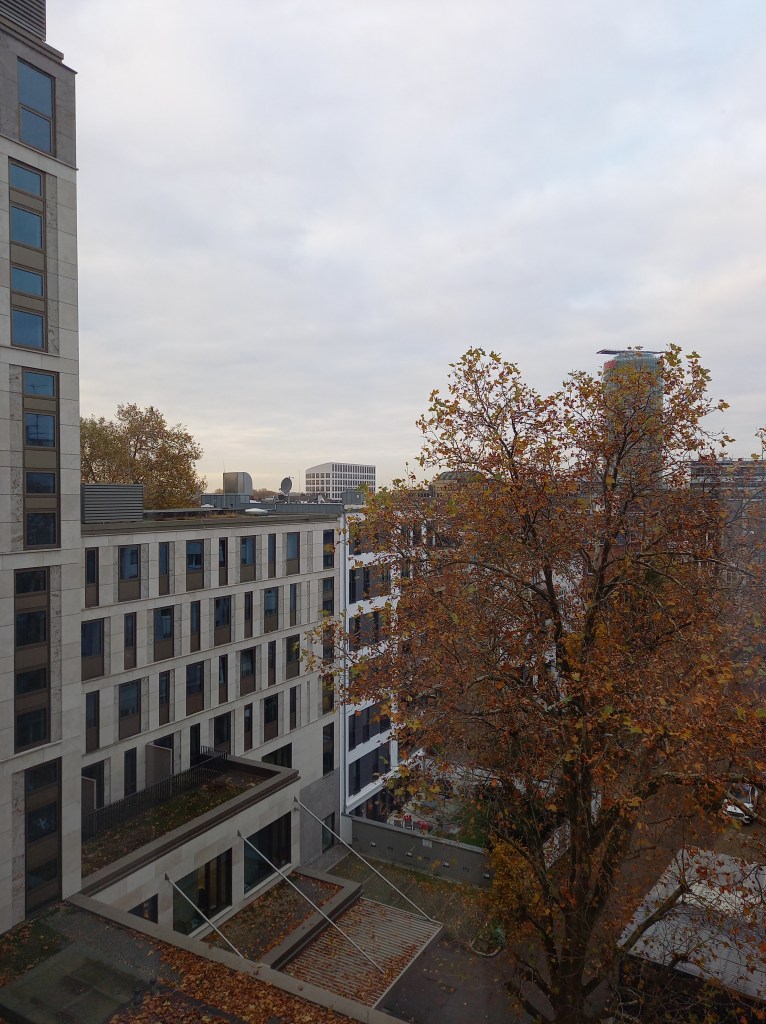
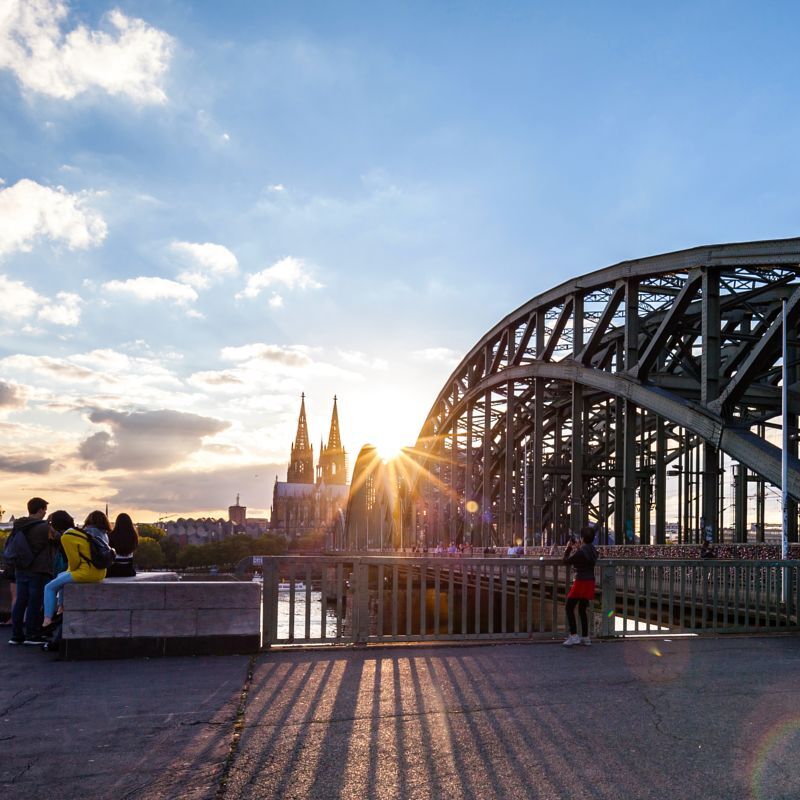
During my stay I shot some photos as Pure Duesseldorf and Cologne.
Delphi and Lazarus is one of the programming world’s legendary languages, a cornerstone of the history of software development. New languages have come to the fore as new platforms and frameworks have emerged, but Delphi and FreePascal has stood its ground as development trends came and went because of its reliability and efficacy as a development path.
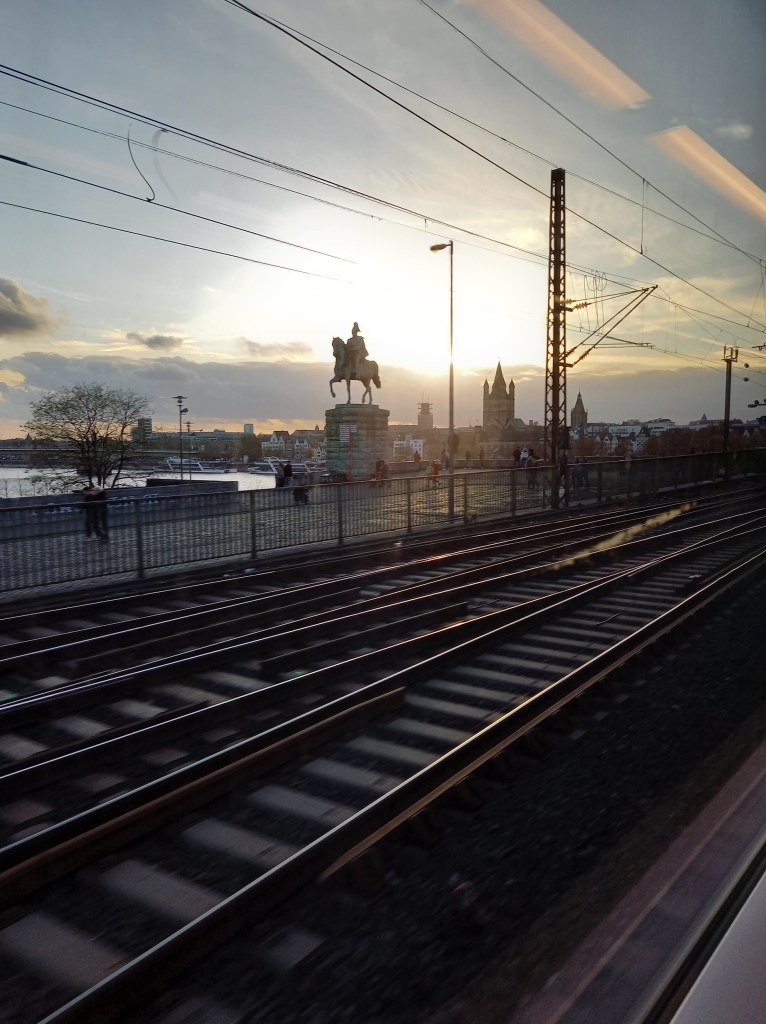
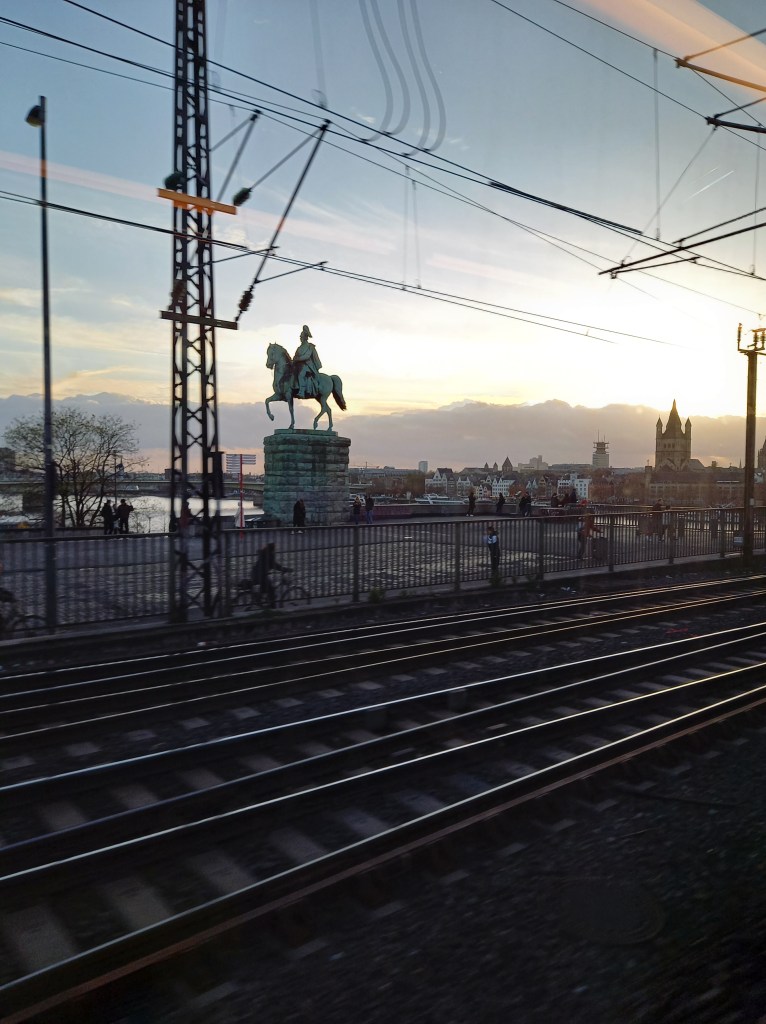
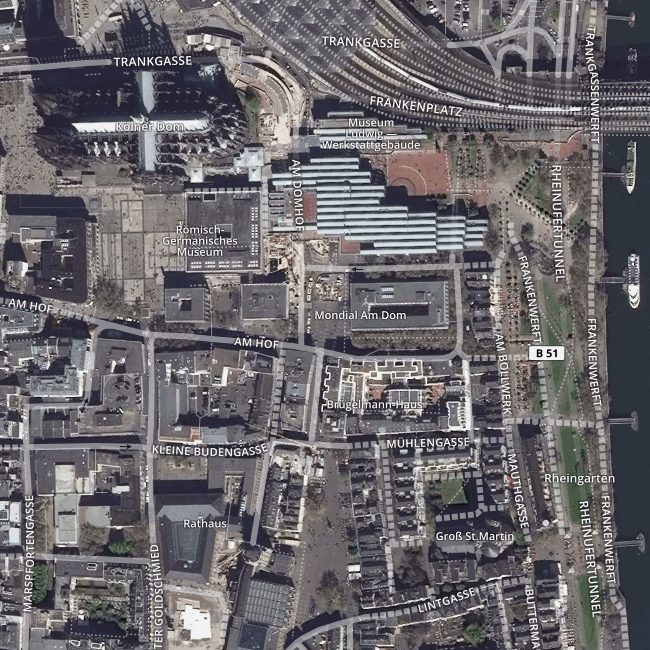
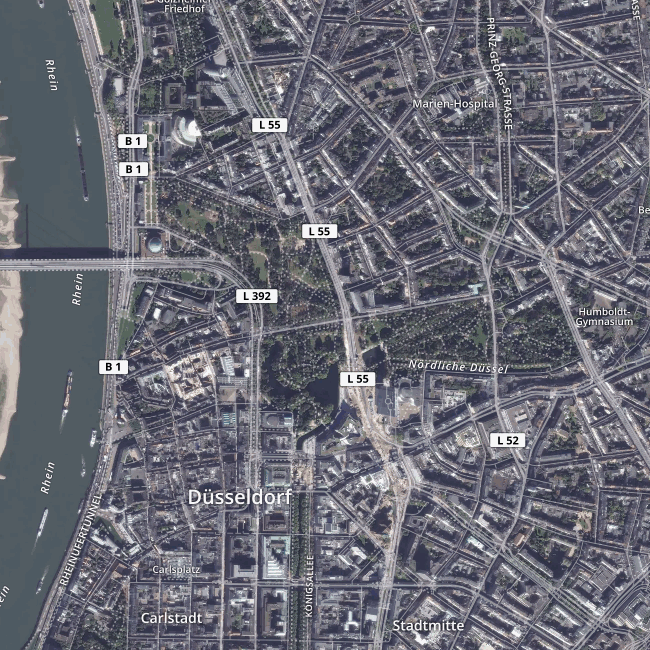
Cologne and Duesseldorf with mapbox satSunset your mindsetCC 6530
Terminal Session to EKON 20
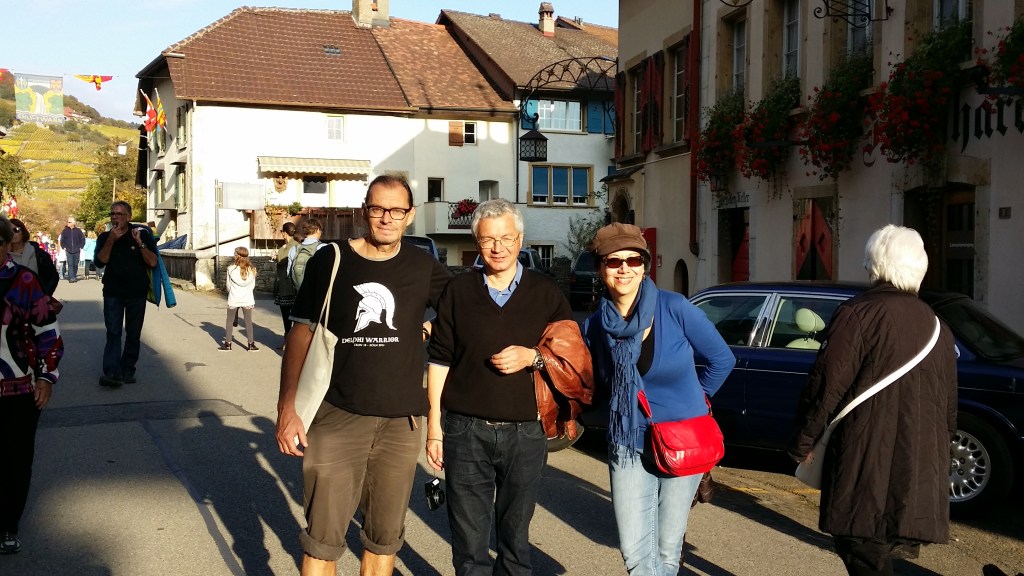
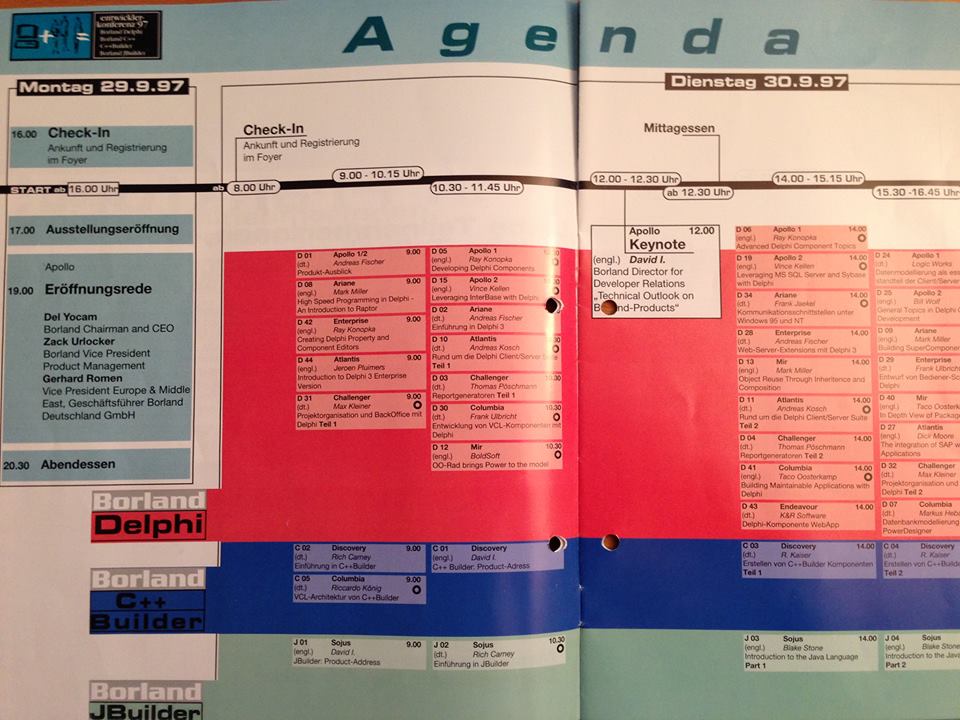
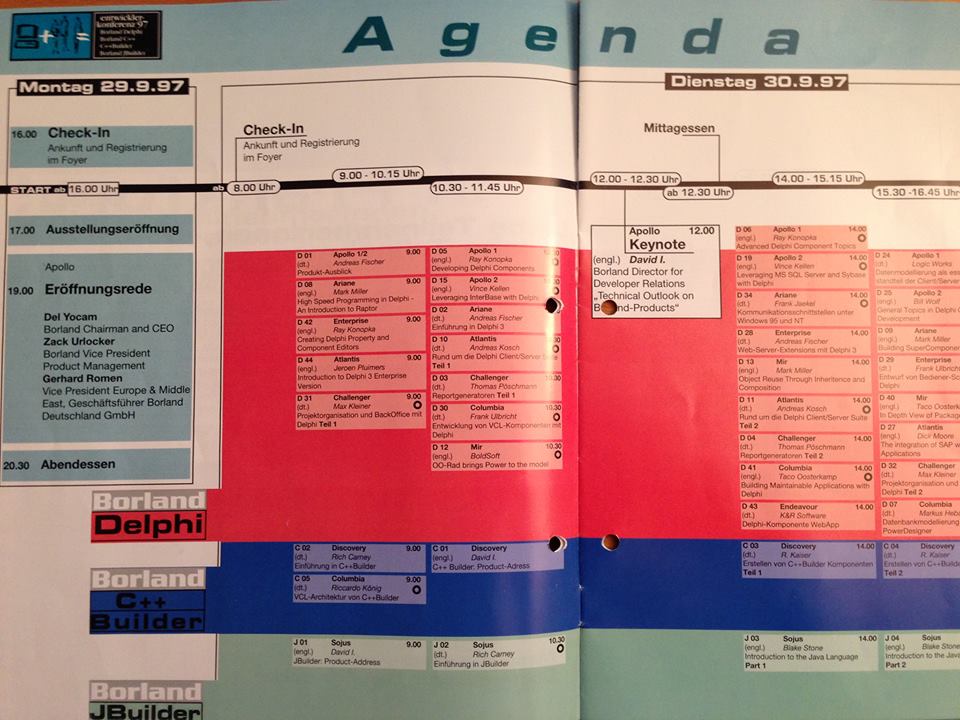
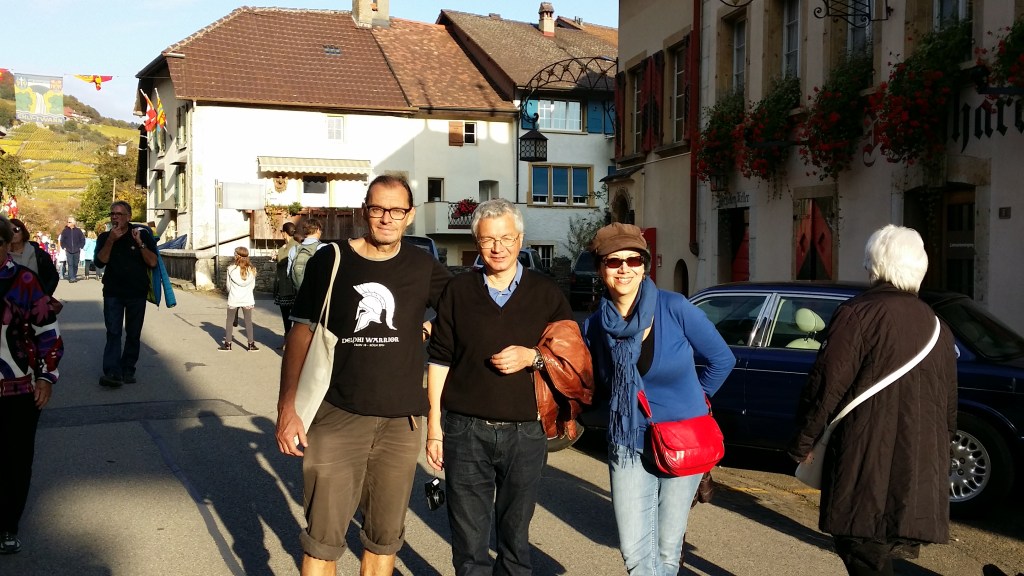
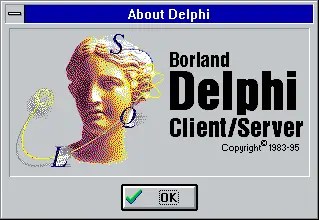
Rheinita VDelphi WarriorFirst EKON Agenda 1997
Lindau 2009
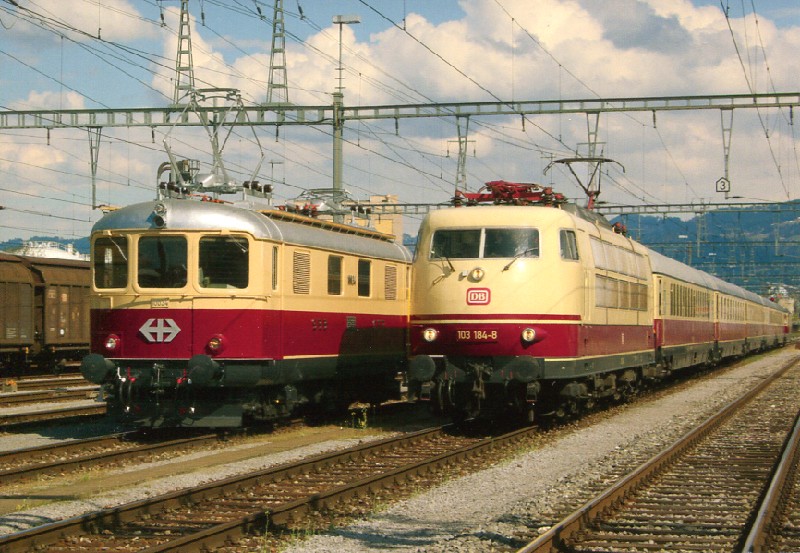
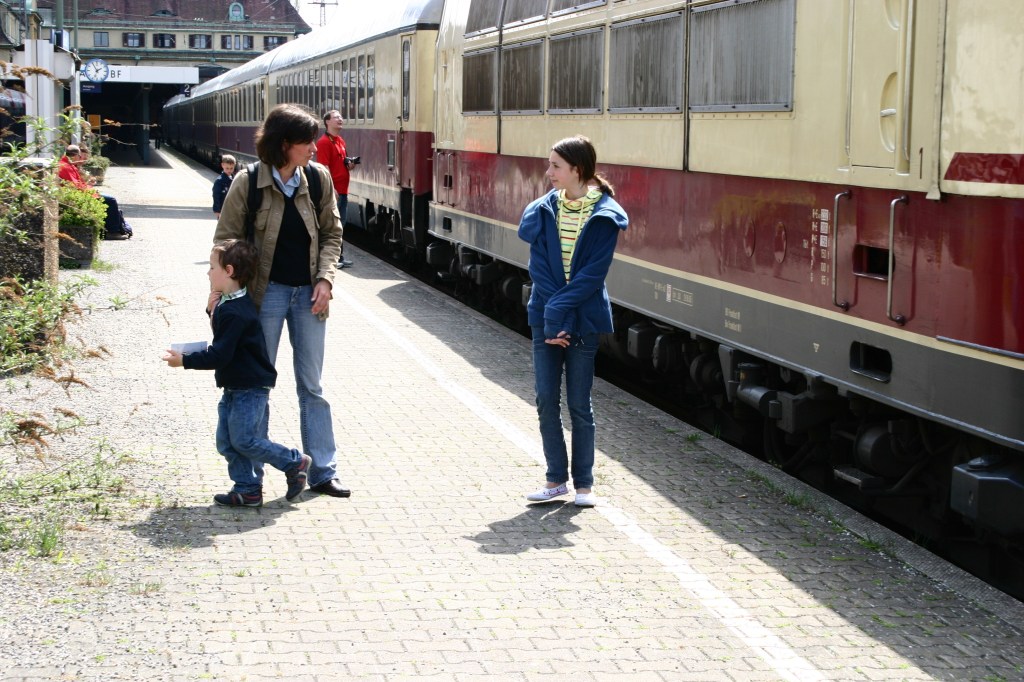
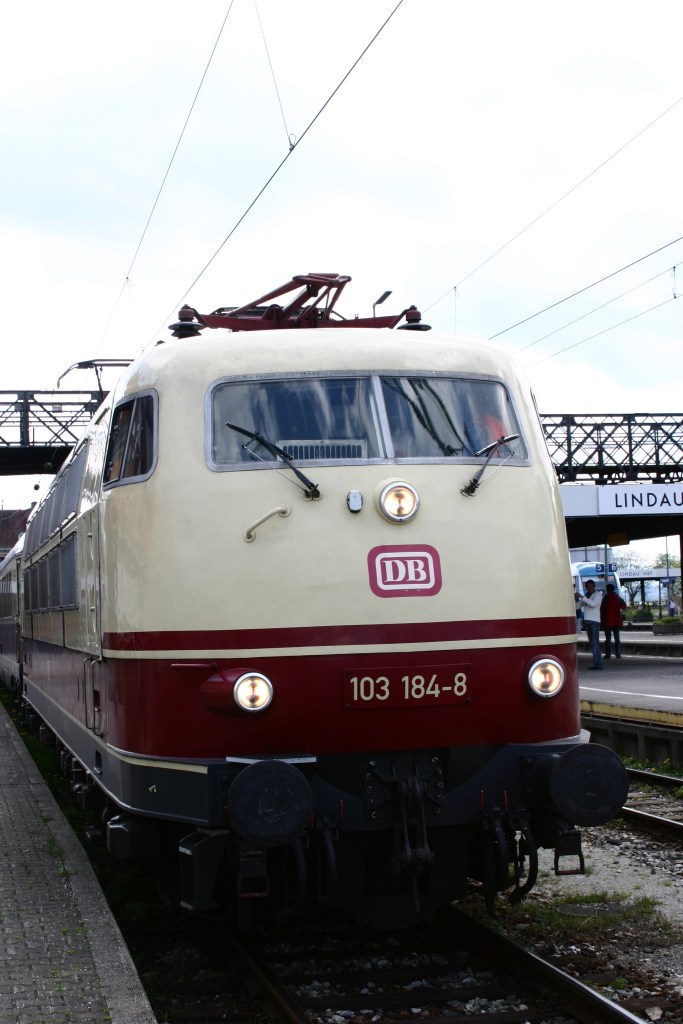
TEE-ClassicsTEE-Classics Sonderfahrt Bavaria April 2009Lindau und Domodossola
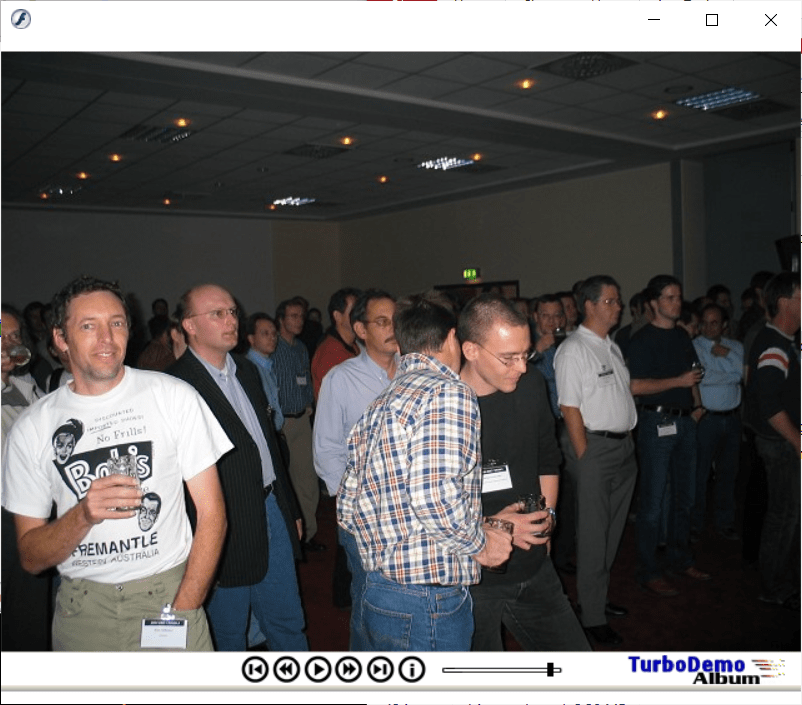
The EKON Story
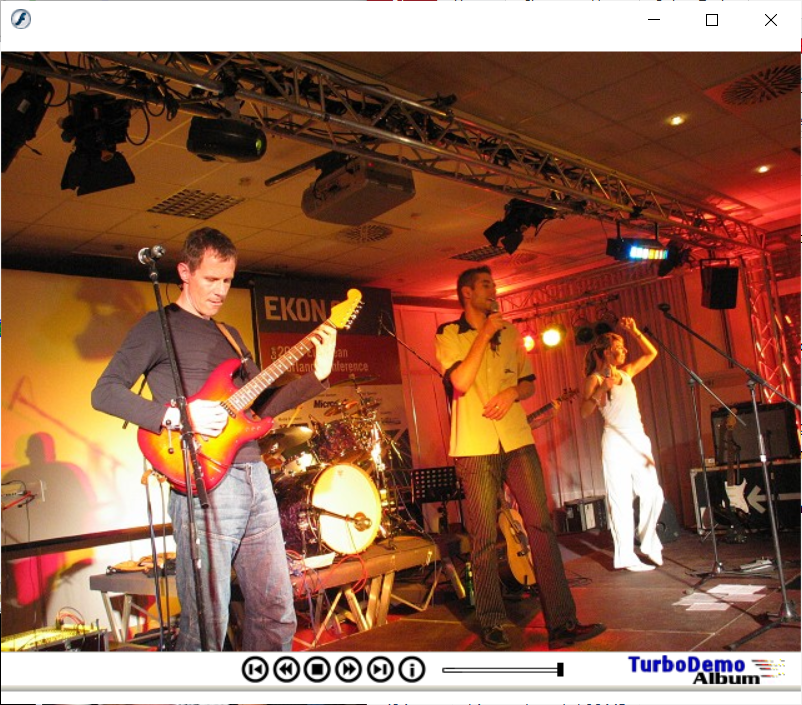
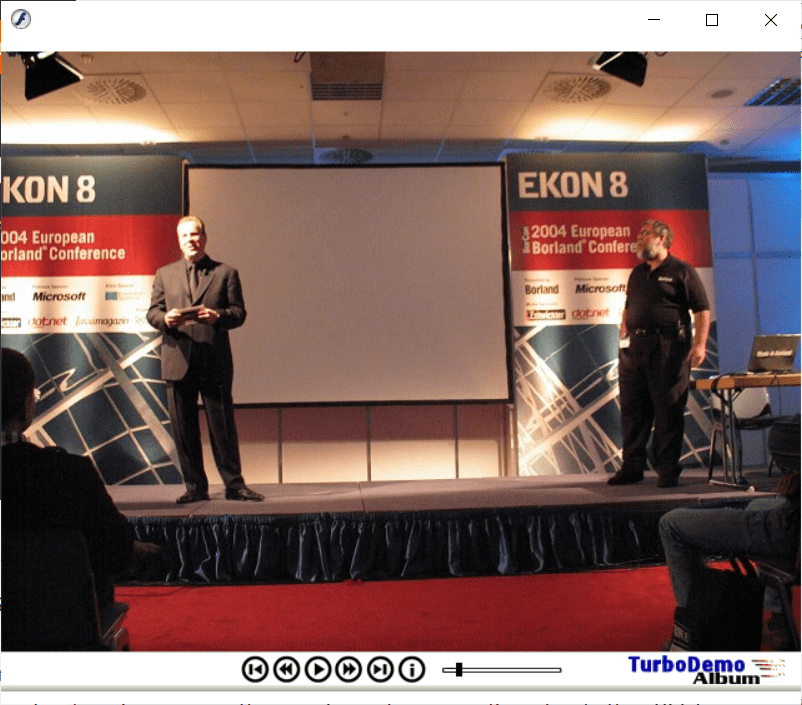
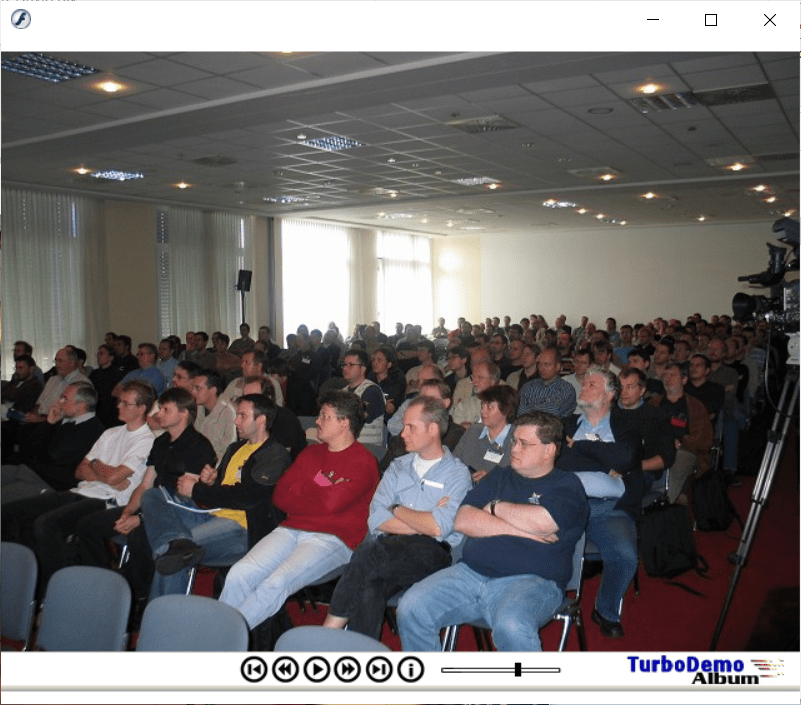
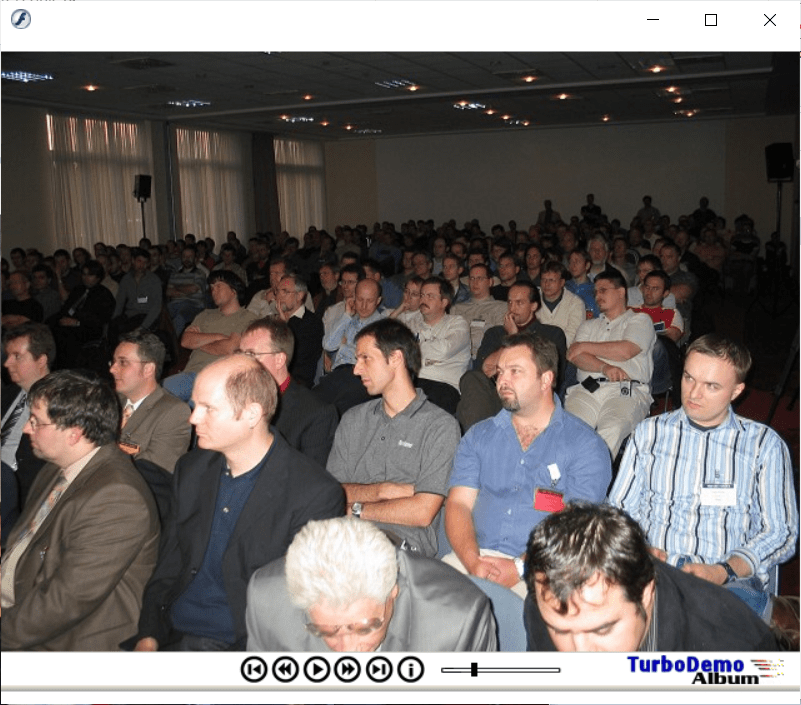
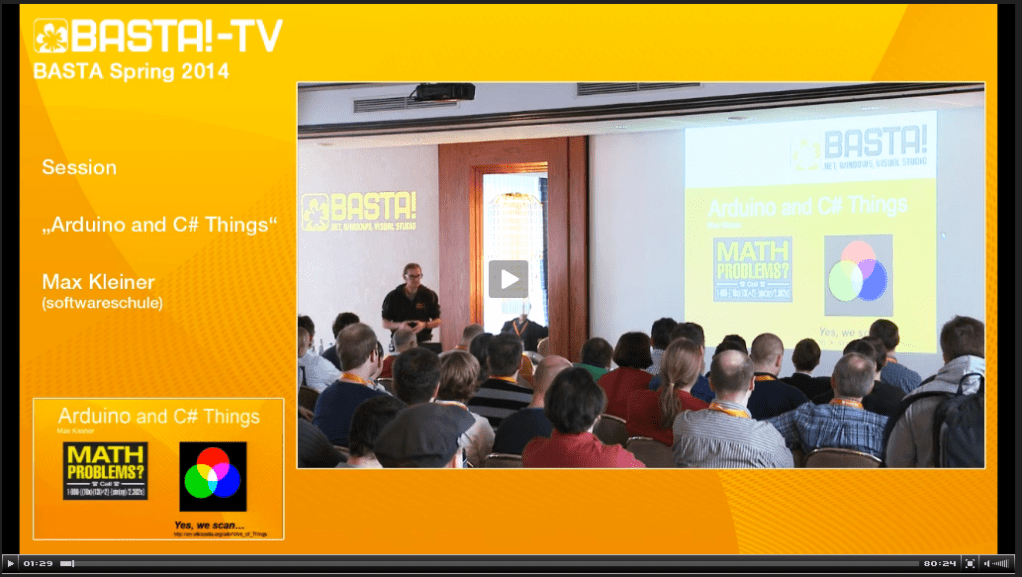
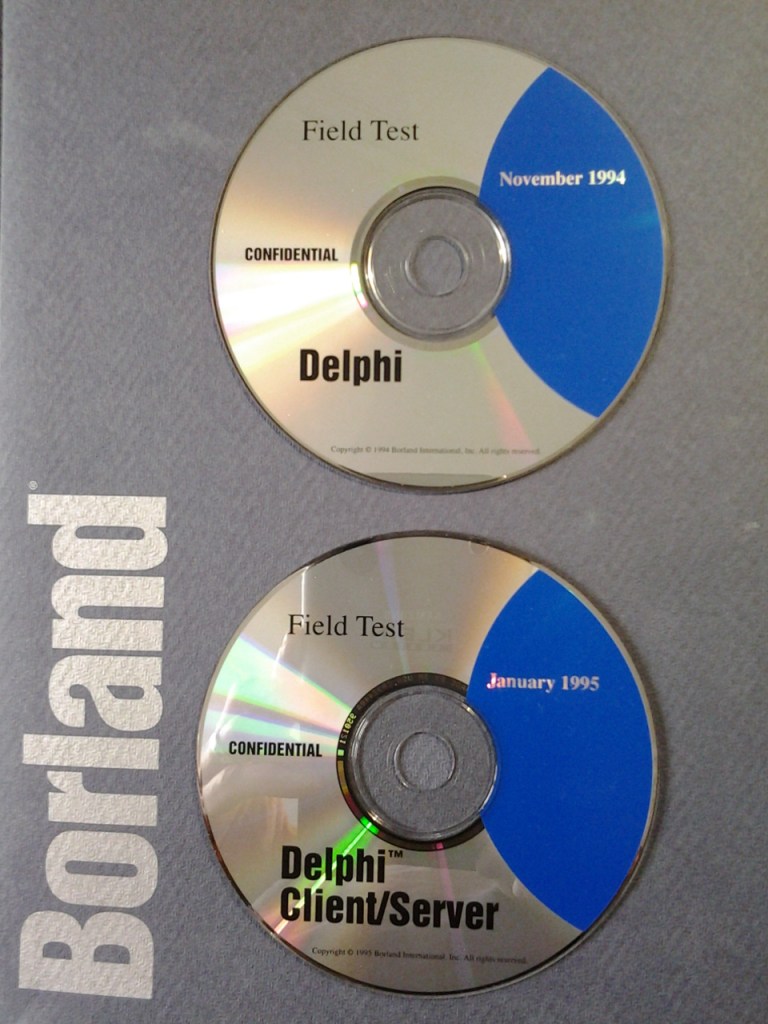
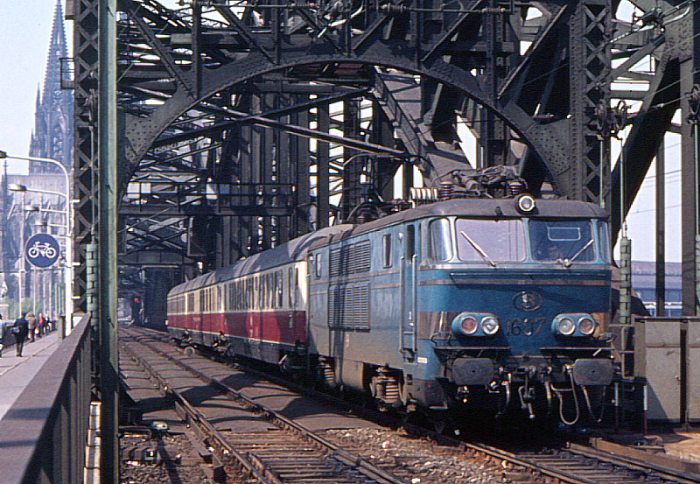
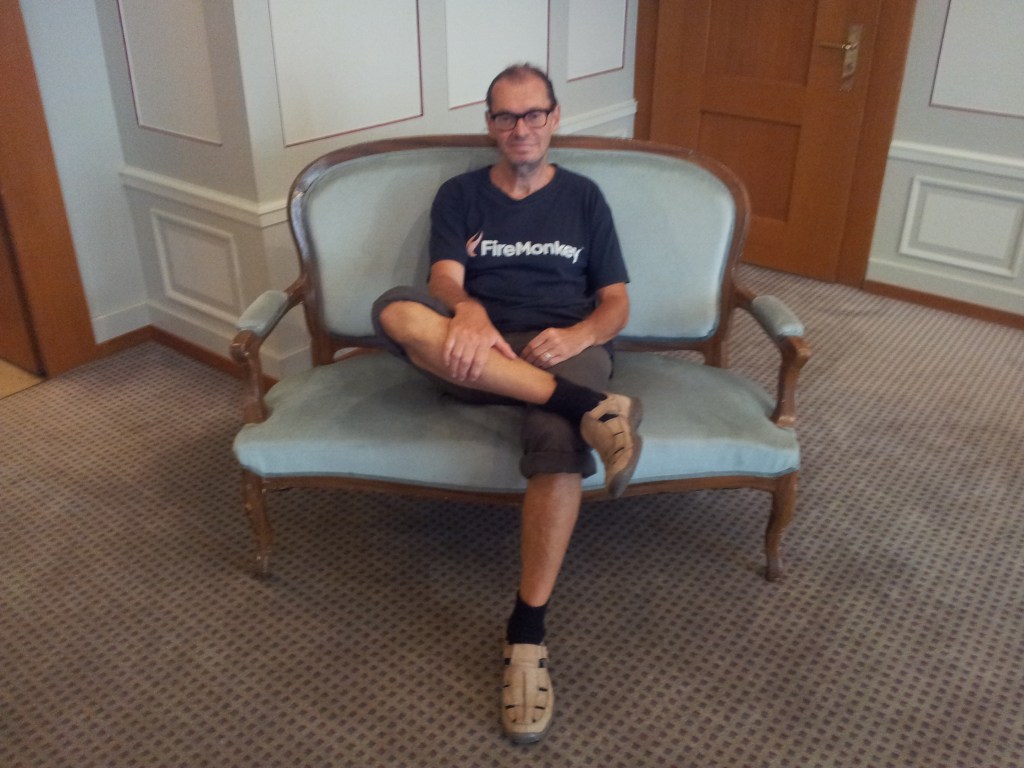
Delphi & FIBPlus. Firebird und InterBase mit Delphi und FIBPlus. DL33 | IB4.EKON 1-25 SlidesBASTA and EKONCologne 2016bug on the top leftfrom 1995 to 2021Mai 1976 Cologne TEE DiamantAs Fire Monkey at Conference Vienna 2014MINT and EKON










































































































































































































































































































 Breitschblog
